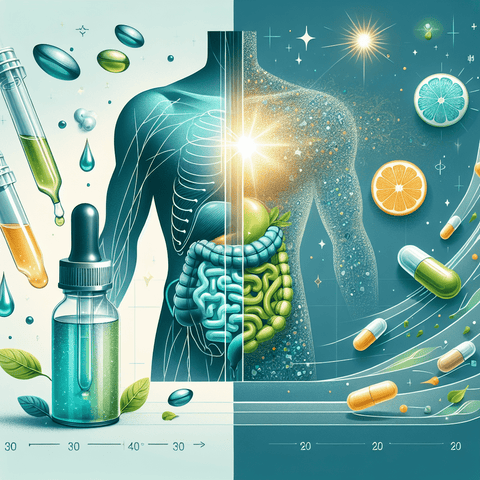
Liquid supplements are vitamins and minerals delivered in fluid form rather than as tablets, capsules, or powders. Their main practical advantages are easier swallowing, flexible dosing, and the potential for faster uptake because they don't need to disintegrate before the body can absorb the nutrients. This guide explains how liquid supplements work, how their absorption compares with pills, when they may be worth considering, and how to evaluate quality, safety, and label information—so you can decide whether a liquid form fits your personal nutrition plan.
Introduction: Why Liquid Supplements Are Getting So Much Attention
Interest in liquid supplements has grown steadily as more people look for convenient, easy-to-take ways to support their daily nutrient intake. For some, the appeal is practical: large tablets can be difficult or unpleasant to swallow. For others, it's about absorption—liquids bypass the disintegration step required of solid forms, so the nutrients are already dissolved when they reach the digestive tract.
At the same time, marketing around "fast-absorbing" formulas often outpaces the science. That's why it helps to understand both what liquid supplements genuinely offer and where the evidence is still limited. This guide walks you through the science of bioavailability, the situations where a liquid form may be useful, and the practical criteria for choosing a well-made product.
What You'll Learn in This Guide
- What liquid supplements are and the common forms they take
- How absorption and bioavailability work, and whether liquids really absorb faster than pills
- Why vitamins and minerals matter for everyday health and where diets commonly fall short
- Who may benefit most from liquid nutrient forms
- How to read labels, evaluate quality, and use liquid supplements safely
What Are Liquid Supplements?
Liquid Supplements Definition and Basic Forms
Liquid supplements are nutritional products in which vitamins, minerals, or other active compounds are dissolved or suspended in a fluid base—typically water, glycerin, or oil. They're usually taken with a dropper, measuring cup, or spoon, which allows the dose to be adjusted more precisely than with a fixed-dose tablet. Common formats include ready-to-drink liquids, concentrated drops, and syrups.
Liquid Vitamins vs. Capsules, Tablets, and Powders
Every supplement form has trade-offs. Capsules and tablets are stable, portable, and often inexpensive, but they must dissolve in the digestive tract before their contents can be absorbed. Powders mix into liquid and offer flexible dosing but require preparation. Liquids skip the disintegration step entirely and can be easier to tolerate for people with swallowing difficulties. However, liquids can be less stable than solids—some nutrients degrade faster in solution—so preservatives, refrigeration, and shorter shelf life are often part of the trade-off.
Common Types of Liquid Supplements (Vitamins, Minerals, Herbal Drops, Collagen Liquids)
The category covers a wide range of products:
- Liquid multivitamins – broad-spectrum formulas combining multiple vitamins and minerals in one serving
- Single-nutrient drops – such as vitamin D drops, vitamin C liquids, or magnesium solutions (you can learn more in our guide to vitamin D sources and safety)
- Liquid minerals – including iron, zinc, and trace mineral solutions
- Herbal drops and tinctures – concentrated plant extracts taken in small volumes
- Collagen and protein liquids – ready-to-drink formats popular in sports and beauty nutrition
- Omega-3 and lipid liquids – fish oil and other fatty acid preparations (see our overview of omega-3 supplements)
Why Absorption Matters: How Liquid Supplements Work in the Body
Bioavailability Explained: What It Means and Why It Varies
Bioavailability is the proportion of an ingested nutrient that actually reaches the bloodstream in a usable form. It depends on several factors: the chemical form of the nutrient, whether it needs digestion or conversion, the presence of other foods or compounds that enhance or inhibit uptake, and the health of the person's digestive system. Fat-soluble vitamins A, D, E, and K, for example, are absorbed better alongside dietary fat, regardless of whether they're taken as a liquid or a pill.
Do Liquid Vitamins Absorb Faster Than Pills?
Liquids can begin to be absorbed sooner because they don't require disintegration—a step that capsules and especially compressed tablets must complete first. For most healthy people, however, the total amount of nutrient absorbed from a well-formulated solid supplement is comparable to a liquid; the difference is mainly speed, not overall uptake. Claims that liquids are dramatically "better absorbed" are not consistently supported by research. Some nutrients are inherently better absorbed in certain chemical forms—such as chelated minerals or active B vitamins—and that matters more than the delivery format itself. Evidence comparing liquid and solid forms head-to-head remains limited, so individual tolerability and product quality should carry at least as much weight as absorption claims.
Who May Benefit From Faster-Absorbing Nutrient Forms
People whose absorption is compromised may be the groups most likely to notice a practical benefit from liquids:
- Adults with difficulty swallowing pills due to age, medical devices, or throat conditions
- People with reduced stomach acid, digestive disorders, or those who have had gastrointestinal surgery
- Individuals whose solid supplement tablets pass through the digestive tract without fully dissolving
- Anyone experiencing "pill fatigue" from taking multiple capsules daily
Why Vitamins and Minerals Matter for Everyday Health
Key Roles of Vitamins and Minerals in Energy, Immunity, and Wellbeing
Vitamins and minerals are involved in virtually every process in the body. B vitamins help convert food into usable energy; vitamin C and zinc contribute to normal immune function; vitamin D supports bone, muscle, and immune health; and minerals such as magnesium, iron, and calcium are essential for muscle function, oxygen transport, and skeletal strength. Consistent, adequate intake of these micronutrients is a foundation of everyday wellbeing, not a fringe concern.
How Modern Diets Can Fall Short of Nutrient Needs
Despite greater food availability, many people's diets still fall short for specific nutrients. Common shortfalls include vitamin D—especially in regions with limited winter sunlight—along with magnesium, iron (particularly for women with menstrual losses), and in some populations calcium and omega-3 fatty acids. Highly processed eating patterns, calorie-restricted diets, and low vegetable intake can all contribute to gaps over time.
Common Situations Linked to Low Nutrient Intake or Poor Absorption
Signs Often Associated With Insufficient Nutrient Levels
Persistent fatigue, frequent infections, brittle hair or nails, muscle cramps, and low mood are among the signs sometimes associated with inadequate nutrient status. These symptoms are non-specific—the same fatigue can stem from poor sleep, stress, or an underlying medical condition, and muscle cramps can have many causes unrelated to nutrition.
Why Symptoms Alone Can't Confirm a Deficiency
Because these signs overlap with so many other conditions, they cannot confirm a nutrient deficiency. For several nutrients, validated blood tests—such as vitamin D, vitamin B12, ferritin (iron stores), and folate—can provide much more reliable information than symptom-based guessing. Testing before supplementing is especially worthwhile for nutrients with meaningful toxicity risks at high doses, such as iron, vitamin A, and vitamin D.
Causes and Risk Factors for Low Nutrient Status
Dietary Patterns and Restricted Eating
Vegan and vegetarian diets can lack vitamin B12, iron, zinc, and omega-3s without careful planning. Calorie-restricted or monotonous diets limit the variety of foods that supply different nutrients. Even well-intentioned "healthy" diets can fall short if food variety is narrow or fortified products are avoided.
Age, Digestion, and Age-Related Absorption Changes
Stomach acid production and digestive efficiency often decline with age, reducing absorption of vitamin B12, calcium, and other nutrients. Older adults also tend to have reduced appetite and lower food intake, increasing the risk of inadequate nutrient status even when the diet is reasonably balanced.
Medications and Health Conditions That Affect Nutrient Absorption
Several medications interfere with nutrient uptake: proton pump inhibitors and long-term antacid use reduce B12, magnesium, and calcium absorption; metformin can lower B12 status; and some antibiotics interact with minerals. Conditions such as coeliac disease, Crohn's disease, and other malabsorptive disorders can affect multiple nutrients at once.
Lifestyle Factors: Stress, Alcohol, Smoking, and Physical Demands
Chronic alcohol use interferes with the absorption and metabolism of several B vitamins. Smoking lowers vitamin C requirements being higher and status being lower in smokers. Intense physical training increases some micronutrient needs, and chronic stress can influence eating patterns that indirectly affect nutrient intake.
Why Nutrient Needs Differ From Person to Person
Diet, Genetics, Health Status, and Life Stage
Requirements vary with age, sex, pregnancy and breastfeeding, body size, activity level, sun exposure (for vitamin D), and health status. Genetic variation also plays a role—some people convert nutrients or metabolize vitamins differently. This is why a dose that works well for one person may be unnecessary or excessive for another.
Existing Nutrient Intake From Fortified Foods and Multivitamins
Before adding a supplement, it's worth accounting for what you already consume. Breakfast cereals, plant milks, and other fortified foods contribute meaningfully to daily intakes, and anyone already taking a multivitamin should check how its nutrients overlap with any additional product to avoid unintentionally exceeding upper intake limits.
Food First: Dietary Sources of Essential Vitamins and Minerals
Nutrient-Rich Foods to Prioritize Daily
- Leafy greens and vegetables – folate, vitamin K, magnesium, potassium
- Oily fish – omega-3s, vitamin D, vitamin B12
- Legumes, nuts, and seeds – magnesium, iron, zinc, vitamin E
- Whole grains – B vitamins, selenium, iron
- Dairy or fortified plant alternatives – calcium, vitamin B12, iodine
- Eggs, fruit, and colourful produce – vitamin A, vitamin C, choline, antioxidants
Eating Patterns That Support Better Nutrient Intake
A varied, mostly whole-food eating pattern—such as a Mediterranean-style diet—naturally covers most micronutrient needs for most healthy adults. Variety matters as much as quantity: rotating different food groups across the week broadens the spectrum of nutrients consumed.
Simple Habits That Improve Natural Absorption From Food
Pair iron-rich plant foods with vitamin C sources (for example, lentils with peppers) to enhance iron uptake. Consume fat-soluble vitamins with a source of fat. Soaking and fermenting grains and legumes can reduce phytates, compounds that bind minerals. Spreading calcium intake across meals, rather than one large dose, improves absorption efficiency.
Where Liquid Supplements May Fit Into a Nutrition Plan
What Liquid Vitamins and Minerals Are Commonly Used For
Liquid supplements are typically used to fill identified nutritional gaps, support intake during periods of higher need, or provide a convenient format for people who cannot take solid forms. They're a delivery method—not inherently stronger or weaker nutritionally than equivalent doses in other forms.
Liquid Multivitamins, Single-Nutrient Drops, and Specialty Liquids
Liquid multivitamins offer convenience for broad-spectrum support, while single-nutrient drops allow targeted top-ups—for example, vitamin D drops during winter months or magnesium liquid in the evening. Specialty liquids such as collagen drinks, iron solutions, and children's formats serve more specific purposes.
What Research Says About Liquid Supplement Effectiveness
The underlying nutrients in liquid supplements are well studied—what's less established is whether the liquid format itself confers meaningful clinical advantages over solids for healthy people. Some studies suggest faster initial absorption of liquids, but differences in total absorbed amount and long-term outcomes are less clear. The practical conclusion: choose the format that fits your needs, tolerability, and consistency, rather than assuming liquids are universally superior.
When Supplementation May Be Worth Considering
Situations Where Diet Alone May Not Be Enough
- Confirmed low levels of specific nutrients through testing
- Pregnancy or breastfeeding, when requirements rise (folate, iron, iodine, vitamin D)
- Vegan or vegetarian diets without careful planning
- Age-related reduction in absorption of certain nutrients
- Use of medications that deplete or block nutrient absorption
- Limited sun exposure affecting vitamin D status
Nutritional Support vs. Treating a Diagnosed Condition
Supplements are intended to support nutritional status—they are not treatments for diagnosed diseases. Anyone with a medical condition, unexplained persistent symptoms, or a suspected deficiency should seek medical assessment rather than self-treating with high-dose supplements.
Why Testing and Professional Assessment Matter First
Because requirements vary so widely between individuals, testing and professional guidance help avoid two opposite mistakes: supplementing with nutrients you don't need, and missing a genuine gap that diet alone can't correct. A doctor or registered dietitian can interpret test results in context and recommend appropriate doses and forms.
How to Choose a Quality Liquid Supplement
Nutrient Forms and Bioavailability (e.g., Chelated Minerals, Active B Vitamins)
The chemical form of a nutrient often matters more than the delivery format. Chelated minerals (such as magnesium bisglycinate or iron bisglycinate) are generally gentler on the stomach and well absorbed. Active B vitamin forms—methylcobalamin for B12, methylfolate for folate—may suit people with conversion variations, though standard forms work well for most people.
Dosage, Concentration, and Serving Size
Liquid products vary widely in nutrient concentration per dose, so always check how much is in a serving, not just per bottle. A concentrated formula may require only a few drops, while a diluted one may need a full capful—both can be legitimate, but dosing accuracy matters, especially for children or single-nutrient products.
Single Ingredients vs. Combination Liquid Formulas
Single-nutrient liquids offer precision and are easier to adjust based on test results. Combination formulas are convenient but make it harder to fine-tune individual doses and to identify which ingredient may cause a reaction if one occurs.
Purity, Third-Party Testing, and Certifications to Look For
Look for brands that disclose third-party testing for identity, purity, and heavy metals, and that follow recognized manufacturing standards such as GMP. Certificates of analysis, when available, provide independent verification of what's actually in the bottle.
Added Sugars, Flavors, Preservatives, and Unnecessary Ingredients
Some liquid vitamins—especially children's syrups—contain notable added sugars or artificial colors. Since liquids are taken daily, these extras add up. Check the ingredient list for unnecessary fillers and prefer products with short, purposeful ingredient lists.
Allergens, Vegan Options, and Dietary Preferences
Liquid formulas may contain allergens such as fish, shellfish, soy, gluten, or dairy depending on the base and active ingredients. Verify vegan status if relevant—gelatin and animal-derived glycerin sometimes appear in liquid products. For broader context on choosing across categories, our natural supplements overview covers quality criteria that apply to most formats.
How to Read a Liquid Supplement Label
Supplement Facts, %DV, and Serving Sizes Explained
The Supplement Facts panel lists each nutrient, its amount per serving, and the percentage of the Daily Value (%DV). Percentages above 100% aren't automatically better—nutrients at or near the DV are usually appropriate for daily maintenance, while very high percentages warrant a reason (for example, vitamin D testing showing low status).
Understanding Nutrient Forms Listed on the Label
Labels name the specific chemical form: "magnesium citrate," "calcium carbonate," "ascorbic acid," "cholecalciferol." Knowing these forms helps you compare products meaningfully, since forms differ in absorbability, tolerability, and cost.
Red Flags and Marketing Claims to Question
- Claims to "cure," "detox," or "reverse" conditions—supplements can't legally make disease-treatment claims
- Vague "super-absorption" claims without any supporting rationale
- Proprietary blends hiding individual nutrient amounts
- Doses far exceeding established upper intake limits
- Missing manufacturer details or third-party testing information
Who May Benefit Most From Liquid Supplements
Adults With Swallowing Difficulties or Pill Fatigue
For people who struggle with large tablets or take several supplements daily, liquids can meaningfully improve consistency—the most important factor in whether a supplement is actually useful over time.
Older Adults and Age-Related Absorption Changes
Older adults often have both increased nutrient needs and reduced absorption efficiency. Liquid or easily dissolved formats, combined with professionally guided dosing, can be a practical solution.
People With Digestive Conditions or Absorption Challenges
Those with malabsorptive conditions may absorb liquids more reliably than solids, though this varies by condition and nutrient. Anyone with a diagnosed digestive disorder should supplement under medical supervision.
Situations Where Professional Guidance Is Recommended
Professional advice is strongly recommended for children, pregnancy and breastfeeding, kidney or liver conditions, people on multiple medications, and anyone taking high doses of fat-soluble vitamins or iron.
Safety, Interactions, and Side Effects of Liquid Supplements
Upper Intake Limits: Can You Take Too Much?
Yes. Nutrients have established tolerable upper intake levels (ULs), and excess intake is possible regardless of format. Iron, vitamin A, vitamin D, zinc, and selenium carry the most well-documented risks at high doses. Because liquid doses are adjustable, accidental over-dosing—particularly with concentrated drops—can occur more easily than with fixed-dose tablets, so measure carefully.
Possible Medication Interactions to Discuss With a Doctor
Minerals such as calcium, iron, magnesium, and zinc can reduce the absorption of certain antibiotics and thyroid medications when taken simultaneously. Vitamin K can affect blood-thinning medication. Always discuss supplements with your doctor or pharmacist, and separate mineral supplements from interacting medications by a few hours where advised.
Considerations for Pregnancy, Children, and Chronic Conditions
Pregnant and breastfeeding women have elevated requirements but should never self-dose high amounts of vitamin A, D, or other fat-soluble nutrients. Children's liquid supplements should be dosed by age and weight, using products formulated specifically for paediatric use. People with kidney disease need particular caution with minerals, as excess intake can be difficult for impaired kidneys to handle.
Diet Alone or Supplementation? Making an Informed Decision
Questions to Ask Yourself Before Buying a Supplement
- Is there a specific nutrient gap I'm trying to fill, or am I supplementing "just in case"?
- Have I accounted for fortified foods and supplements I already take?
- Would testing give me clearer information than guessing?
- Can I realistically take this consistently, in this format?
- Is the dose appropriate for maintenance, or is it far above established needs?
How to Match a Product to Your Individual Needs
If your diet is varied and you feel well, a modest food-first approach may be sufficient. If testing or life stage indicates a specific gap—for example, low vitamin D in winter or B12 on a vegan diet—a targeted product, in whatever format you'll take consistently, usually makes more sense than a high-dose everything formula. The mineral supplements guide offers more detail on forms and doses for individual minerals.
Key Takeaways: Choosing Liquid Supplements With Confidence
The Bottom Line on Fast-Absorbing Vitamins and Minerals
- Liquid supplements deliver vitamins and minerals in a pre-dissolved form, offering easier swallowing, flexible dosing, and faster initial absorption than solids.
- For most healthy people, total nutrient absorption from a quality solid supplement is comparable to a liquid—the delivery format matters less than the nutrient form and dose.
- Bioavailability depends primarily on the chemical form of the nutrient, co-consumed foods, and individual digestive health—not the liquid versus solid format alone.
- A varied, whole-food diet covers most micronutrient needs; food should come first in any nutrition plan.
- Liquids are especially practical for people with swallowing difficulties, absorption challenges, or those who simply can't tolerate pills consistently.
- Symptoms alone can't confirm a deficiency—testing for nutrients like vitamin D, B12, and ferritin is more reliable before supplementing.
- Check labels for nutrient form, dose per serving, added sugars, allergens, and third-party testing.
- Respect upper intake limits: more is not better, and concentrated liquid drops make careful measurement essential.
- Discuss supplements with a healthcare professional if you're pregnant, managing a condition, or taking medications.
Frequently Asked Questions
Do liquid vitamins really absorb better than pills?
Liquids can be absorbed sooner because they don't need to disintegrate first, but for most healthy people the total amount absorbed from a well-formulated pill is similar. Head-to-head research comparing formats is limited, so nutrient form and dose matter more than the delivery format itself.
When is the best time to take liquid vitamins?
Fat-soluble vitamins (A, D, E, K) are best taken with a meal containing some fat. Water-soluble vitamins and most minerals can be taken any time, though minerals that affect sleep or muscle relaxation—such as magnesium—are often taken in the evening.
Can I take too much of a liquid supplement?
Yes. Because liquid doses are adjustable and often concentrated, accidental over-dosing is a real risk—especially for children. Always measure with the provided device and stay within established upper intake levels, particularly for iron, vitamin A, vitamin D, zinc, and selenium.
Are liquid supplements safe for children?
Children's-specific liquid products can be appropriate, but doses must match age and weight. Adult formulas are often too concentrated for children, so use paediatric products and consult a paediatrician or pharmacist on dosing.
How long does it take for liquid supplements to work?
It depends on the nutrient and your starting status. Correcting a genuine deficiency typically takes weeks to months, regardless of format. Nutrients with obvious acute effects—such as magnesium on muscle relaxation—may be noticed sooner, but structural benefits like bone support develop over months.
Should I take a liquid multivitamin or individual drops?
If you want broad maintenance support, a multivitamin is convenient. If you have a specific, identified gap—such as low vitamin D—single-nutrient drops offer precision and avoid excess intake of nutrients you don't need.
Do liquid supplements need to be refrigerated?
Some do, some don't—check the label. Many liquid formulations require refrigeration after opening because preservative-free solutions are more prone to degradation. Liquid supplements generally have shorter shelf lives than tablets.
Can liquid supplements interact with medications?
Yes. Minerals like calcium, iron, magnesium, and zinc can interfere with certain antibiotics and thyroid medication, and vitamin K interacts with blood thinners. Discuss any supplement with your doctor or pharmacist, and separate doses where advised.
Are liquid supplements suitable for vegans?
Many are, but not all—some contain fish oil, gelatin, or animal-derived glycerin. Check the ingredient list and look for explicit vegan certification if this matters to you.
Do I need a supplement if I eat a healthy diet?
Not necessarily. A varied whole-food diet covers most needs for most healthy adults, though specific situations—limited sun exposure, vegan diets, pregnancy, or certain medications—can create gaps even with a good diet. Testing can clarify whether supplementation is actually needed.
Why do liquid vitamins sometimes taste unpleasant or contain sweeteners?
Many vitamins and minerals have naturally bitter or metallic tastes, so manufacturers add sweeteners, flavours, or acids to make them palatable. Check labels for added sugars if you take a product daily, as these can be significant over time.
Can I mix liquid supplements into drinks or smoothies?
Usually yes, and it's a common way to mask taste. However, check the label for storage instructions, and be aware that some minerals can interact with compounds in coffee or tea (tannins) that slightly reduce absorption—mixing into water or food is generally safest.
Related Keywords
- liquid supplements
- liquid vitamins
- fast-absorbing vitamins
- liquid mineral supplements
- vitamin absorption and bioavailability
- liquid multivitamins
- vitamin D drops
- supplement forms comparison
- nutrient deficiency signs
- chelated minerals
- how to choose a supplement
- supplement upper intake limits
- liquid supplements for older adults
- supplement label reading