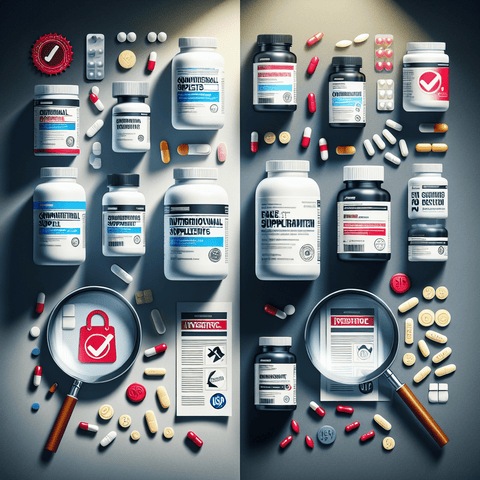
Online supplement fraud involves fake stores, counterfeit products, and deceptive sales tactics that can put both your health and your money at risk. This article explains how supplement scams operate, which warning signs to watch for, how to verify a seller before buying, and what to do if you have already been misled. Because counterfeit supplements can contain wrong doses, undeclared substances, or no active ingredients at all, learning to spot fraud is an essential part of using supplements safely.
What Is Online Supplement Fraud? Understanding the Problem
How counterfeit and fake supplement scams operate online
Online supplement fraud covers any scheme in which a seller misrepresents what you are buying or who you are buying from. The most common version is the counterfeit product: packaging that imitates a legitimate brand but contains little or none of the advertised nutrient, the wrong dose, or even undeclared pharmaceutical ingredients. Because supplements are regulated more like food than medicine in most countries, counterfeiters face fewer barriers than they would with prescription drugs.
Common types of online supplement fraud
Fraud typically takes one of three forms. First, fake storefronts mimic real shops, collect payment, and never deliver. Second, counterfeit products arrive looking genuine but failing in content. Third, subscription traps lure buyers with low introductory prices or "free trials" and then charge recurring fees that are difficult to cancel. Some schemes combine all three.
Why e-commerce has made supplement scams easier
Buying supplements online is convenient and often more affordable, but it also removes the checks that happen in a physical store. You cannot inspect packaging, verify a seller's identity in person, or ask a pharmacist questions. Cheap website templates, cloned logos, paid social media ads, and easily faked reviews all lower the cost of appearing legitimate, which is why verifying sellers has become a core consumer skill.
Why Online Supplement Fraud Is a Serious Health and Financial Risk
Health risks of counterfeit or contaminated supplements
A counterfeit product may contain nothing at all, meaning a person relying on it for genuine nutritional support unknowingly goes without. More concerning are products that contain too much of an active ingredient, unlisted stimulants, or contaminants such as heavy metals. Because the contents are unknown, neither the dose nor the interactions can be anticipated.
Financial risks: subscription traps, fake discounts, and hidden charges
Beyond the product itself, fraud costs money through inflated "discounted" prices, unauthorized recurring charges, and card data harvested during checkout. Cancellation pages may be hidden, support emails unanswered, and refund policies written in ways that effectively deny claims.
How fraudulent products undermine genuine nutritional support
When someone takes a supplement to address a documented gap—say, low vitamin D in winter or limited dietary iron—a counterfeit product silently fails. The person may then attribute continued symptoms to the nutrient "not working," when in fact they never received it. Fraud therefore distorts people's understanding of whether supplementation helps them at all.
Red Flags: How to Spot Supplement Scams Online
Warning signs of fake supplement websites
- No physical address, phone number, or company registration details
- Only contact method is a web form or free email address
- Missing or unusually vague return, privacy, and terms policies
- Domain registered very recently, or URL slightly misspelled compared with the real brand
- No secure (HTTPS) checkout or requests for unusual payment methods
Too-good-to-be-true claims: miracle cures, rapid results, and exaggerated promises
Legitimate supplements support normal physiological functions; they do not cure diseases, melt fat overnight, or replace medication. Claims like "reverses diabetes in 30 days" or "doctors hate this" are strong indicators of fraud, and in many jurisdictions such disease claims are illegal for supplements.
Suspicious pricing, pressure tactics, and fake scarcity
"70% off today only," countdown timers, and "only 3 left in stock" banners that reset on every visit are pressure tactics designed to short-circuit careful evaluation. Deeply discounted prices on premium brands should always raise the question of counterfeiting.
Missing or vague product information: ingredients, dosage, and manufacturer details
A trustworthy listing shows the full ingredient list with amounts per serving, the chemical form of each nutrient (for example, magnesium citrate versus magnesium oxide), the serving size, allergen information, and the responsible manufacturer. Listings that hide labels behind stock photos or omit amounts are a red flag.
Fake reviews and manipulated ratings: how to recognize them
Clusters of five-star reviews posted within days, generic praise without product specifics, reviewer names repeated across unrelated products, and a suspicious absence of any critical feedback all suggest manipulation. Independent review platforms and third-party verification services can help cross-check.
Common Tactics Fraudsters Use in Online Supplement Sales
Fake endorsements, doctor approvals, and celebrity claims
Fraudulent sites frequently display fabricated "as seen on TV" badges, invented endorsements from physicians, or deepfake-style video ads. Real health professionals rarely endorse specific brands in paid social ads; treat any such endorsement as unverified unless you can trace it to a credible source.
Cloned websites and impersonated well-known brands
Scammers copy the design of established stores, change one character in the domain, and run ads pointing to the clone. Checking the exact URL, comparing the site with the brand's official channels, and searching for the company's registration details are quick ways to detect clones.
Social media ads, influencer scams, and free-trial traps
Paid posts featuring dramatic before-and-after images or scripted testimonials are common entry points for supplement fraud. "Free trial, pay only shipping" offers frequently enroll buyers in expensive auto-ship programs with terms buried in fine print.
Auto-ship subscription schemes that are hard to cancel
Some operators make signup effortless and cancellation deliberately difficult—requiring phone calls to numbers that are never answered. Before any subscription purchase, locate the cancellation process and read the recurring-billing terms.
The Nutritional Context: Why People Buy Supplements Online in the First Place
Common reasons for supplementation: dietary gaps, lifestyle, and life stages
People typically look for supplements because of restricted diets (for example, vegan diets and vitamin B12), limited sun exposure and vitamin D, increased needs during pregnancy, or simply difficulty eating a varied diet. These are legitimate reasons—but they also create demand that fraudsters exploit.
Why individual needs vary: diet, age, absorption, health status, and genetics
Nutritional requirements differ with age, sex, diet quality, gastrointestinal health, medication use, pregnancy, physical activity, sun exposure, smoking, and alcohol intake. Two people with the same diet may have very different nutrient status because absorption and metabolism vary between individuals.
Why food first: dietary sources and lifestyle habits before supplementation
For most nutrients, a varied diet of vegetables, fruit, whole grains, legumes, fish, eggs, and dairy (or fortified alternatives) covers requirements better than any pill, because food delivers nutrients in combinations and amounts the body handles well. Supplementation works best as targeted support for identified gaps, not as a replacement for eating well. Readers comparing options can start with educational guides such as the multivitamin ingredients and safety guide to understand what a balanced formula actually contains.
How Fraudulent Products Differ From Quality Supplements
What legitimate labels disclose: ingredient forms, amounts, and serving sizes
A quality label states each nutrient's amount per serving, its chemical form, and the full serving composition—including fillers and allergens. Vague "proprietary blends" that hide individual amounts make it impossible to compare products or check against safe upper intake levels.
Certifications and third-party testing: GMP, USP, NSF, and lab verification
Look for evidence of manufacturing under Good Manufacturing Practices (GMP) and independent verification from organizations such as USP or NSF. Some brands publish batch-level lab results; a refusal to provide a certificate of analysis when asked is itself informative.
Bioavailability and ingredient forms: why quality matters as much as safety
Form matters for absorption. Magnesium citrate is generally better absorbed than magnesium oxide; vitamin D3 is typically preferred over D2 for raising blood levels. Research comparing many newer forms is still limited or mixed, so extreme claims about "superior absorption" should be treated cautiously—but at minimum, the form should be clearly stated so it can be evaluated.
Red-flag ingredients and undeclared substances in counterfeit products
Counterfeit weight-loss, sports, and sexual-health products are repeatedly found to contain undeclared stimulants or prescription drugs. Products promising drug-like effects with "all-natural" labels deserve particular skepticism. Learn more about evaluating herbal supplement sourcing and safety before buying botanical products.
How to Verify an Online Supplement Store Before Buying
Checking website legitimacy: contact details, policies, and secure payment
Confirm there is a real address, a reachable customer service channel, clear refund and privacy policies, and an HTTPS checkout. Search the company name plus words like "scam" or "review," and check how long the domain has existed.
Researching the brand: transparency, sourcing, and manufacturing standards
Established brands explain where ingredients are sourced, where products are manufactured, and what quality testing they perform. Transparency about limitations—not just benefits—is a positive signal.
Reading labels intelligently: comparing products beyond marketing claims
Compare products on nutrient amounts, forms, serving size, and price per effective dose rather than on front-of-pack slogans. For individual nutrients, guides such as the magnesium benefits and support guide or the vitamin D sources and safety overview explain what sensible dosing ranges look like.
Verifying reviews, certifications, and batch testing claims
Check whether certification logos link to verifiable databases, whether batch reports are published, and whether reviews appear on independent platforms rather than only on the seller's own site.
Safe Buying Practices: Protecting Yourself When Ordering Supplements Online
Payment safety, data protection, and avoiding recurring charges
Pay with a credit card or a payment service offering buyer protection rather than bank transfers or cryptocurrency. After checkout, review your statements for unexpected recurring charges, and check your account settings for any auto-ship you did not intend to start.
What to do if you've been scammed: refunds, chargebacks, and reporting fraud
Contact the seller in writing first, then request a chargeback from your card issuer if unresolved. Report the incident to your national consumer protection agency or online fraud reporting service—reports help authorities identify repeat offenders and protect other buyers.
How to spot legitimate alternatives when a deal seems suspicious
If a price seems too good, check the brand's official website or authorized retailers listed by the manufacturer. The small price difference rarely justifies the risk of a counterfeit product.
Who Should Be Especially Careful When Buying Supplements Online
People taking medications or managing health conditions
Nutrients and herbs can interact with medications—vitamin K with anticoagulants, for example, or high-dose antioxidants around certain treatments. Anyone on regular medication should confirm supplement choices with a doctor or pharmacist, and counterfeit products make this risk impossible to manage because the contents are unknown.
Pregnancy, children, and older adults: higher-stakes purchases
During pregnancy, doses of folate, vitamin A, and iron matter for both safety and benefit. Children are more sensitive to dosing errors, and older adults often take multiple medications. In these groups, unverified products carry proportionally greater risk.
When professional guidance or testing should come before purchasing
Symptoms alone rarely confirm a deficiency; fatigue, for instance, has many possible causes. Blood tests for nutrients such as vitamin D, B12, or iron can show whether supplementation is actually needed and at what level—often more useful than buying a product on guesswork.
Safety Considerations Beyond Fraud: Interactions, Dosage, and Side Effects
Why counterfeit products make overdose and interactions harder to avoid
Even genuine supplements carry upper intake levels: very high doses of vitamin A, for example, can harm the liver and bones, and excess iron is dangerous for people with iron-loading conditions. With counterfeits, the actual dose is unknown, making both overdose and interactions unpredictable.
Upper intake levels and the risk of excessive doses
More is not better. Staying within labeled serving sizes and known upper limits, and avoiding "mega-dose" products without professional guidance, is a core safety habit—especially when combining a multivitamin with individual nutrient products.
When to talk to a doctor or pharmacist before ordering online
Consult a healthcare professional if you are pregnant or breastfeeding, managing a chronic condition, taking prescription medication, considering high doses, or giving supplements to a child. This advice applies regardless of where you shop, but it is especially important when a product's authenticity is uncertain.
Decision Guide: Buying Supplements Online With Confidence
Do you need a supplement at all? Diet, lifestyle, and when support makes sense
Start with diet and lifestyle: can the gap be closed with food, more varied meals, or modest habit changes? If yes, that is usually the first and best step. If intake is genuinely limited—through diet, life stage, or absorption issues—a targeted supplement may be worth considering.
A practical checklist for choosing a trustworthy product and seller
- Confirm a documented need (diet analysis, test result, or professional advice)
- Verify the seller: address, policies, domain age, independent reviews
- Check the label: nutrient amount, form, serving size, allergens
- Look for GMP manufacturing and third-party testing
- Compare price per effective dose against official channels
- Avoid disease claims, miracle language, and pressure tactics
- Understand the cancellation terms before any subscription
Balancing price, quality, and safety: what matters most
Safety and authenticity come first, then verified quality, then price. The cheapest product that may be fake is the most expensive purchase of all; a moderately priced, third-party-tested product from a transparent seller is usually the better value.
Final Takeaway: Staying Safe From Online Supplement Fraud
Key habits that protect your health and your wallet
Verify sellers before paying, read labels for amounts and forms, distrust miracle claims and pressure tactics, use protected payment methods, and check for unwanted recurring charges. These five habits prevent most supplement scams.
Making informed, confident supplement choices online
Supplement needs differ from person to person, and food usually comes first. When a genuine gap exists, a targeted, quality-verified product bought from a legitimate seller can be sensible nutritional support—provided you take the time to confirm what you are actually buying.
Key Takeaways
- Online supplement fraud includes fake stores, counterfeit products, and subscription traps.
- Counterfeit supplements may contain no active ingredient, wrong doses, or undeclared substances, creating real health risks.
- Key red flags include miracle claims, extreme discounts, missing contact details, hidden labels, and fake review patterns.
- Legitimate labels disclose nutrient amounts, chemical forms, and serving sizes; vague blends are a warning sign.
- GMP manufacturing and third-party testing (such as USP or NSF) are meaningful quality indicators.
- Verify a store's address, policies, domain age, and independent reviews before buying.
- Use protected payment methods and monitor statements for unauthorized recurring charges.
- Diet and lifestyle come first; supplements are targeted support, not a default.
- Symptoms alone rarely confirm a deficiency—testing or professional advice is often more reliable.
- Pregnancy, childhood, older age, and medication use raise the stakes of buying unverified products.
Frequently Asked Questions
What is online supplement fraud?
It is any scheme in which a seller misrepresents supplements online—selling counterfeit or adulterated products, operating fake storefronts, or using deceptive billing such as hidden subscriptions. It harms consumers both financially and potentially through health effects.
How can I tell if an online supplement store is legitimate?
Check for a physical address, reachable customer service, clear refund and privacy policies, an HTTPS checkout, and a domain with some history. Cross-check reviews on independent platforms and compare prices with the brand's official website.
What are the signs of a counterfeit supplement?
Common signs include unusually low prices, packaging inconsistencies, missing batch numbers or expiry dates, vague labels without nutrient amounts, and a lack of effect despite correct use. Batch-level lab reports, when available, are strong evidence of authenticity.
Can fake supplements be dangerous to health?
Yes. Counterfeits may contain too much of an active ingredient, undeclared pharmaceuticals or stimulants, or contaminants like heavy metals. Because the contents are unknown, dose errors and interactions become impossible to manage.
Why do supplement scams use "miracle cure" language?
Because it works: dramatic promises trigger impulsive purchases before careful evaluation. Such claims are also illegal in most jurisdictions for supplements, so their presence is a strong fraud indicator.
Are free supplement trials really free?
Often not. Many "pay only shipping" trials enroll buyers in recurring auto-ship programs with charges that start after a short window. Read the full terms and locate the cancellation process before providing payment details.
How do I cancel a supplement subscription I was tricked into?
Cancel in writing through every available channel and keep records. If the seller refuses, request a chargeback from your card issuer and report the company to your national consumer protection or fraud-reporting agency.
Should I trust influencer recommendations for supplements?
Treat them as advertising, not advice. Influencers are frequently paid and rarely verify product quality. Evaluate any recommended product independently on its label, testing, and seller legitimacy.
Which certifications indicate a quality supplement?
Look for GMP-compliant manufacturing and independent verification from bodies such as USP or NSF. Some brands also publish third-party batch test results, which is a strong transparency signal.
Do I need a supplement if I eat a balanced diet?
Often not—most people meeting their needs through varied food do not require routine supplementation. Specific situations such as pregnancy, vegan diets, limited sun exposure, or documented deficiencies may justify targeted support, ideally guided by testing.
Can I take too much of a vitamin?
Yes. Nutrients have upper intake levels; excessive vitamin A, for example, can damage the liver and bones over time, and too much iron can be toxic. Stay within labeled servings and seek professional advice before high-dose use.
What should I do immediately after being scammed on a supplement purchase?
Document everything, contact the seller in writing, request a chargeback from your card provider if unresolved, and report the fraud to consumer protection authorities. Also monitor your statements for further unauthorized charges.
Related Keywords
- online supplement fraud
- counterfeit supplements
- fake supplement websites
- supplement scams red flags
- how to verify supplement brands
- third-party tested supplements
- supplement subscription traps
- fake supplement reviews
- supplement safety and dosage
- nutrient bioavailability and forms
- buying vitamins online safely
- undeclared ingredients in supplements
- supplement chargeback and refund tips
- GMP certified supplements