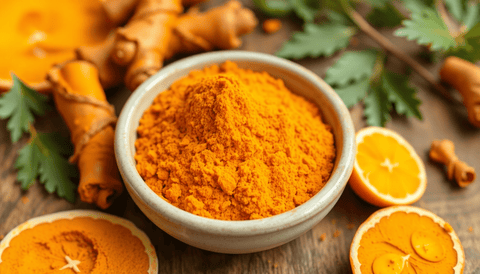
Organic turmeric extract is a concentrated preparation made from the root of the turmeric plant, grown and processed according to organic agricultural standards. It has become one of the most popular botanical supplements because it delivers curcumin—the main active compound in turmeric—in amounts far higher than what ordinary turmeric powder provides. In this article, you will learn what makes organic turmeric extract different from kitchen turmeric, how curcumin works in the body, what the current evidence says about its potential benefits, and how to evaluate products, doses, and safety considerations so you can decide whether supplementation makes sense for you.
What Is Organic Turmeric Extract and How Is It Different from Regular Turmeric?
Turmeric (Curcuma longa) is a golden-yellow root in the ginger family, used for centuries in traditional cooking and in Ayurvedic and traditional Chinese practices. Modern interest centers on curcumin and related compounds called curcuminoids, which are responsible for turmeric's color and much of its biological activity. An organic turmeric extract is designed to concentrate these compounds, because the amount of curcumin in the raw root is actually quite small.
What Does “Organic” Mean for Turmeric Extract?
Organic certification means the turmeric plants were grown without synthetic pesticides, herbicides, or genetically modified organisms, and that processing followed certified organic standards. For a rhizome that grows in soil—and is sometimes subject to contamination concerns—organic cultivation can reduce exposure to certain unwanted residues. Certification does not, however, guarantee higher curcumin content; potency and organic status are separate quality dimensions.
Turmeric Powder vs. Turmeric Extract: What’s the Difference?
Ordinary turmeric powder is simply dried, ground rhizome and typically contains around 2–5% curcuminoids by weight. A concentrated extract, by contrast, is standardized to a much higher curcuminoid content—often around 95%. This means a single extract capsule can deliver substantially more curcumin than several teaspoons of spice, which matters because many research studies on curcumin use doses that are difficult to reach through food alone.
Which Part of the Turmeric Plant Is Used for Extraction?
The rhizome—the underground stem that resembles ginger—is the part used for both spice and extract production. Curcuminoids are concentrated mainly in the rhizome's pigmented tissues, which is why reputable extracts specify turmeric rhizome as the source rather than unspecified plant parts.
Why Is Curcumin the Main Active Compound in Turmeric?
Curcumin is the best-studied of the curcuminoids and is thought to account for most of turmeric's biological activity, although the other curcuminoids (demethoxycurcumin and bisdemethoxycurcumin) contribute as well. Research suggests curcumin may interact with multiple cell-signaling pathways involved in the body's inflammatory and antioxidant responses, which explains the broad scientific interest in the compound.
How Much Curcumin Does Organic Turmeric Extract Typically Contain?
Standardized turmeric extracts commonly provide 95% curcuminoids, with supplements typically delivering somewhere in the range of a few hundred to around 1,000 mg of curcuminoids per daily serving. This is very different from turmeric powder: a teaspoon of spice contains only a small fraction of that amount. Always check the label for the amount of curcuminoids per serving rather than the total turmeric extract weight.
Why Is Curcumin’s Bioavailability So Important?
Curcumin on its own is poorly absorbed, rapidly metabolized, and quickly eliminated from the body. This is one of the most important practical facts about curcumin supplementation: the amount you swallow is not the amount that reaches your bloodstream. This limitation has driven several formulation strategies, including combining curcumin with black pepper extract, pairing it with fats, or using specialized absorption-enhanced forms. Comparing products without accounting for bioavailability can be misleading.
What Are the Potential Health Benefits of Organic Turmeric Extract?
Curcumin is among the most extensively studied botanical compounds, with hundreds of published trials. That said, the quality and consistency of studies vary, and many findings come from small or short-term research. The most supported areas of interest involve the body's inflammatory response, joint and muscle comfort, and antioxidant defense.
How Does Curcumin Interact with the Body’s Inflammatory Response?
Inflammation is a normal and necessary immune process, but chronic low-grade inflammation is associated with many long-term health concerns. Research suggests curcumin may influence signaling molecules involved in inflammatory responses, such as certain cytokines and enzymes. Some human studies indicate curcumin supplementation may help support a healthy inflammatory response, though results vary and it is not a treatment for inflammatory disease.
Can Curcumin Support Joint and Muscle Comfort?
Joint health is one of the best-researched applications. Several clinical trials have examined standardized curcumin extracts in people experiencing joint discomfort, with some studies reporting improvements in comfort and function compared with placebo. Evidence in this area is promising but not unanimous, and study designs, doses, and extract types differ considerably. Curcumin may help support joint and muscle comfort, but it should be viewed as nutritional support rather than a substitute for medical evaluation of persistent joint problems.
What Role Does Curcumin Play in Antioxidant Defense?
Curcumin has antioxidant properties in laboratory studies and may also support the body's own antioxidant enzyme systems. Antioxidants help neutralize free radicals—unstable molecules that can contribute to cellular stress. While this makes curcumin a reasonable addition to an antioxidant-focused diet, it is one of many such compounds, and whole foods like vegetables and fruits provide a broader spectrum of protective nutrients. You can read more about how antioxidants help protect your body by neutralizing free radicals in our related guide.
Who Might Benefit Most from Organic Turmeric Extract?
No one needs curcumin the way the body needs essential vitamins and minerals—curcumin is not an essential nutrient. The question of who might benefit is therefore about lifestyle goals and personal circumstances rather than correcting a deficiency.
Are There Specific Lifestyle or Dietary Patterns That Increase the Need?
People whose diets are low in colorful plant foods and spices consume little curcumin, while those with demanding training schedules or physically strenuous routines may be particularly interested in compounds associated with muscle recovery and a healthy inflammatory response. These are reasonable motivations for considering curcumin, though they are goals, not physiological needs.
How Do Age and Metabolic Factors Influence the Relevance of Curcumin?
Interest in curcumin often increases with age, as joint comfort and inflammatory balance become more common concerns. Body composition, metabolic health, and overall dietary pattern also shape how relevant an anti-inflammatory dietary strategy is for a given individual. None of these factors makes curcumin necessary—they simply influence whether supplementation may be a sensible choice.
What Are the Signs That You Might Not Be Getting Enough Curcumin?
Strictly speaking, there are no deficiency signs, because curcumin is not an essential nutrient. Your body does not require a minimum curcumin intake to function. What you might notice instead is the absence of a dietary pattern—plenty of spices, colorful vegetables, and healthy fats—associated with overall anti-inflammatory eating.
Can Diet Alone Provide Meaningful Amounts of Curcumin?
Diet can contribute meaningful curcumin, particularly for people who use turmeric generously and eat it with absorption-enhancing foods. However, the typical Western diet provides only small amounts, and even turmeric-rich diets deliver far less curcumin than the doses used in many clinical studies. So diet-first is a sound strategy for general wellness, while targeted supplementation is how people reach research-style doses.
Why Turmeric’s Curcumin Content in Food May Be Lower Than You Think
Commercial turmeric powder varies widely in curcuminoid content depending on variety, origin, and storage time, and much of it degrades with heat and light exposure over long storage. A typical serving of curry delivers only a small fraction of a gram of curcuminoids—and with poor absorption, the amount actually reaching circulation is smaller still.
How to Incorporate Turmeric into Your Daily Diet First
For most people interested in general wellness, food should be the starting point. Turmeric is easy to include in everyday meals, and combining it intelligently improves how much curcumin your body can actually absorb.
Best Food Sources of Turmeric and Curcumin
- Curries and stews: traditional dishes that combine turmeric with fats and spices.
- Golden milk: warm milk (dairy or plant-based) with turmeric, black pepper, and a source of fat.
- Smoothies and dressings: a small amount of turmeric pairs well with olive oil or avocado.
- Rice and grain dishes: turmeric adds color and flavor to pilafs and grain bowls.
Why Black Pepper and Healthy Fats Improve Curcumin Absorption in Meals
Black pepper contains piperine, a compound shown in research to substantially increase curcumin absorption—classic studies reported increases of up to around 2,000% when piperine was co-administered. Because curcumin is fat-soluble, cooking turmeric with oil, coconut milk, or other fats also helps. These simple pairings are why traditional cuisines that use turmeric almost always combine it with pepper and fat.
Simple Dietary Patterns That Support a Healthy Inflammatory Response
Curcumin works best as part of a broader pattern: a plant-rich diet emphasizing vegetables, fruits, legumes, whole grains, oily fish, and olive oil is associated with a healthier inflammatory profile overall. No single spice or supplement compensates for a diet that is otherwise imbalanced.
When Is Organic Turmeric Extract Supplementation Worth Considering?
Supplementation becomes relevant when your goals require curcumin doses that food realistically cannot provide, or when you want a standardized, consistent intake measured in curcuminoids rather than estimated in teaspoons.
Dietary Gaps and the Challenge of Reaching Effective Curcumin Doses
Many clinical studies on curcumin use daily doses of several hundred milligrams to around 1,000 mg of curcuminoids. Reaching that level through spice alone is impractical. If your aim is to match the intake levels examined in research, a standardized extract is the realistic route.
Situations Where Curcumin Requirements May Be Increased
There is no established "requirement" for curcumin, but people with highly active lifestyles, those experiencing age-related joint stiffness, and individuals whose diets contain little turmeric may have more reason to consider an extract. Increased body weight and metabolic stress are also contexts in which supporting a healthy inflammatory response through diet and supplementation may be of interest.
Distinguishing Nutritional Support from Treatment of Medical Conditions
Curcumin supplementation is nutritional support. It is not a treatment for arthritis, inflammatory bowel disease, or any diagnosed medical condition, even though some research explores those areas. If you have a diagnosed condition, curcumin may be something to discuss with your healthcare provider as part of a broader plan—not a replacement for care. Our overview of curcumin's safe and regulated health uses explains the approved health claims in more detail.
Organic Turmeric Extract vs. Standard Turmeric Extract: Which One Is Better?
"Better" depends on which quality dimension matters to you. Organic status speaks to growing conditions and residue avoidance; it does not automatically mean higher curcumin content. A non-organic extract from a transparent, well-tested source can be potent and clean, while an organic product can still be weakly standardized.
Does Organic Certification Affect the Quality of the Curcumin?
Certification affects how the plant was grown, not the chemistry of curcumin itself. The curcuminoid molecule from an organic rhizome is identical to that from a conventionally grown one. Organic certification is best understood as an additional purity and sourcing assurance layered on top of—not a substitute for—standardization and testing.
Pesticide Residue, Heavy Metals, and Sourcing Considerations
Turmeric has occasionally been flagged in independent testing for heavy metal contamination, particularly lead, sometimes from adulteration or poor processing conditions. Sourcing from regions with established quality control, choosing organic cultivation, and selecting brands that conduct third-party testing for heavy metals and residues are all meaningful safeguards.
How to Choose an Organic Turmeric Extract Supplement
Product quality in this category varies enormously, and the differences between labels are often more important than price. Understanding a few key concepts will make comparisons much easier.
What to Look for in Curcumin Content and Concentration
Look for the amount of curcuminoids per serving, not just total extract weight. A capsule containing 500 mg of a 95% standardized extract delivers roughly 475 mg of curcuminoids, while a 500 mg capsule of unstandardized powder may deliver a fraction of that.
Standardized vs. Whole-Herb Extracts: What’s the Difference?
Standardized extracts are adjusted to a guaranteed curcuminoid percentage—typically 95%—so every serving is consistent. Whole-herb or unstandardized powders reflect the natural variability of the plant and offer no guarantee of potency. For research-level curcumin intake, standardized extracts are the practical choice.
How Do Piperine and Black Pepper Extract Enhance Bioavailability?
Many quality products combine curcumin with piperine (black pepper extract) precisely because raw curcumin is so poorly absorbed. Alternatively, some modern formulations use dispersion or phytosome technologies designed to improve absorption without piperine. Note that piperine can also affect the absorption of certain medications, which is worth discussing with a pharmacist if you take prescription drugs.
Capsules, Tablets, or Powders: Does the Delivery Form Matter?
- Capsules and tablets: convenient, precisely dosed, and easy to take consistently; the most common choice.
- Powders: flexible for adding to drinks and smoothies, but dosing is less exact and taste is a factor.
- Liquids and softgels: fat-based delivery can aid absorption, though formulations vary.
The delivery form matters less than the curcuminoid dose and bioavailability strategy—but consistency of daily use matters a lot, so choose the format you will actually stick with. You can explore our range of turmeric supplements to compare standardized options side by side.
How to Read and Interpret an Organic Turmeric Extract Label
Understanding “Curcuminoids” and Amount per Serving
Curcuminoids are the family of active pigments that includes curcumin, demethoxycurcumin, and bisdemethoxycurcumin. Labels may state "curcuminoids" as a group or specify curcumin alone. Check the serving size—some products require two capsules to reach the dose listed on the front of the label.
What Does a “95% Curcuminoid Content” Claim Really Mean?
It means the extract has been concentrated and standardized so that 95% of its weight consists of curcuminoids. This is a marker of a genuine extract rather than a lightly processed powder, and it makes cross-product dose comparisons meaningful.
Red Flags in Supplement Labels for Turmeric Extract
- No stated curcuminoid standardization or percentage.
- Doses given only in total turmeric weight without curcuminoid amounts.
- No information about testing for heavy metals or adulterants.
- Proprietary blends that hide the actual extract amount.
- Claims to cure or treat specific diseases.
Are There Any Side Effects or Safety Considerations with Turmeric Extract?
Curcumin is generally well tolerated at typical supplemental doses, and regulatory authorities have reviewed its safety in food applications. However, concentrated extracts are not risk-free for everyone, and a few considerations deserve attention.
What Is the Safe Upper Limit for Curcumin?
There is no single universally fixed upper limit for supplemental curcumin, but the European Food Safety Authority has set an acceptable daily intake for curcumin as a food additive at 3 mg per kg of body weight per day. Human studies have used doses of around 1,000 mg of curcuminoids per day (and in some research higher) for limited periods with acceptable tolerability. Higher is not better—there is no evidence that exceeding studied doses adds benefit, and long-term high-dose use has not been extensively studied.
Who Should Avoid or Consult a Professional Before Using Turmeric Extract?
People who are pregnant or breastfeeding, those scheduled for surgery (curcumin may have mild blood-thinning properties), individuals with gallstones or bile duct obstruction, and anyone with kidney or liver conditions should consult a healthcare professional before using concentrated turmeric extract. Children should not use concentrated extracts without professional guidance.
How Turmeric Extract Might Interact with Medications or Existing Conditions
Curcumin may interact with anticoagulant and antiplatelet medications, and piperine can alter the metabolism of various drugs by affecting liver enzymes. If you take prescription medication—particularly blood thinners, diabetes medication, or immunosuppressants—talk to your doctor or pharmacist before adding a turmeric extract. Gastrointestinal effects such as mild nausea or reflux can occasionally occur, especially on an empty stomach.
How to Decide If Organic Turmeric Extract Is Right for You
When Food and Lifestyle Strategies May Be Sufficient
If your goal is general wellness and you enjoy cooking, regularly using turmeric with black pepper and healthy fats within a plant-rich diet may be all you need. Combined with regular exercise, adequate sleep, and a varied diet, this approach supports overall health without requiring supplements. Our guide to superfoods and approved nutrient claims can help you put turmeric in the context of other functional foods.
Key Factors That Should Influence Your Final Supplement Choice
If you decide to supplement, prioritize: standardized 95% curcuminoid content; a clearly stated dose per serving; a bioavailability strategy (piperine or an absorption-enhanced formulation); third-party testing for heavy metals; and organic certification if sourcing purity matters to you. Brand transparency about origin and manufacturing should weigh more than marketing language.
When a Professional Assessment or Lab Testing Might Be Useful
Because curcumin is not an essential nutrient, there is no blood test for "curcumin deficiency." However, if you have persistent joint discomfort, fatigue, or symptoms suggestive of inflammation, professional assessment is more informative than self-supplementing. A healthcare provider can identify underlying causes and tell you whether curcumin supplementation fits sensibly alongside appropriate care.
Final Takeaway: Using Organic Turmeric Extract Wisely
Organic turmeric extract offers a practical way to obtain meaningful amounts of curcumin—the compound behind most of turmeric's scientific interest—in a standardized, residue-conscious form. For everyday wellness, turmeric as a spice, paired with black pepper and fats within a plant-rich diet, remains an excellent foundation. When your goals call for research-level curcumin doses, a well-chosen standardized extract can be a reasonable addition. Choose products based on curcuminoid content, bioavailability, and verified purity rather than marketing claims, stay within studied dose ranges, and consult a healthcare professional if you take medications, have a health condition, or are pregnant. If you are building a broader supplement routine, our herbal supplements guide on safety and sourcing offers useful context for evaluating botanical products like turmeric.
Key Takeaways
- Organic turmeric extract is a concentrated, organically grown form of turmeric standardized to high curcuminoid content, unlike ordinary turmeric powder, which contains only about 2–5% curcuminoids.
- Curcumin is the main active compound, but it is poorly absorbed on its own—bioavailability is the key practical consideration when comparing products.
- Research suggests curcumin may support a healthy inflammatory response, joint and muscle comfort, and antioxidant defense, though evidence quality varies and it is not a treatment for disease.
- Curcumin is not an essential nutrient, so there are no deficiency signs—supplementation is a goal-based choice, not a nutritional necessity.
- Diet comes first: cooking with turmeric alongside black pepper (piperine) and healthy fats meaningfully improves absorption from food.
- Reaching the doses used in clinical studies (often several hundred to ~1,000 mg curcuminoids daily) is impractical through food alone, which is when standardized extracts become relevant.
- Organic certification addresses growing conditions and residue avoidance but does not by itself guarantee potency—standardization and third-party testing matter equally.
- Look for 95% standardized curcuminoid content, a clearly stated dose per serving, and a bioavailability strategy on the label.
- Consult a professional if you are pregnant or breastfeeding, take blood thinners or other prescription medications, or have gallbladder, liver, or kidney conditions.
Frequently Asked Questions
What is organic turmeric extract?
It is a concentrated preparation from organically grown turmeric rhizomes, standardized to contain a high percentage of curcuminoids—typically around 95%. It delivers far more curcumin per serving than turmeric powder used in cooking.
What does curcumin do in the body?
Research suggests curcumin may influence signaling pathways involved in inflammation and antioxidant defense. These effects are the basis for scientific interest in joint comfort and general wellness applications, though curcumin is not a treatment for any medical condition.
What is the difference between turmeric and curcumin?
Turmeric is the plant and the spice; curcumin is the main active compound within it. Turmeric powder contains only 2–5% curcuminoids, while extracts are concentrated to deliver much higher amounts.
Why is black pepper recommended with turmeric?
Black pepper contains piperine, which significantly slows the breakdown and increases the absorption of curcumin—classic research reported increases of up to roughly 2,000%. Combining the two is a simple, well-supported way to improve bioavailability.
How much curcumin should I take per day?
Most human studies use daily doses of several hundred to around 1,000 mg of curcuminoids. There is no official recommended daily allowance, and exceeding studied doses offers no proven added benefit. Follow product directions and consult a professional for individual advice.
Can I get enough curcumin from food alone?
For general wellness, dietary turmeric can contribute meaningfully, especially when eaten with pepper and fats. However, reaching the higher doses used in clinical research through food alone is impractical—that is where extracts come in.
Which is better: capsules or powder?
Capsules offer precise, standardized dosing and convenience; powders offer flexibility for drinks and cooking. Neither form is inherently superior—what matters most is the curcuminoid dose, bioavailability strategy, and your consistency of use.
Can you take too much turmeric extract?
Yes. High doses can cause digestive upset, and very long-term high-dose use has not been well studied. EFSA's acceptable daily intake for curcumin as a food additive is 3 mg per kg of body weight per day. Stick to labeled doses unless advised otherwise.
Does turmeric interact with medications?
Curcumin may have mild blood-thinning effects and can interact with anticoagulants, and piperine can alter the metabolism of many drugs. If you take prescription medication, check with your doctor or pharmacist before supplementing.
Who should avoid turmeric extract?
People who are pregnant or breastfeeding, have gallstones or bile duct obstruction, or are scheduled for surgery should avoid or consult a professional first. Anyone with liver or kidney conditions should also seek medical guidance before use.
When should I take turmeric extract—morning or evening?
There is no firmly established optimal time. Taking it with a meal containing some fat may aid absorption of fat-soluble curcumin and improve tolerability. Consistency matters more than timing.
How long does it take to notice effects from curcumin?
It varies by person and purpose. In studies examining joint comfort, effects have typically been assessed over weeks to a few months of consistent daily use. Curcumin is not an acute remedy, so short-term expectations should be modest.
Related Keywords
- organic turmeric extract
- curcumin supplement
- turmeric extract 95% curcuminoids
- turmeric and black pepper supplement
- curcumin bioavailability
- turmeric capsules benefits
- turmeric powder vs turmeric extract
- curcumin anti-inflammatory support
- turmeric for joint comfort
- organic curcumin supplements
- turmeric extract dosage
- curcumin with piperine
- best organic turmeric supplement
- antioxidant supplements