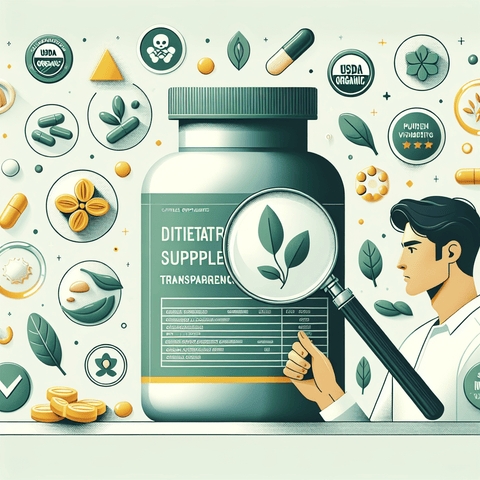
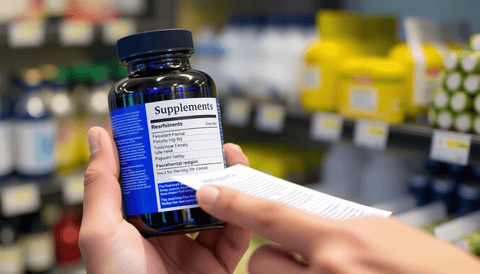
Learning to read a supplement label is one of the most practical skills you can develop for your health. This guide explains the Supplement Facts panel step by step—serving sizes, %DV, ingredient forms, proprietary blends, marketing claims, and third-party seals—so you can compare products accurately, avoid misleading labels, and choose supplements that genuinely match your nutritional needs. Whether you're evaluating a multivitamin, a mineral, or a herbal formula, reading supplement facts carefully helps you shop smarter and stay within safe intake ranges.
Introduction: Reading Supplement Facts Starts Here
What You'll Learn in This Guide
In the sections below, you'll learn how the Supplement Facts panel is structured, how to interpret serving sizes and Percent Daily Values, why ingredient forms and dosages matter, and which label claims are regulated versus purely marketing language. You'll also get a practical checklist you can use before buying any supplement. The goal is simple: by the end, you should be able to pick up two products and make a confident, side-by-side comparison.
What Is the Supplement Facts Panel? Understanding the Label
The Supplement Facts panel is the standardized box on the back of every supplement container that lists serving size, active ingredients, amounts per serving, and Percent Daily Values. It's required by regulators in many regions, including the U.S. FDA and similar frameworks in the EU, and it must follow a specific format so consumers can compare products consistently. Think of it as the nutritional "ID card" of the product.
Supplement Facts vs. Nutrition Facts: What's the Difference?
Nutrition Facts panels appear on conventional foods and list calories, macronutrients, and naturally occurring nutrients. Supplement Facts panels appear on dietary supplements and focus on the active nutrients and other ingredients the product delivers. One key distinction: supplement labels list Other Ingredients—excipients, fillers, and capsule materials—below the panel rather than inside it. Knowing this difference helps you avoid confusing a fortified food with a concentrated supplement.
Key Terms Explained: Serving Size, DV, %DV, and Amount Per Serving
Serving size is the manufacturer's recommended amount to take at one time, such as one capsule or two scoops. Amount per serving tells you how much of each nutrient that serving contains. DV (Daily Value) is a reference intake established for the general population, and %DV expresses how much of that reference one serving provides. A product providing 100% DV of vitamin C is not "better" than one providing 50%—it simply delivers a different amount relative to a population-level reference, not to your personal needs.
Why Reading Supplement Facts Matters for Your Health
How Labels Help You Match Products to Your Nutritional Needs
Supplements can help fill specific nutritional gaps, but only when the product actually contains what you need, in a form your body can absorb, at a dose that makes sense. Labels are the primary tool for verifying this. If you're comparing two magnesium supplements, for example, the label tells you both the elemental magnesium content and the chemical form—two factors that affect how useful the product is.
The Hidden Risks of Ignoring the Label
Overlooking the label can lead to problems such as unknowingly doubling nutrients when combining products, exceeding tolerable upper intake levels for nutrients like vitamin A, iron, or zinc, or consuming allergens and additives you'd rather avoid. It can also mean paying for a proprietary blend that lists impressive-sounding ingredients in undisclosed, possibly trivial amounts. Careful label reading is a basic safety practice, not just a shopping tip.
Breaking Down Each Part of a Supplement Facts Label
Serving Size: Why It's the First Thing to Check
Always start with the serving size, because every number below it refers to that amount. A product with 500 mg per capsule taken twice daily delivers 1,000 mg—not 500 mg. Some manufacturers list small serving sizes so individual nutrient amounts look impressive per unit, while the actual daily recommendation involves several capsules. Check how many servings the container holds to understand the true cost and dose.
Ingredients and Amounts: Active Ingredients, Blends, and Proprietary Formulas
Active ingredients are listed with their specific amounts, usually in mg, mcg, or IU. However, "proprietary blends" allow manufacturers to list a blend total without disclosing how much of each ingredient it contains. If an ingredient appears at the end of a long blend list, it may be present in a token amount. Products that disclose full amounts per ingredient generally offer more transparency.
Percent Daily Value (%DV): How to Interpret the Numbers
%DV is a useful benchmark but an imperfect one. It reflects reference intakes designed for the average adult, not your age, sex, diet, or health status. A %DV below 5% is generally considered low, and above 20% high—for a single serving. Note that some nutrients, such as many herbal extracts and amino acids, have no established DV, so no percentage appears. Also be aware that %DV may be based on different reference values depending on the region where the product is sold.
Other Ingredients: Fillers, Sweeteners, and Additives
Below the main panel you'll find the "Other Ingredients" list: capsule materials, anti-caking agents, sweeteners, colors, and preservatives. Most are present in small amounts and are considered safe at those levels, but they matter if you have allergies, follow a vegan diet, or prefer to avoid specific additives. People with sensitivities should scan this list as carefully as the nutrient panel itself.
Common Label Claims and What They Really Mean
"High Potency," "Advanced Formula," and Other Marketing Terms vs. Regulated Claims
Terms like "advanced," "premium," "doctor-approved," or "scientifically formulated" are marketing language with no legal definition. In contrast, some potency descriptors—such as "high potency" in the U.S.—can be used only when a nutrient is present at 100% or more of its reference daily intake. Learning to separate regulated descriptors from decorative ones protects you from paying extra for words rather than substance.
Structure/Function Claims vs. Health Claims: What Labels Are Allowed to Say
Regulators distinguish between health claims ("calcium may reduce the risk of bone loss," which requires substantial authorization) and structure/function claims ("supports bone health," which requires no pre-approval but must include a disclaimer that the statement hasn't been evaluated by the FDA). "Supports" is a deliberately flexible word. A structure/function claim suggests a plausible role but is not evidence that the product treats, cures, or prevents any condition.
Third-Party Seals and Certifications: USP, NSF, and Non-GMO
Third-party seals—such as USP Verified, NSF Certified for Sport, or Informed Choice—indicate that an independent organization has verified that the product contains what the label states and is free of certain contaminants. These certifications don't guarantee effectiveness, but they do address a real problem in the supplement industry: variability between what's on the label and what's in the bottle. Certification seals are among the most trustworthy signals on a label.
How to Compare Two Supplements Using the Label
Comparing Forms: Capsules, Tablets, Powders, Gummies, and Liquids
The same nutrient can come in capsules, tablets, softgels, powders, gummies, or liquids. Tablets are often the most compact and economical; capsules avoid compression and may dissolve more readily; powders allow flexible dosing; gummies are palatable but frequently contain added sugars and may omit certain minerals due to formulation limits. Delivery form affects convenience and tolerability more than it necessarily affects benefit—choose the format you'll actually take consistently.
Comparing Doses: Why mg Isn't Always Comparable Between Products
Two products listing "1,000 mg" may deliver very different amounts of the active nutrient. Herbal extracts, for example, may be standardized to a specific concentration of active compounds, so 500 mg of a 10:1 extract is not the same as 500 mg of raw powder. For minerals, the label should state the elemental amount, but forms differ—600 mg of magnesium citrate delivers less elemental magnesium than 600 mg of magnesium oxide. Always compare the active compound, not the total weight.
Single-Ingredient vs. Combination Products: Which Fits Your Needs?
Single-ingredient products make it easy to control dose and avoid unnecessary nutrients. Combination products such as multivitamins offer convenience and broad coverage but limit your flexibility. If you only need one or two nutrients, a targeted single-ingredient product is usually more precise; if you want general nutritional insurance, a well-dosed combination product may be more practical.
Bioavailability and Ingredient Forms: What the Label Doesn't Always Spell Out
Nutrient Forms That Matter: Citrate vs. Oxide, Methylated B Vitamins, Chelated Minerals
The chemical form of a nutrient affects how well it dissolves and absorbs. For minerals, citrate and chelated (bisglycinate) forms are generally better absorbed than oxides, which are inexpensive but poorly soluble. For B vitamins, activated forms such as methylfolate and methylcobalamin are readily usable by the body, while folic acid and cyanocobalamin must be converted first—a process that varies between individuals. Understanding ingredient forms is where reading supplement facts becomes genuinely expert-level.
Absorption Factors: Timing, Food, and Interaction Between Nutrients
Bioavailability also depends on context. Fat-soluble vitamins (A, D, E, K) are absorbed better with a meal containing fat. Iron absorption improves with vitamin C and is reduced by calcium, tea, and coffee taken at the same time. Zinc and copper compete for absorption at high doses. The label rarely explains these interactions, so a little nutritional knowledge goes a long way toward getting the most from a well-formulated product.
Why Your Nutritional Needs Differ From Someone Else's
Age, Sex, Diet, and Lifestyle: How They Change Your Needs
Nutritional requirements vary with age, sex, pregnancy, dietary pattern, sun exposure, physical activity, and habits such as smoking and alcohol consumption. Adults over 50, for instance, may have higher vitamin B12 and vitamin D considerations; women of reproductive age have higher iron needs; vegans may need attention to B12, iodine, and omega-3 intake. A %DV that looks adequate on the label may be too much or too little for your specific situation.
Health Status, Medications, and Absorption: When Needs Shift
Gastrointestinal conditions, certain medications (including metformin, proton pump inhibitors, and some diuretics), and life stages such as pregnancy can alter nutrient requirements or absorption. In these cases, needs are genuinely individual, and a healthcare professional can help determine whether a supplement is appropriate and at what dose—rather than relying on general label references.
Food First: Meeting Your Nutritional Needs Through Diet
Whole Foods vs. Supplements: What a Balanced Diet Can Provide
For most healthy people eating a varied diet, whole foods can cover the majority of nutrient needs. Foods deliver nutrients alongside fiber, beneficial compounds, and in forms the body has evolved to process. Leafy greens, legumes, nuts, fish, eggs, dairy, and fortified foods collectively supply the vitamins and minerals that supplements often replicate in isolated form. Nutrient-dense whole foods remain the foundation of good nutrition.
When Diet Alone May Fall Short
There are realistic situations where dietary intake may be insufficient: restrictive diets, limited sun exposure affecting vitamin D status, pregnancy, aging-related absorption changes, and certain medical conditions. Even a well-planned diet can leave specific gaps, and in those cases supplementation serves a targeted, supporting role—not a replacement for a good diet.
When Supplementation May Be Relevant
Common Situations Where Nutritional Support May Be Considered
Supplementation may be worth considering when a specific nutrient is difficult to obtain from food, when blood testing suggests low status, or when a healthcare professional identifies an increased requirement. Examples include vitamin D during winter months for people with limited sun exposure, B12 for those following vegan diets, and iron for individuals with medically confirmed low stores. The pattern to notice: each case involves a specific, identified gap—not a general desire for "more nutrients."
Why Testing and Professional Assessment Matter Before Supplementing
Symptoms like fatigue, poor sleep, or brittle hair are nonspecific and can have many causes, so they cannot reliably confirm a nutrient deficiency. For nutrients with validated tests—such as vitamin D, B12, ferritin, and folate—blood testing provides far more useful information than guesswork. Testing also prevents the opposite problem: supplementing nutrients you don't need, which wastes money and may carry risks at high doses.
How to Choose a Quality Supplement
Purity, Testing, and Manufacturing Standards: What to Verify
Look for supplements produced under recognized quality standards (such as GMP), ideally with third-party testing or certification. Reputable manufacturers disclose full ingredient amounts, avoid hiding key ingredients in proprietary blends, and provide clear contact information. Whether you're browsing a curated range of natural supplements or evaluating a single product, these markers of transparency are worth prioritizing.
Allergens, Dietary Preferences, and Added Ingredients to Check
Check the allergen statement for milk, eggs, fish, shellfish, tree nuts, wheat, soy, and sesame. If you follow a vegan or vegetarian diet, confirm the capsule material (gelatin vs. cellulose) and the source of nutrients like vitamin D3, which can be derived from lanolin or lichen. These details matter for both safety and consistency with your values.
Dosage and Upper Limits: Staying Within Safe Intake Ranges
More is not better. Nutrients such as vitamin A, vitamin D, iron, zinc, selenium, and niacin have established tolerable upper intake levels (ULs), and exceeding them—especially over long periods—can cause harm. If you take a multivitamin plus individual supplements, add up the total across all products to avoid unintentional overlap. High-dose supplementation should never be undertaken casually or without professional guidance.
Safety, Interactions, and When to Talk to a Professional
Medication Interactions and Health Conditions to Consider
Several supplements have well-documented interactions: vitamin K can interfere with blood thinners such as warfarin; St. John's Wort interacts with many medications; high-dose mineral supplements can affect the absorption of certain drugs. If you take prescription medication or manage a chronic condition, consult a healthcare professional or pharmacist before adding any supplement—even one that looks benign on the label.
Pregnancy, Children, and Older Adults: Special Label Considerations
Pregnant and breastfeeding women have distinct nutrient requirements and should avoid certain ingredients entirely, including high-dose vitamin A. Children's supplements should be formulated and dosed specifically for children—adult products are rarely appropriate. Older adults may benefit from attention to B12, vitamin D, and calcium, but dosing should reflect individual health status and medication use. In all these groups, professional guidance is especially important.
Your Step-by-Step Label-Reading Checklist
Quick Questions to Ask Before You Buy
Run through this checklist each time you evaluate a supplement:
- What is the serving size, and how many servings does the container hold?
- Which nutrients does it contain, in what amounts and chemical forms?
- What is the %DV, and does it fit sensibly with the rest of my diet and any other supplements I take?
- Are key ingredients hidden in a proprietary blend without disclosed amounts?
- What's in the Other Ingredients list, and does it conflict with allergies or dietary preferences?
- Is there third-party testing or a certification seal?
- Do the total amounts across all my products stay within safe upper limits?
- Do I actually need this nutrient, or should my diet—or a test—come first?
Key Takeaways
- The Supplement Facts panel lists serving size, active ingredients, amounts, and %DV in a standardized format designed for comparison.
- Always start with the serving size—every number on the label refers to that amount, not the whole container.
- %DV reflects population-level reference intakes, not your individual needs, which vary with age, sex, diet, and health status.
- Ingredient form affects absorption: mineral citrates and chelates, and activated B vitamins, are often better utilized than cheaper alternatives.
- Proprietary blends hide individual ingredient amounts; fully disclosed formulas offer more transparency.
- Marketing terms like "advanced" are unregulated; third-party seals such as USP and NSF are meaningful quality signals.
- Compare the active compound—not total mg—when comparing products, especially herbal extracts and minerals.
- Whole foods should come first; supplements work best as targeted support for identified gaps.
- Stay within tolerable upper intake levels, and add up doses across all products you take.
- Consult a healthcare professional if you take medication, are pregnant, or are considering high-dose supplementation.
Frequently Asked Questions
What is the Supplement Facts panel?
It's the standardized label on supplement packaging that lists serving size, active ingredients and their amounts, and Percent Daily Values. It's regulated so that consumers can compare products on a consistent basis. The "Other Ingredients" list below the panel covers fillers, capsules, and additives.
What does %DV mean on a supplement label?
%DV shows how much of the recommended daily intake of a nutrient one serving provides, based on reference values for the general adult population. It's a helpful benchmark, but it doesn't account for your personal age, sex, diet, or health circumstances.
Why is serving size the first thing to check?
Because every other number on the label refers to that serving. A product may look well-dosed per capsule, but if the recommended serving is four capsules, the actual daily intake—and cost—is four times higher than a quick glance suggests.
What is a proprietary blend, and should I avoid it?
A proprietary blend is a combination of ingredients listed under one total weight, without disclosing how much of each ingredient it contains. Ingredients listed last in a blend may be present in very small amounts. If you want transparency about dosing, products that disclose each ingredient's amount are preferable.
Does a higher dose mean a better supplement?
No. Nutrients have established requirements and upper intake limits, and doses above your needs offer no additional benefit and may increase risk of side effects. The appropriate dose depends on your dietary intake, nutritional status, and individual circumstances.
Which magnesium form is best absorbed?
Research generally suggests that magnesium citrate and chelated forms such as magnesium bisglycinate are better absorbed and gentler on digestion than magnesium oxide, which is poorly soluble. However, differences between well-absorbed forms are modest, and individual tolerance varies.
Can you take too much of a vitamin?
Yes. Fat-soluble vitamins (A, D, E, K) accumulate in the body, and minerals like iron, selenium, and zinc can reach toxic levels with prolonged excessive intake. Check the tolerable upper intake level, and count total intake across all supplements and fortified foods you use.
What do "supports" and other structure/function claims mean?
These claims describe a nutrient's intended role, such as "supports immune health," without implying the product treats or prevents disease. They don't require the same level of evidence as authorized health claims, so treat them as a starting point rather than proof of benefit.
Are third-party certification seals important?
Yes. Seals such as USP Verified or NSF Certified indicate that an independent body verified the product's identity, potency, and purity. Given that supplement quality varies across the industry, third-party testing is one of the most reliable signals on a label.
Should I take a supplement if my diet is already balanced?
Often, no. A varied, balanced diet covers most nutrient needs for most healthy people. Supplementation is most relevant when there's a specific, identified gap—such as limited sun exposure, a restrictive diet, or a confirmed low blood level—rather than as a general habit.
How do I compare two products that list different units, like IU and mcg?
Use the %DV line where available, or convert the units using current conversion standards—vitamin D, for example, has largely transitioned from IU to mcg on newer labels (400 IU = 10 mcg). Comparing %DV is often the simplest way to compare products with different units.
When should I talk to a doctor before taking supplements?
Consult a healthcare professional if you take prescription medications, are pregnant or breastfeeding, have kidney or liver conditions, are considering high doses, or have persistent symptoms that prompted your interest in supplements. Testing and professional assessment are more reliable than self-diagnosis.
Conclusion: Reading Supplement Facts Like a Pro
Making an Informed Choice About Your Nutrition
Reading supplement facts fluently turns you from a passive shopper into an informed evaluator. The label tells you exactly what you're getting: the dose, the form, the extras, and the claims—regulated and otherwise. Start with food, address specific gaps where they exist, and use testing and professional advice when symptoms or circumstances suggest your needs differ from the general reference values. When supplementation is genuinely relevant, apply your checklist: verified amounts, sensible doses, meaningful forms, and third-party quality assurance. Your nutritional needs are individual, and the best choice is always the one grounded in that reality—not in marketing language on the front of the bottle.
Related Keywords
- reading supplement facts
- how to read supplement labels
- supplement facts panel explained
- percent daily value (%DV) meaning
- serving size vs daily dose
- proprietary blend supplements
- bioavailability of vitamins and minerals
- supplement ingredient forms
- third-party tested supplements
- tolerable upper intake level
- structure/function claims vs health claims
- choosing a quality supplement
- supplement safety and interactions
- vitamin and mineral dosage guide