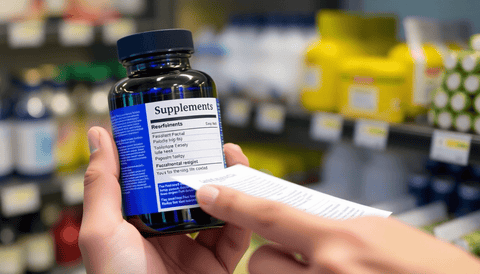
Learning how to read a supplement label is one of the most useful skills you can develop as a consumer. This supplement label guide walks you through every element you will encounter—from the Supplement Facts panel and ingredient forms to dosage units, marketing claims, and third-party verification marks. Understanding what is actually printed on the package helps you compare products objectively, avoid misleading claims, and choose a supplement that matches your needs, rather than one with the most persuasive packaging.
What Is Actually on a Supplement Label?
In most jurisdictions, including the United States under FDA regulation and the European Union under food supplement law, supplement labels are legally required to display specific information in a standardized format. This regulation exists so consumers can identify what a product contains, how much of each ingredient is in a serving, and how to use it safely. Despite these requirements, labels vary widely in how much additional detail they provide—and in how much marketing language they pack onto the front of the package.
The Five Mandatory Sections Every Label Must Include
While exact requirements differ between regions, a compliant supplement label generally includes these core elements:
- Supplement Facts panel: serving size, servings per container, and the amount of each nutrient per serving.
- Full ingredient list: all ingredients, typically listed in descending order by weight.
- Suggested use directions: how and when to take the product.
- Manufacturer information: the name and contact details of the company responsible for the product.
- Safety statements: applicable warnings, a lot number, and usually an expiration or best-before date.
The Difference Between the “Supplement Facts” Panel and the Front of the Package
The front of the package is primarily a marketing surface. Phrases like “advanced formula” or “high potency” are not standardized and may not reflect the actual content. The Supplement Facts panel, by contrast, is regulated and standardized. If there is a conflict between the two, the panel is the source you should trust. A useful habit: always turn the bottle over and read the panel before being influenced by the front.
How to Read the Supplement Facts Panel Correctly
Serving Size vs. Servings Per Container: Why It Matters
One of the most common mistakes is comparing two products based on the headline number without checking the serving size. A capsule containing 500 mg of an ingredient and a two-capsule serving of 250 mg each deliver the same amount—but the second bottle contains half as many servings. Always check “servings per container” to calculate the true duration and effective cost of the product.
Amount Per Serving and Daily Value (DV): What These Numbers Really Mean
The Daily Value is a reference intake for the general population, based on a typical adult diet. A “%DV” of 50% means one serving provides half of the daily reference amount—not that you personally need that amount. Individual requirements vary with age, sex, pregnancy, diet, and health status. The %DV is a useful benchmark for comparing products, not a personalized recommendation.
Why Some Nutrients Show “No Daily Value” on the Label
Many botanicals, amino acids, enzymes, and other compounds have no established Daily Value because regulators have not set a reference intake for them. This does not mean they are ineffective or unsafe—it simply means no official benchmark exists. For these ingredients, you will see the amount per serving in milligrams or grams without a %DV figure.
Ingredient Forms and Bioavailability: Why the Same Nutrient Isn’t Always the Same
Common Nutrient Forms You’ll See (and the Difference They Make)
The same nutrient can appear in multiple chemical forms. Vitamin D appears as D2 (ergocalciferol) or D3 (cholecalciferol); vitamin B12 as cyanocobalamin or methylcobalamin; calcium as carbonate or citrate; magnesium as oxide, citrate, or glycinate. These forms can differ in absorption, tolerability, and sometimes in biological activity. For example, research suggests vitamin D3 may be more effective at raising and maintaining blood vitamin D levels than D2, and magnesium citrate is generally better absorbed—and more likely to affect digestion—than magnesium oxide.
Elemental vs. Compound Weight: What “Magnesium 200 mg” Actually Means
Minerals are often bound to carrier compounds. A well-written label states the elemental amount—the actual mineral content. “Magnesium 200 mg (as magnesium citrate)” means 200 mg of elemental magnesium. If a label lists only the compound weight, the actual mineral content may be considerably lower. This distinction is especially important when comparing magnesium supplements, where oxide forms contain only around 60% elemental magnesium by weight.
When a More Expensive Ingredient Form Is—and Isn’t—Worth It
Chelated minerals, active folate (as 5-MTHF), or methylcobalamin may be worth paying for in specific situations, such as reduced absorption or genetic variations affecting conversion. However, form premium does not automatically equal better results for everyone. If comparative evidence for a form is limited or mixed—as it often is—your budget may be better spent on a product with solid third-party testing rather than the trendiest ingredient form.
Decoding the Ingredient List: Fillers, Binders, and Additives
Common Excipients and Their Roles
“Other ingredients” are technically called excipients: substances that make manufacturing possible or improve shelf life. Common examples include:
- Fillers (microcrystalline cellulose, rice flour): fill capsule volume.
- Binders (stearic acid): hold tablets together.
- Flow agents (silicon dioxide, magnesium stearate): prevent ingredients from clumping.
- Coatings (hypromellose, shellac): ease swallowing or delay release.
- Preservatives and flavorings: maintain stability and palatability.
Which Additives Are Harmless and Which Are Worth Questioning
Most excipients are used in tiny amounts and are considered safe by regulatory authorities. That said, if you have sensitivities or prefer a minimal formulation, it is reasonable to scrutinize the list. Ingredients worth questioning include artificial colors, titanium dioxide (where still permitted), and added sugars in gummies. Their presence is not dangerous per se—but it tells you something about the formulation philosophy of the brand.
How to Spot Hidden Allergens and Dietary Suitability Issues (Vegan, Gluten-Free, Halal)
Major allergens such as milk, soy, wheat, fish, shellfish, tree nuts, and eggs must typically be declared. However, dietary suitability claims like “vegan,” “gluten-free,” or “halal” are not always independently verified—check for certification marks if this matters to you. Capsules made from gelatin, for instance, are not vegan, while cellulose-based capsules are. Look for the capsule type listed among the other ingredients.
Understanding Common Label Claims Without Falling for Marketing
“Clinically Studied,” “Doctor-Approved,” and “GMP Certified”: What These Terms Legally Mean
“Clinically studied” often means the ingredient—somewhere, in some study—has been researched, not that this specific product was tested at this dose in humans. “Doctor-approved” is not a regulated term and may reflect a paid endorsement. “GMP certified” (Good Manufacturing Practice) is more meaningful: it indicates the product is manufactured under quality standards, though it does not verify ingredient amounts in the finished bottle.
“Proprietary Blend” — Why You Can’t Verify the Dosage
A proprietary blend lists ingredients under a single combined weight without individual amounts. This means you cannot confirm whether the formula contains an effective dose of each ingredient or mostly the cheapest one. Ingredients are usually listed in descending order within the blend, which offers a rough hint—but it remains an opaque practice. If dosage transparency matters to you, prioritize products that list each ingredient individually.
“Natural,” “Organic,” and “Whole Food-Based”: What These Descriptors Do and Don’t Guarantee
“Natural” has essentially no legal meaning on supplement labels. “Organic” certification is regulated and confirms farming and processing standards, but not potency. “Whole food-based” describes the source of the nutrient, and in some cases these nutrients come bound to food matrices; evidence that this meaningfully improves outcomes in everyone is limited. None of these descriptors guarantees quality, purity, or dosage accuracy—only third-party testing does that.
Different Product Delivery Forms: Capsules, Tablets, Powders, and Liquids
What the Delivery Form Means for Absorption and Convenience
Delivery form affects practicality more than most people expect. Capsules dissolve relatively quickly and mask unpleasant tastes. Compressed tablets are cheap and stable but may be large and, in rare cases, may pass through the digestive tract undissolved if not properly formulated. Powders and liquids generally dissolve quickly and allow flexible dosing, but may be less convenient and have shorter shelf life once opened.
When a Liquid or Powder May Be Preferable to a Capsule
Liquids and powders can be useful for people who have difficulty swallowing, those needing doses above what fits in a capsule, or anyone who prefers mixing supplements into food or drinks. Children and older adults often benefit from these forms. Absorption differences between well-manufactured forms are usually modest—the main advantages are flexibility and tolerability, not dramatically better uptake.
Chewables, Gummies, and Effervescent Tablets: Hidden Sugar and Dosage Trade-Offs
Gummies typically contain added sugars or sweeteners, and their nutrient range is limited—some minerals are chemically difficult to include in gummy form. They also frequently contain lower doses than their capsule equivalents. Effervescent tablets can contain significant sodium. These formats improve compliance, which is genuinely valuable—but check the panel to see what you are trading away.
How to Check Supplement Quality and Third-Party Verification
What Third-Party Testing Labels Like NSF, USP, and ConsumerLab Do and Don’t Confirm
Independent verification marks confirm that the product was tested for identity (it contains what it claims), potency (at the stated amounts), and often purity (free from heavy metals, pesticides, or contaminants). Programs such as USP Verified, NSF Certified for Sport, and ConsumerLab approval are meaningful quality signals. What they do not confirm: that the product is effective for your goal, appropriate for your situation, or dosed for your needs.
Lot Numbers, Expiration Dates, and Storage Requirements
A lot number allows the manufacturer to trace and, if necessary, recall a specific batch—its presence is a baseline quality indicator. Expiration dates reflect the period during which the product should retain its labeled potency when stored correctly. Storage instructions matter more than many realize: heat, humidity (a bathroom cabinet is a poor choice), and light degrade many nutrients. Properly stored supplements last; improperly stored ones may degrade well before the printed date.
How to Verify a Brand’s Claims Through Independent Databases
Beyond on-label marks, you can check certificate-of-analysis availability on brand websites and consult independent testing publications. Reputable brands usually publish COAs on request. If a company cannot or will not provide any documentation about testing, treat that as a meaningful signal—particularly for products in categories where contamination has historically been an issue, such as herbal and traditional herbal supplements.
How to Spot Red Flags on a Supplement Label
Vague Serving Size Language and Non-Standard Units
Be cautious with labels using phrases like “a scoop,” “a handful,” or doses expressed in non-standard units without grams or milligrams. Legitimate labels quantify precisely. Similarly, beware of dramatically higher amounts than established reference values presented without any rationale—more is not inherently better, and with some nutrients, more can be harmful.
“Proprietary Blends” That Hide Ingredient Amounts
As discussed earlier, blends prevent dose verification. A particular warning sign is a large blend list with a small total weight—this mathematically guarantees that most ingredients are present in trace amounts.
Label Claims That Are Legally Prohibited (and Why They Signal a Problem)
Supplements legally cannot claim to cure, treat, or prevent disease. Phrases like “cures arthritis,” “treats depression,” or “prevents cancer” on a label indicate either an illegitimate product or a manufacturer operating outside regulatory norms—both reasons to walk away. Legitimate structure/function claims are worded carefully, such as “supports immune function” or “contributes to normal bone health.”
Common Label Reading Mistakes and How to Avoid Them
Confusing Milligrams, Micrograms, and International Units (IU)
Units matter enormously. A milligram is 1,000 times larger than a microgram—so 500 mcg is not close to 500 mg. Fat-soluble vitamins like A and D are often listed in International Units (IU) alongside micrograms; for vitamin D, 400 IU equals 10 micrograms. Always compare products in the same unit. This is especially important when evaluating products like vitamin D supplements, where doses are commonly expressed in IU.
Overlooking the “Other Ingredients” Section
People with allergies, dietary restrictions, or sensitivities should never skip this section—it is where gelatin, soy, gluten-containing excipients, and sweeteners hide. It also reveals the true complexity of the formula beyond the headline nutrients.
Comparing Products on Price Per Bottle Instead of Price Per Serving
A cheaper bottle with 30 capsules at 100 mg per capsule may cost more per actual gram of nutrient than a pricier bottle with 90 servings. Calculate price per serving—and ideally price per amount of active ingredient—before deciding. This simple calculation often reverses the apparent value ranking of two products.
How to Use This Information When Choosing a Supplement
A Simple Step-by-Step Process for Evaluating Any Label
- Step 1: Confirm the product contains the nutrient and form you actually want, at an appropriate amount per serving.
- Step 2: Check servings per container and calculate true cost per serving.
- Step 3: Scan the full ingredient list for allergens, additives, and capsule type.
- Step 4: Look for third-party testing marks and manufacturer transparency.
- Step 5: Read the warnings and directions, and check for interactions relevant to any medications you take.
When a Pharmacy Brand Is Just as Good as a Premium Brand
For straightforward single nutrients—vitamin C, vitamin D, basic magnesium—a well-tested, affordable product often delivers the same active ingredient at the same dose as a premium equivalent. Premium pricing may reflect superior ingredient forms, cleaner excipient lists, or better testing—or simply marketing. Use the label, not the price, to make that determination.
When It Makes Sense to Ask a Doctor, Dietitian, or Pharmacist
Professional input is genuinely valuable when you take medications (many interact with supplements, including vitamin K and blood thinners), are pregnant or breastfeeding, manage a chronic condition, or are considering high doses. Likewise, if you suspect a deficiency, testing through a healthcare provider is more reliable than choosing a product based on symptoms alone. A pharmacist can also check interactions quickly and accurately.
Final Takeaway: What a Label Can—and Can’t—Tell You
A supplement label tells you what is in the bottle, how much, and in what form—and it can reveal a great deal about a manufacturer’s transparency and quality standards. It cannot tell you whether that product is right for your individual needs, whether your diet already covers the nutrient, or whether a deficiency exists. The most informed approach starts with diet and lifestyle, uses the label to compare options objectively, and brings in professional assessment when personal factors—medications, health conditions, pregnancy, or suspected deficiency—come into play. A well-read label will not make every decision for you, but it will stop you from making decisions based on packaging alone.
Key Takeaways
- The Supplement Facts panel—not the front of the package—is the regulated, trustworthy part of any supplement label.
- Always check serving size and servings per container before comparing doses or prices between products.
- The same nutrient can exist in multiple chemical forms with different absorption and tolerability profiles.
- For minerals, the elemental weight (not the compound weight) is what counts toward your intake.
- “Other ingredients” matter for allergens, dietary suitability, and formulation philosophy.
- Proprietary blends prevent dose verification; a large blend in a small total weight signals trace amounts.
- Third-party marks like USP, NSF, and ConsumerLab verify content and purity, not effectiveness for your personal needs.
- Claims to cure or treat disease are legally prohibited and signal an unreliable product.
- Compare price per serving, not price per bottle.
- Labels inform choices, but suspected deficiencies and medication interactions warrant professional assessment.
Frequently Asked Questions
What is the Supplement Facts panel?
It is the standardized, regulated section of a supplement label showing serving size, servings per container, and the amount of each nutrient per serving. It is the most reliable part of the label and should be your primary reference when comparing products.
What does %DV (Daily Value) mean on a supplement label?
The %DV indicates what percentage of the reference daily intake one serving provides for an average adult. It is a benchmark for comparison, not a personalized recommendation, since individual needs vary with age, sex, diet, and health status.
What does “elemental” mean on a mineral label?
Elemental weight refers to the actual amount of the mineral itself, excluding the carrier compound it is bound to. This is the number that matters for your intake; a label that lists only the compound weight may deliver far less mineral than it appears.
Are proprietary blends bad?
They are not inherently unsafe, but they prevent you from verifying how much of each ingredient you are getting. If a blend lists many ingredients under a small total weight, most ingredients are present only in trace amounts.
Are additives and fillers in supplements harmful?
Most excipients are used in very small amounts and are considered safe by regulatory authorities. However, if you have allergies, sensitivities, or strong formulation preferences, the “other ingredients” list is exactly where you should look.
What does “GMP certified” actually guarantee?
It indicates the product is manufactured under Good Manufacturing Practice quality standards covering consistency, hygiene, and documentation. It does not verify the potency or purity of the specific bottle you purchase—third-party testing marks are more informative for that.
Is a more expensive form of a nutrient always better?
No. Some forms have documented advantages for absorption or tolerability, but for many nutrients the evidence between forms is limited or mixed. Third-party testing and appropriate dosing often matter more than form premiums.
Which is better: capsules, tablets, powders, or gummies?
There is no universally superior form. Capsules and tablets suit most adults; liquids and powders help those who cannot swallow pills or need flexible dosing; gummies aid compliance but often contain sugars and lower doses. Choose based on your needs and check the panel for what each format trades away.
Can you take too much of a vitamin based on the label amount?
Yes. Many nutrients have established upper intake levels, and fat-soluble vitamins (A, D, E, K) in particular can accumulate. Compare the label amount against your total intake from all sources, including fortified foods and other supplements, and consult a professional before high-dose use.
What does IU mean and how do I convert it?
International Units are used for some fat-soluble vitamins. Conversions vary by nutrient: for vitamin D, 1 mcg equals 40 IU, so 400 IU equals 10 mcg. Always convert to the same unit before comparing products.
Do expiration dates on supplements really matter?
Yes. They indicate the period during which the product should retain its labeled potency when stored properly. Heat and humidity accelerate degradation, so store supplements in a cool, dry place rather than a bathroom.
When should I ask a professional before buying a supplement?
When you take medications, are pregnant or breastfeeding, have a kidney, liver, or other chronic condition, plan high-dose use, or suspect a deficiency. A doctor, dietitian, or pharmacist can assess your situation far more accurately than a label comparison can.
Related Keywords
- supplement label guide
- how to read supplement labels
- supplement facts panel explained
- daily value on supplements
- elemental vs compound weight minerals
- supplement ingredient forms and bioavailability
- proprietary blend meaning
- third-party tested supplements
- USP verified vs NSF certified supplements
- supplement red flags
- milligrams vs micrograms vs IU
- other ingredients in supplements
- price per serving supplements
- gummy vitamins vs capsules
- supplement label claims meaning