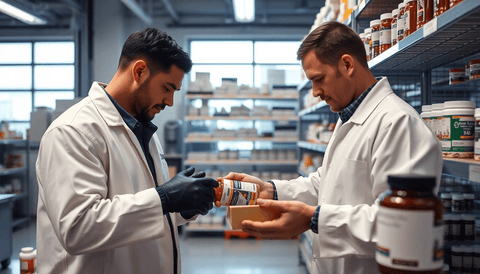
Supplement quality control refers to the systems, tests, and certifications used to verify that a dietary supplement contains exactly what its label claims — nothing more and nothing less. Because supplements are not tested for safety and efficacy before reaching the market in the way medicines are, understanding how purity, potency, and safety are verified matters for anyone considering vitamins, minerals, or other nutritional products. In this article, you will learn what supplement quality control actually means, why it matters for your health, which warning signs to look for, how third-party testing and certifications work, and how to use this knowledge to make informed choices — whether you buy supplements or simply want to understand the industry better.
What Is Supplement Quality Control? Understanding Purity, Potency, and Safety
Supplement Quality Control Meaning: A Clear Definition
Supplement quality control is the set of procedures a manufacturer uses to confirm that a product is correctly identified, free from harmful contaminants, and contains the labeled amounts of active ingredients throughout its shelf life. It covers the entire production chain: sourcing raw materials, manufacturing, packaging, storage, and final release testing. A product with strong quality control should match its label exactly — the right ingredient, in the right form, at the right dose, with no undeclared substances.
Key Terms Explained: Identity, Purity, Potency, and Contaminants
- Identity: Confirms that the ingredient in the bottle is actually what the label says. Historical cases of economic adulteration — such as products containing cheaper substitutes — make this the most basic test.
- Purity: Confirms the absence of contaminants such as heavy metals (lead, cadmium, arsenic, mercury), pesticide residues, solvents, microbes, and undeclared allergens.
- Potency: Confirms the product contains the labeled amount of each active ingredient. Independent testing frequently finds products that contain significantly more or less than the label states.
- Contaminants: Undeclared substances, including banned or prescription drugs occasionally found in weight-loss or sports products, are the most serious quality failure.
Who Regulates Supplement Quality? FDA, GMP, and Third-Party Testing
In the United States, the Food and Drug Administration (FDA) regulates dietary supplements under a different framework than pharmaceuticals: manufacturers are responsible for their own product safety and labeling, and the FDA acts largely after products reach the market. Good Manufacturing Practices (GMP) regulations require basic quality systems, but compliance varies. This is why independent third-party testing plays an outsized role in the supplement industry — it fills a verification gap that consumers cannot otherwise close on their own.
Why Supplement Quality Control Matters for Your Health
What Can Go Wrong With Poorly Controlled Supplements
When quality control fails, several things can happen: the active ingredient may be missing, underdosed, or degraded; the product may be contaminated; or it may contain ingredients not listed anywhere on the label. Research by independent laboratories and regulatory agencies has repeatedly documented such problems, particularly in categories with high commercial pressure, such as weight management, sports performance, and sexual health products.
How Inaccurate Labeling and Contamination Affect Consumers
Inaccurate labeling has real consequences. Someone taking a supplement to address a specific nutritional gap may believe they are meeting their needs when the product contains far less than claimed. Conversely, an overfilled product can push intake above intended levels. For people with allergies, undeclared ingredients can trigger reactions. For competitive athletes, contaminated products can lead to inadvertent doping violations — a risk documented even in products that never mention banned substances on the label.
The Health Risks of Heavy Metals, Banned Substances, and Fillers
Certain ingredients carry inherently higher contamination risk. Minerals sourced from the earth can carry trace heavy metals; botanicals can be adulterated or contaminated with pesticides; and products from suppliers with weak oversight may contain pharmaceutical compounds entirely. Chronic exposure to low levels of heavy metals is a recognized health concern, which is why reputable manufacturers set internal limits that are stricter than legal maximums.
Warning Signs a Supplement May Have Quality Problems
Red Flags on Labels: Proprietary Blends, Missing Certifications, and Vague Claims
- Proprietary blends that list ingredient names but not individual amounts — you cannot judge whether doses are meaningful.
- Health claims that sound too good to be true, such as promises to cure, detox, or melt fat — these violate regulatory norms and signal weak compliance culture.
- No address, manufacturer name, or contact details, which are legally required on legitimate products.
- No mention of testing, certifications, or verification anywhere on the label or website.
Red Flags When Buying: Unrealistic Prices, Missing Contact Information, and Marketing Pressure
Selling a genuinely tested, properly dosed product costs money. Prices dramatically below market norms, "limited-time only" pressure tactics, countdown timers, and websites with no physical business information are all worth caution. Marketplaces with third-party sellers also carry higher adulteration risk than direct or authorized channels.
How Contamination or Mislabeling Is Actually Detected (And Why You Can't Tell by Looking)
There is no reliable way to assess supplement quality by appearance, smell, or taste. Laboratory methods such as high-performance liquid chromatography (HPLC) verify potency, while mass spectrometry (ICP-MS) detects heavy metals at parts-per-million and parts-per-billion levels. Microbial testing, allergen testing, and identity testing use additional specialized methods. This is precisely why third-party certification exists: quality is invisible without laboratory verification.
What Causes Quality Differences Between Supplements
Ingredient Sourcing, Manufacturing Conditions, and Storage
Two products with identical labels can differ substantially. Raw material quality varies by supplier, region, and extraction method. Manufacturing conditions affect cross-contamination risk — a facility producing products with soy, gluten, or dairy alongside allergen-free products must have validated cleaning procedures. Storage matters too: some nutrients, such as probiotics and certain omega-3 oils, degrade faster with heat, light, and humidity.
Why the Same Nutrient Can Vary in Form, Dose, and Bioavailability
Nutrients exist in multiple chemical forms. Magnesium may be supplied as oxide, citrate, glycinate, or malate; vitamin D as D2 or D3; folate as folic acid or methylfolate. These forms differ in absorption, tolerability, and cost — for example, magnesium oxide is cheap but poorly absorbed compared with chelated forms. Doses also vary widely, and a "meaningful" dose of one ingredient may be trivial in another. Understanding these differences is part of evaluating any natural supplement product responsibly.
Weak Industry Oversight and How Reputable Brands Respond
Because enforcement is largely reactive, the burden of verification falls on manufacturers — and on brands that voluntarily invest in third-party certification, published certificates of analysis, and transparent sourcing. Brands that make testing data easily accessible are demonstrating a level of accountability that goes beyond the legal minimum.
How Third-Party Testing and Certifications Verify Quality
USP, NSF, Informed Sport, and ConsumerLab: What Each Certification Means
- USP Verified: The ingredient identity, potency, and purity are independently verified against USP's public standards, and manufacturing sites are audited.
- NSF Certified: Products are tested for contaminants and contents; NSF also operates the "Certified for Sport" program, which screens for banned substances on athletic lists.
- Informed Sport / Informed Choice: Every batch is tested for a wide range of substances prohibited in sport — primarily relevant to athletes.
- ConsumerLab, Labdoor, and similar services: These are independent testing programs rather than certifications; they purchase products at retail and publish pass/fail results.
Certificates of Analysis (COA): How to Read One
A COA is a laboratory report showing what was actually measured in a specific batch. Useful elements to check: the product name and batch number matching your bottle, the testing laboratory's identity (ideally independent rather than the manufacturer's own lab), measured amounts of active ingredients versus the label claim, and results for heavy metals and microbes. Some brands publish COAs directly on product pages; others provide them on request. A refusal to provide one is itself informative.
What GMP-Certified Manufacturing Actually Guarantees
GMP certification means a facility follows documented procedures for cleanliness, material handling, batch records, and traceability. It does not guarantee that a specific formula is well-designed or appropriately dosed — but it does significantly reduce the risk of contamination, mix-ups, and undeclared ingredients. The strongest products combine GMP manufacturing with third-party finished-product testing.
How to Read a Supplement Label for Quality Clues
Serving Size, Active Ingredients, and Other Ingredients: What Each Section Tells You
The Supplement Facts panel lists the serving size, each active ingredient, and its amount per serving. The "Other Ingredients" section reveals fillers, flow agents, capsules, sweeteners, and flavorings. Together, these two sections tell you what you are getting, how much, and what else comes with it.
Distinguishing Effective Dosages From "Fairy Dust" Amounts
"Fairy dusting" is the practice of adding tiny, sub-meaningful amounts of popular ingredients so they can appear on the label. Compare stated amounts with doses used in published research on that ingredient; if the label contains a small fraction of commonly studied amounts, the ingredient is likely there for marketing rather than function. Multivitamin labels vary enormously in this respect, so it pays to compare carefully — a helpful starting point is a guide to multivitamin ingredients, usage, and safety.
Allergens, Fillers, and Added Ingredients Worth Questioning
Major allergens must be declared. Some fillers and flow agents are functional and harmless; others are worth questioning when they serve no purpose. People with dietary restrictions may also want to check for gelatin capsules, animal-derived ingredients, or added sugars and sweeteners.
Choosing the Right Form for Absorption and Bioavailability
Capsules vs. Tablets vs. Powders vs. Liquids: Practical Differences
Capsules generally dissolve readily and mask taste; tablets are compact and stable but may include more binders and, in some cases, dissolve less completely; powders allow flexible dosing and suit people who dislike swallowing pills; liquids offer convenience for some nutrients but may have shorter shelf life. The "best" form depends on the nutrient, the dose required, and personal tolerance — no single format is universally superior.
Chelated, Methylated, and Other Enhanced Forms: When They Matter
Chelated minerals (such as magnesium bisglycinate) are bound to amino acids and are often better absorbed and gentler on digestion than inorganic salts. Methylated B vitamins (methylfolate, methylcobalamin) bypass one conversion step in folate and B12 metabolism, which may matter for some individuals, though evidence on widespread benefit is mixed. Enhanced forms typically cost more; they are most relevant where absorption is a known limiting factor.
Single Ingredients vs. Combination Products: Which Suits Your Goal
Single-ingredient products make dosing transparent and allow targeted adjustment. Combination formulas offer convenience and can be well designed — but only when every component is meaningfully dosed and compatible. Complex multi-ingredient blends also make it harder to identify the cause of any intolerance or interaction.
When Supplementation May Be Relevant — and How Quality Fits In
Situations Where Dietary Intake May Fall Short
Most nutrients can be obtained adequately through a varied diet, and food remains the preferred source. However, some groups have documented higher needs or lower intake: vitamin D in people with limited sun exposure, vitamin B12 in strict vegans and many older adults, iron in menstruating women, and several minerals when dietary diversity is limited. You can explore the roles and dietary sources of individual nutrients — for example vitamin D, magnesium, or minerals such as iron, zinc, and selenium — before deciding whether a gap in your own diet exists.
Why Testing and Professional Guidance Should Come Before Supplementation for Suspected Deficiencies
Symptoms such as fatigue, poor sleep, or muscle cramps are non-specific and rarely indicate a single nutrient problem. For nutrients with validated assays — vitamin D, B12, ferritin for iron stores, and others — a blood test provides far more useful information than guesswork. Testing also prevents unnecessary supplementation and helps establish whether a dose is working. Self-prescribing high doses "just in case" is one of the most common and avoidable supplement mistakes.
Who May Benefit Most From Carefully Selected, High-Quality Supplements
Pregnant women (folic acid), vegans (B12), people with malabsorption conditions, older adults with reduced absorption, athletes with high sweat losses of certain minerals, and individuals with medically confirmed deficiencies are among the groups for whom supplementation is most clearly relevant. For these groups, quality control is not a nice-to-have: the product is doing work that diet is not.
Safety, Interactions, and When to Seek Professional Advice
Upper Intake Levels and the Risk of Overdoing It With High-Potency Products
Nutrients have established tolerable upper intake levels (ULs) — amounts above which the risk of adverse effects increases. Fat-soluble vitamins (A, D, E, K) accumulate in the body, and iron can accumulate dangerously in susceptible individuals. High-potency products, combined with fortified foods and other supplements, can push total intake above safe levels without a person realizing it. More is not better; adequacy is the goal.
Medication Interactions and Considerations for Pregnancy and Medical Conditions
Several supplements interact with common medications — vitamin K affects blood thinners such as warfarin, high-dose vitamin C and some minerals can affect certain drugs, and St. John's Wort is involved in numerous clinically significant interactions. Pregnancy, kidney or liver disease, thyroid conditions, and upcoming surgery all warrant professional review of any supplement routine. A healthcare provider or pharmacist can check interactions against your specific situation.
Possible Side Effects Related to Low-Quality Products vs. Well-Formulated Ones
Side effects from a supplement may stem from the active ingredient itself (a known, dose-related effect), from the formulation (fillers, sweeteners, or forms that irritate the digestive tract), or from contamination and undeclared substances. When a product produces unexpected effects, a well-documented, independently tested product helps narrow down the cause — and switching products should be considered before abandoning a nutrient that testing showed you actually need.
How to Decide: Diet First, or a Supplement?
A Simple Checklist for Evaluating Whether a Supplement Is Necessary
- Can the nutrient be reliably obtained from your current diet, or is intake genuinely low?
- Do you belong to a group with documented higher needs or lower intake?
- Is testing available and appropriate before starting?
- Do you take medications or have conditions that a supplement could affect?
- Is the product you are considering independently tested, GMP-certified, and transparently labeled?
What Should Influence Your Final Product Choice
When supplementation is justified, prioritize: a clearly labeled chemical form, a dose consistent with evidence and safe upper limits, third-party verification or an accessible COA, GMP-certified manufacturing, minimal unnecessary additives, and a manufacturer you can contact. Price matters less than transparency — an inexpensive product with unverified contents is rarely a bargain.
Final Thoughts: Making Informed Choices About Supplement Quality
Supplement quality control is what separates a product that does what it promises from one that merely claims to. Because regulatory oversight is limited and quality is invisible without laboratory testing, informed consumers rely on transparent labeling, recognized certifications, and accessible certificates of analysis. Nutritional needs differ between individuals — shaped by diet, age, health status, and lifestyle — so the right starting point is always an honest look at your food intake and, where relevant, professional testing. When a genuine gap exists and diet cannot realistically close it, a well-manufactured, independently verified supplement can be a sensible addition. When it does not, saving your money and investing in dietary quality is usually the better choice.
Key Takeaways for Ensuring Purity, Potency, and Safety
- Supplement quality control confirms identity, purity, and potency — the three things a label can promise but you cannot verify by looking.
- Regulatory oversight is reactive; third-party testing and certifications fill the verification gap.
- USP, NSF, and Informed Sport are independent certification marks; COAs let you check batch-specific results.
- Proprietary blends, missing contact information, and exaggerated claims are warning signs.
- Nutrient form matters: chelated minerals and methylated B vitamins can affect absorption and tolerability.
- Symptoms alone rarely confirm a deficiency; validated blood tests offer more reliable guidance.
- Respect upper intake levels — high-potency products plus fortified foods can exceed safe totals.
- Diet first: supplements are most clearly justified for documented gaps and higher-need groups.
- Pregnancy, medications, and chronic conditions warrant professional review before supplementing.
Frequently Asked Questions
What does supplement quality control actually mean?
It means the procedures used to verify that a supplement is correctly identified, free from harmful contaminants, and contains the labeled amounts of ingredients. It spans raw material sourcing, manufacturing, packaging, and finished-product testing.
How can I verify that a supplement is high quality?
Look for third-party certification (USP, NSF, Informed Sport), published certificates of analysis with matching batch numbers, and GMP-certified manufacturing. These are the only reliable verification routes, since quality cannot be judged by appearance.
Are supplements tested for safety before they are sold?
Unlike medicines, dietary supplements generally do not require pre-market safety and efficacy testing. Manufacturers are responsible for safety and compliance, and regulators typically act after problems are identified — which is why independent verification matters so much.
What is a certificate of analysis (COA)?
A COA is a laboratory report for a specific product batch showing measured ingredient amounts and contaminant results. Check that the batch number matches your bottle and that testing was performed by an independent laboratory.
What are the most common contaminants in supplements?
Heavy metals (lead, cadmium, arsenic, mercury), pesticide residues, undeclared allergens, microbes, and — most seriously — undeclared pharmaceutical or banned substances, particularly in weight-loss and sports products.
Why do proprietary blends raise quality concerns?
A proprietary blend lists ingredient names but not individual amounts, so you cannot tell whether any component is present at a meaningful dose. Research-supported doses are one of the clearest markers of a well-formulated product.
Do cheaper supplements mean lower quality?
Not always, but unusually low prices deserve scrutiny because testing and quality manufacturing cost money. More important than price is whether the product is transparently labeled and independently verified.
Are GMP certification and third-party testing the same thing?
No. GMP certification concerns the manufacturing facility's processes and reduces contamination and mix-up risk. Third-party testing verifies the finished product's actual contents. The strongest products have both.
Which supplement forms are absorbed best?
It depends on the nutrient. Chelated minerals are generally better absorbed than inorganic salts like magnesium oxide, and enhanced B vitamin forms bypass certain conversion steps — but no single format is universally superior, and evidence varies by ingredient.
Can you take too much of a vitamin or mineral?
Yes. Every nutrient has a tolerable upper intake level, and fat-soluble vitamins and iron can accumulate to harmful levels. High-dose products combined with fortified foods can push total intake above safe limits without obvious warning signs.
Should I get tested before taking a supplement?
For nutrients with validated tests — vitamin D, vitamin B12, and iron status (ferritin), among others — testing provides far better guidance than guessing from symptoms. It also confirms whether a dose is working.
Which groups are most likely to benefit from supplements?
Documented higher-need or lower-intake groups include pregnant women (folic acid), vegans (vitamin B12), people with malabsorption, many older adults, and individuals with medically confirmed deficiencies.
Related Keywords
- supplement quality control
- third-party tested supplements
- certificate of analysis (COA)
- supplement purity and potency
- GMP-certified supplement manufacturing
- supplement contamination heavy metals
- USP verified NSF certified supplements
- supplement label reading guide
- proprietary blends red flags
- supplement bioavailability and forms
- chelated minerals absorption
- how to choose quality supplements
- upper intake levels vitamins
- supplement safety and interactions