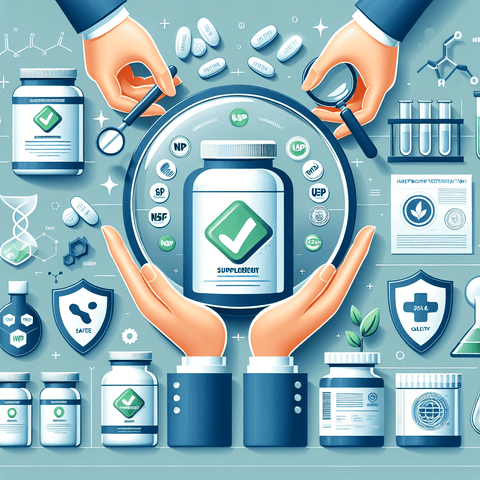
Supplement verification is the process of confirming that a dietary supplement actually contains what its label promises—in the stated amounts, free from problematic contamination, and produced under accountable conditions. Because supplement oversight differs fundamentally from medicine regulation, quality can vary widely between brands and even between batches of the same product. This guide explains how verification works in practice: which certifications and third-party testing programs carry real weight, how to read labels and certificates of analysis, which red flags suggest a product may not be trustworthy, and how to judge whether a supplement is even necessary for your situation.
Introduction: Why Supplement Verification Matters Before You Buy Anything
The dietary supplement market is enormous, and quality is not uniform across it. Unlike medicines, most supplements do not require pre-market approval demonstrating identity, potency, and purity before they can be sold. Regulators set labeling rules and manufacturing standards and act against violations after the fact, but they generally do not test every product on shelves. That gap means a well-designed label is not, by itself, evidence of a well-made product—and supplement verification is the practical way to close it.
What Is Supplement Verification? Meaning, Testing, and Key Concepts
Verification means independent confirmation—through laboratory testing and documented quality systems—that a product matches its label. It answers three questions: Is the ingredient what it claims to be? Is the amount correct? Is anything present that should not be?
Key Terms Explained: Third-Party Testing, GMP, Batch Testing, and Certificates of Analysis
- Third-party testing: analysis by an independent laboratory with no commercial stake in the result, rather than by the seller itself.
- GMP (Good Manufacturing Practice): audited production standards covering facility hygiene, equipment, personnel, and documentation.
- Batch testing: testing each production lot, not just an early sample, so every bottle reflects verified quality.
- Certificate of Analysis (CoA): a batch-specific document listing test results; it should match the lot number printed on your bottle.
"Regulated" vs. "Verified": How Supplement Oversight Really Works
Regulation sets the legal floor: manufacturers must follow GMP, label accurately, and avoid disease claims, and authorities can recall products or take enforcement action. Verification confirms what actually happened above that floor. A product can be perfectly legal yet never independently tested—so "regulated" describes the rules, while "verified" describes the evidence.
The Real-World Risks of Unverified Supplements
Quality failures are not hypothetical. Independent laboratory surveys across multiple countries have repeatedly documented problems serious enough to affect both efficacy and safety.
When Labels Lie: Mislabeling and Potency Problems
Analyses of vitamins, botanicals, and probiotics have found products containing far less—or sometimes far more—of an ingredient than stated, and occasionally none at all. Under-dosing may simply deliver no benefit; unexpected overdosing can push intake past safe upper limits, particularly for nutrients like vitamin A, vitamin D, and iron.
Contaminants and Adulterants: Heavy Metals, Banned Substances, and Undeclared Ingredients
Heavy metals such as lead, mercury, and arsenic can enter products through contaminated soil, raw materials, or processing. More concerning is deliberate adulteration: undeclared pharmaceutical compounds or their analogues have been documented, especially in products marketed for weight loss, sexual enhancement, or muscle growth. Undeclared allergens are an additional risk for sensitive individuals.
Counterfeit and Gray-Market Supplements: A Documented, Growing Problem
Counterfeit products enter the market largely through unauthorized marketplace sellers, while gray-market goods may have been stored improperly, diverted from intended channels, or sold near or past expiry. Buying directly from the brand or an authorized retailer, and checking lot numbers and expiry dates on arrival, meaningfully reduces this risk.
Red Flags: Warning Signs a Supplement May Not Be Trustworthy
No single warning proves a product is bad, but several together should prompt caution.
Claim and Marketing Red Flags: Miracle Promises, Suspicious Pricing, and Missing Evidence
- Promises of a "cure," "miracle" results, or rapid, guaranteed outcomes
- Disease-treatment claims, which supplements are generally not permitted to make
- Prices dramatically below the normal market range
- Proprietary blends that hide individual ingredient doses
- No company address, manufacturer details, or way to request a CoA
Seller Red Flags: Marketplace Risks, Untraceable Brands, and Missing Contact Details
Unbranded products from anonymous marketplace accounts, listings with no expiry date or lot number, bottles arriving with broken or substituted packaging, and brands with no working customer service are all signs to walk away. A legitimate company can tell you where its products are made and provide documentation on request.
Why Quality Problems Happen: Causes and Risk Factors in the Supplement Supply Chain
Supplement supply chains are long: raw materials may pass through growers, brokers, processors, and contract manufacturers before reaching a brand. At each step, identity errors, ingredient substitution, or economically motivated adulteration can occur. Botanical products carry particular risk because similar-looking plants are easily confused, and multi-ingredient formulas multiply the number of inputs that must be verified. Testing every batch is costly, which is exactly why brands that invest in it stand out.
Verification Isn't One-Size-Fits-All: How Your Situation Changes the Standard
How much verification you need depends on what is at stake if a product is wrong.
Athletes and Drug-Tested Professionals: Why Banned-Substance Certification Matters
For competitive athletes, even trace contamination with a prohibited substance can end a career. Programs such as Informed Sport and Informed Choice test products batch by batch against banned-substance lists, making them the sensible minimum for drug-tested individuals. When browsing sports supplements, this type of certification should rank above price or flavor.
Pregnancy, Children, Medications, and Allergies: When Purity and Accuracy Are Non-Negotiable
During pregnancy, in young children, and alongside prescription medication, the margin for label error is small. An inaccurate dose or undeclared ingredient matters far more in these situations, so certified products, professional guidance, and verified sources deserve clear priority.
Start With the Basics: Diet, Lifestyle, and Whether You Even Need a Supplement
Verification answers "is this product good?"—but a more useful first question is "do I need a product at all?"
Food First: Why a Verified Supplement Still Can't Replace a Balanced Diet
For most nutrients, a varied diet is the intended primary source, providing fiber, beneficial food compounds, and nutrient combinations that capsules cannot replicate. A perfectly verified supplement adds to dietary intake; it does not substitute for it. If your diet is restricted or highly repetitive, improving it often delivers more than any bottle can.
Everyday Habits That Protect Product Quality: Buying Direct, Storing Properly, Checking Dates
Quality can degrade after purchase. Store supplements in a cool, dry place away from sunlight—bathrooms are usually too humid—keep containers tightly closed, respect expiry dates, and discard products with damaged seals or unusual odor, clumping, or discoloration. Buying from the brand or an authorized seller also protects you from diverted or expired stock.
How Verification Works Across Supplement Types
Different supplement categories fail in different ways, so meaningful verification looks slightly different too.
Vitamins, Minerals, and Herbal Extracts: Identity, Potency, and Standardization
For vitamins and minerals, testing focuses on identity and whether the stated amount holds through shelf life. Herbal products add a further challenge: extracts should be standardized to defined marker compounds, so quality depends not only on purity but also on the sourcing and standardization behind herbal supplements.
Fish Oil, Probiotics, and Protein Powders: Oxidation, Viability, and Stability Testing
Omega-3 products are vulnerable to oxidation, which affects both taste and quality, so reputable brands test oxidation markers and protect oils from light and oxygen—worth checking when choosing omega-3 fish oil supplements. Probiotics must retain their stated live cultures through the full shelf life, and protein powders should be tested for identity to prevent amino spiking and contamination.
When Supplementation May Be Relevant (and When It Isn't)
Verification is only worth doing for products that serve a genuine purpose in your diet.
Common Situations Where Dietary Intake May Fall Short
Certain situations are associated with lower intake or higher requirements: limited sun exposure for vitamin D, vegan or vegetarian diets for vitamin B12, menstruation and pregnancy for iron, restrictive diets, and reduced absorption with age or gastrointestinal conditions. These are patterns from nutrition research, not a diagnosis—individual status can only be established through dietary assessment or appropriate blood testing.
General Nutritional Support vs. Addressing a Diagnosed Deficiency
A broad multivitamin may serve as general nutritional support when intake is inconsistent. A diagnosed deficiency is different: it typically involves specific doses, defined follow-up, and professional oversight. Confusing the two can lead to self-treating symptoms that have an entirely unrelated cause.
How to Verify a Supplement Before You Buy: A Practical Framework
The following four layers move from strongest evidence to supporting context.
Supplement Certifications Explained: USP, NSF, Informed Choice, Non-GMO, and More
Third-party certification seals are the most convenient signal, because they involve independent audits and routine testing. USP Verified and NSF certification confirm identity, potency, and contaminant screening; NSF Certified for Sport and Informed Choice/Informed Sport additionally screen for banned substances. Non-GMO, vegan, and organic labels describe production attributes—they say nothing reliable about potency or purity.
Certificates of Analysis and Label Transparency: Reading Beyond the Seal
A CoA is most meaningful when it comes from an accredited laboratory and matches the lot number on your bottle. Useful documents report identity, potency, heavy metals, and microbiological results. Full disclosure of every ingredient dose is itself a quality signal; proprietary blends make independent verification nearly impossible.
Forms, Bioavailability, and Dosing: Why Identical Nutrients Aren't Equal
The same nutrient can exist in chemical forms with meaningfully different absorption. Magnesium oxide, for example, is poorly absorbed compared with magnesium citrate or glycinate, while vitamin D3 is generally preferred over D2 for maintaining status. Bioavailability justifies choosing one form over another; higher doses do not. Where evidence comparing forms is limited or conflicting, the honest answer is that more research is needed.
Allergens, Additives, and Delivery Formats: Capsules, Tablets, Powders, and Liquids
Check allergen statements for milk, gluten, soy, shellfish, or nuts, and review "other ingredients," which range from routine flow agents to fillers some readers prefer to avoid. Format matters practically too: capsules and liquids suit people who dislike large tablets, powders allow flexible dosing, and vegetarians should confirm capsule origin.
How to Read a Supplement Label Like a Verification Expert
Labels contain most of the verification information you need—once you know where to look.
The Supplement Facts Panel: Serving Size, Amounts, and % Daily Value
Start with serving size, because two products with identical amounts per capsule can recommend very different daily servings. The panel lists each nutrient's amount and % Daily Value, showing how the dose relates to general reference intakes. Totals matter if you take multiple products containing the same nutrients.
Seals and Claims: What's Meaningful vs. What's Marketing
Structure-function wording such as "supports immune health" is legally permitted but says nothing about quality. Certified seals from USP, NSF, and Informed programs involve audits and testing; self-declared badges like "laboratory tested" without a named laboratory do not. A meaningful seal can be verified on the certifier's own website.
Lot Numbers, Expiry Dates, and Traceability: The Small Print That Matters
Lot numbers make recalls actionable and let you match a CoA to your specific bottle. Expiry dates reflect stability testing rather than arbitrary dates. Their absence is a quiet but serious red flag.
Who Benefits Most from Careful Supplement Verification
Verification matters for everyone, but the payoff is greatest for drug-tested athletes, pregnant or breastfeeding women, parents of young children, people taking prescription medication, those with allergies or chronic conditions, and anyone buying through marketplaces where counterfeits circulate. If a product failure would carry real health consequences for you, prioritize certified products and verified sources without compromise.
Safety First: Interactions, Upper Intake Levels, and When to Seek Professional Advice
A verified product answers the quality question; suitability is a separate matter entirely.
A Verified Product Isn't Automatically Right for You: Dosage Limits and Interactions
Nutrients have upper intake levels beyond which risk increases—relevant for fat-soluble vitamins like A and D, for iron, and for others. Interactions are equally real: vitamin K can reduce the effect of warfarin, and several minerals interfere with certain medications. Stacking multiple products can quietly exceed safe totals, so count all sources.
Recalls, Adverse Effects, and When to Talk to a Professional
Check regulator recall lists occasionally, and report suspected adverse effects to your national authority and your doctor. Professional advice is clearly warranted if you are pregnant or breastfeeding, managing a medical condition, taking interacting medication, or considering high-dose, long-term use of any nutrient.
Your Step-by-Step Supplement Verification Checklist
Condensed into a repeatable sequence:
Step 1: Confirm You Need a Supplement at All
Review your diet, lifestyle, and any known risk factors first. Where validated testing exists—vitamin D, B12, iron status—it provides far more useful information than guessing from symptoms.
Step 2: Verify Quality Credentials Before Comparing Prices
Look for third-party certification, a brand that publishes CoAs or provides them on request, GMP manufacturing, full dose disclosure, and complete contact details. Only then compare cost per serving.
Step 3: Match Form, Dose, and Format to Your Needs
Choose a chemical form with meaningful bioavailability, a dose aligned with your actual intake gap rather than the largest number available, and a format you will take consistently.
Step 4: Factor In Your Personal Safety Profile and Buy From Trustworthy Sources
Check interactions with medication and other supplements, consider allergens, buy direct or from authorized retailers, and verify the lot number and expiry date on arrival.
Conclusion: Trust, but Verify—Making Smarter Supplement Decisions
Supplement verification is not about distrusting every product—it is about knowing which claims rest on evidence. Regulated does not mean verified, and a strong label is not a test result. For most people, a varied diet remains the foundation, with supplements serving specific gaps where intake genuinely falls short. Because nutritional needs differ by age, diet, health status, and medication use, the right product for one person may be unnecessary—or unsuitable—for another. When you do buy, verified quality, honest labels, and appropriate doses are the standard worth holding every product to.
Key Takeaways
- Supplement verification confirms that a product matches its label in identity, potency, and purity—independently, not just on paper.
- Regulation sets minimum legal rules; verification is the evidence that a specific product meets higher standards.
- Third-party certification seals such as USP, NSF, and Informed Sport/Choice are the strongest quick signal of quality.
- A genuine certificate of analysis is batch-specific, comes from an accredited lab, and matches your bottle's lot number.
- Mislabeling, contamination, adulteration, and counterfeiting are documented problems—unverified products carry real risk.
- Diet and lifestyle come first; supplements address specific gaps rather than replacing balanced eating.
- Bioavailability differs between chemical forms of the same nutrient, but higher doses are not inherently better or safer.
- Verified quality does not guarantee suitability—doses, interactions, and personal health context still need checking.
- Buying direct or from authorized sellers and checking lot numbers and expiry dates protects against counterfeit and expired goods.
Frequently Asked Questions
What does third-party testing of supplements actually mean?
It means an independent laboratory with no financial stake in the outcome analyzes the product for identity, potency, and contaminants. Results may be published as a certificate of analysis or summarized in a certification seal. Brand-run testing can still be valid, but independent testing removes the conflict of interest.
Is GMP certification the same as third-party testing?
No. GMP certification confirms that a facility follows audited manufacturing processes, while third-party testing confirms the composition of a finished product. Strong verification usually combines both: well-controlled production plus routine testing of every batch.
What should a legitimate certificate of analysis include?
A useful CoA identifies the product and lot number, names the testing laboratory, and reports identity confirmation, measured potency, and contaminant screening such as heavy metals and microbiology. It should also show the testing date and the specifications the product was measured against.
Does a supplement need FDA approval before being sold?
In the United States, no. Supplements are regulated as a food category: manufacturers are responsible for safety and accurate labeling, and the FDA acts after products reach the market. This is precisely why independent verification adds meaningful assurance beyond regulatory compliance.
What does the USP Verified mark indicate?
The USP Verified mark means a product has been independently audited and tested to confirm it contains the stated ingredients and amounts, meets contaminant limits, and is produced under GMP. It is one of the most recognized voluntary certification programs for supplements.
How can I tell if a supplement might be counterfeit?
Warning signs include unusually low prices, anonymous marketplace sellers, missing lot numbers or expiry dates, damaged packaging, and brands without verifiable contact details. Buying directly from the brand or an authorized retailer is the single most effective protection.
Why do athletes need Informed Sport or Informed Choice certification?
These programs test every batch against extensive banned-substance lists, because routine quality testing does not specifically screen for prohibited stimulants or steroids. Even trace contamination can trigger a positive drug test, so batch-certified products are the practical minimum for drug-tested athletes.
Are more expensive supplements always higher quality?
Not necessarily. Price reflects many factors, including marketing and packaging. Certification, transparent labeling, and available CoAs are far better quality indicators than cost alone—though extremely low prices can signal adulterated or diverted goods.
Can I verify a supplement myself at home?
Not meaningfully. You can check the label, lot number, expiry date, certification seals, and whether the brand publishes CoAs, but identity and potency require laboratory analysis. For consumers, verification means checking documentation rather than testing the product personally.
Do labels like Non-GMO or organic confirm supplement quality?
No. These labels describe agricultural and production attributes, not ingredient identity or potency. They can matter for personal preferences, but they should not be treated as substitutes for third-party quality certification.
Should I stop taking a supplement if a recall is announced?
Yes—match the lot number on your bottle against the recall notice, stop using it if it matches, and follow the manufacturer's instructions for returns. If you have taken the product and feel unwell, contact a healthcare professional.
How should supplements be stored to preserve quality?
Most products last longest in a cool, dry, dark place with the lid tightly closed. Heat, humidity, and light accelerate degradation—refrigeration helps some probiotics but can harm others, so follow the label rather than general rules.
Related Keywords
- supplement verification
- third-party tested supplements
- certificate of analysis (CoA)
- supplement quality testing
- GMP-certified supplements
- USP Verified supplements
- NSF Certified for Sport
- Informed Sport certification
- how to read supplement labels
- supplement red flags
- counterfeit supplements
- supplement purity and potency
- batch testing supplements
- how to choose quality supplements