Independent Testing in Plain Terms
Independent testing, commonly called third-party testing, means that a lab or certification body that does not make the supplement is reviewing the product that a manufacturer sent them. This impartial check is meant to verify what the supplier says about the product, so it helps confirm that the bottle contains what the label claims and that it does not also contain hidden amounts of contaminants.
Specifically, independent testing evaluates:
- Ingredient identity and purity
- Dosage and potency ratios
- Absence of harmful levels of heavy metals, microbes, pesticides, or allergens
- Correct labeling that matches actual the ingredient list
Because the lab is an external entity, it less likely to have a conflict of interest than if a brand tests only its own products. The result is a more objective insight into what you are actually taking.
What an Independent Testing Specialist Does
An independent testing specialist works inside an accredited lab and stays responsible for reviewing supplement samples with protocols designed to keep results impartial. The job typically involves:
- Taking the supplement sample under strict chain-of-custody to ensure it is not tampered.
- Selecting the proper analytical method, such as chromatography or mass spectrometry, to identify ingredients and detect contamination.
- Following standardized, documented procedures at every step.
- Creating a certificate of analysis (COA) or a clear report that the manufacturer can share.
This process is what turns a supplement into a third-party tested product, and it gives consumers a standard to compare.
What Independent Testing Can and Cannot Tell You
Independent testing adds a powerful layer of confidence, but it is also important to understand its limits. It does not automatically guarantee that a supplement is better or that a specific health benefit will occur. Instead, it confirms that the product's composition matches its label, that it is free from high levels of unwanted contaminants, and that basic safety criteria are met. That is why you should use third–party verified supplements as a signal of quality, not as a promise for cure or prevention.
Many trustworthy brands voluntarily submit their batches to independent labs and publish either a COA or a certification for consumer review. Knowing how to read the testing details helps you make a fast, more informed choice.
How to Choose a Third-Party Tested Supplement
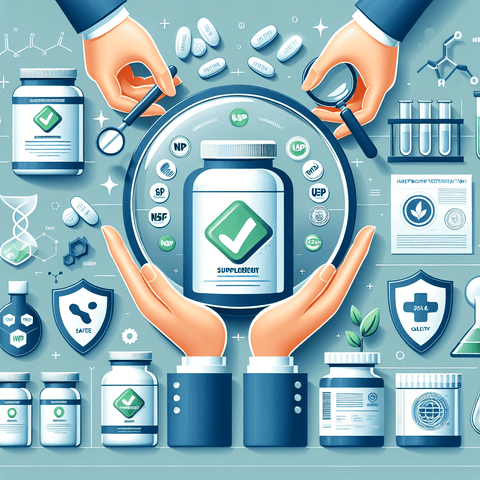
Choosing verified supplements starts by looking for packaging that shows a recognized logo, such as NSF or the USP. Some brands also show their testing reports online. You can also:
- Look for the words “third-party tested” or “independent verification.”
- Compare the label to the certificate of analysis (COA) if available.
- Check the manufacturer’s website for QA policies, raw material sourcing, and batch-level testing.
- Prefer brands that use of well‑recognized quality programs like cGMP.
Remember that a supplement sourced from a reputable brand usually has a more detailed testing record. When in doubt, contact the brand or their consumer line and ask if they use third-party labs and how you can see the reports.
Practical Steps for Reading a Certificate of Analysis
A certificate of analysis often includes the official unique ID, the test methodology, and the results for each compound that was measured. It will normally show whether the amount of an active ingredient matches its label claim and whether it is within an acceptable range.
Look for lines that indicate “detected” or “not detected” for heavy metals and microbials. If the COA reports a “pass” result for those parameters, that means the lab has found them within acceptable—although not necessarily zero—limits. This documentation can be a simple on-the-go way to confirm your supplement.
Independent Testing vs. Quality Assurance
Independent testing and quality assurance are connected but different parts of a safety net. Quality assurance is the big picture program that a manufacturer operates to keep every part of its process consistent. It includes cGMP compliance, good raw material sourcing, routine batch checks, and proper documentation.
Independent testing is a separate check done by an unbiased lab. It adds an external layer of scrutiny to a manufacturer’s internal QA process. Both together help consumers feel more secure that what is written on the label is inside the bottle and that the outer has not been issued.