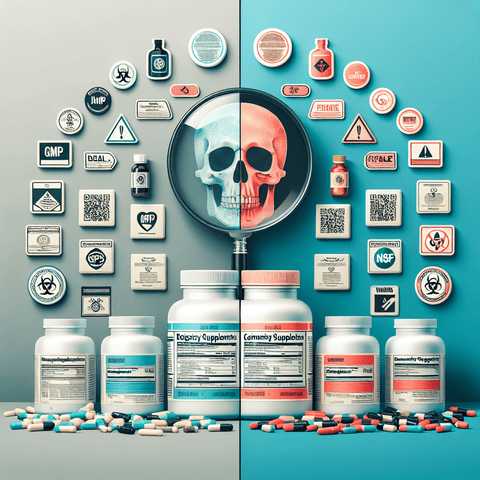
Knowing how to verify supplement labels is one of the most practical skills you can develop for making safer, better-informed supplement choices. A supplement label tells you what the product contains, how much of each nutrient you get per serving, and in what chemical form — but only if you know how to read it. This guide walks you through the Supplement Facts panel, ingredient list, and common red flags such as proprietary blends and unrealistic claims. You will also learn how to compare products on dosage, ingredient forms, certifications, and quality indicators, so you can evaluate any supplement with confidence before it reaches your shopping basket.
How to Verify Supplement Labels: A Practical Guide to Spotting Safer Supplements
What You'll Learn in This Guide
- What a supplement label legally must disclose — and how to find it quickly.
- Key terminology such as serving size, %DV, active ingredients, and proprietary blends.
- Red flags that suggest a product may be mislabeled, underdosed, or exaggerated in its marketing.
- How supplement quality is shaped by sourcing, manufacturing standards, and third-party testing.
- How to compare labels like a professional, including forms, dosages, formats, and certifications.
- Where supplements fit after food and lifestyle, and when professional assessment is the better first step.
What Does a Supplement Label Actually Tell You?
Key Parts of a Supplement Facts Panel Explained
A Supplement Facts panel is a standardized format required on most dietary supplements. It typically lists the serving size, the amount per serving of each nutrient, and the percent Daily Value (%DV) where one has been established. Below or beside the nutrient list, the panel identifies other ingredients — fillers, binders, coatings, and flavorings — plus allergen statements. The panel should also carry the name and address of the manufacturer, packer, or distributor, which matters if you ever need to contact someone about a product issue.
Not everything on a label is standardized. Herbal supplements, for example, may list the plant part used, the extraction ratio, and the concentration of standardized compounds, while mineral products may specify the salt form (such as magnesium citrate versus magnesium oxide), which directly affects how much elemental mineral you actually receive.
Supplement Label Terminology: Serving Size, %DV, and Active Ingredients Explained
Serving size is the amount the manufacturer recommends taking at one time — and every other number on the label refers to that serving. If a label says two capsules, but you take only one, you are getting half of the listed amounts. %DV tells you what percentage of the daily reference intake one serving provides, which helps you gauge whether a product is low-dose, near typical intake, or far above it. Active ingredients are the nutrients or compounds intended to have an effect, while "other ingredients" are technically necessary but not nutritionally active.
The Difference Between the Supplement Facts Panel and the Ingredient List
The Supplement Facts panel quantifies nutrients; the ingredient list describes everything in the product by weight, in descending order. The ingredient list is where you find out whether a formula contains fillers, flow agents, sweeteners, or allergens such as soy, gluten-containing grains, or dairy derivatives. When verifying supplement labels, check both: the panel tells you how much, and the ingredient list tells you what else comes along with it.
Why Verifying Supplement Labels Matters for Your Health
How Misleading Labels Can Affect Your Nutritional Goals
If a label is inaccurate or difficult to interpret, you may believe you are covering a nutritional gap when you are not. A product labeled with a blend instead of individual amounts may contain only trace levels of an ingredient you specifically wanted. Similarly, a label that suggests one capsule equals a full day's nutrition can encourage a false sense of security, replacing efforts to improve dietary intake that would deliver a far broader range of nutrients and food-based compounds.
The Health Risks of Underdosed, Overdosed, or Contaminated Supplements
Underdosing simply wastes money and delays addressing a genuine gap. Overdosing carries more direct risk: several nutrients — including vitamin A, vitamin D, iron, and selenium — have established upper intake levels, and chronic intake above those thresholds can cause harm. Independent testing of supplements has also occasionally found products that contain substantially more or less of an ingredient than stated, or that are contaminated with heavy metals or unapproved substances. Careful label reading reduces, though cannot fully eliminate, these risks — which is why third-party testing (discussed below) matters.
Red Flags on Supplement Labels: Signs a Product May Not Be Trustworthy
Vague or "Proprietary Blend" Ingredient Listings
A proprietary blend lists several ingredients under one total weight without disclosing how much of each one is present. Ingredients are usually listed in descending order, but you cannot tell whether the compound you want is present at the dose used in research or at a token amount. When verifying supplement labels, prefer products that state the exact amount of every active ingredient per serving.
Unrealistic Health Claims and Disease-Cure Language
In most jurisdictions, supplements legally cannot claim to treat, cure, or prevent disease. Be cautious of phrases like "cures arthritis," "reverses aging," "works better than prescription medication," or guarantees of specific results. Legitimate products use structure/function language — for example, that calcium "contributes to normal bone maintenance" — which reflects the regulated framework these products operate within.
Missing Dosages, Fillers, Allergens, or Manufacturer Information
A trustworthy label discloses the amount of each active ingredient, lists all other ingredients, declares major allergens, and identifies a real company with contact details. If any of these elements is missing or hidden behind a QR code or marketing website, treat it as a warning sign. Also be skeptical of labels that omit an expiration date or batch number.
Exaggerated Marketing Terms That Don't Mean "Clinically Proven"
Terms like "natural," "premium," "advanced," "pharmaceutical grade," and "miracle" have no standardized legal definition in most supplement markets and do not indicate quality or efficacy. "Clinically proven" is only meaningful if the specific product — or at least the specific ingredient at the labeled dose — has actually been studied. Marketing on the front of the bottle is advertising; the Supplement Facts panel is the verifiable information.
What Influences Supplement Quality in the First Place?
Sourcing, Manufacturing Standards, and Third-Party Testing
Quality begins long before the label is printed. Ingredient sourcing, the cleanliness of the manufacturing facility, and adherence to Good Manufacturing Practice (GMP) all influence whether the finished product matches the label. Because regulators generally test products after they reach the market rather than approving them beforehand, independent third-party certification from organizations that verify identity, potency, and purity provides an additional layer of assurance. Seals such as USP, NSF, or Informed Choice indicate that a batch was independently checked against the label claims.
How Ingredient Forms and Bioavailability Differ Between Products
The same nutrient can appear in many chemical forms, and these differ meaningfully in absorption and tolerability. Magnesium oxide, for instance, contains a high proportion of elemental magnesium but is less well absorbed than forms such as citrate or glycinate. For vitamin B12, methylcobalamin and cyanocobalamin are both used, with somewhat different characteristics. Folate may appear as folic acid or as 5-MTHF, the form that circulates in blood. That said, evidence comparing forms is sometimes limited or conflicting, and a "better" form on paper does not always translate to meaningfully better outcomes for everyone — but the form should at least be clearly disclosed so you know what you are buying.
Storage, Shelf Life, and Expiration Dates on Labels
Nutrients degrade at different rates. Probiotics are sensitive to heat and moisture, fish oils are vulnerable to oxidation, and some powdered products shorten their shelf life once opened. A quality label states the expiration date and any storage instructions — such as refrigeration or keeping the container tightly closed in a dry place. Using a product well past its expiration date may mean receiving less of the active nutrient than the label states.
Why Your Nutrient Needs Are Different From Everyone Else's
How Diet, Age, Lifestyle, and Health Status Change Nutrient Requirements
Reference intakes are set for population groups, not individuals. Requirements shift with age and life stage — adolescents, pregnant women, and older adults have different needs for nutrients such as iron, folate, vitamin D, and calcium. Diet pattern matters too: someone following a fully plant-based diet needs reliable sources of vitamin B12, and someone with low sun exposure may have higher vitamin D needs than an outdoor worker. Alcohol intake, smoking, and intense physical training can also influence the metabolism and requirements of certain nutrients.
Absorption, Medications, and Genetic Factors That Affect Individual Needs
Getting a nutrient into your body is not the same as taking it. Gastrointestinal conditions, aging-related changes in stomach acid, and certain medications — including proton pump inhibitors, metformin, and some diuretics — can reduce the absorption or increase the loss of specific vitamins and minerals. Genetic variation also plays a role in how efficiently some people convert or utilize particular nutrient forms. This individual variability is a core reason symptoms alone rarely confirm a nutritional gap, and why blood testing and professional guidance can be more reliable than guesswork.
Food and Lifestyle First: The Foundation Before Supplements
Everyday Food Sources That Should Come Before a Bottle
Whole foods deliver nutrients in combination with fiber, beneficial plant compounds, and food matrices that influence absorption — something isolated supplements cannot replicate. Leafy greens, legumes, nuts, and seeds supply magnesium and folate; oily fish provides omega-3 fatty acids and vitamin D; dairy products and fortified alternatives contribute calcium, and eggs and meat are rich sources of B12. For most nutrients, a varied diet can meet typical requirements.
Dietary Patterns and Habits That Support Nutrient Intake
Beyond individual foods, overall patterns matter. Eating a diverse range of plant foods, including protein sources at most meals, and choosing minimally processed options consistently improves intake of vitamins, minerals, and antioxidants. Pairing certain foods can help as well — for example, vitamin C from fruit or vegetables improves the absorption of non-heme iron from plant sources, while tea, coffee, and calcium-rich foods taken alongside a meal can reduce it.
Where Supplements Fit: When Dietary Intake May Not Be Enough
Situations Where Nutritional Support May Be Reasonably Considered
Even an excellent diet has gaps in specific circumstances. Research consistently shows certain groups may benefit from targeted nutritional support, including:
- People with limited sun exposure, who may have low vitamin D status, particularly in winter months.
- Women who are pregnant or planning pregnancy, for whom folic acid supplementation is broadly recommended.
- People following vegan or strict vegetarian diets, who need a reliable B12 source.
- Older adults, whose absorption of B12 and requirements for vitamin D and calcium may change.
- Individuals with diagnosed absorption disorders or those taking medications that affect nutrient status.
Nutritional Support vs. Treating a Diagnosed Condition: Knowing the Difference
Supplements are intended to support nutritional intake — not to replace medical care or treat diagnosed disease. If you have symptoms that suggest a health problem, or a diagnosed condition, the appropriate first step is professional assessment. A supplement may then be one part of a broader plan, but it should never substitute for evidence-based treatment or delay a diagnosis.
How to Compare Supplement Labels Like a Pro
Ingredient Form and Dosage: What the Numbers Really Mean
Two products can both say "1000 mg" and deliver very different things. For minerals, check the elemental amount — the part your body actually uses — which reputable labels state explicitly. For extracts, check whether the compound of interest is standardized, such as curcuminoids in turmeric products. And compare doses against the %DV and against amounts used in research; a dose far below what studies suggest is relevant may be less useful than the marketing implies.
Single-Ingredient Products vs. Combination Formulas
Single-ingredient products make it easy to control the dose and to verify exactly what you are taking — useful if you are targeting a specific gap or managing interactions. Combination formulas offer convenience and can reduce the number of products needed, but they make precise dosing harder and raise the risk of doubling up on nutrients you already get from a multivitamin. If you use a broad multivitamin, check its label before adding individual products so you do not exceed sensible totals.
Capsules, Tablets, Powders, and Liquids: Which Format Fits Your Needs?
Format affects practicality more than efficacy. Capsules are generally easy to swallow and often free of unnecessary binders; tablets are inexpensive and compact but may include more excipients, and quality tablets should break down properly in the digestive tract. Powders suit people who take larger amounts or dislike swallowing pills but require accurate measuring and careful storage. Liquids may be preferable for those with swallowing difficulties, though some nutrients are less stable in solution. Choose the format you will take consistently — the best supplement is the one taken as directed.
Additives, Fillers, Allergens, and Dietary Preferences (Vegan, Gluten-Free)
Read the "other ingredients" list with your own needs in mind. Gelatin capsules are not suitable for vegans, while cellulose-based capsules are. Common allergens such as soy, dairy, wheat, and shellfish derivatives must be declared, and people with sensitivities should also scan for sweeteners, colorings, and flow agents they prefer to avoid. Labels that clearly declare allergens and additive choices demonstrate the kind of transparency you should expect across the whole product.
Certifications to Look For: Third-Party Testing, GMP, and Quality Seals
Useful quality indicators include third-party testing seals, GMP manufacturing statements, and batch or lot numbers that allow traceability. Certifications for organic sourcing, vegan suitability, or allergen-free production can matter depending on your priorities. No certification guarantees a product is right for you — but when verifying supplement labels, independent verification of identity, potency, and purity is among the strongest signals of a manufacturer that takes quality seriously.
How to Read Between the Lines: Smart Label Comparison Questions
Is the Effective Dose on the Label or Hidden in a Blend?
Ask directly: does the panel state exactly how much of each active ingredient is in each serving? If the compound you care about sits inside a proprietary blend listed near the end of a formula, it may be present in only a trivial amount. Compare the labeled dose with the %DV and with doses used in published research where available.
Does the Label Match the Marketing Claims?
Cross-check the front-of-bottle promise against the panel. A product advertised as supporting energy should contain nutrients actually involved in energy metabolism — such as B vitamins, magnesium, or iron — at meaningful amounts. If the marketing highlights one ingredient while the panel shows only trace levels of it, the claim and the content do not align. Honest products make claims the label can substantiate.
Who May Benefit Most From Carefully Chosen Supplements?
Groups With Higher Nutritional Needs or Restricted Diets
Some groups have a clearer, evidence-based case for targeted supplementation: pregnant women (folate and often vitamin D), people with minimal sun exposure (vitamin D), those on plant-based diets (B12, and attention to iron, zinc, iodine, and omega-3s), older adults, and people with restricted diets or malabsorption conditions. For these groups, product quality and label accuracy matter even more, because the supplement is filling a real and specific gap rather than serving as general insurance.
When Blood Testing and Professional Guidance Make Sense
For several nutrients — notably vitamin D, B12, ferritin (iron stores), and folate — validated blood testing can establish actual status far better than symptoms or assumptions. If you suspect a deficiency, plan to take higher doses long term, take medications that affect nutrient status, or manage a health condition, testing and professional advice should come before the purchase. Testing also prevents the opposite problem: supplementing nutrients you do not need.
Supplement Safety: Interactions, Upper Limits, and Special Situations
When More Isn't Better: Understanding Upper Intake Levels
Water-soluble vitamins are generally excreted when taken in excess, but fat-soluble vitamins (A, D, E, K) and most minerals accumulate. Nutrients such as vitamin A, vitamin D, iron, selenium, and zinc have established tolerable upper intake levels, and long-term intake above them can cause genuine harm — vitamin A excess, for example, has been associated with liver and bone problems. More is not better; the goal is adequate intake, not maximum intake.
Medication Interactions, Pregnancy, and Existing Health Conditions
Supplements can interact with medications. Vitamin K can interfere with blood-thinning medication such as warfarin; St John's Wort interacts with a wide range of drugs; and high-dose calcium or iron can reduce the absorption of certain medications when taken together. Pregnancy, kidney or liver disease, upcoming surgery, and chronic conditions all change what is appropriate. If any of these apply to you, review your supplements — including herbs — with a qualified healthcare professional before starting them.
Should You Change Your Diet or Start a Supplement? A Simple Decision Guide
When Food Changes May Be Enough
If your diet is limited in variety, or you consistently skip entire food groups out of preference rather than necessity, improving your food choices first is usually the most effective and safest step. Broadening your intake of vegetables, fruits, legumes, whole grains, quality protein sources, and oily fish addresses many common shortfalls simultaneously and delivers benefits no supplement can replicate.
When a Supplement May Be a Reasonable Addition
A supplement becomes a reasonable consideration when a specific gap is likely or confirmed — through dietary pattern, life stage, restricted diet, medication use, or blood testing — and when diet alone cannot practically close it. In those cases, a well-labeled, third-party-tested product taken at an appropriate dose can be a sensible, proportionate addition to your routine.
Factors That Should Drive Your Final Product Choice
When you do choose a product, let these factors guide you rather than marketing:
- Label transparency: full disclosure of every active ingredient and its amount.
- Appropriate dose: aligned with your needs and within safe upper limits.
- Meaningful form: a clearly identified chemical form suited to your situation.
- Quality verification: GMP manufacturing and, ideally, third-party testing.
- Additives and allergens: compatible with your dietary requirements and preferences.
- Professional fit: checked against any medications or conditions you manage.
The Bottom Line: Reading Labels Is the First Step to Safer Supplement Choices
Learning to verify supplement labels transforms you from a passive buyer into an informed evaluator. The Supplement Facts panel and ingredient list tell you what a product really contains; red flags like proprietary blends, missing dosages, and cure-based claims tell you what to avoid. Food and lifestyle remain the foundation of good nutrition, and supplements are best viewed as targeted tools for specific, identified gaps — not universal insurance. Because individual needs vary with diet, age, health status, and medication use, the most reliable path is: eat well first, test or seek professional advice when a gap is suspected, and then use label literacy and quality indicators to select a product that matches your actual needs.
Key Takeaways
- Verify supplement labels by checking the serving size, per-serving amounts, %DV, and full ingredient list — not just the front of the bottle.
- The Supplement Facts panel quantifies nutrients; the ingredient list reveals fillers, allergens, and additives.
- Proprietary blends, missing dosages, absent manufacturer information, and disease-cure claims are major red flags.
- Terms like "natural" and "premium" have no standardized meaning and do not indicate quality.
- Third-party testing seals and GMP manufacturing provide the strongest available quality signals.
- Ingredient form matters: mineral salts and vitamin forms differ in elemental content and bioavailability.
- Food first: a varied, whole-food diet meets most people's nutrient requirements.
- Supplements are most relevant for defined situations — pregnancy, restricted diets, limited sun exposure, older age, or confirmed gaps.
- Respect upper intake levels for fat-soluble vitamins and minerals, and check for medication interactions.
- Blood testing and professional guidance are more reliable than symptoms alone for assessing nutritional status.
Frequently Asked Questions
What does %DV mean on a supplement label?
%DV (percent Daily Value) shows how much one serving contributes to the recommended daily intake of a nutrient for an average adult. A %DV of 100% means one serving provides the full reference amount, while a low %DV suggests the product is a modest contributor rather than a primary source.
Why are proprietary blends considered a red flag?
A proprietary blend hides the individual amount of each ingredient behind one combined weight, so you cannot tell whether an ingredient is included at a meaningful dose or only a token amount. Products with nothing to hide typically list every active ingredient with its exact quantity.
Is "natural" on a supplement label meaningful?
In most markets, "natural" has no strict legal definition for supplements and does not indicate purity, potency, or safety. Synthetic and naturally derived nutrients can both be well absorbed and well tolerated; the label details and third-party testing matter far more.
How can I tell if a supplement is third-party tested?
Look for a certification seal from an independent testing organization on the packaging, such as USP, NSF, or Informed Choice, or check the manufacturer's website for published certificates of analysis linked to specific batches. A brand's own claim of "quality tested" without independent verification is weaker evidence.
Can you take too much of a vitamin or mineral?
Yes. Fat-soluble vitamins (A, D, E, K) and minerals such as iron, selenium, and zinc can accumulate to harmful levels with chronic high intake. Each has a tolerable upper intake level, and exceeding it — especially over months or years — can cause adverse effects.
Do supplement expiration dates really matter?
Yes. Nutrients degrade over time, particularly when exposed to heat, light, and moisture, so a product past its expiration date may deliver less of the active ingredient than the label states. Probiotics and oils such as fish oil are especially prone to losing potency.
Which magnesium form has the best absorption?
Forms such as magnesium citrate, glycinate, and malate are generally better absorbed and better tolerated than magnesium oxide, which is often used for its low cost despite poorer absorption. However, evidence comparing forms is not always consistent, and the best choice depends on your purpose and tolerance.
Can I take a multivitamin and individual supplements together?
Yes, but check the labels to avoid doubling up. Adding individual products to a multivitamin can push certain nutrients — such as vitamin A, zinc, or iron — toward or above upper limits. Add up the totals from all products you take, including fortified foods where relevant.
What should vegans look for on a supplement label?
Vegans should confirm the capsule shell is plant-based (cellulose rather than gelatin), that vitamin D3 is derived from lichen rather than lanolin if that matters to them, and that the formula covers nutrients commonly low in plant-based diets — particularly vitamin B12, iodine, and omega-3s.
Can a supplement label tell me if a product works for my condition?
No. Labels can tell you what a product contains and whether it carries permitted structure/function statements, but they cannot tell you whether it will help a specific health condition. Supplements are not intended to treat or cure disease, so any medical concern warrants professional advice.
How do I check where a supplement is manufactured?
The label must state the name and address of the manufacturer, packer, or distributor. This tells you who is responsible for the product and gives you a contact point for questions about sourcing, testing, or batch-specific certificates of analysis.
Are higher doses always more effective?
No. Nutrients follow a curve where more is not better: below a certain intake you may see a benefit, but beyond the point of sufficiency, extra provides no additional benefit and may cause harm. Effective doses used in research should guide expectations, not the assumption that bigger numbers mean better results.
Related Keywords
- verify supplement labels
- how to read a supplement facts panel
- supplement label red flags
- proprietary blend supplements
- third-party tested supplements
- supplement dosage and %DV explained
- supplement ingredient bioavailability
- GMP certified supplement manufacturing
- supplement safety and upper intake levels
- how to choose a quality supplement
- supplement allergen and additive labels
- mislabeled dietary supplements
- vitamin and mineral supplement forms
- supplement interactions with medications