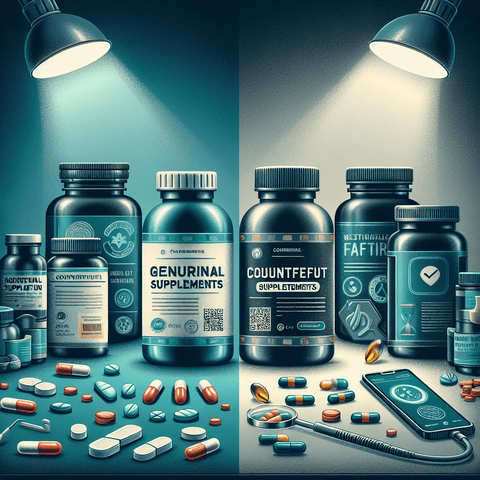
In a world where nutritional supplements are increasingly popular, understanding how to verify supplements is essential for making informed choices. This guide provides you with a practical framework to check the quality, safety, and efficacy of dietary supplements, ensuring you choose products that meet your health needs. Knowing how to navigate product labels, interpret safety claims, and recognize third-party testing will empower you to make safer nutrition decisions.
Introduction: Verify Supplements for Safer, Smarter Nutrition Decisions
Purpose of the guide
This guide aims to transition readers from mere informational knowledge to practical, actionable strategies for verifying supplements. By focusing on how to verify supplements, we enable readers to gain confidence in their choices.
What you’ll learn
Throughout this post, you'll learn what "verify supplements" means in practical terms, including evaluating quality, safety, and efficacy. We'll explore the limitations of making self-diagnoses based solely on symptoms, interpret product labels, unpack third-party testing, and manufacturer claims.
Why this matters for every reader
Your health, budget, and time are critical factors when selecting supplements. A systematic verification approach reduces risk, saving money on ineffective products, and enhancing your overall well-being.
Core Explanation: What “Verify Supplements” Really Means
Defining quality, safety, and efficacy
Quality refers to accurate ingredient dosing, purity, and the absence of harmful contaminants. Safety involves ensuring appropriate dosages, allergen controls, and identifying any contraindications. Efficacy is about having credible evidence supporting the intended benefits and outcomes of the supplement.
The verification workflow in practice
To effectively verify supplements, follow this step-by-step process: check product labels for transparency, seek third-party testing verifications, confirm Good Manufacturing Practice (GMP) compliance, and review dosing information and warnings.
Key verification signals to look for
- Third-party certifications (e.g., USP, NSF, ConsumerLab, ISO standards).
- Complete ingredient lists, clear serving sizes,and realistic marketing claims.
- Accessible contact information, lot/batch numbers,and testing statements.
Regulatory context and limitations
Understanding where regulations apply (or don't) is crucial for dietary supplements. Claims of being “natural” or “herbal” do not inherently guarantee safety or efficacy, necessitating verification.
Why This Topic Matters
Consumer risk without verification
Unscrupulous products can contain contaminants, be mislabeled, or have variances in dosages across batches, which could lead to adverse health effects.
Real-world impact on health outcomes
The potential benefits of supplements can quickly turn harmful if poor quality or misinformed choices are made. Well-chosen supplements can support health positively.
Economic and time considerations
Understanding how to verify supplements helps consumers avoid wasted expenses on low-quality products that don't deliver results.
Related Symptoms, Signals, or Health Implications That Prompt Supplement Consideration
Symptom clusters that commonly prompt supplementation
Fatigue, brain fog, muscle cramps, poor sleep,and digestive discomfort are some common symptoms driving individuals to consider supplements.
Nutrient deficiency signals to watch for (and why symptoms aren’t definitive)
Common signs of nutrient deficiency include fatigue linked to iron deficiency, bone or mood issues related to vitamin D deficiency, and low energy associated with B12 deficiency in older adults. Symptoms alone can be misleading without confirming nutrient status through testing.
When to seek professional guidance
Seek professional help if experiencing persistent or severe symptoms, underlying health conditions, or when pregnant or taking medications that could interact with supplements.
Variability across individuals
Individual variability in nutrient requirements can depend on factors such as age, sex, genetics, activity level, diet,and existing health conditions.
Individual Variability and the Uncertainty Factor
Why people respond differently to the same supplement
Responses vary due to differences in nutrient absorption, baseline nutrient status, microbiome composition,and metabolic functionality among individuals.
The role of medications and lifestyle
Medications may interact with supplements, affecting efficacy or safety (e.g., anticoagulants, antacids), and timing of intake (with or without meals) also influences outcomes.
Acknowledge uncertainty without paralysis
It's important to recognize that supplementation should not be seen as a one-size-fits-all solution; individualization is often necessary.
Why Symptoms Alone Do Not Reveal the Root Cause
The multi-factorial nature of health symptoms
Symptoms are not always indicative of deficiencies. Factors like diet, stress, sleep patterns, hydration, gut health,and chronic medical conditions can obscure the real cause of health issues.
The diagnostic pathway
Rather than jumping to conclusions based solely on symptoms, consider a path that includes lab testing, clinician consultations,and a phased approach to supplementation.
The risk of self-diagnosis and over-interpretation
Misinterpreting symptoms can delay proper treatment and may lead to harm, particularly if specific deficiencies or chief health concerns are not directly identified.
The Role of Nutritional Supplements in This Topic
Supplements as supportive tools, not cures
Supplements can help fill dietary gaps, support specific life stages, or address identified deficiencies, but they should complement—not replace—a balanced diet.
Evidence spectrum by nutrient and indication
- Strong evidence: Correcting specific deficiencies with targeted supplementation.
- Moderate/limited evidence: Condition-specific or preventive roles require careful interpretation.
- Mixed or evolving evidence: Highlight the importance of individualized assessment and consultation.
Safety-first framework
Maintain safety by ensuring proper dosing, checking for potential interactions, screening for contraindications,and being aware of allergens.
The practical mindset: surveillance and adjustment
Develop an actionable supplementation strategy that involves starting with small doses, monitoring responses,and adjusting based on both results and professional advice.
How Nutritional Supplements Could Support Health Goals
Filling common nutrient gaps
Common gaps include vitamin D, iron (especially for those at risk of deficiency), B12 for vegetarians and older adults,and magnesium, which plays roles in various physiological functions.
Special populationsand scenarios
Pregnant individuals,lactating mothers,vegetarians/vegans,older adults,athletes,and people on restricted diets may have unique nutrient requirements that can be supported by supplementation.
Practical usage patterns
Consistent usage,proper timing with meals,and adherence to recommended dosages are important factors in maximizing the effectiveness of supplements.
Monitoring response
Monitor for symptom relief,energy levels,and potential side effects to assess the efficacy of supplementation.
Decision-Support Section: When Do Supplements Make Sense?
A practical decision checklist
- Do symptoms suggest a possible nutrient gap?
- Is there a confirmed deficiency or high-risk factor?
- Is enough credible evidence available for the specific supplement?
- Have you ensured product quality (certificationsand labels)?
- Have you consulted a healthcare professional where necessary?
How to trial a supplement responsibly
Start with a low dose,allow sufficient time to assess effects (4–12 weeks),and keep track of both objective and subjective changes in health.
When to stop and reassess
Reassess supplementation if there is no improvement,if adverse reactions occur,new symptoms emerge,or if you modify medications or receive updated lab results.
Practical Guide to Choosing and Verifying Supplements(Label Literacy and Verification Signals)
What to inspect on labels
- Active ingredients and their amounts
- Serving size and dosage
- % Daily Value (where applicable)
- Advisories and allergen statements
- Certificationsand quality verification
Trusted verification signals
Look for third-party testing logos (e.g., USP,NSF),statements confirming cGMP compliance,batch/lot numbers,and details on ingredient sourcing and impurity testing.
How Topvitamine supports verified selections
Topvitamine offers a curated selection of products vetted for label accuracy,third-party test certifications,and quality controls,ensuring peace of mind for consumers. You can explore our natural supplements collection for more options.
Read-between-the-lines: marketing vs. evidence
Be wary of bold claims without evidence; differentiate verified statements from those that rely on marketing tactics or vague representations.
Clear Concluding Section: Connecting the Topic to Buying Nutritional Supplementson Topvitamine.com
How Topvitamine helps with verified supplement discovery
Topvitamine provides a robust database of products vetted for labeling accuracy,third-party testing,and quality control measures,facilitating informed choices.
How to use Topvitamine’s search and filters for verification
Utilize the website’s filtering options for certifications,ingredient transparency,and allergy controls to compare products effectively.
A safe, supported purchasing path
Topvitamine ensures transparent product data,accessible customer support,fair return policies,and guidance to facilitate thoughtful purchasing decisions.
Next steps for readers
Apply the verification framework discussed in this article to assess a product you're considering on Topvitamine,and bookmark the site for any future supplement-related inquiries. Explore our multivitamins collection to see how these principles apply in practice.
Key Takeaways
- Verification of supplementsis crucial for health and safety.
- Quality, safety,and efficacy are the key pillars of supplement verification.
- Understanding product labelsand third-party certifications can safeguard health.
- Individual variability is significant; no single supplement works universally.
- Seek professional guidancein cases of severe symptoms or chronic conditions.
- Supplements should complement,not replace,a balanced diet.
- Monitoring and reassessing supplementation is vital for efficacy.
- Topvitamine offers resources for verifiedand credible supplement choices.
Frequently Asked Questions (FAQ)
1. How can I verify the quality of a supplement?
Look for third-party testing certifications,read ingredient labels carefully,and verify the manufacturer’s adherence to Good Manufacturing Practices(GMP).
2. Are all natural supplements safe?
No,“natural” does not guarantee safety or efficacy. Always check for third-party testingand clear ingredient lists.
3. What should I do if I experience side effects from a supplement?
Stop taking the supplement immediatelyand consult a healthcare professional,especially if side effects persist or worsen.
4. How can I know if I need a supplement?
Consider your diet,symptoms,and health goals. Testing for nutrient deficienciesisthe most reliable way to determine necessity.
5. Can supplements interact with medications?
Yes,many supplements can interact with medications affecting their efficacy or safety. Always discuss supplementation with your healthcare provider.
6. How often should I review my supplement regimen?
Regularly review your regimen,especially after any changes in health,medications,or symptoms,ideally with a healthcare provider.
7. What does GMP compliance mean?
Good Manufacturing Practice(GMP) compliance ensures that supplements are manufactured in a quality-controlled environment,minimizing the risk of contamination.
8. Can I trust claims made on supplement labels?
While many claims can be backed by research,consumers should verify these claims through independent sourcesand look for third-party testing.
9. What should I look for in a multivitamin?
Choose a multivitamin that lists full ingredient details,has third-party testing certifications,and meets your specific health needs(age,sex,lifestyle).
10. How do I know if a specific supplement is right for me?
Assess your dietary intake,potential deficiencies,and health goals,and consider consulting a healthcare professional to make an informed choice.
11. Are there any risks associated with taking supplements unnecessarily?
Yes,taking unnecessary supplements can lead to toxicity,adverse effects,and interference with medications or other health conditions.
12. What nutrients are often missing in diets?
Common nutrient gaps include vitamin D,iron,and B12—especially in specific populations,such as older adultsand vegetarians. For more information, explore our vitamin D collection.
Keywords
verify supplements,supplement quality,supplement safety,supplement efficacy,third-party testing,GMP,certifications,labeling accuracy,ingredient transparency,nutrient gaps,individualized supplementation,safe supplementation.