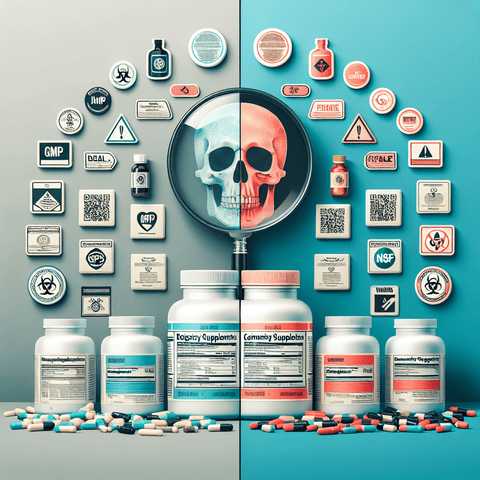
Fake Vitamins Exposed: How to Spot Counterfeit Supplements


Summary of the Risks of Fake Vitamins

In an era of health awareness, the presence of fake vitamins and counterfeit supplements poses significant risks to well-being. These products misrepresent their contents through methods such as misleading labeling and harmful adulteration, which can lead to serious health concerns. Understanding how to identify counterfeit items is crucial, especially as they often infiltrate unregulated online marketplaces.

Recognizing Red Flags

Common indicators of fake vitamins include unrealistically low prices, inconsistent branding, and lack of Certificates of Analysis (COAs). Consumers should remain vigilant and verify product authenticity by checking batch numbers and requesting third-party test results.

Real Health Consequences

Consuming counterfeit supplements can lead to ineffective results and adverse reactions. It's essential to focus on quality and choose legitimate products that meet safety standards. Individual variability in nutrient absorption highlights the need for personalized approaches to supplementation.

Consulting healthcare professionals can also help consumers make safer choices, especially when considering products like vitamin D, multivitamins, and vitamin C.

Final Thoughts

By prioritizing verification and informed decision-making, consumers can effectively navigate the risks associated with fake vitamins and safeguard their health.


How Do I Avoid Counterfeit Supplements and Spot Fakes Online and In-Store - Topvitamine
Aug 28, 2025
Discover expert tips to avoid counterfeit supplements, identify fake products online and in-store, and ensure you're buying safe, authentic health supplements every time.
How to Identify Counterfeit Supplements and Protect Your Health - Topvitamine
Aug 28, 2025
Learn how to spot counterfeit supplements, avoid health risks, and ensure you're getting safe, effective products with our expert tips and guide.
How to Identify Counterfeit Supplements and Avoid Online Scams - Topvitamine
Aug 28, 2025
Learn how to spot fake supplements and avoid online scams with our expert tips. Protect your health and money by identifying counterfeit products before you buy.

In today's health-conscious world, the prevalence of fake vitamins and counterfeit supplements poses serious threats to our well-being. With increasing reports of mislabeling and adulteration, it's crucial to understand how to identify these hazardous products. This guide will equip you with essential knowledge on spotting red flags associated with low-quality supplements, recognizing the significance of genuine nutritional products, and safely navigating your shopping journey on Topvitamine.com. Understanding this issue is vital for your health, ensuring that the supplements you choose truly support your wellness.

What are fake vitamins and counterfeit supplements?

Definitions and scope

Fake vitamins refer to products that misrepresent their contents, often through counterfeit or misleading labels. These products can fall into three main categories: counterfeit products that use fraudulent practices to mimic legitimate brands, mislabeling where actual contents differ from what is stated, and adulteration, which involves substituting or adding harmful ingredients. Fake vitamins can present in various forms, including ingredient swaps, inaccurate potency claims, and undisclosed fillers that compromise efficacy and safety.

Common entry points and supply-chain risks

Unfortunately, counterfeit supplements can easily enter the market through various vulnerable points in the supply chain. Online marketplaces often have unregulated sellers, making them fertile ground for these fraudulent products. Additionally, cross-border shipments complicate enforcement of regulations, while private-label products can sometimes use counterfeit packaging methods to mislead consumers about their source and authenticity.

How this differs from legitimate product variability

It's important to note that not all variability in supplements stems from counterfeiting. Legitimate products may exhibit differences due to factors like brand reputation, batch-to-batch discrepancies, or realistic claims. Understanding these distinctions can prevent unnecessary alarm over legitimate products and their inherent variability.

Real-world consequences

The consequences of consuming counterfeit vitamins can be severe. Users may experience a lack of efficacy, developing unexpected side effects, or even suffering from harmful contamination. Such experiences underscore the importance of vigilance when selecting nutritional supplements.

Why this topic matters for health, safety, and wallets

Health and safety implications

Taking unauthorized or counterfeit supplements can expose consumers to toxic metals, harmful adulterants, and ineffective therapies for nutritional deficiencies. These risks underscore the critical need for consumers to verify the safety of the products they choose.

Financial and trust implications

The financial ramifications of fake vitamins extend beyond wasted money; they can lead to disrupted treatment plans and increased erosion of confidence in nutritional supplements. Consumers may find themselves skeptical about the integrity of all products, which is detrimental to informed health choices.

Regulatory context and gaps

While regulatory bodies work to ensure safety, there are gaps in oversight that consumers must navigate independently. A fundamental understanding of what regulators can and cannot guarantee is essential, reinforcing the necessity for individual vigilance in protecting one's health.

Signals, symptoms, and health implications

Symptom patterns that may raise suspicion

Awareness of symptom patterns can help consumers identify potential issues with counterfeit products. Symptoms such as no improvement after consistent supplementation, new adverse reactions, or signs of toxicity are all red flags that warrant immediate attention.

Health implications of counterfeit ingredients

Counterfeit ingredients may interact negatively with prescribed medications, exacerbate existing health conditions, or create a false sense of security about one's nutrient status. These implications highlight the need for careful consideration of supplement choices.

Distinguishing ordinary diet-related issues from counterfeit-related concerns

Understanding lifestyle factors, existing illnesses, or medications can help distinguish between diet-related issues and possible counterfeit supplement problems. This knowledge is vital for addressing health concerns accurately.

Individual variability and uncertainty

Genetic and metabolic differences influencing nutrient needs

Individual variability, stemming from genetic and metabolic differences, can significantly affect how people respond to nutritional supplements. What works for one person may not be effective—or could even be harmful—for another.

Life stage and health status affecting response to supplements

Factors such as age, gender, and health status can also impact how a person responds to supplements. Pregnancy, lactation, and advanced age may necessitate different supplement considerations, underscoring the importance of individualized approaches.

Medication interactions and poly-supplement considerations

Interactions between supplements and medications can complicate health management. It's crucial to be aware of such interactions, particularly if taking multiple supplements simultaneously. Consulting with healthcare professionals can clarify which combinations may be safe.

Embracing uncertainty in self-diagnosis

Proactively managing health requires recognizing that “more is not always better.” A cautious approach to self-diagnosis protects against unnecessary complications and misattributed symptoms.

Why symptoms alone cannot reveal root cause

Correlation vs. causation in self-assessment

Understanding the difference between correlation and causation can help consumers avoid misattributing symptoms solely to counterfeit vitamins. Other factors, such as diet, stress, or underlying illnesses, can manifest similar symptoms, leading to incorrect conclusions.

The need for objective evidence

Relying on objective evidence, such as lab tests and clinician guidance, is essential for accurate health assessments. Objective measures provide clarity that subjective symptom reporting cannot offer.

A cautious approach to self-diagnosis

Practical steps to avoid misattributing symptoms to counterfeit products include keeping a detailed health journal, considering recent lifestyle changes, and actively engaging with healthcare providers about your supplement habits.

The role of nutritional supplements in this topic

Legitimate purposes of supplements

Nutritional supplements serve meaningful and legitimate purposes, such as addressing documented deficiencies, filling dietary gaps, and supporting specific health needs. Understanding these roles helps frame a responsible approach to supplementation.

How supplements can support safe, informed decisions

Using evidence-based guidelines for nutrient intake and dose levels, along with healthcare provider assistance, can reduce the risks associated with supplementation. Understanding how to properly support health ensures that individuals make informed choices.

How counterfeit risk shapes supplementation choices

The risk of counterfeiting necessitates a focus on quality and proper sourcing. Engaging in diligent research about products and prioritizing supplements with verifiable third-party testing can mitigate risks associated with low-quality supplements.

How nutritional supplements could support health while staying safe

Safer-use strategies

When suspecting deficiencies, starting with clinician input is essential. Monitoring responses to supplements and avoiding self-prescribing for complex health issues ensures individualized and safe supplementation.

Evidence-based nutrients and reliable forms

Selecting key vitamins and minerals—like vitamin D, magnesium, or vitamin C—backed by strong evidence for deficiency correction can support health without unintentional harm. These nutrients serve as essential dietary components often overlooked.

Labels, certifications, and guarantees to look for

When shopping for supplements, look for GMP-compliance, transparent ingredient lists, and third-party testing certificates. These indicators provide assurance of product authenticity and quality.

Practical guardrails for choosing supplements

Maintaining awareness of appropriate dosage ranges, proper storage conditions, understanding expiration dates, and reviewing return policies can serve as practical guardrails to support safe supplement use.

Decision-support: when do supplements make sense?

Situations where supplements are reasonable

Supplements can be justified in specific situations, such as documented nutritional deficiencies, pregnancy or lactation, advanced age with absorption concerns, and certain medical conditions that impair nutrient absorption.

How to decide collaboratively

Involving healthcare professionals in supplement decisions ensures that individuals consider the full spectrum of health needs. Targeting lab tests and weighing benefits against risks solidify informed decision-making.

Practical guidelines for usage and monitoring

Starting at lower doses and gradually increasing when appropriate allows for careful monitoring of symptom responses. Regularly reassessing health status provides clarity and context for supplement use.

How to verify supplement authenticity and reduce risk

Red flags that suggest a product may be counterfeit or mislabeled

  • Unrealistically low prices compared to market norms
  • Inconsistent branding or appearance
  • Vague or missing Certificates of Analysis (COAs)
  • Suspicious or unclear packaging

Verification steps you can take now

Consumers can take proactive measures to verify product authenticity by checking batch and lot numbers, requesting third-party test results, contacting manufacturers, and ensuring retailer legitimacy before purchasing.

What to do if something seems off

If you suspect a counterfeit product, stop use immediately and consult with a clinician. Reporting concerns to regulatory bodies or the brand involved may help prevent others from encountering the same issue.

Buying with confidence on Topvitamine.com

What Topvitamine offers to support safe choices

Topvitamine.com features curated brands with transparent ingredient labeling, emphasizing third-party testing and clear disclosures for consumers seeking high-quality supplements.

How to navigate Topvitamine product pages

Product pages on Topvitamine include educational details like COAs, dosage guidance, and clinical notes to empower customers to make informed decisions based on reliable information.

How Topvitamine helps minimize counterfeit risk in practice

By verifying suppliers and conducting rigorous quality checks, Topvitamine minimizes counterfeiting risks. Customer reviews also inform decisions, offering additional clarity for interested buyers.

Conclusion: from awareness to action

Recap of key takeaways

  • Recognize the signs of fake vitamins and counterfeit supplements.
  • Understand that symptoms alone do not reveal the root cause of health issues.
  • Prioritize quality verification before purchasing supplements.
  • Utilize trusted sources such as Topvitamine for safe shopping.

Connecting awareness to purchase decisions on Topvitamine.com

By following the guidance outlined in this article, consumers can confidently choose vetted supplements that support their health. Awareness is the first step; acting on that knowledge can lead to better health outcomes through informed supplement choices.

Optional Q&A: quick clarity on common concerns

Are counterfeit vitamins common, and should I be worried?

While the occurrence of counterfeit vitamins may not be widespread, it is a notable concern, particularly in online marketplaces. Being vigilant and informed can help alleviate risks associated with these products.

Can testing reliably confirm supplement authenticity?

Testing can provide insights into product authenticity, especially when conducted by third-party laboratories. However, not all products may undergo reliable testing, highlighting the importance of consumer awareness.

What if I suspect a counterfeit product I’ve purchased?

If you suspect that a product is counterfeit, cease use immediately and consult with a healthcare professional. Report your concerns to both the retailer and relevant regulatory authorities to assist in the prevention of such products reaching others.

Keywords

fake vitamins, counterfeit supplements, nutritional supplements, health safety, supplement authenticity, evidence-based nutrients, health implications, dietary gaps, quality verification, individual variability.

  • Understand the risks of counterfeit supplements.
  • Know how to identify red flags when buying vitamins.
  • Learn the importance of consulting with healthcare professionals.
  • Be aware of individual variability in nutrient absorption.
  • Utilize third-party testing as a benchmark for quality.
  • Recognize the role of reputable brands in supplement safety.
  • Follow practical guidelines for choosing supplements.
  • Acknowledge that symptoms alone do not determine health issues.
  • Familiarize yourself with the purpose and need for nutritional supplements.
  • Use resources like Topvitamine to ensure safe supplement choices.