
Warum werden Ihre Medikamente nicht aufgenommen? Wenn die Aufnahme inkonsistent erscheint, haben Sie wahrscheinlich mit Bioverfügbarkeitsproblemen zu tun. Bioverfügbarkeit bezeichnet den Anteil eines Medikaments, der im Körper verfügbar ist, um eine Wirkung zu entfalten. Wenn dieser Prozess nicht wie erwartet funktioniert, können Bioverfügbarkeitsprobleme entstehen, die die Wirksamkeit eines Medikaments beeinflussen. Mehrere Faktoren können Bioverfügbarkeitsprobleme verursachen, darunter die Formulierung eines Medikaments, wie es durch die Körpersysteme wandert, und wie es durch individuelle Unterschiede im Stoffwechsel verarbeitet wird. Weitere Blockaden ergeben sich durch Variabilität zwischen den Menschen sowie durch die Art und Weise, wie ein Medikament freigesetzt oder im Körper gelöst wird. Diese breiten Kategorien zu verstehen hilft zu erklären, warum manche Medikamente nicht wie erwartet aufgenommen werden. Einfache, rezeptfreie Ansätze, die in klinischen Zusammenhängen häufig besprochen werden, konzentrieren sich auf die Zusammenarbeit mit einem Gesundheitsdienstleister, um die Formulierung des Medikaments zu überprüfen, Alternativen zu erkunden und sicherzustellen, dass der Plan mit den Verarbeitungsmustern des Körpers übereinstimmt. Dies kann die Betrachtung verschiedener Verabreichungsoptionen, die Überprüfung bekannter Wechselwirkungen und die Konsistenz in der Handhabung der Behandlung umfassen – alles unter Anleitung eines Fachmanns. Indem Sie Bioverfügbarkeitsprobleme erkennen und aktiv mit Ihrem Gesundheitsteam zusammenarbeiten, können Sie eine informierte Herangehensweise an die Anwendung Ihrer Medikamente entwickeln. Nutzen Sie diese Informationen, um Fragen vorzubereiten, das Verhalten eines Regimes zu verfolgen und bei Entscheidungen über die Behandlung mitzuwirken. Der Schwerpunkt liegt auf dem Verstehen der Faktoren, die die Aufnahme beeinflussen, und der Nutzung professioneller Beratung, um Optionen zu navigieren.
Bioverfügbarkeitsprobleme: Warum Ihre Medikamente nicht absorbiert werden und wie man das Problem behebt
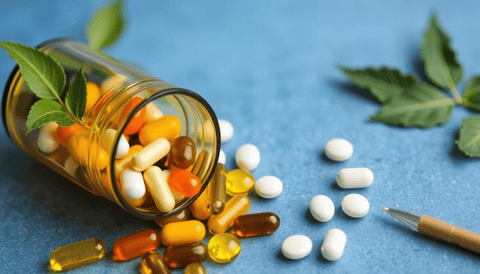
Bioavailability is a fundamental concept for anyone taking medication or supplements. It refers to the amount of a substance that enters your bloodstream and is available to have an active effect. Bioavailability problems occur when this process is less efficient than intended, meaning your body may not be getting the full dose from what you consume. This can make a medication seem less effective or a supplement appear underwhelming. This page explores the main reasons these problems happen, including formulation, biological differences, and interactions, and how you can approach these challenges with the help of your healthcare provider.
Defining Bioavailability and Its Core Problems
In simple terms, bioavailability is how much and how quickly a substance is absorbed and becomes available for the body to use. When discussing bioavailability problems, we're usually talking about a reduction in this availability. For medications, this could mean a drug is absorbed but broken down too quickly, or it is not absorbed at all. For supplements like vitamins and minerals, the same principles apply—their formulation can greatly affect how much of the nutrient your body actually receives.
Several broad factors are commonly responsible for these issues:
- Drug and supplement formulation: The chemical form of the ingredient, the presence of other binding agents, and the type of delivery system (tablet, capsule, liquid) all influence dissolution and absorption.
- Physiological variability: Individual differences in metabolism, gut health, age, and genetics can dramatically affect how a substance is processed. A 'one-size-fits-all' approach often fails due to this variability.
- Ingredient interactions: Certain foods, beverages, and other supplements can interfere with the absorption of a specific compound. This includes chelation (binding) with minerals, competition for transport mechanisms, and effects on stomach acid.
How Bodily Processes Affect Nutrient Absorption
Your body is a complex system designed to process what you consume, but this process isn't always perfectly efficient. The journey from ingestion to circulation involves several steps where challenges can arise. The digestive tract is not just a passive pipeline; it is an active barrier. For a substance to be bioavailable, it must survive the acidic environment of the stomach, evade degradation by digestive enzymes, and then pass through the intestinal wall.
This is where the concept of 'first-pass metabolism' is important. After being absorbed from the gut, substances are often shuttled directly to the liver, where they can be extensively metabolized. This means a significant portion of an active ingredient can be deactivated before it ever reaches general circulation. This natural process explains why different delivery methods, such as sublingual (under the tongue) or transdermal (through the skin), can sometimes offer higher bioavailability for certain compounds.
Formulation and Delivery: A Key Driver of Availability
Not all versions of a nutrient or medication behave the same way in the body. For example, the form of a mineral—such as magnesium citrate versus magnesium oxide—can have significantly different absorption rates. Similarly, whether a vitamin is fat-soluble (like Vitamins A, D, E, and K) and consumed with fat can impact its absorption. The choice of delivery on the shelf is often a matter of understanding these differences. This is a deep topic, and you can explore different nutrient categories like our selection of Vitamin D supplements or Magnesium supplements to see how different forms are offered.
Beyond the form itself, how a product is manufactured matters. Factors like particle size, whether the product is time-released, and the presence of absorption enhancers all play a role. This is why generic versions of a drug or different brands of a supplement can produce different results, even if the label says the same amount of active ingredient.
A Practical and Professional Approach to Fixing Absorption
If you suspect you have bioavailability problems, the most effective step is to have a detailed conversation with your doctor or pharmacist. They can review your current medication and supplement list to identify potential interactions. The conversation should cover areas such as:
- Timing: Does the substance need to be taken on an empty stomach or with food? Stomach contents can dramatically alter absorption for many compounds.
- Formulation: Would a different form of the medication (e.g., a liquid or a different salt form) be more appropriate for your needs?
- Interactions: Are there any known interactions with certain foods (like grapefruit juice) or other supplements you take, such as calcium or iron?
- Consistency: Sometimes the simplest fix is ensuring you take a dose at the same time every day to maintain consistent levels, under professional guidance.
Guiding Your Diet and Supplement Choices
While professional advice is paramount, understanding the principles of bioavailability helps you make better-informed choices. For instance, optimizing your dietary intake is the first step. The fat-soluble vitamins require dietary fat for absorption, and certain minerals like iron are better absorbed with Vitamin C. If you are considering supplements to help bridge any gaps, it is helpful to review general guides on multivitamins or other mineral supplements to understand the broader context of what is available. Remember that supplements are intended to complement a healthy diet, not replace it, and should be used with a clear understanding of their role.
By understanding the fundamentals of bioavailability and proactively discussing them with your healthcare team, you can take control of your health. You'll be better equipped to identify when a treatment isn't working, ask the right questions about your regimen, and make informed decisions that align with your body's unique needs. This knowledge ensures that the effort you put into your health is not lost at the point of absorption.