```html
What Is the Certification Process and Why Does It Matter?
Navigating the world of health products and professional credentials can feel overwhelming. You see seals, stamps, and claims everywhere, but what do they actually mean? At its core, a certification process is a systematic evaluation that verifies a product, person, or organization meets specific, pre-defined standards. It provides a layer of assurance, helping consumers make more informed choices in a marketplace filled with options that range from truly excellent to frankly misleading.
This guide will demystify the certification process, particularly as it applies to dietary supplements, vitamins, and health professionals. You will learn how to distinguish between different types of certifications, why they are critical for safety and quality, and how to use this knowledge to choose products that align with your health goals. We will move from general definitions to specific label-reading strategies, ensuring you finish with a clear, actionable framework for your next health-related purchase.
Defining the Certification Process in Simple Terms
In simple terms, a certification process is a formal, often third-party verification that something meets a set of agreed-upon criteria. This could involve testing a product in a laboratory, auditing a company's manufacturing facilities, or examining an individual's education and exam scores. The goal is independent confirmation. Instead of a company simply claiming its product is "high quality," a certification process provides external, evidence-based proof of that claim. This system creates accountability and trust, giving you a benchmark for evaluating options you may not fully understand.
The Difference Between Certification for Products, Professionals, and Organizations
It is crucial to recognize that certification applies to different entities in different ways. For products, certification usually involves lab testing for purity, potency, and contaminants (like heavy metals or pesticides). For professionals, it signifies that an individual (like a nutritionist or personal trainer) has completed specific education, accrued required experience, and passed a comprehensive exam. For organizations, it typically involves an audit of their processes, such as manufacturing facilities, to ensure they follow Good Manufacturing Practices (GMPs). Understanding this distinction helps you know what a "certification" actually guarantees in each context.
How Certification Differs from Standard Licensing or Registration
While often confused, certification is different from licensing and registration. Licensing is a mandatory, government-mandated process required to legally practice a profession (e.g., a medical doctor). Registration is often simpler, involving placing a product or professional on an official list. Certification, however, is typically voluntary and may be granted by a non-governmental organization. It demonstrates a higher, often more rigorous level of achievement or conformity than simply meeting minimum legal standards. For supplements, this voluntary step is a powerful indicator of a brand’s commitment to quality.
The Most Common Certification Paths and Types
Understanding the landscape of certifications helps you decode the labels you see every day. There are distinct paths for supplements, professionals, and manufacturing, each serving a unique purpose in ensuring quality and safety.
The Certification Process for Supplements and Vitamins
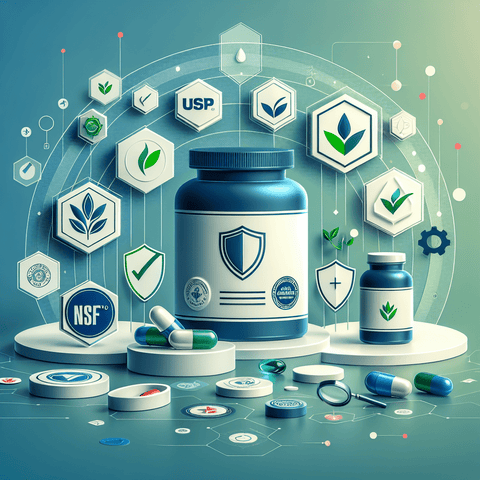
For vitamins and supplements, the certification process involves multiple layers. A brand may follow GMP protocols, but to truly stand out, they often seek third-party certification. This means an independent organization, like NSF International or USP (U.S. Pharmacopeia), tests the product to ensure it contains what the label says and does not contain harmful levels of contaminants. They also audit the manufacturing facility to ensure the process itself is sanitary and well-controlled. This provides a verifiable standard of quality that goes beyond a company's internal checks.
The Certification Process for Health and Nutrition Professionals
For professionals, certification offers a different kind of assurance. It confirms that a practitioner, such as a Certified Nutrition Specialist (CNS) or a Certified Health Coach, has met a certain level of academic knowledge and practical skill. The process typically involves completing an accredited degree program, accumulating supervised practice hours, and passing a rigorous board exam. Then, they must often complete continuing education to maintain the credential, ensuring their knowledge stays current. This process helps you trust the guidance you receive regarding your diet and lifestyle.
The Certification Process for Manufacturing and Quality Standards
Manufacturing certifications focus on the production environment. The most key among these is Good Manufacturing Practices (GMP). This certification process involves a thorough audit of a facility’s procedures for everything from raw material sourcing to final product packaging. It ensures that products are consistently produced and controlled according to quality standards. Certified facilities must have proper documentation, staff training, and sanitation protocols. This process minimizes the risk of contamination, incorrect ingredients, and dosage errors.
How the Certification Process Impacts Health and Wellbeing
The impact of robust certification is direct and significant. It bridges the gap between marketing claims and proven reality, playing a vital role in both personal health decisions and the broader public health landscape.
Why Third-Party Testing and Certification Builds Consumer Trust
When a product carries a third-party certification seal, it signals that an unbiased party has verified its contents. This transparency builds trust. It moves the conversation from "trust us" to "look at the evidence." This independent verification is particularly critical in the supplement industry, where products are not pre-approved by the FDA before hitting the market. Choosing certified products is a proactive way to exercise control over your health decisions, ensuring you are not relying solely on a brand's marketing promises.
The Nutritional Relevance of Choosing Certified Products
The certification process has direct nutritional relevance. A certified product is one where the active ingredients, like vitamins or minerals, have been verified for their presence and quantity. This means you are more likely to receive the nutritional support you pay for. For example, if a multivitamin is certified, you have higher confidence that its vitamin D or magnesium content is accurate. This reliability is fundamental for anyone using supplements to address a specific dietary or lifestyle need, as it ensures you're getting the intended nutritional benefit.
Sorting Out Certified Organic, Non-GMO, and Good Manufacturing Practices (GMP)–Certified Labels
Different labels address different aspects of quality. A Certified Organic label (like USDA Organic) focuses on how the ingredients are grown, avoiding synthetic pesticides and fertilizers. A Non-GMO label indicates the product was not made with genetically modified organisms. A GMP-Certified label confirms the manufacturing process is clean and safe. These certifications are not mutually exclusive; a supplement can be all three. The key is to understand what each seal guarantees: one for raw sourcing, one for ingredient composition, and one for production safety.
Signs a Product or Professional May Not Be Properly Certified
Understanding what a certification looks like is also about recognizing when it is absent or falsely claimed. Being able to spot the red flags can protect you from subpar products and misinformation.
The Red Flags That Point to Missing or Fake Certifications
Be wary of products that use vague, unbranded "certified" claims without a recognizable third-party seal. Check the label for a specific organization's name, like "USP Verified" or "NSF Certified." If the seal is missing the name of the certifying body, it may be meaningless. For professionals, a red flag is a credential that is not from an accredited institution or is described as "certification" but requires no exam or experience. Always verify a credential by checking with the issuing organization's official registry.
Why a Missing Certification Doesn't Always Mean a Poor-Quality Product
It is a common misconception that a lack of certification equals a bad product. Some excellent, high-quality brands choose not to pursue third-party certification. Reasons may include the significant cost, the time required, or a belief that their internal standards are already high. This means that while certification is a valuable quality filter, it is not the only one. You may need to do more research into a brand's reputation and manufacturing transparency if they lack a third-party seal.
How the Certification Process Protects You From Misleading Health Claims
A rigorous certification process doesn't just test for ingredients; it often verifies that the product doesn't contain undeclared ingredients, some of which could be harmful or interact with medications. This verification creates a factual barrier against misleading health claims. While certification doesn't evaluate whether a product cures a disease, it does ensure the product is what it says it is, preventing companies from using a cloak of legitimacy to sell products that are contaminated or mislabeled. This is a foundational safety measure for consumers.
Why the Certification Process Is Often Misunderstood
Despite its importance, the certification process is surrounded by confusion, particularly regarding its scope and what it actually proves. Clarifying these common misunderstandings is essential for consumers.
The Difference Between "Certified" and "Approved" by the FDA or Equivalent Agencies
A major point of confusion is the distinction between FDA "approval" and third-party "certification." The FDA does not approve dietary supplements for safety or efficacy before they are sold. They are regulated more like food. In contrast, third-party certification (e.g., NSF) is a voluntary, post-market verification process. While the FDA can take action against unsafe supplements, they do not certify them. Seeing a "certified" seal means a private organization, not the government, has verified the product’s quality.
Common Myths About the Certification Process for Dietary Supplements
One common myth is that "certification" means a product is effective at treating a disease. This is false. Certification simply verifies purity and potency—that the product contains what it claims without harmful contaminants. Another myth is that certified products are more expensive for no reason. The cost reflects the independent lab testing and facility audits that provide higher quality assurance. Finally, many believe that natural products cannot or do not need to be certified, but in fact, natural supplements are among the most widely certified product categories.
Why a Certification Process Standard Is Only as Strong as Its Auditor
The credibility of a certification is entirely dependent on the rigor and independence of the auditor. A certification is only as reliable as the organization providing it. Reputable certifiers like USP, NSF, and UL are meticulous, conducting unannounced facility inspections and performing regular, random product testing. A certification from a less well-known, less strict organization offers far less assurance. Therefore, you should look not just for the presence of a seal, but for the credibility of the organization behind it.
Individual Variability in Certification Standards
Standards are not global. What is required for certification in one country or for one product type can differ markedly from another, creating a complex environment for global consumers.
Why Certification Requirements Differ Between Countries and Regions
Regulatory frameworks vary significantly across the globe. A certification that is mandatory in Europe might be voluntary in the United States. For example, the European Food Safety Authority (EFSA) has a more centralized and stringent process for health claims, while the FDA relies more on post-market oversight. This creates differences in what standards exist. When purchasing supplements, especially online, it’s wise to be aware of the country of origin and understand that a certification standard in one region may not be the same as in another.
How Dietary Supplements Meet Certification Hurdles for Different Health Needs
Certifications do not tailor to individual health needs, but they ensure the products addressing those needs are reliable. Whether you are looking for a sports supplement, which might be certified for banned substances, or a general multivitamin, which is certified for ingredient accuracy, the process provides a baseline of quality. The hurdle for a product to be "NSF Certified for Sport" is higher than a general "USP Verified" product, as it includes screening for hundreds of substances banned by athletic organizations.
The Variance in the Certification Process for Food vs. Supplements vs. Personal Care Products
It is helpful to understand that the process for certifying a food item (like organic produce) is different from certifying a dietary supplement (for content) and a personal care product (often for safety and sourcing). For food, certification often focuses on agricultural practices. For supplements, it focuses on laboratory analysis and manufacturing. For personal care, it might focus on avoiding certain chemicals. Understanding this helps you apply the proper context and expectations to different product categories you encounter.
Diet, Lifestyle, and the Foundation of Nutritional Health
Before delving deeper into supplements, it's essential to re-establish the foundation: a balanced diet and healthy lifestyle are the most critical factors for nutritional health. Certification and supplements are tools to support this, not replace it.
Prioritizing Whole Foods and Balanced Dietary Patterns Before Supplements
Supplements are designed to "supplement" or add to your diet, not to substitute for it. Whole foods are incredibly complex, providing a matrix of fiber, phytochemicals, and nutrients that work together. No supplement can replicate this fully. A diet rich in colorful fruits, vegetables, whole grains, lean proteins, and healthy fats should always be the first priority. When your diet is already solid, you can better evaluate whether a supplement is truly an "insurance policy" or an unnecessary expense.
How Lifestyle Factors Influence Your Overall Nutritional Status
Your daily habits dramatically impact your nutritional needs. Sleep, stress, physical activity, and substance use all play a role. For example, chronic stress can increase your body's demand for magnesium, and intense athletic training can increase the need for electrolytes and certain B vitamins. Your lifestyle directly influences your nutrient requirements, which can, in turn, inform whether a specific certified supplement might be beneficial for you as a targeted addition to your health plan. Understanding your baseline is key.
Understanding When a Balanced Diet That is "Certified" for Safety Is Enough
For many people, a well-planned diet provides all the essential vitamins and minerals the body needs. If you are generally healthy, eat a wide variety of foods, and have no absorption issues, you may not need a supplement. The "certification" for your diet is its diversity. If you are meeting your nutritional needs through food, adding a supplement might not offer additional benefits for general wellness. Recognizing this can save you money and unnecessary consumption, solidifying food as your primary source of nutrition.
The Role of Certifications in Supplement Quality and Safety
When you do decide a supplement is right for you, the certification process becomes the primary filter for choosing between brands. It is the most reliable indicator of product quality.
How the Certification Process Elevates Product Purity and Potency
The certification process includes rigorous lab analysis to confirm that the active ingredient in a capsule or tablet matches the quantity stated on the label within a specific range. This ensures potency. Equally important is the screening for purity, which involves testing for common and hidden contaminants like heavy metals (lead, arsenic), pesticides, plasticizers, and mold. A certified product provides a guarantee that you are getting the intended dose without being exposed to unwanted or harmful substances.
The Biological Rationale for Choosing Verified, High-Quality Nutrient Forms
Choosing a certified product also gives you access to a more consistent quality of nutrient form. While certification doesn't dictate which form of magnesium or vitamin D is best, it verifies that the form specified is actually present. Your body absorbs and utilizes different forms of nutrients differently. For example, magnesium glycinate is generally better absorbed than magnesium oxide. A certified product ensures the label accurately reflects the form you have chosen, allowing you to make a conscious choice based on your goals and then trust that you are getting exactly that.
Understanding Why Testing and Certification Inform Better Supplement Choices
When you choose a certified product, you are using objective data to make a health decision. Instead of being swayed by clever marketing or pretty packaging, you are relying on the science of lab verification. This approach empowers you to compare different brands on an even playing field. For instance, you could compare two different omega-3 supplements by looking for the one that is third-party certified for purity and freshness (low oxidation levels), making you a more discerning and effective consumer.
When the Certification Process Matters Most for Your Supplement Selection
Not all supplements are created equal, and the need for certification can be more critical in certain scenarios. Knowing when to prioritize it can help allocate your time and budget wisely.
Scenarios Where Certified Ingredients Reduce Risk (Heavy Metals, Pesticides, and Contaminants)
This is particularly important for foods that are prone to contamination. For example, rice-based proteins often contain arsenic, and marine-sourced omega-3s can contain heavy metals or PCBs. In these cases, choosing a third-party certified product is not just a nice-to-have; it is essential for reducing your exposure to known toxins. A certification seal. Here, you can look specifically for certificates that analyze contaminants. Certified products provide peace of mind that these risks have been screened and are within safe limits.
Distinguishing Between General Nutritional Support and Clinical Necessity
For general wellness and balancing an everyday imperfect diet, a high-quality, certified multivitamin is often sufficient. The certification ensures that the foundational nutrients are present. However, for clinical necessity—such as addressing a diagnosed iron deficiency or a doctor-recommended high-dose vitamin D protocol—certification becomes less about "insurance" and more about precise dosing and purity. In either case, choosing a certified product reduces variables and ensures the success of your nutritional protocol.
Recognizing When a Certification Process Improves Bioavailability or Absorption
While certification tests what is in the bottle, it doesn't dictate bioavailability. However, it does ensure the product is formulated with a specific, possibly more absorbable ingredient. Some products use innovative, scientifically-studied forms that have better absorption rates, but these are often more expensive. The certification process verifies that you are getting this specific expensive, well-absorbed form and not a cheap, less absorbable filler. In this way, it supports your choice for a high-quality, bioavailable product.
How to Choose a Supplement That Has Completed a Rigorous Certification Process
Now that you know why certification matters, the next step is understanding how to select one in practice. This involves looking beyond the front label.
Look for Third-Party Seals and What They Actually Verify
The most reliable certification comes from independent, third-party organizations. Look for seals from USP (US Pharmacopeia), NSF International, or ConsumerLab.com. Each has its own rigorous standards. For athletes, the "NSF Certified for Sport" label is the gold standard for ensuring no banned substances. A "USP Verified" label verifies the supplement contains the declared ingredients and is free from harmful levels of contaminants. Understanding these brand seals is your first line of defense in choosing a quality product.
The Certification Process for Ingredient Sourcing vs. Finished Product Testing
Some certifications only apply to raw ingredients, while others test the finished product. It is essential to know the difference. A company might have a certified source for their raw material, but the final blend could still be contaminated during manufacturing. The most robust certifications test the finished product that you actually consume. For maximum safety, prioritize certifications that are applied to the final product rather than just the source materials.
Comparing Single-Ingredient and Combination Formulas with Certified Standards
Certification is important for both single-ingredient and combination formulas, but the challenge is different. For a single ingredient, the certification process is straightforward: test for that one substance. For a combination like a multivitamin, it is more complex, as the lab must test for every active ingredient present. This is why certified multivitamins are a strong testament to a manufacturer's commitment. A certified combination product provides a higher level of quality assurance than a non-certified one.
Matching Your Health Profile to a Specific Certified Product Format (Capsule, Powder, Liquid, etc.)
Certification applies to all formats—capsules, tablets, powders, liquids, and gummies. Your choice should be based on your personal preferences and needs. A powder might be ideal for those who struggle to swallow pills. A liquid might be suitable for children or those on a soft-food diet. The certification, however, remains crucial across all these formats. A certified powder still guarantees that the dose you mix into your smoothie contains the correct amount of active ingredients without contaminants, just as a certified capsule would.
What to Look For on a Supplement Label That Fits the Certification Process
Once you have identified a certified product, you still need to read the label correctly. Mastering label reading is the final step in making an informed choice.
Reading Serving Size, Potency, and Percentage of Daily Value (DV) Correctly
The "Supplement Facts" panel is your source of truth. First, check the "Serving Size" – this is the base unit for all other numbers. Next, look at the "Amount Per Serving" for each nutrient. Compare this to the "% Daily Value" (DV), which indicates what percentage of the recommended daily intake is met by one serving. A product that has a very high potency may provide over 100% of the DV for a Vitamin, which is normal for some nutrients but not all. Understanding this helps you avoid under- or over-dosing.
Identifying Ingredient Forms That Are Backed by Scientific Research or Certified Testing
Look for the precise chemical name of the nutrient. For example, for magnesium, you might see "Magnesium Glycinate" or "Magnesium Oxide." Some forms are more bioavailable than others. Similarly, for vitamin D, look for "D3 (cholecalciferol)" rather than "D2 (ergocalciferol)" for better potency. A certification process verifies that the label accurately reflects what is in the product, ensuring you are getting the specific, researched form you intend to take.
Watching for the Presence or Absence of Allergen and Dietary Preference Certifications
If you have allergies or follow a specific diet, this is a crucial step. Look for certifications like "Certified Gluten-Free," "Vegan," or "Non-GMO Project Verified." A rigorous certification process will also test for common allergens like soy, dairy, or nuts, even if they are not declared ingredients, to prevent cross-contamination. This gives you a higher level of safety if you are sensitive to these substances.
The Role of Expiration Dates and Proper Storage in the Certification Process
A product's certification doesn't make it last forever. Always check for a "Best By" or expiration date. This date indicates the time period within which the manufacturer guarantees the ingredients are at their stated potency. After this date, the product may degrade. Proper storage is also vital. Some vitamins are sensitive to heat and light. Following storage instructions on the label is key to preserving the quality of the certified product you paid for.
Who Benefits Most From Selecting Certified Supplements
While anyone can benefit from choosing a certified product for quality assurance, certain groups may find it particularly critical.
Older Adults, Restrictive Diets, and Those with Absorption Concerns
Older adults often have increased nutrient needs and decreased absorption efficiency. Certified supplements ensure they are getting a consistent dose without fillers that might be harder to digest. Similarly, individuals on restrictive diets like veganism or those with gastrointestinal conditions (like Crohn's disease) have a higher risk of deficiencies. The precision offered by a certified product is vital for managing these specific, high-risk requirements.
Athletes and Fitness Enthusiasts Looking for Contaminant-Screened Products
For athletes, a certified supplement is almost non-negotiable. Athletic governing bodies ban thousands of substances, and even trace amounts of a banned ingredient found in a supplement can cause a positive drug test, ruining a career. A certification like "NSF Certified for Sport" is your only safeguard against unintentional ingestion of banned stimulants or other prohibited compounds, ensuring you can compete clean and safely.
Individuals with Existing Health Conditions Who Need a Trusted Certification Process
For those managing chronic health conditions, the body is often in a more delicate state. Adding a contaminated or mislabeled product can be more than just a hassle; it can be a health risk. For example, a diabetic supplement that is not accurately labeled could contain more sugar than expected. Certified products provide the safety and consistency needed to avoid these adverse events, making them a more responsible choice for this vulnerable group.
Safety, Interactions, and Professional Guidance in the Certification Process
Insurance is a foundational piece of health, but it is not a free pass. You must still exercise caution and, where necessary, seek professional advice. The certification process does not replace medical oversight.
Understanding That a Certified Supplement Is Not Exempt From Interactions
It is a common misconception that a "clean" product is safe to take with any medication. This is false. Even a perfectly pure, certified supplement can interact with prescription drugs. For example, vitamin K can interfere with blood thinners like warfarin, and St. John's Wort can reduce the effectiveness of birth control pills. The certification process does not screen for these interactions; it only verifies the product's contents. You must be proactive about understanding these potential effects.
Medication Interactions That Warrant Review With a Healthcare Provider
Many supplements have documented interactions with common medications. Magnesium can interact with certain antibiotics and bisphosphonates, reducing their absorption. Calcium can interfere with thyroid medication if taken at the same time. Before adding any new supplement to your routine, especially a high-dose one, review it with your doctor or pharmacist. They can help you time your doses and avoid potentially dangerous interactions, ensuring your new certified product works with your medication, not against it.
Pregnancy, Medical Conditions, and The Need for Professional Oversight
Pregnancy and breastfeeding dramatically change your nutritional needs and introduce high stakes for any supplemental intake. Some herbs and high-dose vitamins that are safe for the general population could be harmful to a developing fetus. For managing specific medical conditions, self-supplementing can be dangerous. In these situations, the therapeutic dose of a nutrient must be carefully managed by a healthcare professional, and they can help you choose a safe, high-quality brand. This is not a scenario for self-guided decision-making.
When to Seek Medical Evaluation Rather Than Self-Diagnosing a Deficiency
Fatigue, brain fog, or brittle nails are common symptoms that might lead you to think you are deficient in something. However, these are non-specific and could be caused by many underlying issues. Rather than guessing and buying a bunch of supplements, it is wise to seek a blood test and medical evaluation. If you have a true deficiency, a doctor can guide you on the correct dosage and form needed to fix it safely, rather than you trying to figure it out on your own through trial and error.
Is a Certified Supplement Right for You? A Decision-Making Framework
To bring all this information together, here is a practical, step-by-step framework you can use to decide if a certified supplement fits into your personal health plan.
Step 1: Assess Your Dietary Gaps Without a Diagnosis
First, take an honest look at your diet. Are you consistently eating a wide variety of nutrient-dense foods? Do you struggle to get enough fruits, vegetables, or lean proteins? Are you following a specific diet like vegan or paleo? Identifying potential gaps in your food intake is statistical, not a diagnosable condition. For example, if you live in a northern climate, a gap in vitamin D intake is common.
Step 2: Determine Whether Whole Foods Can Close the Nutritional Gap
Now, consider if you can close that gap with food first. If you are low in fiber, perhaps you need more oats superfoods and legumes. If you are low in omega-3s, maybe you should increase your intake of fatty fish like salmon. Often, a simple change in eating habits is the most effective and sustainable solution. If you can't or won't eat the right foods, a supplement might be a convenient second choice.
Step 3: Consider the Certification Process as a Quality Filter, Not a Health Guarantee
If you've decided food alone isn't enough, approach the supplement aisle with the understanding that certification is your quality filter. It is not a guarantee of health outcomes or an anti-disease pill. It is a guarantee of purity and potency. Using this criterion, you can quickly eliminate many products that fail to meet this high standard, focusing only on those that have been independently verified for what they claim to be.
Step 4: Choose a Product Using the Label and Testing Criteria You Just Learned
Finally, match a certified product to your specific gap. Use the label-reading skills you learned to select a product that matches your health profile. If you are deficient in iron, look for a certified version of a well-absorbed form like iron bisglycinate. Start with the recommended serving size and evaluate how you feel. Consult your healthcare provider about how best to integrate it. For more specific needs, you can explore related resources like those for vitamin D or magnesium to understand more about your choice.
Final Thoughts on Mastering the Certification Process
Mastering the certification process is a step towards becoming a more confident and empowered consumer. It's about shifting your focus from clever marketing to verified reality.
The Key Takeaway: Certification Is a Signal, Not a Cure
It’s essential to remember that certification is a powerful signal of product quality, not a promise of miraculous health results. It does not diagnose, treat, or cure any condition. Instead, it provides a trustworthy foundation for your health choices. It ensures that the building blocks you choose to support your health are structurally sound, free from harmful materials, and precisely dosed, allowing your healthy diet and lifestyle to work effectively without the risk of unknown variables.
Making Informed, Confident Choices About Your Health and Nutritional Future
Armed with the knowledge of what certification is and what it isn't, you are now better prepared to navigate the complex world of dietary supplements. You can approach your health decisions with a blend of skepticism and confidence—skepticism of unsubstantiated claims and confidence in evidence-based verification. This understanding helps you build a personalized, sustainable, and effective wellness routine, whether that's solely through a nutrient-rich diet or a well-chosen, certified supplement to fill in the gaps. To continue building your knowledge on specific nutrients and supplement types, our comprehensive natural supplement collections offer further educational material. You can also browse our guides on related topics like B vitamins and multivitamins for more detailed information.
Key Takeaways
- The certification process is a third-party system for verifying that a product or professional meets specific, transparent standards.
- For supplements, certification typically verifies purity, potency, and contaminant levels, but it does not prove the product can treat or cure diseases.
- Look for certifications from reputable, independent organizations like USP, NSF, or ConsumerLab, as the "seal" is only as reliable as the auditor behind it.
- A missing certification does not automatically mean a product is low quality, but it does mean you need to do additional research into the brand's practices.
- Your diet of whole foods is the primary source of nutrition; supplements are intended to fill specific gaps, not replace a healthy lifestyle.
- Individual needs vary; groups like older adults, athletes, and those with chronic conditions often have a higher need for the assurance that certified products provide.
- Even certified supplements can interact with medications, so it's essential to consult a healthcare provider before adding them to your routine, especially if you are on other medications or are pregnant.
- Mastering label reading—checking for serving size, potency, ingredient forms, and expiration dates—is a crucial companion skill to understanding product certifications.
Frequently Asked Questions
What does "certification process" mean?
The certification process is a formal, structured evaluation performed by an independent third-party to verify that a product, service, or individual meets specific, pre-defined standards. This could involve laboratory testing, facility audits, or comprehensive exams, and it results in the issuance of a certificate or seal if the criteria are met.
Why is third-party certification for supplements important?
Third-party certification for supplements is crucial because the FDA does not pre-approve these products for safety or efficacy before they are sold. An independent certification provides a layer of quality control by verifying the product contains the ingredients listed on the label, in the correct amounts, and are free from harmful contaminants like heavy metals, pesticides, and microbes.
What is the difference between GMP certification and a product certification like USP?
GMP (Good Manufacturing Practices) certification is focused on the facility and the manufacturing process, ensuring they are clean, controlled, and properly documented. A product certification, like a USP Verified seal, includes testing of the finished product itself. The best scenario is finding a product made in a GMP-certified facility that also has a third-party product certification.
Can a supplement be both certified organic and certified for purity?
Yes, a supplement can have multiple certifications. An organic certification (like USDA Organic) applies to the farming and sourcing of ingredients, avoiding synthetic pesticides and fertilizers. A purity certification (like NSF) applies to the finished product and manufacturing process, testing for contaminants. A product can successfully meet the requirements for both, offering a higher level of assurance for the consumer.
Is a "certified" supplement safe for everyone to take?
No. Certification indicates the product is free from contaminants and accurately labeled, but it does not mean it is safe for every individual. For example, a high-potency supplement can interact with prescription medications or be inappropriate for a person with a specific medical condition. Always consult with a healthcare provider to determine if a particular certified supplement is safe for you.
How do I know if a certification seal on a product is real?
Check the seal for the name of the issuing organization, such as USP, NSF, or UL. You can then go to that organization's official website and search their verified product databases using the product's lot number or brand. If the seal claims to be certified by an organization you cannot find or verify, it may be a counterfeit or misleading claim.
Why are certified supplements often more expensive?
Certified supplements often cost more because the process itself is expensive. The brand must pay for the raw material testing, finished product testing, and routine facility audits by the third-party certification body. This additional cost is passed onto the consumer, but it reflects the extra cost of providing a verifiable level of quality and transparency.
What should I do if I think I have a nutrient deficiency?
The first step is not to buy a supplement, but to consult a healthcare professional. They can evaluate your symptoms, discuss your medical history, and order appropriate blood tests to accurately determine if you have a deficiency. Once you have a diagnosis, they can recommend the appropriate dosage and form of a nutrient for your specific needs.
Do athletes need a different type of certification?
Many athletes prefer supplements that have been specifically certified for sport, such as those carrying the "NSF Certified for Sport" seal. This certification includes additional screening for hundreds of substances banned by major athletic organizations, protecting athletes from unintentional doping violations. It’s a higher standard than general supplement certifications.
Does a certification process test for how well my body absorbs a nutrient?
No, certification tests what is in the bottle, not how well your body absorbs it. Bioavailability is dependent on various factors, including the chemical form of the nutrient, your digestive health, and what you are eating it with. Certification ensures that you are getting the specific form of the nutrient listed on the label, but it doesn't guarantee absorption.
Are all 'Certified' labels the same for dietary supplements?
No, the standards behind different certification marks vary. Some are rigorous, involving in-depth batch testing and facility audits. Others are less so. It's important to research the specific certifier. Look for well-known, internationally recognized organizations and understand what exactly their seal verifies, whether it's 'contaminant-free in the final product' or 'made in a GMP-compliant facility.'
If a product does not have a certification seal, should I avoid it?
Not necessarily. Some small, high-quality brands may not seek third-party certification. Without a seal, you must do more due diligence. You can research the brand's reputation, ask for certificates of analysis (CoAs) for their products, and ensure they are transparent about their sourcing and manufacturing. Certification is helpful, but it is not the only indicator of quality.
Related Keywords
- Certification process
- Third-party supplement testing
- NSF Certified for Sport
- USP Verified supplements
- GMP certified manufacturing
- Non-GMO certified vitamins
- Certified organic supplements
- Supplement purity and potency
- Dietary supplement quality standards
- Contaminant screening for vitamins
- How to read a supplement label
```