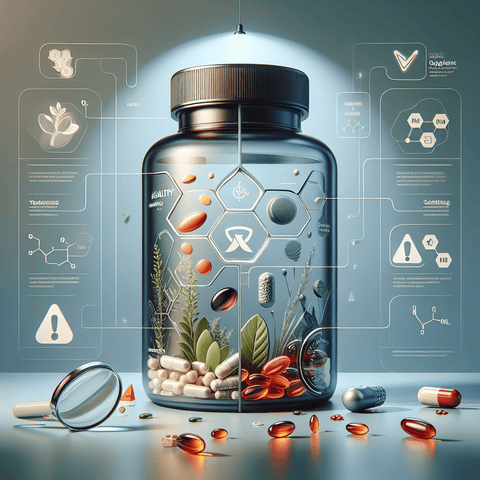
Meisterhaft sauberes Supplement-Labeling beginnt mit einem sorgfältigen, bewussten Ansatz für das, was auf einer Flasche steht. Lesen Sie Etiketten wie ein Profi, indem Sie die Sprache der Hersteller lernen, erkennen, wo Informationen vorhanden sind, und notieren, was fehlen könnte. Sauberes Supplement-Labeling hebt Transparenz, konsistente Benennung und die Verwendung klarer, überprüfbarer Details hervor, anstatt auf Marketing-Hype zu setzen. Um Ihre Fähigkeiten für sauberes Supplement-Labeling zu schärfen, konzentrieren Sie sich auf die Struktur des Etiketts: die Portionsgröße und die Gesamtanzahl der Portionen pro Behälter, die Zutatenliste in absteigender Reihenfolge nach Gewicht sowie die Menge pro Portion für jeden aufgeführten Artikel. Achten Sie auf „Proprietary Blends“ — sie verschleiern die genauen Mengen der enthaltenen Zutaten, was Ihre Vergleichsmöglichkeiten einschränkt. Suchen Sie nach Warnhinweisen zu Allergien, Vorsichtsmaßnahmen sowie Hinweisen auf Füllstoffe, Bindemittel, künstliche Zusätze oder unklare Begriffe, und überprüfen Sie, ob etwaige Angaben zur Potenz durch die auf dem Etikett angegebenen Zahlen gestützt werden. Schließlich erkennen Sie versteckte Inhaltsstoffe und risikoreiche Zusatzstoffe, indem Sie nach vagen Begriffen wie „natürliche Aromen“ oder „Gewürzextrakt“, ungewöhnlichen Farbstoffen, synthetischen Konservierungsstoffen oder langen Listen mit unbekannten Zutaten Ausschau halten. Überprüfen Sie, ob Drittzertifizierungen oder Testaussagen vorhanden sind (zum Beispiel USP, NSF oder ähnliche Programme) und seien Sie vorsichtig bei Aussagen, die Sicherheit suggerieren, ohne vollständige Offenlegung. Kurze Checkliste: 1) Entspricht der Produktname dem Etikett? 2) Sind alle Zutaten aufgeführt, mit Mengenangaben, wo möglich, und ist eine klare Unterscheidung bei aktiven Inhaltsstoffen vorhanden? 3) Gibt es eine proprietäre Mischung, und sind die Mengen offengelegt? 4) Sind Allergiehinweise vorhanden und korrekt? 5) Sind künstliche Farben, Geschmacksstoffe oder Konservierungsstoffe enthalten? 6) Gibt es Drittanbieter-Zertifizierungen oder Testhinweise? 7) Ist das Batch- oder Haltbarkeitsdatum sichtbar? 8) Wenn etwas unklar ist, wenden Sie sich an den Hersteller zur Klärung oder entscheiden Sie sich, das Produkt zu meiden.
Saubere Ergänzungskennzeichnung: Lesen Sie Etiketten wie ein Profi & vermeiden Sie versteckte Inhaltsstoffe
Navigating the world of dietary supplements can feel overwhelming. With countless products on the shelf, each with its own label, understanding what you are actually buying is crucial. This guide focuses on clean supplement labeling, helping you decode the information on a bottle so you can make choices that align with your health goals and values. We'll cover what a clean label means, how to read one effectively, and how to spot hidden ingredients that might not align with your expectations.
What Is Clean Supplement Labeling?
Clean supplement labeling is a concept centered on transparency and clarity. It implies that a product's label accurately represents its contents without unnecessary hidden ingredients or misleading marketing language. A commitment to clean labeling means a manufacturer prioritizes open communication with the consumer, using straightforward terminology and providing verifiable information. This approach is about empowering you to understand exactly what you are putting into your body, moving beyond buzzwords to focus on factual details.
In practice, this involves a consistent and honest presentation of information. It includes listing ingredients by their common names, avoiding vague descriptors where specific ones are required, and clearly stating the amount of each active ingredient per serving. While 'clean' is not a legally regulated term for supplements, it signals a manufacturer's philosophy towards consumer education and product quality.
How to Read a Supplement Label Like a Pro
Reading a supplement label effectively means moving beyond the front-of-package claims and focusing on the detailed information provided. Here are the key areas to examine to understand what's really in the product.
The Supplement Facts Panel
This is the most critical part of any supplement label. It provides the standardized information you need to compare products. Focus on the following:
- Serving Size and Servings Per Container: This tells you the suggested amount for one serving and how many servings are in the whole bottle. Always compare products using the same serving size.
- Amount Per Serving: This lists the quantity of each dietary ingredient in one serving, usually in milligrams (mg) or micrograms (mcg). This allows for easy comparison between different brands.
- % Daily Value (%DV): This percentage shows how much of a recommended daily nutrient is provided by one serving. Keep in mind that not all nutrients have an established Daily Value.
- Ingredient List: Ingredients are listed in descending order by weight. The ingredients present in the largest amounts are listed first. For dietary ingredients, the list may be separate from the 'Other Ingredients' section, which includes excipients like fillers and binders.
Understanding Proprietary Blends
A 'proprietary blend' is a mixture of ingredients where the label only shows the total weight of the blend, not the individual amount of each component. This prevents you from knowing exact dosages of each ingredient, making it difficult to assess the product's potency or compare it to others. If a product uses a proprietary blend, weigh the lack of transparency against the potential benefits. A clean label philosophy would generally favor full disclosure.
Spotting Hidden Ingredients and Risky Additives
Beyond the primary nutrients, supplements can contain a variety of other ingredients used for manufacturing, preservation, or appearance. Learning to identify these can help you avoid unnecessary or unwanted additives.
- Vague Terms: Be cautious of terms like 'natural flavors,' 'spice extract,' or a long list of unpronounceable chemical names. These can be placeholders for a range of substances.
- Artificial Additives: Look for and consider avoiding artificial colors (e.g., FD&C Yellow No. 5), artificial sweeteners (e.g., aspartame, sucralose), and certain synthetic preservatives unless you are comfortable with their inclusion.
- Fillers and Binders: These are used to give a supplement its shape or bulk. Common ones include magnesium stearate, cellulose, and silica. While generally considered safe, some people prefer to avoid them.
The Role of Certifications and Third-Party Testing
Third-party testing and certifications can provide an extra layer of assurance that a product meets certain quality standards. Organizations like USP (United States Pharmacopeia) and NSF International offer verification programs that test for purity, potency, and the absence of contaminants. A product carrying one of these seals has been independently reviewed. While this is a strong indicator of quality, its absence does not automatically mean a product is poor, but it may warrant more careful investigation.
Your Practical Checklist for Evaluating a Supplement Label
To simplify the process, use this checklist to quickly evaluate any supplement label before making a purchase.
- Is the product name consistent with the ingredient list?
- Are all active ingredients listed with their amounts per serving?
- Is there a proprietary blend? If so, are you comfortable with the lack of individual ingredient amounts?
- Are allergen warnings (e.g., milk, soy, gluten) present and accurate for your needs?
- Are there any artificial colors, flavors, or preservatives listed?
- Are there any third-party certifications or testing statements on the bottle?
- Is the batch number or expiration date clearly visible?
- If anything is unclear, have you considered contacting the manufacturer for clarification or choosing a different product?
Labeling Regulations and Beyond
In the United States, the FDA has specific labeling requirements for dietary supplements, which include mandatory elements like the Supplement Facts panel and a statement of identity. These regulations set a baseline for what must be on a label. However, 'clean labeling' is often a step above these legal requirements, reflecting a voluntary commitment to even greater transparency. Understanding the difference between what is legally required and what is considered a clean-label best practice is key to making informed choices.
By mastering the skill of reading supplement labels, you can confidently navigate the market, choose products that align with your preferences, and take a more active role in your nutritional health. For more in-depth information on specific nutrients and how to choose quality supplements, you may find our guides on multivitamins ingredients and usage or our overview of supplements from healthy origins helpful as you continue your research.