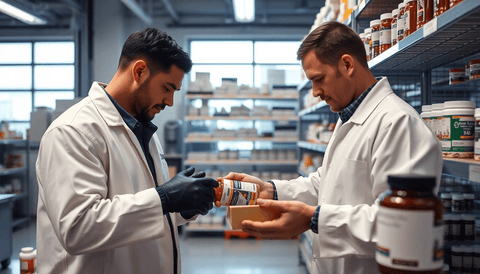
EU-Sicherheitsstandards für Nahrungsergänzungsmittel: Wie sie Ihre Gesundheit schützen


Entdecken Sie, wie die Sicherheitsstandards für EU-Zusatzstoffe den Markt gestalten und Ihnen helfen, die Vielzahl der Produkte zu navigieren. Diese Standards legen den Rahmen dafür fest, was als Nahrungserg supplement verkauft werden darf, wie Produkte getestet werden müssen und wie Informationen für Verbraucher präsentiert werden. Das Verständnis der EU-Zusatzstoffsicherheitsstandards kann Ihnen dabei helfen, legitime Produkte zu erkennen und sie von Artikeln zu unterscheiden, die die Anforderungen nicht erfüllen. Das System umfasst Vorabregeln für Inhaltsstoffe und laufende Überwachungen durch nationale Behörden, um die Einhaltung in den Mitgliedstaaten zu überwachen, mit integrierten Mechanismen für Rückverfolgbarkeit und zeitnahe Maßnahmen bei Problemen. Die Tests nach den EU-Zusatzstoffsicherheitsstandards konzentrieren sich auf die Bestätigung der Identität und Zusammensetzung der Inhaltsstoffe, die Überprüfung der deklarierten Mengen sowie die Kontrolle auf Kontaminanten wie Schwermetalle, Pestizide oder andere unerwünschte Substanzen. Hersteller und Lieferanten müssen die Gute Herstellungspraxis (GMP) einhalten und Inhaltsstoffe aus zugelassenen Listen verwenden, unterstützt durch Testergebnisse oder Lieferantenzertifikate. Nationale Behörden können Inspektionen und Marktüberwachungen durchführen, und EU-weite Warnungen können durch koordinierte Sicherheitsnetzwerke Rückrufen auslösen. Die Etikettierungsvorschriften gemäß den EU-Zusatzstoffsicherheitsstandards verlangen eine eindeutige Produktbezeichnung (z.B. Nahrungserg supplement), eine vollständige Zutatenliste, Nettomenge, Mindesthaltbarkeitsdatum oder Haltbarkeitsdauer sowie Lagerhinweise. Das Label muss den Namen und die Kontaktdaten des verantwortlichen Unternehmens enthalten, das Ursprungsland, soweit relevant, sowie die empfohlene tägliche Dosis. Allergeninformationen und Hinweise auf Vorsichtsmaßnahmen müssen, soweit zutreffend, bereitgestellt werden. Gesundheits- oder andere Aussagen sind streng reguliert und dürfen nur verwendet werden, wenn sie auf EU-Ebene genehmigt sind, wobei die Aussage durch überprüfte Nachweise gestützt wird. Diese strukturierte Etikettierung hilft Ihnen, wesentliche Produktinformationen auf einen Blick zu überprüfen. Die Beratung bei der Auswahl sicherer Ergänzungsmittel beginnt mit Marken, die die Einhaltung der EU-Zusatzstoffsicherheitsstandards nachweisen. Überprüfen Sie, ob die Verpackung alle erforderlichen Informationen bietet und ob das Produkt unter GMP-Bedingungen hergestellt wurde. Achten Sie auf eine klare Chargennummer, Rückverfolgbarkeitsdetails und die Kontaktdaten des Händlers. Vergewissern Sie sich, dass die Inhaltsstoffe aus zugelassenen Listen stammen und dass die Etikettierung keine unbestätigten Behauptungen enthält. Für zusätzliche Sicherheit konsultieren Sie offizielle Ressourcen wie nationale Verbraucherportale oder EU-Sicherheitswarnungen und sprechen Sie bei Fragen mit einem Apotheker oder Händler. Durch das Verfolgen von Sicherheitsmitteilungen und Maßnahmen können Sie mit Vertrauen einkaufen.


From Seed to Supplement: How Top Brands Ensure Supplement Quality Control - Topvitamine
July 29, 2025
Die Qualitätskontrolle bei Nahrungsergänzungsmitteln beginnt bei der Auswahl und Prüfung der Rohstoffe und endet erst nach Herstellung, Abfüllung und Lagerung. Dieser Ratgeber erklärt, welche Rolle GMP, unabhängige Labortests, Bio-Zertifizierung und EU-Vorschriften spielen. Außerdem erfahren Sie, warum Clean Label kein geschütztes Qualitätssiegel ist und welche Angaben Sie vor der Auswahl eines Supplements prüfen sollten.

When you buy a food supplement in the European Union, a comprehensive system of rules works behind the scenes to help ensure the product is safe, accurately labelled, and honestly presented. These EU supplement safety standards are built on the principle that ingredients should be vetted before they reach the market and that products should be consistently monitored after they are sold. This page explains the core pillars of this system—ingredient approval, manufacturing practices, testing, and labeling—so you can confidently identify legitimate products and make informed choices.

The Core Framework of EU Supplement Rules

The European Union has established a harmonized legal framework for food supplements, primarily through Directive 2002/46/EC. This directive sets out a clear definition of what constitutes a food supplement: concentrated sources of nutrients or other substances with a nutritional or physiological effect, sold in dose form such as capsules, tablets, or sachets. Crucially, it establishes a list of permitted vitamins and minerals that manufacturers can use, providing a clear legal basis for products.

Beyond these essential nutrients, other substances like amino acids, enzymes, and botanicals are governed by the rules established in individual member states or by European Commission decisions. This means the regulatory landscape can be more complex for non-vitamin ingredients. However, the core philosophy remains consistent: products must be safe and not mislead consumers. This pre-market assessment is the first major step in the safety journey.

How Supplement Manufacturing and Testing is Regulated

The responsibility for a safe product begins with the manufacturer. Under EU regulations, manufacturers must operate under the principles of Good Manufacturing Practice (GMP). This involves establishing robust quality control procedures throughout the production process. It ensures that products are consistently produced and controlled according to quality standards, minimizing risks like contamination or incorrect dosage.

Testing is a critical component of GMP. Manufacturers are expected to verify that their products meet specifications. This includes:

  • Confirming the identity and composition of ingredients used.
  • Verifying that the quantity of active ingredients matches the label claim.
  • Screening for common contaminants, such as heavy metals, pesticides, and microbiological organisms.

While manufacturers are responsible for internal testing, EU member states also have a role to play. National authorities can conduct their own inspections and perform market surveillance. European-wide safety concerns are shared through the Rapid Alert System for Food and Feed (RASFF), which allows member states to quickly exchange information and coordinate actions, like product recalls, to protect consumers.

Understanding Labeling and Authorized Health Claims

The label is your primary source of information as a consumer. EU rules require that it provides several key pieces of information in a clear and accessible way. A compliant label will usually include the product name (often “food supplement”), a full list of ingredients, the net quantity of the product, and a best-before date. It must also provide storage instructions and the name and address of the responsible food business operator.

Of equal importance is the recommended daily dose. The label must specify how much of the product should be consumed, and it must include a warning not to exceed this stated dose. Information about allergens is mandatory as well. Most significantly, any health or nutritional claims made on the product—such as “vitamin D contributes to the normal function of the immune system”—must be authorized by the European Food Safety Authority (EFSA) and approved by the European Commission. This ensures that claims are supported by sound scientific evidence and are not misleading.

Practical Guidance for Shopping With Confidence

While a supplement brand cannot be “certified” by the EU in a universal way, there are clear indicators that a product is likely to be compliant and therefore a safer choice. First, check the label for completeness. If essential information is missing or hard to read, it is a red flag. Look for a batch or lot number, which aids in traceability should a recall occur. Verify that the product’s claims are measured and not overly dramatic.

You can also use the system proactively. To stay informed about safety issues, you can consult public resources like the RASFF portal or national consumer safety websites. These sites publish alerts about products that have been recalled due to safety issues. Additionally, speaking with a pharmacist or healthcare professional is always a good practice when deciding to start a new supplement.

To explore the diverse range of products that operate within these rules, you might be interested in learning more about specific supplement categories. Whether you are curious about basic nutrients, specialty ingredients, or how supplements fit into a broader diet, we have resources to help you navigate the market.

You can start with our guide to natural supplement categories to see how these regulations apply to common products. If you are interested in how specific nutrients are addressed, our section on well-researched supplement ingredients may be a useful next step.

Glossary of Key Terms

Understanding these terms can help you make more informed decisions:

  • Good Manufacturing Practice (GMP): A system for ensuring that products are consistently produced and controlled according to quality standards.
  • RASFF (Rapid Alert System for Food and Feed): An EU system that enables member states to share information about serious risks detected in food and feed, leading to coordinated recalls.
  • Approved Health Claim: A statement about a relationship between a food, nutrient, or substance and health that has been scientifically substantiated and legally authorized by the European Commission.
  • Permitted List: The official list of vitamins and minerals, and their specific forms, that are authorized for use in food supplements within the EU.

By familiarizing yourself with these standards, you move from being a passive consumer to an active and informed one, capable of evaluating products based on the robust framework the EU has built.