
{"" :[ "Die Wechseljahre sind eine natürliche Phase im Leben jeder Frau, die dennoch viele Herausforderungen mit sich bringen kann. Hitzewallungen und Schlafstörungen gehören zu den häufigsten Beschwerden, weshalb sich viele Frauen natürlichen Alternativen zuwenden. In der EU sind Nahrungsergänzungsmittel streng reguliert, und auch für pflanzliche Präparate gelten klare Vorgaben. In diesem Ratgeber erfahren Sie, welche Pflanzenstoffe in der Forschung diskutiert werden, worauf Sie beim Kauf achten sollten und warum ein ganzheitlicher Ansatz so wichtig ist.", "", "„Der Markt für pflanzliche Präparate ist unübersichtlich. Verbraucherinnen brauchen klare Informationen, um sichere und qualitativ hochwertige Produkte zu erkennen.", "– Dr. med. Anna Weber, Fachärztin für Gynäkologie", "", "Bevor Sie sich für ein Präparat entscheiden, lesen Sie unbedingt die Hinweise auf der Verpackung. Konsultieren Sie bei Fragen auch Ihre Ärztin oder Apothekerin. Weitere wertvolle Tipps zu diesem Thema finden Sie in unserem Ratgeber „Pflanzliche Nahrungsergänzung sicher anwenden“.", "", "Pflanzliche Nahrungsergänzung sicher anwenden", "", "", "Pflanzliche Präparate und ihre Wirkstoffe", "", "Die Forschung hat einige Pflanzen genauer untersucht, die in der Erfahrungsheilkunde traditionell eingesetzt werden. Dazu gehören Extrakte aus der Traubensilberkerze (Cimicifuga racemosa), Rotklee (Trifolium pratense) und Mönchspfeffer (Vitex agnus-castus). Die Studienlage ist gemischt, und die Ergebnisse sind nicht eindeutig.", "", "Wichtig zu verstehen: Pflanzliche Präparate sind keine Medikamente. Sie ersetzen keine ärztliche Behandlung und sind nicht dazu bestimmt, Krankheiten zu heilen. Vielmehr können sie im Rahmen eines gesunden Lebensstils unterstützend wirken – das bestätigen auch die strengen Regeln für gesundheitsbezogene Angaben in der EU, die nur wissenschaftlich belegte Aussagen erlauben.", "", "Traubensilberkerze (Cimicifuga racemosa)", "", "Dieser nordamerikanische Hahnenfußgewächs wird in der Pflanzenheilkunde verwendet. Einige klinische Studien lassen vermuten, dass er helfen könnte, das allgemeine Wohlbefinden während der Wechseljahre zu unterstützen. Die Ergebnisse sind jedoch nicht einheitlich, und die genauen Wirkmechanismen sind noch nicht vollständig geklärt. Man geht davon aus, dass die Pflanze Einfluss auf bestimmte Botenstoffe des Körpers hat.", "", "Rotklee (Trifolium pratense)", "", "Die Pflanze enthält von Natur aus sogenannte Phytoöstrogene – sekundäre Pflanzenstoffe, die eine ähnliche Struktur wie körpereigenes Östrogen aufweisen. In wissenschaftlichen Studien ist die Wirkung von Rotklee-Extrakten auf typische Beschwerden in den Wechseljahren nicht eindeutig belegt. Auch hier gilt: Jeder Mensch reagiert anders.", "", "Mönchspfeffer (Vitex agnus-castus)", "", "Mönchspfeffer ist seit langem in der Erfahrungsheilkunde bekannt. Er wird traditionell zur Unterstützung des weiblichen Wohlbefindens verwendet. Die Studienlage ist begrenzt, und die Wirkung kann individuell unterschiedlich ausfallen.", "", "Weitere Pflanzenstoffe und Nährstoffe", "", "Weitere Pflanzenstoffe und Nährstoffe", "", "Neben den genannten Pflanzenextrakten gibt es weitere Stoffe, die in diesem Zusammenhang diskutiert werden. Lassen Sie sich am besten individuell in der Apotheke oder bei Ihrer Ärztin beraten.", "", "B-Vitamine, insbesondere Vitamin B6, werden für den normalen Hormonhaushalt benötigt. Sie können über die Nahrung oder ein gezieltes Präparat aufgenommen werden.", "Phytoöstrogene in der Ernährung", "", "Nicht nur in Kapseln stecken die Pflanzenstoffe: Bestimmte Lebensmittel wie Sojaprodukte, Leinsamen und Hülsenfrüchte enthalten von Natur aus nennenswerte Mengen an Phytoöstrogenen. Die Forschung hat untersucht, ob diese Stoffe eine schützende Wirkung haben – die Ergebnisse sind uneinheitlich, und es lassen sich daraus keine eindeutigen gesundheitsbezogenen Aussagen ableiten.", "", "Von einer übermäßigen Aufnahme von Phytoöstrogenen in konzentrierter Form raten Fachleute jedoch ab, solange die Studienlage nicht eindeutig ist. Die nahrungsbezogene Zufuhr über Sojaprodukte und Leinsamen im Rahmen einer ausgewogenen Ernährung ist unbedenklich.", "", "Sicherheit und Nebenwirkungen", "", "Wenn Sie sich für ein Produkt entscheiden, ist es wichtig zu wissen, dass auch pflanzliche Präparate Nebenwirkungen haben können. Diese sind in der Regel mild, können aber von Person zu Person unterschiedlich ausfallen.", "", "Zu den möglichen, vorübergehenden Nebenwirkungen gehören:", "", "leichte Magen-Darm-Beschwerden", "Kopfschmerzen", "Schwindelgefühle", "Hautreaktionen", "", "Achten Sie auf Ihren Körper und beobachten Sie, wie Sie auf das Präparat reagieren. Sollten unangenehme Symptome auftreten oder anhalten, setzen Sie das Produkt ab und fragen Sie Ihre Ärztin oder Ihren Arzt.", "", "Wechselwirkungen mit Medikamenten", "", "Pflanzliche Wirkstoffe können mit anderen Medikamenten in Wechselwirkung treten. Das gilt insbesondere für:", "", "blutgerinnungshemmende Medikamente", "Präparate zur Hormontherapie", "bestimmte Medikamente gegen Krebserkrankungen", "", "Eine sorgfältige Rücksprache mit Ihrem medizinischen Fachpersonal ist daher unerlässlich, bevor Sie mit der Einnahme beginnen.", "", "Einnahme und Dosierung", "", "Die richtige Dosierung lesen Sie am besten in der jeweiligen Packungsbeilage oder auf dem Produktetikett.", "", "Beachten Sie die folgenden Hinweise zur Anwendung:", "", "Nehmen Sie pflanzliche Präparate regelmäßig ein, um eine optimale Wirkung zu erzielen.", "Beginnen Sie die Einnahme erst nach Rücksprache mit Ihrer Ärztin oder Ihrem Arzt.", "Überschreiten Sie niemals die auf dem Etikett angegebene empfohlene Tagesdosis.", "Pflanzliche Präparate sind kein Ersatz für eine ausgewogene und abwechslungsreiche Ernährung und gesunde Lebensweise.", "", "Nahrungsergänzungsmittel müssen außerhalb der Reichweite von kleinen Kindern aufbewahrt werden.", "", "Für eine sinnvolle Ergänzung eignen sich Präparate mit einer transparenten Kennzeichnung der Inhaltsstoffe.", "", "Warum Zink für die Wechseljahre relevant ist", "", "Auch Mineralstoffe wie Zink spielen bei vielen Körperfunktionen eine Rolle. Zink ist ein essentielles Spurenelement, das der Körper nicht selbst herstellen kann. Es trägt zu einer normalen Funktion des Immunsystems bei und unterstützt den Schutz der Zellen vor oxidativem Stress.", "", "Die Auswirkungen eines Zinkmangels können vielfältig sein. Ob eine gezielte Nahrungsergänzung für Sie sinnvoll ist, sollten Sie am besten mit Ihrer Ärztin besprechen, um eine individuelle Beratung zu erhalten.", "", "Welche Nahrungsergänzungsmittel können die Wechseljahre unterstützen?", "", "Nahrungsergänzungsmittel können sinnvoll sein, wenn bestimmte Nährstoffe nicht ausreichend über die Ernährung aufgenommen werden. Besonders wichtig sind dabei:", "", "Vitamin D", "", "Vitamin D ist für die Erhaltung normaler Knochen unerlässlich und trägt zu einer normalen Funktion des Immunsystems bei. Der Körper kann es durch Sonnenlicht selbst bilden, jedoch kann die körpereigene Produktion in den Herbst- und Wintermonaten abnehmen.", "", "Was ist bei Vitamin D zu beachten?", "", "Es kann sinnvoll sein, den Vitamin-D-Spiegel im Blut zu überprüfen. Ihr Arzt kann Sie hierzu beraten. Die Einnahme von Vitamin-D-Präparaten kann in Absprache mit ärztlichem Fachpersonal erfolgen.", "", "Calcium", "", "Calcium ist ein wichtiger Mineralstoff, der zur normalen Muskelfunktion beiträgt und für die Erhaltung normaler Knochen von Bedeutung ist. Eine ausreichende Zufuhr über die Ernährung sowie gegebenenfalls durch Nahrungsergänzungsmittel ist wichtig.", "", "Magnesium", "", "Magnesium trägt zur normalen Funktion des Nervensystems und zur Verringerung von Müdigkeit und Ermüdung bei. Viele Frauen in den Wechseljahren schätzen die entspannende Wirkung.", "", "B-Vitamine", "", "B-Vitamine unterstützen den Energiestoffwechsel und die normale Funktion des Nervensystems.", "", "Fazit", "", "Pflanzliche Präparate können ein Baustein sein, um sich in den Wechseljahren wohler zu fühlen – für die einen sind sie eine wertvolle Unterstützung, für andere zeigen sie keine Wirkung. Die Studienlage ist nicht eindeutig, und es gibt keine Wunderwirkung.", "", "Entscheidend ist:", "", "Eine ausgewogene, nährstoffreiche Ernährung", "Regelmäßige Bewegung", "Stressreduktion durch Entspannungstechniken", "Ausreichend Schlaf", "Bei anhaltenden Beschwerden: ein Gespräch mit Ihrer Ärztin oder Ihrem Arzt", "", "Die Wechseljahre sind keine Krankheit, sondern eine natürliche Lebensphase, die sich mit der richtigen Unterstützung gut gestalten lässt.", "" ]}
Pflanzliche Präparate in den Wechseljahren: Natürliche Linderung bei Hitzewallungen, Stimmungsschwankungen und Energie
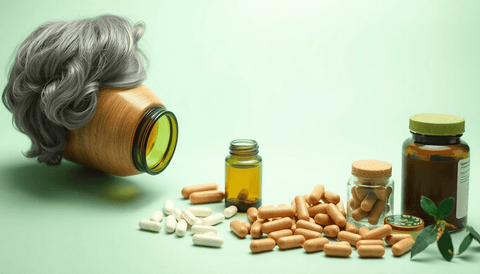
Nahrungsergänzungsmittel in der Menopause sind keine allgemeingültige Lösung. Welche Auswahl sinnvoll sein kann, hängt von den Beschwerden, der Ernährung, der individuellen Nährstoffversorgung und möglichen Wechselwirkungen ab. Dieser Ratgeber vergleicht Traubensilberkerze, Soja-Isoflavone, Rotklee, Calcium, Vitamin D und Omega-3-Fettsäuren. Außerdem erfahren Sie, worauf Sie bei Produkten achten sollten und wann ärztlicher oder pharmazeutischer Rat wichtig ist.
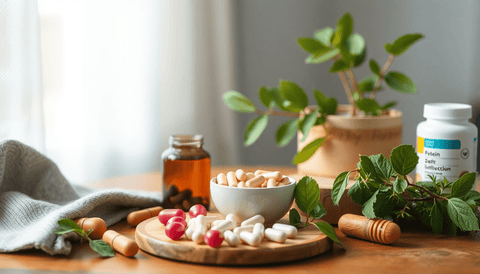
Das beste Nahrungsergänzungsmittel für die Wechseljahre gibt es nicht. Welche Ergänzung sinnvoll sein kann, hängt von Beschwerden, Ernährung, Nährstoffversorgung, Medikamenten und Vorerkrankungen ab. Dieser Ratgeber vergleicht Traubensilberkerze, Rotklee, Vitamin D, Calcium und Magnesium, erklärt wichtige Auswahlkriterien und zeigt natürliche Maßnahmen. Außerdem erfahren Sie, wann eine fachliche Abklärung bei Wechseljahresbeschwerden wichtig ist.