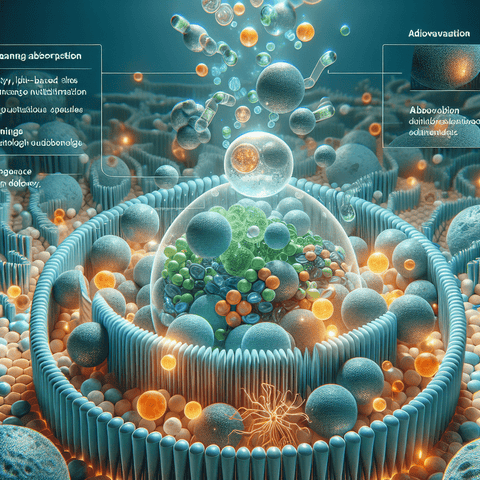
Maximieren Sie die Vitaminaufnahme durch liposomale Abgabe. Liposomale Vitaminaufnahme ist ein Begriff, der im Mittelpunkt der Formulationswissenschaft steht und beschreibt, wie Vesikelträger mit Vitaminen in einem Liefersystem interagieren. Liposomen sind winzige, kugelförmige Schalen, die aus Phospholipiden bestehen und aktive Verbindungen umschließen. Wenn Vitamine in diese Träger geladen werden, ändert sich ihre Mikroumgebung von einer einfachen Lösung zu einem strukturierten, schützenden Raum. Diese Übersicht skizziert, wie liposomale Systeme entwickelt werden, um den Weg von der Formulierung bis zur messbaren Präsenz in einem Zielmedium zu beeinflussen, wobei der Fokus auf Charakterisierung und Leistungsindikatoren liegt und nicht auf Produktbehauptungen. Mehrere Gestaltungsfaktoren bestimmen die Liposomale Vitaminaufnahme. Partikelgröße, Membranzusammensetzung und Oberflächenladung bestimmen das Verhalten eines Liposoms in einem bestimmten Medium. Hydrophile und lipophile Vitamine befinden sich in verschiedenen Bereichen des Vesikels, was die Einschlussstrategien und die Stabilität beeinflusst. Die Wahl der Lipide, des Cholesteringehalts und der Oberflächenmodifikatoren kann den Schutz vor Abbau sowie das Freisetzungsverhalten verändern. Zusammen formen diese Variablen das grundlegende Konzept der liposomalen Vitaminaufnahme, ohne Ergebnisse zu behaupten. Effizienz und Abfallminimierung sind praktische Ziele bei der liposomalen Formulierung. Die Einschluss-Effizienz gibt an, welcher Anteil des Ausgangs-Vitamins im Liposom endet, während unencapsuliertes Material erfasst und in den Produktionsprozessen gesteuert werden kann. Methoden wie Reinigungsschritte, Konditionierung und Qualitätskontrollabläufe helfen, ungebundenes Material und Nebenprodukte zu reduzieren. Durch die Betonung hoher Einschlussraten und sauberer Trennungen zielt das Design darauf ab, Materialverluste zu minimieren und den Ressourceneinsatz zu optimieren. Die vollständige Nutzung des Potenzials Ihrer Vitamine durch liposomale Abgabe erfordert ein Verständnis des Freigabeverhaltens, der Kompatibilität mit Formulierungskomponenten und der Stabilität unter erwarteten Lagerbedingungen. In-vitro-Modelle und analytische Tests bieten Einblicke, wie liposomale Vitaminaufnahmecharakteristika in kontrollierten Umgebungen interpretiert werden können. Die Sprache der liposomalen Vitaminaufnahme verbindet somit Werkstoffwissenschaften, analytische Charakterisierung und Prozessoptimierung und konzentriert sich darauf, zu beschreiben, wie eingeschlossene Vitamine innerhalb eines definierten Systems transportiert und freigesetzt werden.
Liposomale Vitaminaufnahme: Maximierung der Bioverfügbarkeit
Liposomal vitamin absorption represents an important topic in nutritional science and supplement formulation. This page serves as a broad introduction to the subject, explaining what liposomes are, how they function as delivery systems, and which factors determine their behavior. The goal is to provide a clear overview of the science, terminology, and key considerations without making unsubstantiated claims about specific health outcomes. For more detailed information on specific nutrients and their uses, explore our guide on natural supplements.
What Is a Liposome and How Does It Work?
A liposome is a tiny spherical structure composed of one or more phospholipid bilayers, similar to the membranes that surround every cell in your body. This unique composition allows liposomes to encapsulate various substances. Water-soluble (hydrophilic) vitamins sit in the aqueous core, while fat-soluble (lipophilic) vitamins can be housed within the lipid bilayer. This is a fundamental concept in liposomal delivery.
The primary function of a liposome as a delivery vehicle is protection. The phospholipid shell can shield the encapsulated vitamin from degradation in the digestive tract, theoretically allowing more of it to reach the absorption site intact. This protective effect is a key reason why researchers study liposomal systems for enhancing vitamin absorption.
In simple terms, the liposome acts as a protective carrier. It is designed to navigate the body's environment until it releases its contents at a specific location or time. The specific behavior is determined by its formulation, which is a complex process involving several design choices.
Key Formulation Factors in Liposomal Vitamin Absorption
The performance of a liposomal formulation is influenced by its physical and chemical characteristics. These factors are key areas of study in understanding how liposomal vitamin absorption works.
Particle Size and Surface Charge
The size of the liposome and its surface charge are two primary characteristics. Particle size can influence how the liposome interacts with biological barriers. The surface charge can affect its stability in suspension and its interaction with cells. These are measured and optimized during the formulation process.
Lipid Composition and Membrane Stability
The type of phospholipids used, along with the addition of cholesterol or other surface modifiers, determines the rigidity and fluidity of the liposome membrane. A more stable membrane can offer better protection to the encapsulated vitamin, but it may also slow down the release process. The balance between stability and release is a crucial decision in the design.
Encapsulation Efficiency and Stability
Encapsulation efficiency is defined as the percentage of the starting vitamin that is successfully loaded inside the liposome. High encapsulation efficiency is important for minimizing waste and ensuring the product is economically and efficiently produced. Additionally, the formulation must demonstrate stability under expected storage conditions to maintain its performance over time.
How Is Absorption Measured and Evaluated?
In a controlled setting, researchers evaluate liposomal vitamin absorption using various analytical methods. These include in vitro models, which simulate digestive or bodily conditions, to observe how the liposome releases its contents. Key performance indicators include the release profile, which is the rate at which the vitamin is released over time, and the general stability of the formulation.
These tests are fundamental to the development and quality control of liposomal products. They help researchers understand how the system behaves without making direct claims about its effects in the human body. The language of liposomal absorption combines materials science, analytical chemistry, and process optimization to describe how encapsulated vitamins are carried and released.
General Considerations for Supplements
The concept of liposomal delivery is often discussed alongside the general principles of vitamin absorption. When considering any supplement, it is useful to remember that various factors, including diet, lifestyle, and individual health status, can influence how well your body uses nutrients. For example, some vitamins are better absorbed with food, while others may compete for absorption pathways.
This overview is intended to explain the concepts behind liposomal technology. It serves as a foundation for exploring more specific questions about particular vitamins, supplement types, and absorption strategies. For instance, you might be interested in how liposomal delivery applies to a specific vitamin like vitamin C, which you can explore further in our vitamin C guide.
Exploring the Topic Further
There are many specific questions that people ask within the broader topic of liposomal vitamin absorption. These include comparisons between different forms of vitamins, the role of specific ingredients, and practical questions about usage. These detailed subjects are often best explored in dedicated articles, which provides a deeper understanding of a particular question or use case.
This tag page is designed to give you the map: an understanding of the fundamental terms, processes, and scientific concepts. With this foundation, you can more easily evaluate the specific questions and product information you encounter. To learn about the different types of lipids used in these technologies, you can read more about phospholipids.