
Unlock deep sleep, boost mood, and gain energy with a science-backed guide to sleep hormones. Sleep isn’t only about duration; it’s about signals your brain uses to organize night and day. The core players in this signaling are sleep hormones—melatonin, cortisol, and orexin—driving the arc from dusk to dawn and shaping how rested you feel, how your mood unfolds, and how much energy you have. Melatonin is produced by the pineal gland in response to darkness. Its rising levels signal to the brain that night has begun, helping to set the timing of sleep as part of the body’s circadian rhythm. Melatonin interacts with the brain’s master clock in the suprachiasmatic nucleus to align internal processes with the external light-dark cycle, nudging the system toward rest when darkness falls. Cortisol is a glucocorticoid hormone released by the adrenal glands and follows a distinct daily pattern—typically higher in the morning to support wakefulness and energy, then tapering toward the evening. This cortisol rhythm helps synchronize alertness with daily activity and sleep pressure. When the rhythm is out of sync with external cues or stressors, the timing of sleep and mood can be affected. Orexin neurons in the hypothalamus promote wakefulness and help stabilize transitions between sleep stages. Orexin acts as a coordinating signal that, together with melatonin and cortisol, helps organize when you are awake, when you fall asleep, and how deeply you sleep. A balanced orexin system supports a clear distinction between night and day and contributes to the overall architecture of your sleep. --- Freie Übersetzung ins Deutsche: Schlaf tiefen, steigere die Stimmung und gewinne Energie mit einem wissenschaftlich fundierten Leitfaden zu Schlafhormonen. Schlaf ist nicht nur eine Frage der Dauer; es geht um Signale, die dein Gehirn nutzt, um Tag und Nacht zu organisieren. Die zentralen Akteure in dieser Signalübertragung sind Schlafhormone—Melatonin, Cortisol und Orexin—die den Ablauf von Sonnenuntergang bis Sonnenaufgang steuern und beeinflussen, wie erholt du dich fühlst, wie sich deine Stimmung entwickelt und wie viel Energie du hast. Melatonin wird von der Zirbeldrüse als Reaktion auf Dunkelheit produziert. Seine steigenden Werte signalisieren dem Gehirn, dass die Nacht begonnen hat, und helfen, die Schlafzeit im Rahmen des circadianen Rhythmus des Körpers festzulegen. Melatonin interagiert mit dem wichtigsten Uhrzeitsystem im Gehirn, dem suprachiasmatischen Kern (SCN), um interne Prozesse an den äußeren Licht-Dunkel-Zyklus anzupassen und das System bei Einbruch der Dunkelheit in den Ruhezustand zu versetzen. Cortisol ist ein Glukokortikoid-Hormon, das von den Nebennieren ausgeschüttet wird und einem deutlichen Tagesmuster folgt—normalerweise höher am Morgen, um Wachheit und Energie zu unterstützen, und gegen Abend abnehmend. Dieser Cortisol-Rhythmus hilft, Wachsamkeit mit den täglichen Aktivitäten und dem Schlafdruck zu synchronisieren. Wenn der Rhythmus außer Takt mit äußeren Reizen oder Stressoren ist, kann dies den Schlaf- und Stimmungsrhythmus beeinträchtigen. Orexin-Neuronen im Hypothalamus fördern die Wachheit und helfen, Übergänge zwischen den Schlafphasen zu stabilisieren. Orexin dient als koordinierender Signal, das zusammen mit Melatonin und Cortisol dabei hilft, zu organisieren, wann du wach bist, wann du einschläfst und wie tief dein Schlaf ist. Ein ausgeglichenes Orexin-System unterstützt eine klare Unterscheidung zwischen Tag und Nacht und trägt zur Gesamtarchitektur deines Schlafs bei.
Schlafhormone: Tiefen Schlaf freischalten, Stimmung verbessern und mehr Energie
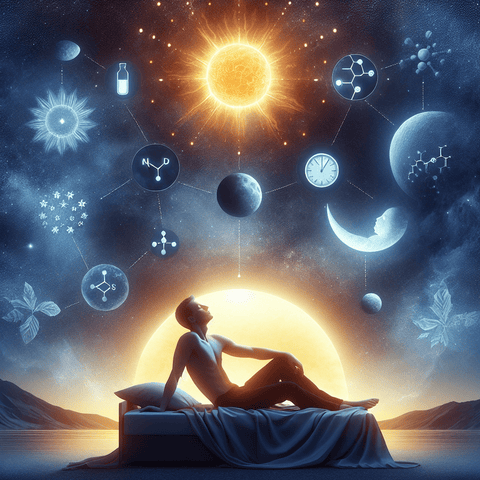
Sleep is not only about how many hours you spend in bed. It is also about the signals your brain uses to organize night and day. Sleep hormones are a central part of that signaling system, helping to set the timing of sleep, shape the architecture of the night and influence how rested you feel the next day. This tag page provides a broad overview of the main hormones involved in sleep, how they relate to each other, and the wider topics that may be worth exploring further.
What Are Sleep Hormones?
Sleep hormones are chemical messengers that help regulate the sleep-wake cycle and the circadian rhythm, the internal clock that aligns many body processes with the external light-dark cycle. They are not a single hormone but a network of signals that interact with the brain, the adrenal glands, the reproductive system and metabolic tissues. Some hormones promote sleepiness, some support wakefulness, and others influence sleep quality indirectly through stress, metabolism or reproductive health.
The topic of sleep hormones sits at the intersection of endocrinology, neuroscience and everyday lifestyle. Understanding the broad picture can help you make sense of why sleep timing, nighttime awakenings and morning energy can vary from person to person and across different life stages.
The Core Sleep Hormones
Three hormones are often described as the core players in the sleep-wake system: melatonin, cortisol and orexin. Each has a different role, and together they help organize the arc from dusk to dawn.
Melatonin
Melatonin is produced by the pineal gland in response to darkness. Its rising levels signal to the brain that night has begun, helping to set the timing of sleep as part of the circadian rhythm. Melatonin interacts with the brain's master clock in the suprachiasmatic nucleus to align internal processes with the external light-dark cycle, nudging the system toward rest when darkness falls.
Cortisol
Cortisol is a glucocorticoid hormone released by the adrenal glands. It follows a distinct daily pattern, typically higher in the morning to support wakefulness and energy, then tapering toward the evening. This cortisol rhythm helps synchronize alertness with daily activity and sleep pressure. When the rhythm is out of sync with external cues or stressors, the timing of sleep and mood can be affected.
Orexin
Orexin neurons in the hypothalamus promote wakefulness and help stabilize transitions between sleep stages. Orexin acts as a coordinating signal that, together with melatonin and cortisol, helps organize when you are awake, when you fall asleep, and how deeply you sleep. A balanced orexin system supports a clear distinction between night and day and contributes to the overall architecture of your sleep.
Other Hormones That Can Influence Sleep
Beyond the core three, several other hormones can affect sleep and circadian patterns. Their influence is often more indirect, but they are an important part of the broader picture.
- Estrogen and progesterone: reproductive hormones that can shift across the menstrual cycle and during menopause, sometimes affecting sleep quality and nighttime awakenings.
- Testosterone: a hormone with a daily rhythm that may relate to sleep timing and overall energy.
- Growth hormone: typically released in pulses during sleep and involved in repair and growth processes.
- Leptin and ghrelin: metabolic hormones linked to appetite and energy balance that can also interact with sleep regulation.
These hormones do not act in isolation. They are part of a larger network in which stress, metabolism, reproduction and sleep influence one another.
How Sleep Hormones Shape the Sleep-Wake Cycle
The sleep-wake cycle is a coordinated pattern that repeats roughly every 24 hours. Melatonin rises in the evening to support sleep onset, while cortisol tends to rise in the early morning to support waking. Orexin helps maintain wakefulness during the day and stabilizes the transitions between sleep stages at night. When these signals are well timed, the distinction between night and day is clear.
Hormonal sleep issues can arise when the timing or balance of these signals shifts. For example, stress can affect the cortisol rhythm, and changes in reproductive hormones can influence sleep during certain life stages. These are broad themes that may be explored in more detail in the individual articles associated with this tag.
Hormonal Imbalances and Sleep: A Broad View
Hormonal imbalances can sometimes be relevant to sleep quality, sleep timing and nighttime awakenings. This does not mean that every sleep problem is hormonal, nor that hormonal factors are always the main cause. It simply means that hormones are one of several systems that can influence sleep.
Life stages such as menopause, thyroid changes and other hormonal shifts may be associated with changes in sleep for some people. If sleep problems persist, they are best discussed with a qualified healthcare professional rather than self-diagnosed or self-treated.
Practical Considerations for Hormonal Sleep Support
General lifestyle habits can support the body's natural sleep-wake signals. These are broad considerations, not personalized medical advice, and they are not a substitute for professional care.
- Keep a consistent sleep and wake schedule where possible.
- Manage light exposure, including morning daylight and reduced bright light in the evening.
- Consider stress-management approaches that fit your routine.
- Pay attention to general nutrition and metabolic health.
- Seek professional guidance for persistent sleep concerns.
For readers interested in general nutritional support, our magnesium supplement category and our herbal supplements guide offer broader context on nutrient and botanical topics that are sometimes discussed alongside sleep and relaxation.
Exploring the Topic Further
This tag page is designed as a broad entry point into the topic of sleep hormones. It introduces the main hormones, explains how they relate to the sleep-wake cycle and highlights the wider themes that may be relevant. More specific questions, such as what hormones make you sleepy, what hormone makes you wake at 3am, how to fix hormonal sleep issues and how to increase sleeping hormones, are better explored in dedicated articles within this tag.
For additional background on general nutritional topics, you can also explore our overview of natural supplements.