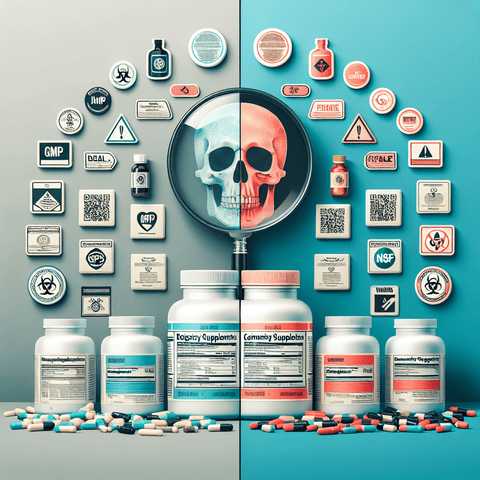
Lernen Sie, wie Sie Supplement-Labels überprüfen, Warnsignale erkennen und sicherere Nahrungsergänzungsmittel auswählen. Nutzen Sie unsere praktische Checkliste, um falsch etikettierte oder unsichere Produkte zu vermeiden. Dieser Leitfaden konzentriert sich auf einfache, umsetzbare Schritte, mit denen Sie ein Etikett inspizieren können, ohne auf Marketingaussagen angewiesen zu sein. Durch die Konzentration auf die auf der Verpackung gedruckten Details können Sie die Optionen objektiver vergleichen. Beginnen Sie bei jedem Etikett mit den grundlegenden Informationen: dem Produktnamen, der Nettomenge sowie den Namen und die Kontaktdaten des Herstellers oder Händlers. Das Supplement Facts-Panel sollte klar jede Zutat und die Menge pro Portion auflisten, wobei die Inhaltsstoffe nach Gewicht in absteigender Reihenfolge angeordnet sind. Seien Sie vorsichtig bei vagen Begriffen wie „proprietäre Mischung“, die die Mengen einzelner Zutaten verschleiern. Überprüfen Sie auch Angaben zu Allergenen, Herkunftsland und Chargen- oder Losnummer. Suchen Sie nach Hinweisen auf Glaubwürdigkeit über das auf dem Etikett Gedruckte hinaus. Zertifizierungen durch Dritte (zum Beispiel USP oder NSF) und klare GMP-Konformitätserklärungen können Ihnen helfen, Qualitätskontrollen einzuschätzen. Ein seriöses Etikett bietet außerdem eine einfache Möglichkeit, das Produkt beim Zertifizierer oder Hersteller zu überprüfen, etwa über eine Webseite oder eine gebührenfreie Telefonnummer. Falls das Etikett Informationen vermissen lässt oder inkonsistente Formulierungen verwendet, behandeln Sie dies als Warnsignal und vergleichen Sie es mit anderen Produkten, die vollständige Etiketten bieten. Praktische Checkliste zur Überprüfung von Supplement-Labels: Prüfen Sie die Produktidentität und -menge; verifizieren Sie die vollständige Zutatenliste und die Mengen pro Portion; bestätigen Sie die Herstellerangaben und Kontaktmöglichkeiten; überprüfen Sie die Losnummer und das Haltbarkeitsdatum; suchen Sie nach Zertifizierungen durch Dritte; stellen Sie sicher, dass keine fehlenden oder mehrdeutigen Begriffe vorhanden sind; und verifizieren Sie die Quelle über offizielle Kanäle. Falls etwas unklar ist, zögern Sie vor dem Kauf nicht und fordern Sie zusätzliche Dokumentationen oder Klärungen an. Diese Schritte helfen Ihnen, Supplement-Labels zu überprüfen und falsch etikettierte oder unsichere Produkte zu vermeiden.
Überprüfung der Nahrungsergänzungsmittel-Labels: Wie man sicherere Ergänzungen erkennt
When you pick up a bottle of supplements, the label is your primary source of information about what is inside. Learning how to verify supplement labels helps you understand what you are taking, compare different products, and identify potential red flags. This guide explains the key components of a supplement label, what to look for, and how to evaluate quality markers. Whether you are new to supplements or simply want to become a more informed consumer, this overview provides a practical foundation for reading and understanding supplement packaging.
Key Components of a Supplement Label
A well-designed supplement label includes several essential pieces of information. Understanding each component helps you evaluate the product more completely. Here are the primary elements to look for when examining a supplement label:
- Product name and brand information
- Net quantity or amount of product in the container
- Name and contact information of the manufacturer or distributor
- Supplement facts panel with ingredient amounts per serving
- Serving size and number of servings per container
- Lot number or batch code for traceability
- Expiration date or best-before date
Each of these elements serves a purpose. The supplement facts panel tells you what is in the product and how much of each ingredient is provided per serving. The manufacturer's contact details allow you to reach out with questions. The lot number and expiration date help with traceability and freshness. When these components are clear and complete, the label generally reflects a more transparent product.
Understanding the Supplement Facts Panel
The supplement facts panel is the most important section of any supplement label. It provides detailed information about the ingredients contained in the product and how much of each ingredient is present per serving. This panel allows you to compare products and understand exactly what you would be consuming.
Ingredient Amounts and Serving Size
The supplement facts panel lists the serving size, which tells you how much of the product is considered one serving, and the amount of each ingredient per serving. This information is essential for understanding how much of a particular nutrient or botanical you would receive if you followed the recommended serving instructions. Clear and specific ingredient amounts allow for easier comparison between products and give you a better sense of what you are taking.
When reviewing the supplement facts panel, pay attention to whether the amount of each ingredient is clearly stated. Some products may list ingredients in proprietary blends, which group multiple ingredients together under one combined amount. This makes it difficult to determine how much of each individual ingredient is included in the product. While proprietary blends are not necessarily problematic, they do reduce transparency.
Ingredient Order and Listing
Ingredients in the supplement facts panel are typically listed in descending order by weight. This means the ingredients present in the largest amounts appear first. Understanding this ordering helps you see which ingredients are most prominent in the product. For example, if a product lists a particular herb near the top of the list, that herb is likely present in a larger quantity than ingredients listed further down.
Quality Markers and Certifications to Look For
Beyond the basic information on a supplement label, several quality markers can provide additional confidence in a product. These markers indicate that the manufacturer has taken extra steps to ensure quality, purity, and transparency. When learning how to verify supplement labels, looking for these markers is a useful part of the process.
Third-Party Testing and Certification
Third-party testing involves an independent organization verifying that a product contains what its label claims and does not contain unwanted contaminants. Certifications from recognized third-party organizations can provide additional assurance about product quality. Common certifications you may encounter include those from organizations that test for purity, potency, and ingredient authenticity.
When a supplement label displays a third-party certification, it typically means the product has undergone voluntary testing by an independent organization. This can be a useful indicator of quality, but it is not the only factor to consider. The absence of a certification does not necessarily mean a product is poor quality, just as the presence of a certification does not guarantee the product is right for you.
GMP Compliance Statements
Good Manufacturing Practices, often referred to as GMP, are standards that help ensure products are consistently produced and controlled according to quality requirements. Some supplement labels may include a statement about GMP compliance, indicating that the manufacturer follows recognized manufacturing standards. While GMP compliance is an important baseline for quality, it is helpful to understand that many reputable manufacturers follow these practices even if they do not prominently display the statement on every label.
Red Flags on Supplement Labels
Not all supplement labels are created equal. Some labels may contain warning signs that suggest the product could be less transparent or lower quality. Recognizing these red flags is an important part of learning how to verify supplement labels effectively.
- Vague ingredient descriptions that do not specify exact amounts or forms
- Proprietary blends that obscure individual ingredient quantities
- Missing contact information for the manufacturer or distributor
- Absence of basic information such as lot numbers or expiration dates
- Inconsistent or confusing labeling language
- Unsupported or exaggerated marketing claims on the packaging
These red flags are not necessarily proof that a product is unsafe or ineffective. However, they may indicate that the manufacturer is not prioritizing transparency. When you encounter these signs, you may want to investigate further or consider products with more complete labeling.
Practical Checklist for Verifying Supplement Labels
Developing a habit of systematically reviewing supplement labels can help you make more consistent and confident decisions. The following checklist summarizes the key points to consider when evaluating a supplement label:
- Check the product name and confirm it matches what you are looking for
- Verify the net quantity to understand how much product you are purchasing
- Review the supplement facts panel for ingredient amounts and serving size
- Look for clear information about the manufacturer or distributor
- Check for a lot number or batch code and an expiration date
- Look for third-party certifications or GMP statements if these matter to you
- Be cautious with vague ingredient lists or proprietary blends that lack transparency
- Compare multiple products to see which labels provide the most complete information
If anything on a label is unclear or raises concerns, you can contact the manufacturer directly using the information on the packaging. You can also explore other products that provide clearer labeling. Taking the time to verify supplement labels before you purchase can help you feel more confident about the products you choose to incorporate into your routine.
Exploring Different Supplement Categories
Understanding supplement labels is a skill that applies across all types of supplements, including vitamins, minerals, herbal products, and specialty formulations. When you browse different supplement categories, you can apply the same label-reading principles to evaluate products consistently. For example, whether you are looking at a multivitamin, a magnesium supplement, or an herbal extract, checking the supplement facts panel and looking for quality markers remains important.
When exploring specific supplement types, you may want to learn more about the forms and sources of ingredients. For instance, some minerals like magnesium come in multiple forms, and the form used may affect how the product is described on the label. Similarly, different vitamins may be listed under different names or forms, so familiarizing yourself with common terminology can help you read labels more effectively.
You can explore our collection of natural supplements for a variety of products with detailed labeling. Additionally, you may find it helpful to review our guides on vitamin categories and mineral supplements to better understand the ingredients you see on labels.
If you are particularly interested in a specific nutrient, you may want to explore our articles on vitamin D, vitamin C, or magnesium to learn more about their roles and forms. These resources can help you become more familiar with the types of supplements available and the information that typically appears on their labels.
Using Label Information Responsibly
Supplement labels provide factual information about a product, but they are only one part of a broader decision-making process. It is important to remember that supplements are not intended to diagnose, treat, cure, or prevent any disease. The information on a supplement label helps you understand what is in the product so you can make an informed choice about whether it fits your needs and preferences.
If you have specific health concerns or are taking medications, it is always wise to consult with a healthcare professional before starting any new supplement. A healthcare provider can help you understand whether a particular supplement may be appropriate for your individual circumstances and can guide you on proper usage.
Learning how to verify supplement labels is a valuable skill that can help you become a more informed consumer. By understanding the key components of a label, recognizing quality markers, and identifying potential red flags, you can approach supplement shopping with greater confidence and clarity.