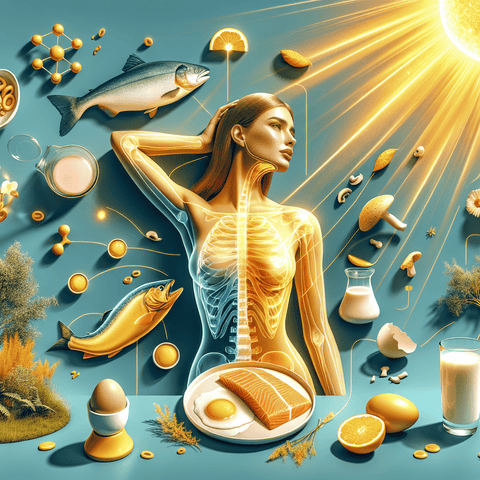
Apprenez comment l'absorption du calcium et la vitamine D travaillent ensemble pour renforcer les os en explorant les idées fondamentales derrière leur partenariat. L'absorption du calcium décrit comment le corps reçoit le calcium provenant de l'intestin pour être utilisé dans la minéralisation et le maintien continu des os. La vitamine D, sous sa forme active, agit comme un régulateur clé permettant à l'intestin de transporter le calcium dans la circulation sanguine. La relation entre l'absorption du calcium et la vitamine D est coopérative : lorsque l'activité de la vitamine D est optimale, la capacité à absorber le calcium augmente, soutenant le approvisionnement en minéraux nécessaire au remodelage osseux continu. Comprendre cette interaction aide à expliquer pourquoi l'absorption du calcium et la vitamine D sont souvent abordées ensemble dans la biologie osseuse. Au niveau moléculaire, l'absorption du calcium et la vitamine D sont liées par des changements à l'intérieur des cellules intestinales. Les protéines calbindine et d'autres transporteurs sont régulés par la calcitrioli (la forme active de la vitamine D) pour transporter le calcium à travers la paroi intestinale. Ce transport actif fonctionne en parallèle avec des voies de diffusion passive, et l'équilibre entre les deux peut varier selon les conditions physiologiques. Avec l'âge ou si la fonction intestinale change, l'efficacité de l'absorption du calcium et du transport induit par la vitamine D peut fluctuer, illustrant comment ces composants répondent aux besoins changeants du corps. Des conseils pratiques fondés sur la science se concentrent sur la compréhension des facteurs qui influencent l'absorption du calcium et la vitamine D. Conseil : familiarisez-vous avec la façon dont l'état en vitamine D est évalué et interprété, car un apport suffisant en vitamine D est nécessaire pour une absorption efficace du calcium. Conseil : reconnaissez que plusieurs facteurs influencent cette absorption et que des changements dans ces facteurs peuvent modifier l'efficacité de l'interaction entre le calcium et la vitamine D. Conseil : recherchez des explications crédibles, basées sur des preuves, et demandez l'avis de professionnels pour mettre en contexte les résultats et les questions concernant cet axe. En abordant le sujet avec une approche scientifique, vous pourrez mieux naviguer dans l'information sur la biologie osseuse et les rôles de l'absorption du calcium et de la vitamine D. En fin de compte, l'absorption du calcium et la vitamine D forment un système étroitement coordonné qui régule le déplacement du calcium de l'intestin vers la circulation sanguine puis vers les tissus impliqués dans la minéralisation. La synergie entre l'absorption du calcium et la vitamine D sous-tend des aspects fondamentaux de la biologie osseuse, soulignant pourquoi les chercheurs étudient leur interaction pour comprendre comment le corps maintient l'équilibre minéral. Cette page fournit une base pour explorer la science derrière l'absorption du calcium et la vitamine D, ainsi que leur rôle dans les processus liés aux os.
Absorption du calcium et vitamine D : améliorez votre santé osseuse
Calcium absorption and vitamin D are two of the most discussed topics in bone health, and for good reason. They work in tandem as a powerful system, ensuring the body has the raw materials it needs to build and maintain strong bones. This page serves as a comprehensive hub, exploring the science behind their partnership, the factors that influence it, and the practical considerations for supporting your skeletal health.
What is Calcium Absorption and Why Does It Matter?
Calcium absorption is the process by which the body takes in calcium from the food you eat and transports it from the digestive tract into the bloodstream. This is not a passive process; it is tightly regulated. Once in the blood, calcium is used for a variety of critical functions, including nerve signalling, muscle contraction, and most importantly for this topic, the mineralization and maintenance of bone tissue. The efficiency of this absorption process is a key determinant of your overall calcium status.
While calcium is the primary mineral in bone, the body simply cannot absorb it effectively without the right helpers. This is where vitamin D becomes essential. In its active form, calcitriol, vitamin D works within the intestines to increase the production of calcium-binding proteins and transporters. These proteins act like a fleet of shuttles, moving calcium across the intestinal lining and into the bloodstream. Therefore, the relationship between calcium absorption and vitamin D is not just complementary; it is fundamentally cooperative.
The Intricate Mechanism of Vitamin D and Calcium
This active transport system works alongside a more passive diffusion pathway. When calcium intake is high, passive diffusion plays a larger role. When intake is low or the body's demand is high, the vitamin D-dependent active transport becomes more critical. The dynamic balance between these two pathways ensures that calcium absorption can be adjusted to meet the body's physiological demands, a process that becomes less efficient as we age.
Key Factors That Influence Absorption
Several factors can influence the efficiency of calcium absorption and vitamin D activity. Understanding these can help you interpret why your calcium status might be suboptimal, even with a good diet.
- Age: As we get older, the skin is less efficient at synthesizing vitamin D from sunlight, and the kidneys become less effective at converting it to its active form. The gut also becomes less responsive to calcitriol, reducing absorption efficiency.
- Vitamin D Status: A deficiency in vitamin D is one of the most common reasons for poor calcium absorption. Without adequate levels, the body cannot produce enough calcitriol to actively transport calcium from the gut.
- Gut Health: Conditions that affect the digestive tract, such as celiac disease, Crohn's disease, or surgeries like gastric bypass, can impair the gut's ability to absorb nutrients, including calcium and vitamin D.
- Other Nutrients: Calcium absorption can be influenced by other dietary components. For example, high levels of oxalates (in spinach and rhubarb) or phytates (in whole grains) can bind to calcium and decrease its absorption.
Dietary Sources and Supplement Considerations
Most people know that dairy products are a rich source of calcium, but many other foods also contribute, including leafy green vegetables, fortified foods, and some types of fish. While obtaining nutrients from food is always a good starting point, many individuals turn to supplements to meet their daily targets, especially for vitamin D, which can be difficult to get from diet alone.
When considering a supplement, it's important to understand the different forms of calcium available. For a broad overview of calcium and its role in the body, you can explore the calcium supplement guide for bone and muscle health. Similarly, vitamin D supplements come in two main forms: D2 (ergocalciferol) and D3 (cholecalciferol), with D3 often considered more effective at raising blood levels. For more detail, see our guide to vitamin D benefits, sources, and safety.
High-Level Practical Tips for Bone Health
Supporting your bone health doesn't require complex biology knowledge, but it does require a thoughtful approach. Here are some practical, science-based considerations to keep in mind.
- Get Your Levels Checked: Before starting a vitamin D supplement, it is wise to have your blood levels tested by a healthcare professional. This helps you understand your baseline and avoid unnecessary supplementation.
- Consider Dietary Interactions: Be mindful that the total diet matters. For instance, a diet very high in oxalates from spinach can bind calcium and reduce absorption, so vary your sources of calcium-rich foods.
- Seek Credible Information: The field of nutrition is full of conflicting advice. Always look for information grounded in evidence-based research and consult healthcare professionals for personalized guidance.
A complete approach to bone health also includes other nutrients. In addition to vitamin D, magnesium plays a vital role in supporting bone structure, and vitamin K is also a key player in the process. This tag page serves as a starting point for understanding the wider ecosystem of nutrients that contribute to skeletal strength.
Explore Related Topics
Understanding the interplay between calcium and vitamin D is a key part of bone biology. The sections above give you a solid foundation in the core concepts. As you explore further, you can dive deeper into specific questions about dosage, potential interactions with medications, and lifestyle factors that affect these essential nutrients. Remember, this information is for educational purposes and does not replace personalized advice from a qualified healthcare provider.