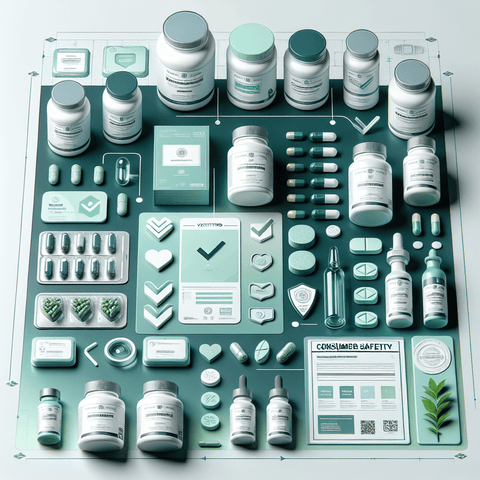
L’authenticité d’un complément alimentaire signifie qu’il contient réellement les ingrédients annoncés, dans les quantités indiquées et avec un niveau de pureté conforme à l’étiquette, de façon régulière d’un lot à l’autre. Comme les contrôles ne reposent pas partout sur une approbation préalable de chaque produit, il est utile de vérifier le fabricant, le vendeur et les informations disponibles avant l’achat.
Qu'est-ce que l'authenticité d'un complément alimentaire ?
Un complément authentique correspond à son étiquette pour l’identité des ingrédients, leur teneur et la qualité annoncée. Ces caractéristiques doivent rester cohérentes entre les lots. Plusieurs problèmes distincts peuvent toutefois affecter un produit : une contrefaçon imite une marque légitime, tandis qu’un produit adultéré contient des substances non déclarées. Un produit mal étiqueté comporte des informations erronées ou manquantes ; un produit périmé a dépassé sa date indiquée et peut ne plus présenter la teneur annoncée.
La réglementation et la surveillance des compléments varient selon les pays. Dans de nombreux marchés, les autorités interviennent notamment par des contrôles après la mise en vente, plutôt que d’évaluer au préalable chaque produit comme un médicament. Cela ne signifie pas que tous les produits sont suspects, mais rend la traçabilité et les vérifications utiles.
- Produits contrefaits : ils imitent une marque légitime et leur composition peut être inconnue.
- Produits adultérés : ils contiennent des substances non déclarées, parfois des médicaments ou des stimulants.
- Produits mal étiquetés : les quantités, les allégations ou les informations obligatoires peuvent être inexactes ou manquantes.
- Produits périmés : ils peuvent être moins fiables quant à leur teneur, même s’ils étaient authentiques à l’origine.
Pourquoi l'authenticité compte pour votre santé et votre bien-être
L’analyse de produits frauduleux a parfois révélé des produits de remplissage sans les nutriments annoncés, des substances pharmaceutiques cachées ou des contaminations. Ces constats concernent des produits précis et ne permettent pas de généraliser à tous les compléments. Un sous-dosage peut aussi empêcher de recevoir la quantité indiquée, tandis qu’une contamination ou un ingrédient non déclaré peut présenter des risques, notamment en cas de prise régulière.
Un produit dont la composition ne correspond pas à l’étiquette peut également compliquer le suivi de ses apports et entamer la confiance envers le fabricant ou le vendeur. La vérification aide à limiter ces incertitudes ; elle ne garantit toutefois ni un bénéfice individuel ni l’efficacité du complément pour un objectif donné.
Comment reconnaître un complément contrefait : les signaux d'alerte
Un seul indice ne suffit pas toujours à établir qu’un produit est faux, mais plusieurs anomalies méritent de la prudence. Avant l’achat, comparez l’emballage aux informations publiées par le fabricant et vérifiez l’identité du vendeur. À réception, examinez le produit sans le consommer si son état ou son origine vous paraît douteux.
- Sceau de sécurité absent, brisé ou différent de celui attendu.
- Impression floue, fautes d’orthographe ou polices qui ne correspondent pas aux visuels officiels.
- Absence du nom et de l’adresse du fabricant ou de l’opérateur responsable, du numéro de lot ou de la date de péremption.
- Prix nettement inférieur à celui habituellement pratiqué, sans explication claire.
- Vendeur difficile à identifier, boutique récemment créée ou informations de contact insuffisantes.
- Décoloration, odeur inattendue, grumeaux ou comprimés qui s’effritent.
Les compléments ont généralement une date de durabilité ou de péremption indiquée sur l’emballage. Après cette date, la teneur et la qualité peuvent être moins fiables ; cela ne signifie pas automatiquement que le produit est dangereux. Une odeur, une couleur ou une texture inhabituelle peut aussi résulter d’une dégradation liée au stockage : ne prenez pas le produit si vous avez un doute et contactez le vendeur ou le fabricant.
Pourquoi les contrefaçons existent : causes et facteurs de risque
Les chaînes d’approvisionnement internationales peuvent faire intervenir plusieurs fabricants, distributeurs et intermédiaires. À chaque étape, des produits peuvent être détournés, mélangés à des stocks d’origine incertaine ou reconditionnés sans contrôle suffisant. Les vendeurs tiers et les importations parallèles ne sont pas nécessairement frauduleux, mais leur traçabilité peut être plus difficile à établir.
Les produits minceur et ceux destinés à la performance ou au sport attirent parfois les fraudeurs, notamment lorsqu’ils promettent des résultats rapides. Les marques très connues peuvent également être imitées. Une catégorie ou une marque populaire n’est pas en soi un signe de fraude : l’origine du produit et la fiabilité du circuit de vente restent déterminantes.
Pourquoi les risques ne sont pas les mêmes pour tout le monde
Une substance non déclarée peut interagir avec un médicament ou s’ajouter à un autre complément sans que la personne le sache. Les personnes qui prennent des médicaments ont donc intérêt à vérifier la composition et à demander conseil à un professionnel de santé en cas d’incertitude. Les précautions sont également importantes pendant la grossesse et l’allaitement, chez les jeunes enfants et les personnes âgées, dont les besoins ou la sensibilité peuvent différer.
Pour les sportifs soumis à des contrôles, une contamination par une substance interdite peut avoir des conséquences sur leur pratique, même si elle n’est pas déclarée sur l’étiquette. Les certifications adaptées au sport peuvent contribuer à réduire ce risque, sans l’éliminer totalement. Enfin, un allergène non déclaré peut exposer une personne allergique à une réaction : la lecture attentive de la liste des ingrédients demeure essentielle.
Les habitudes quotidiennes qui vous protègent
Une alimentation variée constitue la base des apports nutritionnels et évite de faire dépendre son équilibre d’un seul flacon. Si un complément semble nécessaire, privilégiez un achat auprès du site officiel de la marque, d’une pharmacie ou d’un détaillant autorisé, et vérifiez que le vendeur est bien identifié.
À réception, comparez le nom du produit, l’emballage et les coordonnées du fabricant aux informations officielles. Vérifiez le sceau, le numéro de lot, la date et l’aspect du contenu ; en cas d’anomalie, demandez confirmation au fabricant avant toute prise. Pour la conservation, suivez les indications de l’étiquette et gardez le produit dans son emballage d’origine, à l’abri de la chaleur, de l’humidité et de la lumière si cela est recommandé.
Ce que les compléments authentiques de haute qualité ont en commun
Des tests indépendants peuvent vérifier différents aspects : l’identité des ingrédients, leur teneur et la présence de contaminants ou d’impuretés recherchés. La portée des contrôles dépend du programme et du produit. Une certification ou la mention « testé par un tiers » ne prouve pas qu’un complément est efficace pour un objectif individuel ; elle renseigne sur les contrôles effectivement réalisés.
USP Verified porte notamment sur la conformité de certains aspects du produit à son étiquette et sur des critères de qualité définis par le programme. NSF propose différents programmes de certification et de contrôle ; certains concernent spécifiquement les produits destinés aux sportifs. Informed Sport vise le contrôle des produits sportifs pour rechercher des substances interdites dans le cadre de son programme. Le périmètre n’étant pas identique, vérifiez toujours les critères associés au logo affiché.
Les bonnes pratiques de fabrication, souvent désignées par cGMP, encadrent les procédés de fabrication et les contrôles qualité, mais ne constituent pas à elles seules une preuve indépendante de la teneur de chaque flacon. Un certificat d’analyse (COA) utile précise les résultats d’essais et se rapporte au lot concerné. La transparence sur les méthodes de contrôle, les numéros de lot et les documents disponibles facilite les vérifications.
Quand les compléments méritent d'être envisagés — et quand la vérification devient non négociable
Dans certaines situations, les apports alimentaires peuvent être plus difficiles à assurer : par exemple, la vitamine B12 pour les personnes suivant une alimentation végétalienne, la vitamine D selon le contexte, l’acide folique autour d’une grossesse ou l’iode lorsque l’alimentation en apporte peu. Ces exemples ne signifient pas que chacun a besoin d’un supplément ; les besoins dépendent notamment de l’alimentation et de la situation personnelle.
La vérification prend une importance particulière lorsqu’un produit est utilisé chaque jour, sur une longue période ou à forte teneur. Les compléments apportent un soutien nutritionnel et ne remplacent ni une alimentation équilibrée ni un traitement médical. En cas de question sur la pertinence d’un produit, un professionnel de santé peut aider à évaluer la situation.
Comment acheter des compléments en ligne en toute sécurité : liste de vérification
Avant de commander, examinez le vendeur autant que le produit. Une fiche détaillée ne suffit pas si l’origine du stock ou l’identité du commerçant ne sont pas claires. Les grandes places de marché peuvent héberger des vendeurs différents : vérifiez qui expédie et vend réellement l’article.
- Confirmez l’identité du vendeur et du fabricant, ainsi que leurs coordonnées et leurs conditions de retour.
- Recherchez des preuves vérifiables : certification pertinente, certificat d’analyse associé au lot et informations de traçabilité.
- Comparez la forme de l’ingrédient et la quantité indiquée avec les informations nutritionnelles fiables correspondant à votre besoin ; en cas de doute, demandez conseil.
- Choisissez un nutriment isolé ou une formule combinée selon l’objectif, en vérifiant que chaque ingrédient est clairement déclaré.
- Optez pour un format — comprimé, gélule, poudre ou liquide — que vous pouvez utiliser conformément à l’étiquette.
- Vérifiez les allergènes, les excipients et les ingrédients ajoutés, et demandez-vous s’ils sont nécessaires à la formule.
Comment lire une étiquette de complément alimentaire pour y déceler des indices d'authenticité
Commencez par la portion journalière recommandée et le tableau des nutriments : ils indiquent les quantités par portion. Les étiquettes européennes utilisent notamment les valeurs nutritionnelles de référence (VNR), tandis que les étiquettes d’autres marchés peuvent afficher un pourcentage de valeur quotidienne (%DV). Comparez les données présentées et vérifiez à quoi correspond la portion, plutôt que de vous fier uniquement à un chiffre mis en avant sur l’emballage.
Un mélange propriétaire peut indiquer les ingrédients sans préciser la quantité de chacun ; cette présentation ne permet pas toujours d’évaluer les apports individuels. Méfiez-vous aussi des allégations vagues, des promesses de résultats garantis ou des affirmations de traitement. Les allégations relatives à une fonction normale de l’organisme ne sont pas équivalentes à une promesse de prévention ou de guérison d’une maladie.
Selon le marché, une étiquette légitime doit fournir des informations telles que la liste des ingrédients, la quantité par portion, les consignes d’utilisation et les avertissements requis, ainsi que l’identité de l’opérateur responsable, le numéro de lot et une date pertinente. Les exigences varient selon les pays ; l’absence ou l’incohérence de ces renseignements justifie de demander des précisions au fabricant ou au vendeur.
Sécurité des compléments : interactions, limites supérieures et quand consulter un professionnel
Les compléments peuvent modifier l’effet de certains médicaments ou contribuer à des apports cumulés lorsqu’ils sont associés à d’autres produits. Présentez à un professionnel de santé la liste complète de vos médicaments et compléments avant de commencer un nouveau produit, en particulier avant une intervention chirurgicale ou en cas de maladie chronique. Un avis professionnel est également recommandé pendant la grossesse ou l’allaitement.
Des limites supérieures d’apport ont été établies pour certains nutriments, notamment les vitamines A, D et B6, le fer, le zinc et le sélénium. Elles dépendent du nutriment, de l’âge et du cadre de référence ; évitez de cumuler plusieurs produits sans vérifier les apports totaux. Une réaction inhabituelle peut être liée à plusieurs causes, dont la qualité ou la composition du produit : cessez de le prendre si vous suspectez un problème et demandez conseil à un professionnel.
Prendre la décision : avez-vous besoin d'un complément, et pouvez-vous faire confiance à celui que vous choisissez ?
Si votre alimentation est variée et qu’aucun besoin particulier n’a été identifié, ajouter un complément n’est pas forcément nécessaire. Lorsqu’un complément répond à un besoin documenté ou à une recommandation adaptée à votre situation, privilégiez un produit traçable et des preuves de qualité vérifiables. Le prix seul ne prouve ni l’authenticité ni la qualité : mettez-le en regard des informations disponibles sur le fabricant, les contrôles et le lot.
Si un produit que vous possédez semble suspect, ne le consommez pas. Conservez l’emballage et le numéro de lot, prenez des photos des anomalies et contactez le vendeur ou le fabricant pour vérifier son origine. Vous pouvez également le signaler aux autorités compétentes de votre pays ; si vous avez déjà pris le produit et ressentez un effet indésirable, demandez conseil à un professionnel de santé.