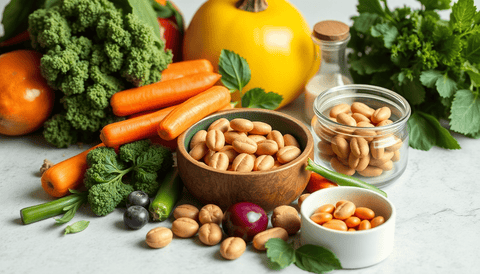
Comprendre les minéraux essentiels pour les vegans commence par une définition claire des minéraux dont le corps a besoin et pourquoi une approche végétalienne nécessite une attention particulière. Cette page met en évidence les 7 minéraux essentiels pour les vegans, explique comment ils sont classés en macroéléments et oligoéléments, et souligne un cadre plutôt que des recettes prescriptives. L'accent est mis sur des concepts qui aident à planifier et à suivre la prise de minéraux dans un contexte à base de plantes. En centrant la discussion sur les minéraux essentiels pour les vegans, le contenu reste pratique et neutre, évitant les listes d'aliments spécifiques ou les allégations de santé. Parmi les minéraux essentiels pour les vegans, des considérations importantes comprennent la biodisponibilité, les interactions entre minéraux, et la façon dont un régime végétalien peut influencer l'absorption. Le terme « minéraux essentiels pour les vegans » est utilisé pour distinguer les nutriments qui doivent provenir de l'alimentation de ceux que le corps peut produire en petites quantités. Cette vue d'ensemble neutre vise à soutenir une planification éclairée, en reconnaissant que les besoins peuvent varier d'une personne à l'autre. L'accent est mis sur la compréhension de la façon dont ces minéraux s'intègrent dans une approche plus large, basée sur les plantes. Des conseils pratiques pour optimiser un régime à base de plantes en se concentrant sur les minéraux essentiels pour les vegans peuvent inclure la mise en favori d'une liste simple de suivi de l'apport, la garantie de variété entre les catégories de minéraux, et la planification de revues périodiques avec un professionnel qualifié. Les recommandations évitent des suggestions culinaires strictes et se concentrent plutôt sur des modèles et des processus qui soutiennent une ingestion cohérente de minéraux. Lorsqu'il est approprié et sous supervision professionnelle, il peut être utile de considérer des sources enrichies ou des compléments dans le cadre d'un plan personnalisé. Prêter attention aux facteurs influençant l'absorption et les interactions peut contribuer à maintenir une approche équilibrée dans le cadre végétalien. En fin de compte, l'accent mis sur les minéraux essentiels pour les vegans sert d'outil de planification plutôt que de règle fixe. Cette page invite les lecteurs à utiliser ces concepts pour adapter leurs stratégies à leur propre situation et à consulter des ressources crédibles au besoin. L'objectif est de soutenir une exploration réfléchie et continue de la manière dont les besoins en minéraux s'intersectent avec un mode de vie basé sur les plantes. Le mot-clé « minéraux essentiels pour les vegans » ancre le contenu et guide la réflexion pratique pour une planification à long terme.
Top 7 minéraux essentiels dont les végétaliens ont besoin pour une santé optimale
A well-planned vegan diet can provide all the nutrients your body needs, but it requires attention to a specific set of essential minerals. These nutrients play vital roles in everything from building strong bones to supporting energy metabolism and immune function. This guide serves as a comprehensive resource on essential minerals for vegans, exploring their importance, plant-based sources, and practical considerations for maintaining optimal intake.
Here, we will break down the key minerals that merit special attention on a plant-based diet, explain the difference between macrominerals and trace minerals, and provide high-level practical advice. Consider this your map of the mineral landscape for vegans, designed to help you navigate more specific topics like individual nutrient deficiencies, dietary sources, and supplementation with confidence.
Why Essential Minerals Matter for Vegans
Minerals are inorganic elements that are crucial for a vast array of bodily functions. Unlike some vitamins, the body cannot synthesize most minerals, so they must be obtained from the diet. For vegans, the focus on minerals is elevated because the bioavailability—the degree to which a nutrient can be absorbed and used by the body—can differ between plant and animal sources. A strategic approach is therefore beneficial for ensuring that a plant-based diet is both nutritionally adequate and supports long-term health.
The topic of essential minerals for vegans encompasses a wide range of nutrients, each with its own set of functions, dietary sources, and absorption considerations. Exploring these various dimensions is key to building a balanced and sustainable vegan diet.
Macrominerals vs. Trace Minerals: What's the Difference?
Essential minerals are broadly classified into two categories based on the amount the body needs: macrominerals and trace minerals. Understanding this distinction is a fundamental step in planning a balanced diet.
Macrominerals are needed in larger amounts—typically more than 100 milligrams per day. This group includes calcium, phosphorus, magnesium, sodium, potassium, and chloride. These minerals are the structural components of bones and teeth, help regulate fluid balance, and are essential for muscle and nerve function.
Trace minerals, on the other hand, are required in smaller amounts, generally less than 100 milligrams daily. Despite their smaller quantities, they are just as vital. This group includes iron, zinc, iodine, selenium, copper, and manganese. Trace minerals are often critical components of enzymes and hormones and play roles in immune defense, cellular metabolism, and antioxidant protection.
Key Minerals of Concern on a Vegan Diet
While a varied vegan diet can provide many minerals, certain nutrients require more attention due to their lower content or reduced absorption from plant-based sources. Being aware of these minerals and the considerations around them is the first step toward proactive dietary management.
Calcium
Calcium is essential for building and maintaining strong bones and teeth, and it also supports nerve signaling, muscle contraction, and normal blood clotting. While dairy is a well-known source, vegans can obtain calcium from fortified plant milks and yogurts, calcium-set tofu, leafy green vegetables like kale and bok choy, and almonds. However, the bioavailability of calcium from some high-oxalate greens, such as spinach, is lower. Paying attention to fortified foods and including a variety of calcium-rich plant foods can help vegans meet their needs. For more in-depth information on this mineral, you can read our guide on calcium benefits for bone and muscle health.
Iron
Iron is a critical component of hemoglobin, which transports oxygen in the blood, and is involved in energy production. There are two forms of dietary iron: heme (from animal products) and non-heme (from plants). Vegans consume only non-heme iron, which is not absorbed as efficiently. This means that a vegan diet may need to include more iron-rich foods than an omnivorous diet. Excellent plant-based sources include legumes, tofu, fortified cereals, and dark leafy greens. Consuming these with vitamin C-rich foods, like citrus fruits or bell peppers, can significantly enhance iron absorption.
A related collection of supplements for minerals like iron, zinc, selenium, and others can provide an overview of the options available for those considering supplementation.
Zinc
Zinc is a trace mineral that plays a vital role in immune function, wound healing, protein synthesis, and DNA synthesis. While plant-based sources like beans, nuts, whole grains, and fortified cereals are available, the phytic acid in these same foods can reduce zinc absorption. To optimize intake, vegans can focus on leavened whole grains (which reduce phytic acid), and include a variety of zinc-rich plant foods throughout the day.
Iodine
Iodine is essential for the production of thyroid hormones, which regulate metabolism, growth, and development. Seafood and dairy are typical sources, which can make it a challenge for vegans. Good vegan sources include iodized salt, sea vegetables (like nori and kelp), and some fortified foods. However, the iodine content in sea vegetables is highly variable, so relying on iodized salt is often a more consistent strategy for meeting daily needs.
Selenium
Selenium acts as an antioxidant and is important for thyroid function and the immune system. Brazil nuts are one of the most concentrated sources of selenium; just one or two nuts can meet your entire daily requirement. Other sources include whole grains, legumes, and sunflower seeds. The selenium content of plant foods can vary depending on the soil they are grown in.
Enhancing Mineral Absorption from Plant-Based Foods
Beyond knowing which foods to eat, understanding how to maximize nutrient uptake is a key part of managing mineral intake on a vegan diet. Several simple strategies can significantly improve how well your body uses the minerals you consume.
- Boost iron absorption by pairing iron-rich foods with vitamin C sources like citrus fruits, strawberries, or bell peppers.
- Reduce the impact of phytic acid on zinc and iron by soaking, sprouting, or fermenting beans, legumes, and whole grains before cooking.
- Avoid consuming coffee or tea (which contain tannins) at the same time as iron-rich meals, as they can inhibit absorption.
- Use iodized salt as a primary seasoning to help meet iodine requirements consistently.
The Role of Supplements and Fortified Foods
Even with a well-planned diet, certain nutrients can be challenging to get in adequate amounts, which is where fortified foods and supplements can play a role. A varied, whole-foods-based vegan diet is a strong foundation, however, fortified foods can also contribute significantly to mineral intake. For example, many plant-based milks and breakfast cereals are fortified with calcium and other minerals.
Supplements can be a useful tool when dietary intake is insufficient or when a healthcare professional identifies a specific need. It is always advisable to consult with a qualified professional before starting any new supplement regimen to determine appropriate forms and dosages based on individual circumstances. For a general overview of available options, you might explore our range of mineral supplement guides for nutrients like iron, zinc, and selenium.
Diving Deeper into Specific Minerals
The overarching topic of minerals for vegans contains many subtopics worth exploring. We have covered the major groups and key minerals, but you can deepen your understanding of specific questions and scenarios through our related blog articles and guides.
For example, you can find more in-depth information about specific supplements like magnesium for energy and support, or broader guides on trace mineral supplements. These resources can provide more detailed analysis to help answer your specific questions.
Key Takeaways: Your Path Forward
- A vegan diet can provide all essential minerals with careful planning and variety.
- Focus on the minerals most likely to be of concern: calcium, iron, zinc, and iodine.
- Learn simple techniques to enhance absorption of plant-based minerals.
- Consider fortified foods and supplements as tools when dietary intake may be insufficient.
- Always consult with a healthcare professional or registered dietitian for personalized guidance.
Navigating the world of essential minerals is a key part of a healthy vegan lifestyle. This guide is intended to provide you with a solid foundation. Continue exploring our articles to answer more specific questions about your dietary needs.