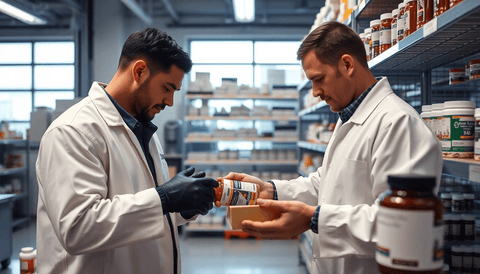
Découvrez comment les normes de sécurité des compléments alimentaires de l'UE façonnent le marché et vous aident à naviguer dans la large gamme de produits. Ces normes établissent le cadre pour ce qui peut être vendu comme complément alimentaire, comment les produits doivent être testés et comment l'information doit être présentée aux consommateurs. Comprendre les normes de sécurité des compléments de l'UE peut vous aider à identifier les produits légitimes et à les distinguer des articles qui ne répondent pas aux exigences. Le système comprend des règles avant la mise sur le marché pour les ingrédients et une surveillance continue par les autorités nationales afin de contrôler la conformité dans tous les États membres, avec des mécanismes intégrés pour la traçabilité et l'action en temps utile en cas de problème. Les tests conformes aux normes de sécurité des compléments de l'UE se concentrent sur la confirmation de l'identité et de la composition de l'ingrédient, la vérification des quantités déclarées et le dépistage des contaminants tels que les métaux lourds, les pesticides ou d'autres substances indésirables. Les fabricants et fournisseurs doivent suivre les bonnes pratiques de fabrication (GMP) et utiliser des ingrédients provenant de listes permises, soutenus par des résultats de tests ou des certificats du fournisseur. Les autorités nationales peuvent effectuer des inspections et une surveillance du marché, et des alertes au niveau de l'UE peuvent déclencher des rappels via des réseaux de sécurité coordonnés. Les exigences d’étiquetage selon les normes de sécurité des compléments de l’UE imposent une désignation claire du produit (par exemple, complément alimentaire), une liste complète des ingrédients, la quantité nette, la date limite de consommation ou la durée de conservation, ainsi que les instructions de stockage. L’étiquette doit inclure le nom et les coordonnées de l’entité responsable, le pays d’origine si pertinent, et la dose quotidienne recommandée. Les informations sur les allergènes et toute précaution doivent être fournies lorsque cela est applicable. Les allégations de santé ou autres sont strictement réglementées et ne peuvent être utilisées que si elles sont autorisées au niveau de l’UE, avec des déclarations soutenues par des preuves approuvées. Cet étiquetage structuré vous permet de vérifier rapidement les informations essentielles sur le produit. Les conseils pour choisir des compléments sûrs commencent par des marques qui démontrent leur conformité aux normes de sécurité des compléments de l’UE. Vérifiez que l’emballage fournit toutes les informations nécessaires et que le produit est fabriqué dans le respect des GMP. Cherchez un numéro de lot clair, des détails de traçabilité, et les coordonnées du distributeur. Vérifiez que les ingrédients proviennent de listes permises et que l’étiquetage évite les allégations non vérifiées. Pour une assurance supplémentaire, consultez les ressources officielles telles que les portails de consommation nationaux ou les alertes de sécurité de l’UE, et envisagez de parler avec un pharmacien ou un détaillant si vous avez des questions. Rester informé des avis de sécurité et des mesures d’application peut vous aider à faire vos achats en toute confiance.
Normes de sécurité supplémentaires de l'UE : comment elles protègent votre santé
When you buy a food supplement in the European Union, a comprehensive system of rules works behind the scenes to help ensure the product is safe, accurately labelled, and honestly presented. These EU supplement safety standards are built on the principle that ingredients should be vetted before they reach the market and that products should be consistently monitored after they are sold. This page explains the core pillars of this system—ingredient approval, manufacturing practices, testing, and labeling—so you can confidently identify legitimate products and make informed choices.
The Core Framework of EU Supplement Rules
The European Union has established a harmonized legal framework for food supplements, primarily through Directive 2002/46/EC. This directive sets out a clear definition of what constitutes a food supplement: concentrated sources of nutrients or other substances with a nutritional or physiological effect, sold in dose form such as capsules, tablets, or sachets. Crucially, it establishes a list of permitted vitamins and minerals that manufacturers can use, providing a clear legal basis for products.
Beyond these essential nutrients, other substances like amino acids, enzymes, and botanicals are governed by the rules established in individual member states or by European Commission decisions. This means the regulatory landscape can be more complex for non-vitamin ingredients. However, the core philosophy remains consistent: products must be safe and not mislead consumers. This pre-market assessment is the first major step in the safety journey.
How Supplement Manufacturing and Testing is Regulated
The responsibility for a safe product begins with the manufacturer. Under EU regulations, manufacturers must operate under the principles of Good Manufacturing Practice (GMP). This involves establishing robust quality control procedures throughout the production process. It ensures that products are consistently produced and controlled according to quality standards, minimizing risks like contamination or incorrect dosage.
Testing is a critical component of GMP. Manufacturers are expected to verify that their products meet specifications. This includes:
- Confirming the identity and composition of ingredients used.
- Verifying that the quantity of active ingredients matches the label claim.
- Screening for common contaminants, such as heavy metals, pesticides, and microbiological organisms.
While manufacturers are responsible for internal testing, EU member states also have a role to play. National authorities can conduct their own inspections and perform market surveillance. European-wide safety concerns are shared through the Rapid Alert System for Food and Feed (RASFF), which allows member states to quickly exchange information and coordinate actions, like product recalls, to protect consumers.
Understanding Labeling and Authorized Health Claims
The label is your primary source of information as a consumer. EU rules require that it provides several key pieces of information in a clear and accessible way. A compliant label will usually include the product name (often “food supplement”), a full list of ingredients, the net quantity of the product, and a best-before date. It must also provide storage instructions and the name and address of the responsible food business operator.
Of equal importance is the recommended daily dose. The label must specify how much of the product should be consumed, and it must include a warning not to exceed this stated dose. Information about allergens is mandatory as well. Most significantly, any health or nutritional claims made on the product—such as “vitamin D contributes to the normal function of the immune system”—must be authorized by the European Food Safety Authority (EFSA) and approved by the European Commission. This ensures that claims are supported by sound scientific evidence and are not misleading.
Practical Guidance for Shopping With Confidence
While a supplement brand cannot be “certified” by the EU in a universal way, there are clear indicators that a product is likely to be compliant and therefore a safer choice. First, check the label for completeness. If essential information is missing or hard to read, it is a red flag. Look for a batch or lot number, which aids in traceability should a recall occur. Verify that the product’s claims are measured and not overly dramatic.
You can also use the system proactively. To stay informed about safety issues, you can consult public resources like the RASFF portal or national consumer safety websites. These sites publish alerts about products that have been recalled due to safety issues. Additionally, speaking with a pharmacist or healthcare professional is always a good practice when deciding to start a new supplement.
To explore the diverse range of products that operate within these rules, you might be interested in learning more about specific supplement categories. Whether you are curious about basic nutrients, specialty ingredients, or how supplements fit into a broader diet, we have resources to help you navigate the market.
You can start with our guide to natural supplement categories to see how these regulations apply to common products. If you are interested in how specific nutrients are addressed, our section on well-researched supplement ingredients may be a useful next step.
Glossary of Key Terms
Understanding these terms can help you make more informed decisions:
- Good Manufacturing Practice (GMP): A system for ensuring that products are consistently produced and controlled according to quality standards.
- RASFF (Rapid Alert System for Food and Feed): An EU system that enables member states to share information about serious risks detected in food and feed, leading to coordinated recalls.
- Approved Health Claim: A statement about a relationship between a food, nutrient, or substance and health that has been scientifically substantiated and legally authorized by the European Commission.
- Permitted List: The official list of vitamins and minerals, and their specific forms, that are authorized for use in food supplements within the EU.
By familiarizing yourself with these standards, you move from being a passive consumer to an active and informed one, capable of evaluating products based on the robust framework the EU has built.