
{"" : "" }
Repérer les faux compléments : 7 signes d'alerte pour identifier les pilules frauduleuses
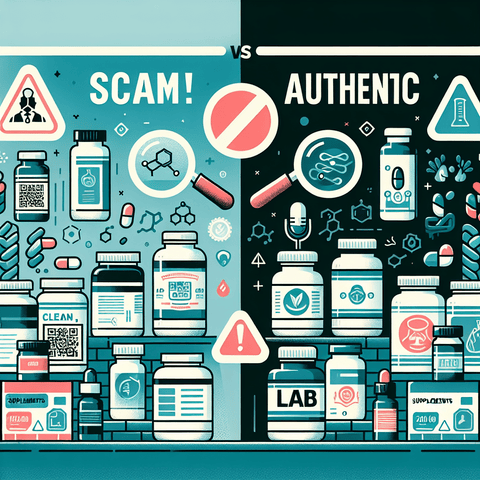
27 August 2025
Un complément alimentaire contrefait peut contenir une dose incorrecte, des ingrédients non déclarés ou des contaminants. Pour limiter les risques, examinez l’étiquette, le numéro de lot, la date, le fabricant et la traçabilité, puis méfiez-vous des promesses miraculeuses et des prix anormalement bas. Ce guide explique aussi la différence avec un médicament contrefait et indique quoi faire si vous suspectez un produit frauduleux.
{
"content": "
Savoir reconnaître les compléments alimentaires frauduleux permet de protéger à la fois votre santé et votre portefeuille. Les compléments alimentaires contrefaits ou de mauvaise qualité sont monnaie courante : beaucoup sont simplement inefficaces, mais certains peuvent contenir des ingrédients non déclarés, des doses erronées ou des contaminants. Cet article présente sept signaux d'alerte clairs qui trahissent un complément falsifié ou douteux, les indices qui montrent qu'un produit déjà acheté pourrait être une contrefaçon, ainsi que des étapes concrètes pour vérifier la qualité avant tout achat — afin de prendre des décisions éclairées concernant les vitamines, les minéraux et les autres produits nutritionnels.
\n\n
Que sont les compléments alimentaires frauduleux et pourquoi sont-ils si répandus ?
\n\n
Les compléments alimentaires frauduleux sont des produits qui ne tiennent pas les promesses de leur étiquette. Cela va des contrefaçons pures et simples — des gélules ne contenant aucun des ingrédients annoncés — à des produits légitimement fabriqués mais sous-dosés, contaminés, adultérés par des substances pharmaceutiques ou commercialisés avec des allégations mensongères. La réglementation des compléments alimentaires est généralement moins stricte que celle des médicaments, ce qui signifie que de nombreux produits arrivent sur le marché sans autorisation préalable ni vérification indépendante de leur contenu.
\n\n
Comment reconnaître les compléments frauduleux par rapport aux produits légitimes
\n\n
Les compléments légitimes partagent des caractéristiques communes : une liste complète des ingrédients avec des quantités chiffrées, un fabricant identifiable et joignable, des numéros de lot clairs, des allégations réalistes conformes à la réglementation, et souvent des tests ou une certification par un tiers. Les produits frauduleux ont tendance à présenter l'absence d'un ou plusieurs de ces éléments. Apprendre à comparer un produit à cette liste de contrôle est le moyen le plus fiable de distinguer les compléments crédibles des produits douteux.
\n\n
Terminologie clé : mélanges exclusifs, excipients et allégations trompeuses
\n\n
Un mélange exclusif (proprietary blend) est un mélange d'ingrédients listés sans quantités individuelles. Bien que cela ne soit pas illégal en soi, ces mélanges empêchent de savoir si des doses efficaces sont incluses — une tactique courante pour dissimuler des excipients bon marché. Les excipients tels que la farine de riz ou la cellulose sont normaux en petites quantités, mais un excipient excessif signifie moins d'ingrédient actif pour votre argent. Les allégations trompeuses incluent un langage de guérison de maladies, des mentions « cliniquement prouvé » sans références, et des termes vagues comme « détox » ou « stimule instantanément l'immunité » qui n'ont pas de définition précise.
\n\n
Pourquoi l'industrie des compléments attire les contrefaçons et les produits de mauvaise qualité
\n\n
Plusieurs facteurs convergent : une forte demande des consommateurs, une application laxiste dans certains marchés, de faibles barrières à la fabrication et la rentabilité de la vente de poudres bon marché à des prix premium. Les produits minceur, de prise de muscle, énergisants et de santé sexuelle sont les plus souvent contrefaits, car la demande est intense et les acheteurs sont motivés par l'espoir plutôt que par l'examen critique.
\n\n
7 signaux d'alerte qui aident à repérer les faux compléments alimentaires
\n\n
Signal d'alerte n° 1 : des allégations trop belles pour être vraies (« guérit », « miracle », « résultats instantanés »)
\n\n
Aucune vitamine, minéral ou plante légitime ne guérit les maladies, ne fait fondre la graisse du jour au lendemain ni n'agit instantanément. Les cadres réglementaires de la plupart des pays interdisent aux compléments alimentaires de prétendre traiter, guérir ou prévenir une maladie. Des phrases comme « remède miracle », « percée approuvée par les médecins » ou « remplace les médicaments » sont de forts indicateurs d'un vendeur frauduleux ou irresponsable. Les nutriments peuvent soutenir des fonctions physiologiques normales — mais ils ne transcendent pas la biologie.
\n\n
Signal d'alerte n° 2 : listes d'ingrédients manquantes ou vagues et mélanges exclusifs non divulgués
\n\n
Un produit digne de confiance indique chaque ingrédient actif avec sa quantité par portion, idéalement sous des formes chimiques reconnues. Méfiez-vous des étiquettes listant des ingrédients sans doses, utilisant des termes vagues comme « complexe énergétique » ou omettant la partie de la plante dans les extraits d'herbes. Si vous ne pouvez pas déterminer quoi et combien vous prenez, vous ne pouvez pas évaluer la sécurité, la qualité ou la pertinence.
\n\n
Signal d'alerte n° 3 : absence de coordonnées du fabricant ou détails d'entreprise invérifiables
\n\n
Les produits légitimes affichent le nom, l'adresse et les coordonnées du fabricant ou du distributeur. Une adresse manquante, une boîte postale sans nom d'entreprise ou un site web sans informations « à propos » rendent toute responsabilité impossible. Si quelque chose tourne mal — une réaction, un rappel, une question sur le dosage — vous devez savoir qui a fabriqué le produit.
\n\n
Signal d'alerte n° 4 : prix anormalement bas et offres de réduction irréalistes
\n\n
Des matières premières de qualité, des tests et une fabrication conforme aux BPF coûtent de l'argent. Des prix nettement inférieurs aux tarifs du marché, des offres « un acheté, dix offerts » ou des soldes perpétuelles « -80 %, aujourd'hui seulement » indiquent souvent des produits contrefaits, périmés ou dilués. Des réductions authentiques occasionnelles existent, mais des prix constamment extrêmes sur des produits premium constituent un signal classique de contrefaçon.
\n\n
Signal d'alerte n° 5 : absence de tests par des tiers ou de certifications de qualité
\n\n
Une certification par un tiers signifie qu'une organisation indépendante a vérifié que le produit contient ce que l'étiquette indique et est exempt de contaminants spécifiés. Les programmes reconnus incluent USP Verified, NSF Certified for Sport, Informed Choice et Informed Sport. La certification n'est pas légalement obligatoire, mais son absence — surtout combinée à d'autres signaux d'alerte — signifie que vous vous fiez entièrement à la parole du fabricant.
\n\n
Signal d'alerte n° 6 : faux avis, témoignages payants et preuve sociale fabriquée
\n\n
Soyez sceptique face aux produits comptant des centaines d'avis cinq étoiles publiés en quelques jours, aux avis utilisant des formulations identiques ou aux témoignages présentant des histoires avant-après spectaculaires. De nombreuses opérations frauduleuses achètent des avis ou utilisent des réseaux d'influenceurs qui n'ont jamais vérifié le produit. Recoupez les avis sur des plateformes indépendantes et traitez avec prudence les approbations de célébrités anonymes.
\n\n
Signal d'alerte n° 7 : emballage de mauvaise qualité, fautes d'orthographe et étiquetage incohérent
\n\n
L'emballage contrefait se trahit souvent par une impression floue, des étiquettes mal alignées, des fautes d'orthographe, des dates de péremption manquantes, un texte en langue étrangère non traduit ou des tableaux de composition différents des photos officielles du produit. Vérifiez que le flacon est correctement scellé, que le numéro de lot correspond à celui de la boîte et que la date de péremption est imprimée — et non simplement recouverte d'un autocollant.
\n\n
Pourquoi la qualité des compléments importe pour votre santé et votre bien-être
\n\n
Ce qui se passe lorsque vous prenez des produits adultérés, contaminés ou sous-dosés
\n\n
Les analyses de compléments illicites et contrefaits ont révélé des produits dopés avec des stimulants non déclarés, des médicaments sur ordonnance ou des métaux lourds comme le plomb, l'arsenic et le mercure. Les produits sous-dosés fournissent bien moins de nutriments que ce qui est indiqué, ce qui signifie que le produit peut ne pas contribuer de manière significative à votre apport même si vous le prenez régulièrement.
\n\n
Comment les faux compléments gaspillent de l'argent et retardent un vrai soutien nutritionnel
\n\n
Une personne prenant un produit frauduleux à base de vitamine D ou de fer peut, sans le savoir, continuer à présenter une insuffisance réelle tout en croyant être couverte. Ce retard compte : un statut nutritionnel faible peut persister pendant des mois ou des années, et la lacune sous-jacente reste non traitée jusqu'à ce qu'elle soit correctement identifiée par une analyse alimentaire ou des tests.
\n\n
Le lien entre la qualité du produit et l'apport nutritionnel réel
\n\n
Un complément ne contribue à votre apport nutritionnel que s'il fournit des nutriments biodisponibles dans les quantités indiquées. La biodisponibilité — la quantité de nutriments que votre corps absorbe et utilise réellement — varie selon la forme chimique, la formulation et les facteurs digestifs individuels. Un produit de haute qualité avec une forme bien absorbée à une dose appropriée est fondamentalement différent d'une gélule de même taille remplie d'un excipient bon marché.
\n\n
Signes avant-coureurs que vous avez peut-être acheté un produit contrefait ou inefficace
\n\n
Signes physiques : odeur, couleur, texture inhabituelles ou comprimés qui s'effritent
\n\n
Faites confiance à vos sens. Des odeurs rances (surtout avec l'huile de poisson ou d'autres produits à base de lipides), une décoloration inhabituelle, des gélules collantes ou fondues et des comprimés qui s'effritent suggèrent une mauvaise fabrication, des ingrédients dégradés ou une contrefaçon. Comparer avec des photos du produit authentique peut aider.
\n\n
Aucun effet notable après une période raisonnable d'utilisation régulière
\n\n
Les effets des nutriments sont souvent subtils et lents, donc « aucun effet » seul ne prouve pas qu'il s'agit d'un faux. Cependant, si vous prenez un complément régulièrement pendant deux à trois mois sans aucun changement dans un marqueur mesurable — comme une prise de sang de suivi pour la vitamine D ou la ferritine — le produit peut ne pas contenir ce qu'il prétend.
\n\n
Effets secondaires ou réactions qui ne correspondent pas aux ingrédients indiqués
\n\n
Un cœur qui s'emballe, des tremblements ou de l'insomnie après un « simple multivitaminé », ou des réactions allergiques à des ingrédients non listés sur l'étiquette, sont des avertissements sérieux. Ces réactions suggèrent des stimulants non déclarés, des allergènes ou des contaminants. Arrêtez de prendre le produit et envisagez de le signaler à votre autorité nationale de sécurité alimentaire.
\n\n
Facteurs de risque courants qui rendent les acheteurs vulnérables aux faux compléments
\n\n
Acheter sur des places de marché en ligne non vérifiées et auprès de vendeurs sur les réseaux sociaux
\n\n
Les places de marché tierces mélangent vendeurs officiels et anonymes, et les contrefacteurs exploitent cette situation. Les vendeurs sur les réseaux sociaux proposant des produits « exclusifs » par message privé n'offrent aucune responsabilité. Acheter sur le site officiel du fabricant ou chez des détaillants agréés réduit considérablement le risque de contrefaçon.
\n\n
Tomber dans le piège des tactiques d'urgence, du battage médiatique des influenceurs et de la pression du « stock limité »
\n\n
Les comptes à rebours « Plus que 3 en stock ! » et les ventes flash exploitent la peur de passer à côté. Les marques légitimes n'ont pas besoin de vous presser. L'urgence est une tactique de manipulation précisément parce qu'une évaluation lente et délibérée exposerait les faiblesses du produit.
\n\n
Rechercher des solutions rapides pour perdre du poids, gagner du muscle ou de l'énergie
\n\n
Le désir de résultats rapides est la plus grande vulnérabilité. Les brûleurs de graisse, les « thés détox » et les pilules d'énergie instantanée sont les catégories les plus fréquemment adultérées avec des ingrédients pharmaceutiques illégaux, précisément parce que les acheteurs veulent des effets spectaculaires rapidement.
\n\n
Âge, état de santé et méconnaissance de la lecture des étiquettes
\n\n
Les personnes âgées, celles gérant des maladies chroniques et toute personne peu familière avec les étiquettes de compléments sont plus facilement trompées. Si la lecture des étiquettes vous semble accablante, le guide de lecture des étiquettes plus loin dans cet article et une consultation avec un pharmacien peuvent vous aider.
\n\n
Pourquoi les besoins en matière de qualité des compléments varient d'une personne à l'autre
\n\n
Comment l'alimentation, l'âge, le mode de vie et l'absorption affectent ce dont vous avez réellement besoin
\n\n
Les besoins nutritionnels varient selon l'âge, le sexe, la grossesse, le régime alimentaire, l'exposition au soleil, l'activité physique, la consommation d'alcool et le tabagisme. L'absorption diminue également avec certaines affections gastro-intestinales et certains médicaments. Deux personnes prenant le même produit peuvent avoir des besoins réels très différents.
\n\n
Pourquoi un produit qui fonctionne pour une personne peut être inutile pour une autre
\n\n
Si votre alimentation fournit déjà un apport adéquat en magnésium, un complément de magnésium supplémentaire offre peu d'avantages, quelle que soit la qualité de la marque. C'est pourquoi les recommandations générales et les routines d'influenceurs déçoivent si souvent — elles ignorent les points de départ individuels.
\n\n
Le rôle de la génétique, des médicaments et de l'apport nutritionnel existant
\n\n
Les variations génétiques influencent la façon dont le corps traite certains nutriments, et les médicaments peuvent interférer avec l'absorption ou augmenter les besoins — par exemple, certains médicaments réduisant l'acidité gastrique affectent l'absorption de la vitamine B12. L'apport existant provenant d'aliments enrichis compte aussi ; beaucoup de personnes consomment plus de certaines vitamines qu'elles ne le réalisent.
\n\n
L'alimentation et le mode de vie d'abord : la base avant tout complément
\n\n
Pourquoi une alimentation riche en nutriments réduit votre dépendance aux compléments
\n\n
Les aliments entiers fournissent des nutriments sous des formes et des combinaisons que le corps gère bien, ainsi que des fibres et des composés phytochimiques qu'aucune pilule ne reproduit. Une alimentation variée riche en légumes, fruits, légumineuses, céréales complètes, poissons, œufs et produits laitiers (ou alternatives enrichies) couvre la plupart des besoins nutritionnels de la plupart des adultes en bonne santé.
\n\n
Habitudes quotidiennes qui soutiennent le statut nutritionnel : sommeil, activité et modération de l'alcool
\n\n
Le statut nutritionnel est influencé par plus que la nourriture. Un sommeil adéquat, une activité physique régulière, une exposition raisonnable au soleil pour la vitamine D et une consommation modérée d'alcool soutiennent tous la façon dont votre corps absorbe et utilise les nutriments. L'alcool excessif, par exemple, interfère avec l'absorption et le métabolisme de plusieurs vitamines B et du magnésium.
\n\n
Quand les changements alimentaires seuls peuvent suffire
\n\n
Si votre alimentation manque de variété mais est autrement ajustable — par exemple, manger peu de légumes ou sauter le poisson — améliorer les choix alimentaires est généralement la première étape et la plus efficace. De nombreuses carences légères se résolvent avec des changements alimentaires seuls, rendant la supplémentation inutile.
\n\n
Où se situent les compléments : le soutien nutritionnel légitime expliqué
\n\n
Situations où l'apport alimentaire peut véritablement être insuffisant
\n\n
Certaines lacunes sont bien reconnues : la vitamine D pendant les mois d'hiver ou en cas d'exposition limitée au soleil, la vitamine B12 pour les végétaliens stricts, le fer pour certaines femmes ayant des règles abondantes, l'acide folique pendant la grossesse et l'iode lorsque l'apport est faible. Dans ces situations, la supplémentation est une forme raisonnable et parfois recommandée de soutien nutritionnel. Pour une orientation plus large, les guides sur la vitamine D et les multivitamines peuvent aider à clarifier la place de ces produits.
\n\n
Soutien nutritionnel général versus produits commercialisés comme traitements
\n\n
Un complément de qualité soutient le statut nutritionnel normal ; il ne traite pas les maladies. Les produits positionnés comme alternatives aux médicaments, ou promus avec un langage de guérison de maladies, franchissent une ligne que les fabricants responsables ne franchissent pas — et signalent souvent les signaux d'alerte décrits ci-dessus.
\n\n
Pourquoi la vérification de la qualité importe encore plus quand un complément comble une vraie lacune
\n\n
Si vous comptez sur un complément parce que votre apport est véritablement insuffisant, la défaillance du produit a de réelles conséquences. Plus le complément est important pour combler une lacune spécifique, plus la diligence en matière de tests par des tiers, d'étiquetage transparent et d'approvisionnement réputé est justifiée. Les détaillants réputés et les collections de compléments établis facilitent la traçabilité des informations du fabricant et des certifications.
\n\n
Comment vérifier la qualité d'un complément avant de l'acheter
\n\n
Certifications et tests par des tiers : USP, NSF, Informed Choice et BPF
\n\n
Recherchez les sceaux de l'USP, de la NSF ou d'Informed Choice/Informed Sport, qui vérifient indépendamment l'identité, la quantité et le dépistage des contaminants des ingrédients. La conformité aux BPF (Bonnes Pratiques de Fabrication) indique que l'établissement suit des normes de production reconnues. Sachez que des faux sceaux de certification existent — vérifiez-les dans la base de données officielle du certificateur.
\n\n
Vérifier la transparence du fabricant, les tests par lot et les numéros de lot
\n\n
Les fabricants soucieux de la qualité publient des certificats d'analyse, effectuent des tests par lot et rendent leurs coordonnées facilement accessibles. Un numéro de lot sur chaque flacon permet la traçabilité en cas de rappel. Si une entreprise refuse de partager des informations sur les tests, considérez cela comme un avertissement important.
\n\n
Vérifier les vendeurs : sites officiels versus places de marché tierces
\n\n
Achetez sur le site officiel du fabricant, chez des détaillants agréés ou dans des pharmacies autorisées. Lorsque vous utilisez une place de marché, confirmez l'identité du vendeur et vérifiez si le prix affiché s'écarte considérablement du prix habituel de la marque — un signal courant de contrefaçon.
\n\n
Recouper les produits avec les bases de données officielles de rappels et d'avertissements
\n\n
Les autorités de sécurité alimentaire (comme la FDA aux États-Unis ou les organismes liés à l'EFSA en Europe) maintiennent des bases de données publiques de rappels, d'avertissements et de produits adultérés. Une recherche de deux minutes du nom du produit ou de la marque avant l'achat est une assurance peu coûteuse.
\n\n
Comment lire une étiquette de complément comme un expert
\n\n
Le tableau de composition : portion, quantités et valeurs quotidiennes
\n\n
Commencez par la taille de la portion — les allégations de dose par gélule peuvent être trompeuses si la portion est de trois gélules. Comparez les quantités à la valeur quotidienne (%VQ) pour comprendre quelle part de vos besoins chaque portion fournit. Des valeurs bien supérieures à 100 % de la valeur quotidienne ne sont pas automatiquement meilleures et peuvent soulever des préoccupations de sécurité pour certains nutriments.
\n\n
Formes des ingrédients et biodisponibilité : pourquoi la source d'un nutriment compte
\n\n
La forme chimique d'un nutriment affecte l'absorption et la tolérance. Les exemples incluent le citrate de magnésium versus l'oxyde de magnésium, ou la vitamine D3 versus la D2. Pour certains nutriments, les différences sont significatives ; pour d'autres, les preuves sont limitées ou mitigées. Ce qui compte le plus est une forme clairement nommée et quantifiée — les étiquettes vagues rendent toute évaluation impossible.
\n\n
Ingrédients ajoutés, allergènes, excipients et dates de péremption
\n\n
Parcourez la liste des « autres ingrédients » pour les allergènes que vous devez éviter (gluten, soja, produits laitiers), les colorants inutiles et les édulcorants excessifs dans les poudres. Vérifiez toujours la date de péremption et les instructions de conservation — les probiotiques et les huiles de poisson en particulier perdent leur efficacité lorsqu'ils sont mal stockés.
\n\n
Gélules, comprimés, poudres et liquides : le format compte-t-il ?
\n\n
Le format affecte la commodité, la stabilité et parfois l'absorption, mais aucun format n'est universellement supérieur. Les gélules conviennent aux estomacs sensibles ; les poudres permettent un dosage flexible ; les liquides peuvent aider les personnes qui ne peuvent pas avaler de comprimés. Choisissez en fonction du nutriment, de votre tolérance et de la régularité d'utilisation — le format que vous prendrez réellement de manière fiable est le meilleur.
\n\n
Comment choisir un complément sûr et de haute qualité
\n\n
Adapter la forme et la dose du nutriment à vos besoins réels
\n\n
Identifiez d'abord la lacune — par une analyse alimentaire, une évaluation du mode de vie ou des tests lorsque disponibles — puis choisissez un produit fournissant ce nutriment à une dose conforme aux apports recommandés, et non des mégadoses. Plus n'est pas mieux ; pour plusieurs nutriments, des doses supérieures au niveau maximal tolérable comportent des risques réels.
\n\n
Produits à ingrédient unique versus formules combinées
\n\n
Les produits à ingrédient unique facilitent le contrôle de la dose et évitent les redondances. Les formules combinées sont pratiques mais compliquent l'ajustement de la dose et peuvent dupliquer des nutriments que vous obtenez déjà d'une multivitamine, dépassant involontairement les limites supérieures sûres.
\n\n
Équilibrer pureté, prix et praticité
\n\n
Le produit le moins cher est rarement le meilleur rapport qualité-prix s'il est sous-dosé ; le plus cher n'est pas automatiquement supérieur. Priorisez la qualité vérifiée et un dosage approprié, puis comparez le prix par portion efficace entre les marques réputées. Des offres légitimes occasionnelles — par exemple sur des compléments à prix réduit proches de leur date de péremption chez des vendeurs réputés — peuvent offrir un bon rapport qualité-prix si vous utilisez le produit avant expiration.
\n\n
Qui doit être particulièrement vigilant concernant la qualité des compléments ?
\n\n
Femmes enceintes ou allaitantes, personnes âgées et personnes atteintes de maladies chroniques
\n\n
Pendant la grossesse et l'allaitement, les carences comme les excès affectent deux personnes, rendant la qualité vérifiée et un dosage approprié essentiels. Les personnes âgées peuvent avoir une absorption modifiée et prennent souvent plusieurs médicaments. Les personnes souffrant de problèmes rénaux, hépatiques ou gastro-intestinaux font face à des risques élevés liés aux contaminants et aux doses élevées.
\n\n
Personnes prenant des médicaments : pourquoi les interactions augmentent les enjeux
\n\n
Un produit contrefait contenant des principes actifs non déclarés est particulièrement dangereux en association avec des médicaments sur ordonnance, car des interactions imprévisibles peuvent survenir. Même les compléments légitimes peuvent interagir — par exemple, la vitamine K affecte les anticoagulants comme la warfarine, et des antioxydants à forte dose peuvent interférer avec certains protocoles de chimiothérapie.
\n\n
Quand les analyses sanguines et l'évaluation professionnelle doivent venir en premier
\n\n
Des symptômes comme la fatigue sont non spécifiques et ne peuvent confirmer aucune carence. Pour des nutriments comme la vitamine D, la B12, la ferritine (réserves de fer) et le folate, des analyses sanguines validées existent et fournissent des informations bien plus fiables que les suppositions. Tester avant de supplémenter est particulièrement utile pour toute personne prenant des médicaments, planifiant une grossesse ou envisageant des produits à forte dose.
\n\n
Sécurité, interactions et quand consulter un professionnel
\n\n
Quand les doses élevées deviennent risquées : les niveaux maximaux tolérables expliqués
\n\n
Les nutriments ont des niveaux maximaux tolérables (UL) — la quantité quotidienne maximale considérée comme peu susceptible de causer des dommages. Les vitamines liposolubles (A, D, E, K) s'accumulent dans le corps, et une utilisation chronique à forte dose peut entraîner une toxicité. Des minéraux comme le fer et le sélénium ont des marges de sécurité relativement étroites. Dépasser le niveau maximal tolérable par le biais de compléments n'est jamais conseillé sans supervision professionnelle.
\n\n
Interactions courantes compléments-médicaments à connaître
\n\n
Des exemples notables incluent la vitamine K et les anticoagulants, le millepertuis avec de nombreux médicaments dont les antidépresseurs et les contraceptifs, la vitamine E à forte dose avec les anticoagulants, et le calcium ou le fer réduisant l'absorption de certains antibiotiques et médicaments thyroïdiens. Informez toujours votre médecin et votre pharmacien de chaque complément que vous prenez.
\n\n
Symptômes d'alerte après avoir commencé un nouveau complément : quand arrêter et demander conseil
\n\n
Arrêtez de prendre un produit et consultez un médecin si vous présentez une jaunisse (coloration jaune de la peau ou des yeux), des urines foncées, des nausées persistantes, des ecchymoses inexpliquées, des palpitations, des maux de tête sévères ou toute réaction allergique comme un gonflement ou des difficultés respiratoires. Ces symptômes justifient une évaluation professionnelle rapide.
\n\n
Comment décider : alimentation seule, compléments de qualité ou conseils professionnels ?
\n\n
Un cadre décisionnel simple pour évaluer votre besoin de supplémentation
\n\n
- Évaluez honnêtement votre alimentation. Si la variété est faible ou que des groupes alimentaires spécifiques sont absents, améliorer les choix alimentaires vient en premier — cela seul peut résoudre la lacune.
- Tenez compte des facteurs de risque connus. Une exposition limitée au soleil, un régime végétalien, des règles abondantes, une grossesse ou un âge avancé peuvent justifier un soutien nutritionnel ciblé.
- Testez quand c'est possible. Pour les nutriments clés comme la vitamine D, la B12 et le fer, les analyses sanguines valent mieux que les suppositions et évitent une supplémentation inutile.
- Si vous supplémentez, vérifiez la qualité. Appliquez la liste de contrôle des sept signaux d'alerte avant d'acheter quoi que ce soit.
- Impliquez un professionnel. Pour les médicaments, les maladies chroniques, les doses élevées ou les symptômes persistants, consultez un médecin, un pharmacien ou un diététicien-nutritionniste.
\n\n
Questions à poser avant d'acheter tout produit complémentaire
\n\n
- L'étiquette liste-t-elle chaque ingrédient avec une quantité chiffrée ?
- Le fabricant est-il nommé, joignable et transparent sur les tests ?
- Y a-t-il une certification par un tiers que je peux vérifier indépendamment ?
- Les allégations sont-elles réalistes, ou promettent-elles des guérisons et des résultats instantanés ?
- Le prix est-il cohérent avec des produits de qualité similaire ?
- Ai-je réellement besoin de ce nutriment, et à quelle dose ?
\n\n
L'essentiel : restez sceptique, restez informé, choisissez la qualité
\n\n
Récapitulatif rapide des 7 signaux d'alerte
\n\n
Pour reconnaître les compléments alimentaires frauduleux, surveillez : (1) les allégations de miracle ou de guérison, (2) les listes d'ingrédients vagues ou manquantes, (3) les fabricants intraçables, (4) les prix irréalistement bas, (5) l'absence de tests par des tiers, (6) les faux avis et le battage médiatique fabriqué, et (7) les emballages de mauvaise qualité et les erreurs d'étiquetage. Un signal d'alerte justifie la prudence ; plusieurs ensemble signifient qu'il faut passer son chemin.
\n\n
Prendre des décisions éclairées sur les compléments avec Topvitamine.com
\n\n
Les besoins nutritionnels diffèrent d'une personne à l'autre, et le meilleur point de départ est toujours une alimentation variée et un mode de vie sain. Lorsqu'une véritable lacune existe, un complément vérifié et bien formulé peut offrir un soutien nutritionnel significatif — mais seulement s'il contient réellement ce qu'il prétend. En appliquant les signaux d'alerte et les étapes de vérification de cet article, vous pouvez évaluer tout produit — y compris ceux des catégories comme les minéraux ou les oméga-3 — avec confiance, et demander conseil à un professionnel chaque fois que votre situation implique des médicaments, des problèmes de santé ou une incertitude sur ce dont votre corps a réellement besoin.
\n\n
Points clés à retenir
\n
- Les compléments alimentaires frauduleux vont des contrefaçons aux produits sous-dosés ou adultérés ; les lacunes réglementaires rendent la vigilance de l'acheteur essentielle.
- Les allégations de miracle, les étiquettes vagues, les coordonnées de fabricant manquantes, les prix extrêmes, l'absence de certifications, les faux avis et les emballages de mauvaise qualité sont les sept signaux d'alerte essentiels.
- Les certifications par des tiers telles que USP, NSF et Informed Choice vérifient indépendamment le contenu des produits.
- Achetez sur les sites officiels et chez les détaillants agréés ; consultez les bases de données de rappels avant d'acheter.
- Les produits minceur, énergisants et de prise de muscle sont les plus souvent contrefaits et présentent le risque d'adultération le plus élevé.
- Des changements physiques — odeur étrange, couleur, comprimés qui s'effritent — ou des effets secondaires inattendus suggèrent un produit contrefait ou dégradé.
- L'alimentation et le mode de vie passent en premier ; de nombreuses carences peuvent être résolues par l'alimentation seule.
- Les besoins en nutriments varient considérablement selon l'âge, l'alimentation, la grossesse, les médicaments et l'absorption, donc ce qui fonctionne pour une personne peut être inutile pour une autre.
- Les symptômes ne peuvent pas confirmer une carence ; les analyses sanguines et les conseils professionnels sont plus fiables pour les nutriments clés.
- Respectez les niveaux maximaux tolérables — des doses élevées de vitamines liposolubles et de certains minéraux peuvent être nocives.
\n\n
Questions fréquemment posées
\n\n
Comment savoir si un complément est faux avant de l'acheter ?
\n
Vérifiez la présence d'une liste d'ingrédients complète et quantifiée, d'un fabricant joignable, d'une certification par un tiers, d'allégations réalistes et d'un prix cohérent. Recherchez la marque dans les bases de données officielles de rappels ou d'avertissements, et achetez uniquement sur le site du fabricant ou chez des détaillants agréés.
\n\n
Les mélanges exclusifs sont-ils toujours un mauvais signe ?
\n
Pas toujours, mais ils vous empêchent de connaître les doses individuelles des ingrédients, ce qui rend impossible de juger l'efficacité ou la sécurité. Pour des nutriments uniques comme la vitamine D ou le magnésium, évitez complètement les mélanges et choisissez des ingrédients uniques quantifiés.
\n\n
Les faux compléments contiennent-ils réellement quelque chose ?
\n
Beaucoup ne contiennent que des excipients bon marché comme la farine de riz, tandis que d'autres contiennent l'ingrédient indiqué à une fraction de la dose annoncée. Plus dangereusement, certains produits amaigrissants ou énergisants contrefaits sont dopés avec des stimulants pharmaceutiques non déclarés.
\n\n
Que signifie BPF sur une étiquette de complément ?
\n
BPF signifie Bonnes Pratiques de Fabrication — des normes de production couvrant l'hygiène des installations, la vérification des ingrédients et la documentation des lots. Cela indique que le produit a été fabriqué dans des conditions contrôlées, bien que cela ne garantisse pas l'exactitude de l'étiquette comme le font les tests par des tiers.
\n\n
Est-il dangereux de prendre un complément périmé ?
\n
Les vitamines périmées sont généralement juste moins puissantes plutôt que nocives, bien que les produits à base de lipides comme l'huile de poisson puissent s'oxyder et devenir rances. Les produits dégradés gaspillent de l'argent et peuvent ne pas fournir l'apport nutritionnel prévu, donc remplacez les compléments périmés.
\n\n
Quels compléments sont le plus souvent contrefaits ?
\n
Les pilules amaigrissantes, les produits de musculation, les boosters d'énergie et les produits de performance sexuelle sont les catégories les plus souvent contrefaites et adultérées, largement parce que ces marchés reposent sur le désir de résultats rapides et une demande intense.
\n\n
Puis-je faire confiance aux avis sur le site web d'un complément ?
\n
Traitez les avis sur site avec scepticisme, car les vendeurs les contrôlent. Recherchez des avis sur des plateformes indépendantes et soyez attentif aux schémas suspects : des flots de notes cinq étoiles sur une courte période, des formulations identiques ou des histoires de miracles spectaculaires.
\n\n
Combien de temps dois-je prendre un complément avant de décider qu'il fonctionne ?
\n
Pour la plupart des nutriments, comptez huit à douze semaines d'utilisation régulière. Comme les effets des nutriments sont souvent invisibles, les marqueurs objectifs — comme des analyses sanguines répétées pour la vitamine D ou la ferritine — sont plus fiables que les impressions subjectives.
\n\n
Les marques de compléments moins chères sont-elles toujours de moindre qualité ?
\n
Pas nécessairement. Certaines marques abordables maintiennent une excellente qualité grâce à une production efficace, tandis que certains produits chers n'offrent guère plus que du marketing. Jugez chaque produit sur la certification, la transparence de l'étiquette et la dose — pas uniquement sur le prix.
\n\n
Dois-je signaler un complément suspecté d'être faux ?
\n
Oui. Signalez-le à votre autorité nationale de sécurité alimentaire ou médicamenteuse (comme la FDA aux États-Unis) et à la marque s'il peut s'agir d'une contrefaçon d'un produit légitime. Le signalement aide à retirer les produits dangereux de la circulation.
\n\n
Les sceaux de certification par des tiers sont-ils parfois falsifiés ?
\n
Oui, les contrefacteurs copient parfois les logos de certification. Vérifiez tout sceau directement sur le site officiel de l'organisme certificateur, qui maintient des bases de données consultables des produits réellement certifiés.
\n\n
Est-il sûr d'acheter des compléments auprès de vendeurs sur les réseaux sociaux ?
\n
Généralement non. Ces vendeurs sont rarement responsables, n'offrent aucune traçabilité et constituent un canal courant pour les produits contrefaits. L'exclusivité sur les réseaux sociaux et les ventes uniquement par message privé sont elles-mêmes des signaux d'alerte.
\n\n
Mots-clés associés
\n
- reconnaître les compléments alimentaires frauduleux
- repérer les faux compléments
- signes d'alerte des contrefaçons de compléments
- liste de contrôle des signaux d'alerte des compléments
- compléments testés par des tiers
- mélanges exclusifs expliqués
- comment lire les étiquettes de compléments
- certifications de qualité des compléments USP NSF
- compléments alimentaires adultérés
- conseils pour acheter des compléments en toute sécurité
- biodisponibilité et formes des compléments
- interactions compléments-médicaments
- niveaux maximaux tolérables des vitamines
- comment choisir un complément de qualité
"
}