Systèmes de livraison liposomaux : comment ils améliorent l'absorption et la ciblage des médicaments


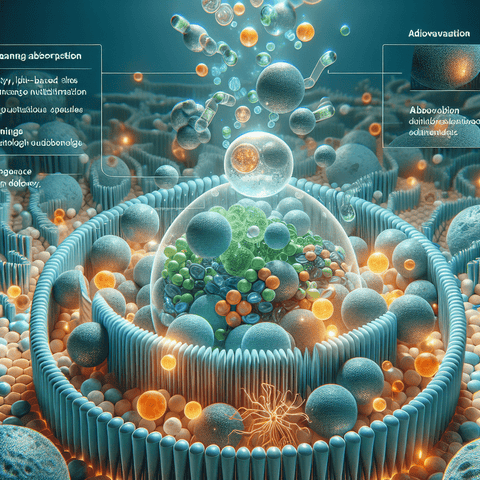
Explorez comment la conception du système de livraison liposomale utilise des vésicules phospholipidiques pour encapsuler des charges utiles. Le système de livraison liposomale est construit à partir d'une bicouche lipidique qui entoure un noyau aqueux, permettant à une cargaison hydrophile de résider à l'intérieur et à des composants hydrophobes de s'associer à la membrane. En ajustant la composition lipidique, la charge de surface et la taille de la vésicule, les chercheurs créent une plateforme modulaire avec différents profils de libération et caractéristiques de stabilité. Cette architecture sert de référence pour examiner comment les transporteurs à l’échelle nanométrique se comportent dans des environnements complexes. Dans de tels environnements, le système de livraison liposomale interagit avec des interfaces qui régissent le transport. La vésicule peut fusionner avec les membranes cellulaires ou être internalisée par endocytose, puis libérer la charge utile en réponse à des déclencheurs tels que des changements de pH ou une activité enzymatique. Les propriétés physiques — taille, charge de surface, rigidité de la membrane, et stabilisateurs comme le cholestérol ou le PEG — façonnent la manière dont le porteur se distribue, traverse les réseaux, et maintient l'intégrité de la cargaison avant la libération. La discussion se concentre sur les mécanismes qui influencent la disponibilité de la charge utile à travers les interfaces. La ciblabilité précise émerge par des modifications de surface : l’attachement de ligands tels que des peptides, des anticorps ou des aptamers permet des interactions spécifiques avec les récepteurs ou l’environnement. Le système de livraison liposomale peut également recourir à des stratégies de furtivité pour réduire les interactions non spécifiques, en utilisant des polymères tels que le PEG pour moduler le comportement de circulation. Ensemble, ces caractéristiques permettent une localisation plus contrôlée tout en conservant l’architecture de base de la vésicule. La caractérisation d’un système de livraison liposomale implique une série de mesures révélant ses propriétés et ses performances potentielles. Des techniques telles que la diffusion de lumière dynamique et la microscopie électronique évaluent la taille et la morphologie, tandis que le potentiel zêta fournit la charge de surface. L’efficacité d’encapsulation et la cinétique de libération quantifient la quantité de charge utile contenue et sa libération au fil du temps. Ces données aident à établir des liens entre les choix de conception et le comportement observé du système dans différentes conditions.


What Are Liposomal Supplements and Do They Really Improve Nutrient Absorption? - Topvitamine
30 August 2025
Les compléments liposomaux encapsulent un nutriment dans des structures constituées de phospholipides. Cette technologie peut améliorer la solubilité ou la biodisponibilité de certains ingrédients, mais son efficacité dépend du nutriment, de la formulation et de la qualité des études disponibles. Découvrez comment favoriser l’absorption des nutriments, ce qui peut la réduire et les précautions à prendre avant une supplémentation.
What are Liposomal Supplements and Are They More Effective? - Topvitamine
29 August 2025
Les compléments liposomaux utilisent des vésicules de phospholipides pour transporter certains nutriments. Cette technologie peut améliorer la stabilité et l’exposition à certains actifs, mais elle ne garantit pas une meilleure efficacité pour tous les produits. Découvrez les différences avec les formes classiques, les critères de qualité, les précautions d’emploi et les réponses aux questions fréquentes avant de choisir une vitamine ou un minéral liposomal.
What Are Liposomal Capsules? Understanding Their Benefits and How They Work - Topvitamine
29 June 2025
Les gélules liposomales associent un nutriment à des liposomes formés de phospholipides. Cette technologie peut influencer la stabilité, la dispersion et l’absorption de certains ingrédients, sans garantir une efficacité supérieure à une gélule classique. Découvrez ce que font réellement les liposomes, les différences entre les formulations, les effets indésirables possibles et les points à vérifier avant de choisir un complément liposomal.

Liposomal delivery systems represent a significant advancement in how active ingredients are transported within the body. Rather than a simple delivery method, this technology employs sophisticated nanoscale vesicles to protect and guide payloads—whether pharmaceutical drugs or nutritional compounds—to their intended destinations. This page provides a comprehensive overview of liposomal delivery, exploring its core principles, design considerations, potential benefits, and the broader context of its use.

What is a Liposomal Delivery System?

At its core, a liposomal delivery system is a microscopic sphere, known as a vesicle, composed of a lipid bilayer. This bilayer is structurally similar to a cell membrane, consisting of phospholipids that arrange themselves to form a protective shell. This shell encloses an aqueous core, creating a versatile carrier capable of encapsulating a wide range of substances.

The architecture of the liposome is key to its function. Hydrophilic (water-loving) compounds can be housed within the aqueous core, while hydrophobic (water-fearing) compounds can be integrated into the lipid membrane itself. This dual capability makes liposomes exceptionally adaptable for delivering different types of cargo. The process of encapsulation can shield sensitive ingredients from degradation in the digestive tract or bloodstream, keeping them stable until they reach their target.

How Do Liposomal Delivery Systems Work?

The functionality of liposomes extends beyond simple encapsulation; it involves a complex interaction with biological systems. Once administered, these vesicles can navigate through the body, and their behavior is significantly influenced by their physical and chemical properties. Researchers can fine-tune these properties to control how the liposome behaves.

Design Parameters and Their Influence

The effectiveness of a liposomal system is determined by several key design parameters:

  • Vesicle Size: Smaller vesicles may have different biodistribution patterns, potentially reaching tissues that larger ones cannot.
  • Surface Charge (Zeta Potential): The charge on the liposome surface can affect its interaction with cells and proteins, influencing uptake and circulation time.
  • Membrane Rigidity: Incorporating cholesterol can modulate membrane fluidity, making the vesicle more or less stable in the bloodstream.
  • Surface Modifications: Attaching polymers like polyethylene glycol (PEG), a process known as PEGylation, creates a 'stealth' effect that helps the liposome evade immune detection and prolong its circulation.

Mechanisms of Interaction and Release

Liposomes deliver their payload through a few primary mechanisms. They may fuse directly with the target cell membrane, merging their lipid layers and releasing the contents into the cell. Alternatively, they can be taken up by cells through a process called endocytosis, where the cell engulfs the vesicle. Once inside, the liposome must release its cargo, which can be triggered by specific conditions such as a change in pH within the cellular compartment or the presence of particular enzymes.

Advantages of Liposomal Delivery

The interest in liposomal delivery systems is largely due to their potential advantages over conventional transport methods. These benefits are particularly relevant in both pharmaceutical and supplement contexts.

  • Enhanced Bioavailability: By protecting the payload from degradation, liposomes can increase the amount of the substance that is absorbed and utilized by the body.
  • Controlled Release: Liposomes can be engineered to release their contents over a sustained period or in response to a specific trigger, leading to more consistent effects.
  • Targeted Delivery: Surface ligands, such as antibodies or peptides, can be attached to the liposome surface, enabling it to seek out and bind to specific cells or tissues, potentially reducing side effects.
  • Improved Stability: Encapsulation can shield sensitive compounds from harsh conditions, such as the acidic environment of the stomach, improving their overall stability.

Disadvantages and Drawbacks of Liposomal Delivery

While the technology is promising, it is not without its challenges. Understanding the limitations is crucial for a balanced view of liposomal delivery.

  • Production Complexity and Cost: Manufacturing liposomes on a large scale with consistent quality is technically challenging and can be more expensive than producing traditional dosage forms.
  • Stability Concerns: Some liposomal formulations may have a limited shelf life and can be prone to leaking their contents or fusing together over time.
  • Potential for Premature Release: A major drawback can be the unintended release of the payload in the bloodstream before it reaches the target site, which could reduce effectiveness or cause side effects.
  • Low Loading Capacity: Some liposomal systems may struggle to encapsulate a sufficient quantity of the active ingredient, requiring larger or more frequent doses.

Characterization and Quality Control

To ensure a liposomal delivery system performs as intended, scientists rely on a suite of analytical techniques to characterize its properties. This rigorous analysis is a critical step in development and quality assurance.

  • Dynamic Light Scattering (DLS): Used to measure the size distribution of the vesicles in a solution.
  • Zeta Potential Measurement: Determines the surface charge of the liposomes, which is an indicator of their physical stability.
  • Electron Microscopy (EM): Provides detailed images of liposome morphology, confirming their shape and structure.
  • Encapsulation Efficiency: Measures the percentage of the active ingredient that is successfully loaded into the liposomes.
  • Release Kinetics: Assesses the rate at which the payload is released from the liposome over time in various conditions.

Liposomal Delivery in Nutritional Supplements

In the realm of dietary supplements, liposomal technology has been adopted to enhance the delivery of various nutrients, particularly those with poor oral bioavailability. By encapsulating these ingredients, manufacturers aim to improve their absorption and effectiveness. While the approach is scientifically sound in principle, the quality and efficacy of commercial liposomal supplements can vary significantly depending on the formulation and manufacturing process. Consumers should seek products from reputable brands that provide transparent information about their liposomal technology. For those interested in supplement science, our natural supplements collection offers a curated selection.

Future Trends and Innovations in Liposomal Technology

The field of liposomal delivery is continuously evolving, with research focused on overcoming current limitations and expanding applications. Innovations include the development of more targeted therapies for complex diseases, novel methods for triggered release, and scalable manufacturing techniques to reduce production costs. The integration of this technology with other fields, such as personalized medicine, could lead to more effective and individualized treatment and supplementation strategies in the future. For those exploring related areas, understanding antioxidants and their role in health can provide a broader nutritional context.

Exploring Related Topics and Categories

Liposomal delivery is often discussed in relation to other novel nutrient delivery methods, such as those involving phospholipids. This broader category of fats is fundamental to understanding how liposomes are constructed. By comparing different delivery systems, consumers and researchers can better appreciate the unique value proposition of each approach.

In conclusion, liposomal delivery systems are a powerful and versatile technology with significant potential. While they offer clear advantages in terms of protection, targeting, and controlled release, they also present challenges related to cost, stability, and manufacturing complexity. As research progresses, these systems are likely to become even more sophisticated, playing an increasingly important role in both medicine and nutrition.