
{"type": "json_object"}
Vitamine C liposomale vs vitamine C classique : laquelle est mieux absorbée ?
05 July 2025
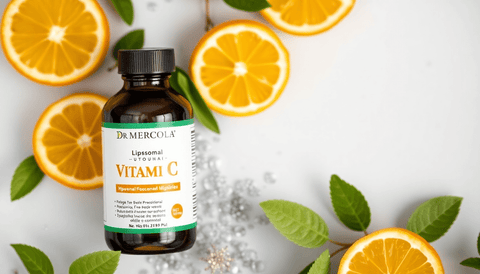
La vitamine C liposomale Dr Mercola associe la vitamine C à des liposomes, une formulation conçue pour modifier sa délivrance. Ce guide explique ses fonctions, ce que l’on peut réellement dire de son absorption, ses différences avec la vitamine C classique et les critères à vérifier avant l’achat. Il répond aussi aux questions sur les compléments antioxydants, leur prise quotidienne et leur usage chez les hommes.
{"content":"
Quand on compare la vitamine C liposomale et la vitamine C classique, la question centrale est simple : envelopper l'acide ascorbique dans de minuscules vésicules lipidiques améliore-t-il réellement la quantité de vitamine C absorbée par l'organisme ? Cet article explique ce qu'est l'administration liposomale, comment l'acide ascorbique standard est digéré et absorbé, ce que dit la recherche sur la biodisponibilité, et qui peut réellement bénéficier d'une forme liposomale. Vous apprendrez aussi pourquoi l'alimentation doit primer, comment reconnaître un apport potentiellement insuffisant, et comment peser le coût, la tolérance et la qualité de l'étiquette pour choisir la forme qui vous convient.
\n\n
Que signifie réellement « vitamine C liposomale » ?
\n\n
La vitamine C liposomale est de l'acide ascorbique enfermé dans des sphères microscopiques appelées liposomes. Ces sphères sont composées de phospholipides — la même classe de molécules lipidiques que l'on trouve dans les membranes cellulaires. L'idée derrière l'administration liposomale est que l'enveloppe lipidique protège la vitamine C de la dégradation dans le tube digestif et pourrait l'aider à franchir la barrière intestinale plus efficacement que l'acide ascorbique libre.
\n\n
Comment fonctionne l'administration liposomale
\n\n
Les liposomes sont généralement produits en mélangeant des phospholipides avec de la vitamine C dans des conditions contrôlées, de sorte que des poches aqueuses d'acide ascorbique soient entourées d'une bicouche lipidique. En théorie, cette protection réduit l'exposition de la vitamine à l'acide gastrique et aux enzymes digestives, et peut permettre à une partie du nutriment d'être absorbée par les cellules intestinales via des voies autres que les transporteurs classiques de la vitamine C. La qualité d'un produit liposomal dépend fortement du procédé de fabrication, car les liposomes varient considérablement en taille, en stabilité et en quantité de vitamine C réellement encapsulée par rapport à celle fixée à l'extérieur.
\n\n
En quoi l'acide ascorbique diffère-t-il de la vitamine C liposomale ?
\n\n
Les suppléments classiques de vitamine C sont essentiellement de l'acide ascorbique pur (ou des sels minéraux comme l'ascorbate de sodium). L'acide ascorbique est hydrosoluble, peu coûteux et bien étudié, mais son absorption suit un schéma physiologique spécifique qui devient limitant à doses élevées. Les formulations liposomales tentent de contourner ou de réduire ces limites. En pratique, les deux formes apportent le même nutriment actif — la différence réside dans le système d'administration, pas dans la vitamine elle-même.
\n\n
Quelle est la différence entre la vitamine C liposomale et la vitamine C classique ?
\n\n
Biodisponibilité et taux d'absorption
\n\n
La biodisponibilité décrit la proportion d'un nutriment ingéré qui atteint la circulation sanguine sous une forme utilisable. Pour la vitamine C classique, la biodisponibilité est élevée à doses faibles à modérées et diminue à mesure que la dose augmente. Quelques petites études suggèrent que les formulations liposomales peuvent produire des concentrations plasmatiques de vitamine C supérieures à celles obtenues avec la même dose d'acide ascorbique simple, particulièrement à doses élevées. Cependant, les données probantes sont limitées, les études varient en conception et en qualité de produit, et l'amélioration des taux sanguins ne se traduit pas automatiquement par des différences prouvées en matière de résultats de santé.
\n\n
Encapsulation liposomale vs digestion standard
\n\n
Avec l'acide ascorbique classique, l'absorption dépend de protéines de transport spécialisées dans l'intestin. Une fois ces transporteurs saturés, la vitamine C excédentaire n'est pour l'essentiel pas absorbée et passe dans le côlon, où des doses élevées peuvent attirer de l'eau et provoquer des troubles digestifs. L'encapsulation liposomale est conçue pour contourner une partie de ce goulot d'étranglement en protégeant la vitamine et en facilitant potentiellement son absorption par des voies supplémentaires. L'efficacité de ce mécanisme dépend de l'intégrité des liposomes, qui peuvent être perturbés par l'acide gastrique, les enzymes digestives et la bile.
\n\n
Quelle quantité de vitamine C classique votre corps absorbe-t-il ?
\n\n
La vitamine C classique est remarquablement bien absorbée — dans les conditions quotidiennes normales. Aux doses alimentaires habituelles (environ 30 à 180 mg par prise), des taux d'absorption de 70 à 90 pour cent sont couramment cités. Les limites ne deviennent pertinentes qu'aux doses supplémentaires plus élevées.
\n\n
Le seuil de saturation de la vitamine C
\n\n
L'absorption de la vitamine C suit un schéma saturable dépendant de la dose. Les recherches de Mark Levine et de ses collègues aux NIH ont montré que les concentrations plasmatiques atteignent un plateau lorsque les doses orales dépassent environ 200 mg à la fois, l'efficacité d'absorption diminuant progressivement à 500 mg, 1 000 mg et au-delà. Autrement dit, prendre 1 000 mg de vitamine C classique en une fois n'apporte pas le double de la quantité absorbée avec 500 mg. L'organisme régule également étroitement l'excès de vitamine C par excrétion rénale, ce qui limite davantage son accumulation.
\n\n
Facteurs limitant l'absorption de la vitamine C classique
\n\n
- Taille de la dose : les doses uniques plus importantes sont proportionnellement moins bien absorbées que des doses plus petites et réparties.
- Capacité de transport intestinal : la saturation des transporteurs est le principal goulot d'étranglement physiologique pour l'acide ascorbique non encapsulé.
- Affections gastro-intestinales : certains troubles digestifs, chirurgies ou inflammations intestinales peuvent réduire l'absorption.
- Chaleur et stockage : la vitamine C se dégrade avec une cuisson prolongée et un stockage long, ce qui affecte l'apport alimentaire plutôt que les suppléments.
- Tabagisme et stress oxydatif : les fumeurs ont des besoins accrus en vitamine C et présentent souvent des taux sanguins plus faibles à apport identique.
\n\n
Quelle quantité de vitamine C le corps peut-il absorber des suppléments liposomaux ?
\n\n
Ce que dit la recherche sur l'absorption liposomale
\n\n
Une étude fréquemment citée de Davis et ses collègues a comparé la vitamine C liposomale à l'acide ascorbique simple et à la vitamine C intraveineuse. Elle a révélé que la formulation liposomale produisait des concentrations circulantes de vitamine C supérieures à une dose orale équivalente d'acide ascorbique classique, et que les liposomes étaient mieux tolérés à doses élevées par les participants ayant souffert de troubles digestifs avec la vitamine C simple. D'autres petites études ont rapporté des différences mitigées ou modestes. D'importantes réserves s'appliquent : la plupart des études sont de petite taille, souvent influencées par l'industrie, utilisent des produits de qualité variable et mesurent des taux sanguins à court terme plutôt que des bénéfices cliniques à long terme. Une interprétation raisonnable est qu'un produit liposomal bien fabriqué peut augmenter modestement les quantités absorbées, surtout à doses élevées, mais ne transforme pas la vitamine C en un nutriment différent ou médicalement supérieur.
\n\n
Qui peut bénéficier de la vitamine C liposomale ?
\n\n
Les personnes souffrant de troubles digestifs avec des doses élevées
\n\n
La vitamine C non absorbée est osmotiquement active dans l'intestin, c'est pourquoi des doses supérieures à environ 1 à 2 grammes à la fois peuvent provoquer ballonnements, crampes ou selles molles chez les personnes sensibles. Si vous devez ou choisissez de prendre des doses plus élevées, une forme liposomale peut être plus douce pour le tube digestif, car une partie de la vitamine C encapsulée peut échapper à l'effet osmotique de l'acide ascorbique libre dans le côlon.
\n\n
Les personnes ayant des besoins accrus en vitamine C
\n\n
Certaines situations augmentent les besoins en vitamine C, notamment le tabagisme, l'activité physique intense régulière, la grossesse et l'allaitement (dans le cadre des recommandations établies), la maladie et un faible apport alimentaire en fruits et légumes. Pour la plupart des gens, l'alimentation plus un supplément standard couvre largement ces besoins ; les produits à doses élevées ou liposomaux sont spécifiques à certaines situations plutôt que courants.
\n\n
Les personnes ayant une capacité d'absorption réduite
\n\n
Les personnes atteintes de troubles malabsorptifs, de maladies inflammatoires intestinales, du syndrome de l'intestin court ou ayant des antécédents de certaines chirurgies gastro-intestinales peuvent absorber moins de vitamine C, quelle que soit la forme. Pour ces personnes, une formulation conçue pour améliorer l'absorption mérite d'être discutée avec un professionnel de santé, accompagnée d'une évaluation correcte de l'état nutritionnel réel plutôt que de conjectures.
\n\n
Sources alimentaires de vitamine C : pourquoi l'alimentation passe d'abord
\n\n
La vitamine C est abondante dans les aliments du quotidien, et pour la plupart des gens, l'alimentation seule couvre l'apport recommandé sans difficulté. Un apport varié en fruits et légumes fournit non seulement de la vitamine C, mais aussi des fibres, des flavonoïdes et d'autres nutriments qui agissent en synergie.
\n\n
Meilleures sources alimentaires de vitamine C
\n\n
- Agrumes (oranges, pamplemousses, citrons)
- Kiwis, fraises et autres baies
- Poivrons — parmi les sources les plus riches de toutes
- Brocoli, choux de Bruxelles et autres crucifères
- Cassis, cynorhodons et cerises acérola
- Pommes de terre et tomates (contributions modestes mais constantes)
\n\n
Peut-on atteindre la saturation en vitamine C par la seule alimentation ?
\n\n
Oui. La recherche indique que la vitamine C plasmatique atteint une quasi-saturation avec un apport d'environ 200 mg par jour ou plus, provenant de sources alimentaires et supplémentaires combinées — un montant facilement atteint grâce à une alimentation riche en produits frais. C'est un point clé du débat entre vitamine C liposomale et classique : une fois les taux sanguins saturés, le système d'administration offre peu d'avantage pratique pour les besoins quotidiens. Les produits liposomaux deviennent surtout pertinents lorsque des doses supérieures à environ 500 à 1 000 mg sont spécifiquement recherchées.
\n\n
Signes d'un apport en vitamine C potentiellement insuffisant
\n\n
Un apport légèrement insuffisant en vitamine C ne provoque souvent aucun symptôme évident, ce qui facilite sa sous-estimation. Les groupes présentant des apports moyens plus faibles comprennent les personnes mangeant peu de fruits et légumes, les fumeurs, les personnes suivant des régimes restrictifs, les personnes âgées avec un appétit limité ou des difficultés à cuisiner, ainsi que celles atteintes de maladies chroniques ou consommant de l'alcool.
\n\n
Facteurs alimentaires et liés au mode de vie pouvant entraîner un apport insuffisant
\n\n
- Faible consommation de fruits et légumes frais
- Tabagisme, qui augmente le renouvellement de la vitamine C
- Recours prolongé aux aliments fortement transformés
- Méthodes de cuisson qui détruisent la vitamine C, comme l'ébullition prolongée
- Affections ou médicaments affectant l'appétit ou l'absorption
\n\n
Comment vérifier votre statut en vitamine C
\n\n
Les symptômes seuls ne permettent pas d'établir de manière fiable le statut en vitamine C, et la carence sévère (scorbut) est rare dans les populations ayant accès à des aliments frais. Si une carence est réellement suspectée, un professionnel de santé peut prescrire un dosage plasmatique de la vitamine C et évaluer l'apport alimentaire et le contexte médical. S'automédiculer avec de la vitamine C à haute dose contre une fatigue vague ne remplace pas une évaluation appropriée, surtout si les symptômes persistent.
\n\n
Quand envisager un supplément de vitamine C liposomale ?
\n\n
Besoins en doses élevées et tolérance gastro-intestinale
\n\n
Un supplément de vitamine C standard suffit généralement pour un soutien nutritionnel de base. La vitamine C liposomale devient une option raisonnable lorsque vous souhaitez spécifiquement des doses plus élevées mais tolérez mal l'acide ascorbique simple, ou lorsque les données cliniques limitées et le marketing produit convergent vers une meilleure tolérance et des taux sanguins modestement supérieurs. Elle n'est pas nécessaire — ni démontrée supérieure — pour simplement couvrir les besoins quotidiens.
\n\n
Comparer l'absorption entre suppléments liposomaux et classiques
\n\n
Pour des doses allant jusqu'à environ 250 à 500 mg à la fois, la différence pratique entre un produit liposomal bien fabriqué et la vitamine C classique est probablement faible. À doses plus élevées, les formulations liposomales semblent plus susceptibles d'élever davantage les taux sanguins et d'être mieux tolérées, bien que les données restent limitées et dépendantes du produit. Répartir une dose de vitamine C classique en plusieurs prises plus petites au fil de la journée est une stratégie plus simple et moins coûteuse qui améliore également l'absorption nette.
\n\n
Comment choisir entre vitamine C liposomale et classique
\n\n
Ce qu'il faut rechercher dans un produit de vitamine C liposomale
\n\n
- Une information claire sur la source des phospholipides (souvent de la phosphatidylcholine dérivée du tournesol)
- La précision de la teneur en vitamine C encapsulée, et pas seulement de l'acide ascorbique total
- Des analyses tierces ou indépendantes de pureté et de teneur
- Des informations transparentes sur la taille des liposomes ou la qualité de fabrication, lorsque disponibles
- Des informations sur les allergènes, notamment pour les phospholipides dérivés du soja ou de l'œuf présents dans certains produits
\n\n
Lire l'étiquette : phospholipides, acide ascorbique et taille de portion
\n\n
Les produits liposomaux gagnent du poids par les phospholipides : comparez donc la quantité réelle de vitamine C par portion, et pas seulement la taille des gélules ou de la dose. Certains produits étiquetés « liposomaux » contiennent peu de vitamine C réellement encapsulée ; d'autres mélangent la vitamine C avec des phospholipides sans véritable encapsulation. Vérifiez également si le produit utilise de l'ascorbate de sodium ou de l'acide ascorbique, ce qui compte pour les personnes surveillant leur apport en sodium.
\n\n
Gélules, poudres ou liquides
\n\n
La vitamine C liposomale se vend sous forme de liquides, de gélules et de poudres. Les vrais liposomes sont par nature fragiles ; les produits liquides préservent donc généralement mieux la structure des liposomes, mais nécessitent parfois une réfrigération et ont une durée de conservation plus courte. Les gélules sont pratiques et stables, bien que la qualité d'encapsulation varie. Les poudres sont peut-être les moins fiables en tant que formes liposomales, car le mélange avec l'eau ne crée pas de liposomes. Explorez la gamme plus large de compléments alimentaires naturels si vous comparez des formats entre marques.
\n\n
La vitamine C liposomale est-elle sûre ?
\n\n
La vitamine C liposomale est généralement bien tolérée dans les plages d'apport normales. Les principales considérations de sécurité pour les deux formes concernent la dose, pas le mode d'administration.
\n\n
Effets secondaires courants et tolérance
\n\n
À doses modérées, les effets secondaires sont rares. À doses élevées, la vitamine C classique provoque couramment des troubles digestifs ; les formes liposomales peuvent les atténuer, sans toutefois les éliminer. Les phospholipides utilisés sont généralement reconnus comme sûrs, et les ingrédients de type lécithine ont une longue histoire d'utilisation alimentaire. Les personnes allergiques à la source des phospholipides doivent lire attentivement les étiquettes.
\n\n
Limites supérieures et apports excessifs
\n\n
La limite supérieure de sécurité (UL) pour la vitamine C chez l'adulte est de 2 000 mg par jour, toutes sources de suppléments confondues, principalement en raison du risque de symptômes gastro-intestinaux. Des apports très élevés peuvent également augmenter les taux d'oxalate, un point à considérer pour les personnes ayant des antécédents de calculs rénaux. La vitamine C peut aussi affecter l'absorption ou l'action de certains médicaments ; toute personne prenant un traitement sur ordonnance, ou qui est enceinte, allaite ou souffre d'une affection rénale, devrait consulter un professionnel avant d'utiliser des doses élevées, quelle que soit la forme.
\n\n
Vitamine C liposomale ou classique : comment décider
\n\n
Coût et rapport qualité-prix
\n\n
Les produits liposomaux coûtent nettement plus cher par gramme de vitamine C que l'acide ascorbique simple. Si votre objectif est de couvrir les besoins quotidiens, la forme la moins chère est généralement le choix le plus rationnel. Payer un supplément de prix ne se justifie que si vous recherchez spécifiquement un apport en doses élevées avec une meilleure tolérance digestive, et seulement si le produit démontre une véritable qualité d'encapsulation.
\n\n
Adapter la forme à vos besoins
\n\n
- Soutien nutritionnel quotidien : l'alimentation plus une vitamine C standard ou un multivitamine bien formulé suffit généralement.
- Doses élevées avec mauvaise tolérance : un produit liposomal de qualité ou des doses classiques réparties sont deux stratégies raisonnables.
- Problèmes de malabsorption : discutez de la formulation et des tests avec un professionnel de santé.
- Soutien antioxydant général : un large éventail de nutriments antioxydants issu d'une alimentation variée compte plus qu'un format d'administration en particulier.
\n\n
En résumé : quelle forme de vitamine C vous convient ?
\n\n
Pour la plupart des gens, la vitamine C classique — idéalement accompagnée d'une alimentation riche en fruits et légumes — couvre tous les besoins quotidiens, et l'efficacité d'absorption naturelle du corps à doses modérées est excellente. La vitamine C liposomale offre un avantage plausible et modestement étayé à doses élevées, principalement sous forme d'une meilleure tolérance digestive et de taux sanguins un peu plus élevés, bien que les données restent limitées et que la qualité des produits varie considérablement. Choisissez la forme liposomale lorsque les doses élevées et la tolérance comptent spécifiquement pour vous ; sinon, privilégiez l'alimentation, prenez de la vitamine C classique en doses réparties raisonnables si nécessaire, et laissez les taux sanguins se saturer naturellement. Si vous doutez de votre apport ou souffrez d'une affection médicale, un test sanguin et un avis professionnel vous en apprendront plus que toute comparaison d'étiquettes.
\n\n
À retenir
\n\n
- La vitamine C liposomale est de l'acide ascorbique enfermé dans des sphères de phospholipides conçues pour le protéger pendant la digestion.
- La vitamine C classique est très bien absorbée (70 à 90 %) à doses faibles à modérées ; l'efficacité d'absorption diminue à mesure que les doses uniques augmentent.
- La vitamine C plasmatique se sature à environ 200 mg par jour d'apport combiné — un niveau facilement atteint par l'alimentation.
- De petites études suggèrent que les produits liposomaux bien fabriqués peuvent augmenter modestement les taux sanguins de vitamine C, surtout à doses élevées, mais les données sont limitées.
- Le principal avantage pratique des formes liposomales semble être la réduction des troubles digestifs à des doses supérieures à environ 1 à 2 g.
- Les fruits et légumes — notamment les poivrons, les agrumes, le kiwi et le brocoli — devraient constituer la base de l'apport en vitamine C.
- La limite supérieure d'apport en vitamine C supplémentaire chez l'adulte est de 2 000 mg par jour ; plus n'est pas mieux.
- La qualité des produits varie considérablement : vérifiez la source des phospholipides, la teneur réelle en vitamine C par portion et les analyses tierces.
- Les symptômes seuls ne permettent pas d'établir le statut en vitamine C ; les tests et l'évaluation professionnelle sont plus fiables en cas de carence suspectée.
\n\n
Questions fréquemment posées
\n\n
La vitamine C liposomale est-elle mieux absorbée que la vitamine C classique ?
\n
À doses faibles à modérées, la différence est probablement faible car la vitamine C classique est déjà bien absorbée. Certaines petites études suggèrent que des produits liposomaux bien fabriqués peuvent produire des taux sanguins plus élevés à doses élevées, mais les données sont limitées et les résultats varient selon les produits.
\n\n
Qu'est-ce que la vitamine C liposomale ?
\n
C'est de la vitamine C (acide ascorbique) enfermée dans de minuscules sphères de phospholipides appelées liposomes. L'enveloppe lipidique est destinée à protéger la vitamine de la dégradation digestive et potentiellement à favoriser une absorption plus efficace.
\n\n
Peut-on prendre trop de vitamine C liposomale ?
\n
Oui. La limite supérieure d'apport en vitamine C supplémentaire chez l'adulte est de 2 000 mg par jour, quelle que soit la forme. Un excès d'apport augmente principalement le risque de symptômes digestifs et, avec des apports chroniques très élevés, peut élever les taux d'oxalate, un facteur pertinent pour le risque de calculs rénaux.
\n\n
Pourquoi la vitamine C à haute dose provoque-t-elle la diarrhée ?
\n
L'acide ascorbique non absorbé reste dans l'intestin, où il attire de l'eau et peut provoquer des crampes et des selles molles. C'est un effet dose-dépendant ; prendre des doses plus petites réparties ou une forme liposomale peut l'atténuer.
\n\n
De quelle quantité de vitamine C ai-je besoin par jour ?
\n
Les apports de référence pour les adultes sont d'environ 75 à 90 mg par jour, avec une légère augmentation pour les fumeurs. La saturation plasmatique survient à environ 200 mg par jour, si bien que la plupart des alimentations variées couvrent confortablement les besoins sans suppléments.
\n\n
La vitamine C liposomale agit-elle comme la vitamine C intraveineuse ?
\n
Non. L'administration intraveineuse contourne entièrement l'intestin et atteint des concentrations sanguines bien plus élevées que toute forme orale, liposomale ou non. Les affirmations assimilant les produits liposomaux à la vitamine C intraveineuse surestiment les données.
\n\n
Quels aliments sont les plus riches en vitamine C ?
\n
Les poivrons, le cassis, le kiwi, les agrumes, les fraises et les crucifères comme le brocoli et les choux de Bruxelles figurent parmi les sources les plus riches. Les aliments frais ou légèrement cuits conservent plus de vitamine C que ceux longuement bouillis ou stockés.
\n\n
Quel est le meilleur moment pour prendre la vitamine C liposomale ?
\n
Elle peut être prise avec ou sans nourriture, bien que la prise au cours d'un repas puisse améliorer la tolérabilité pour certaines personnes et la digestion des phospholipides. La régularité compte plus que le moment de la prise.
\n\n
Puis-je prendre la vitamine C liposomale avec d'autres suppléments ?
\n
Généralement oui. La vitamine C peut améliorer l'absorption du fer non héminique, ce qui est utile pour certains et à considérer pour d'autres, et de très fortes doses peuvent interagir avec certains médicaments. Si vous prenez des médicaments sur ordonnance, consultez un professionnel de santé.
\n\n
La vitamine C liposomale convient-elle aux végans ?
\n
Souvent oui — notamment les produits utilisant de la phosphatidylcholine dérivée du tournesol plutôt que du soja ou de l'œuf. Vérifiez toujours l'étiquette, car les sources de phospholipides et les matériaux des gélules varient selon les produits.
\n\n
Comment conserver la vitamine C liposomale ?
\n
Les produits liposomaux liquides sont généralement plus fragiles et peuvent nécessiter une réfrigération après ouverture, avec une durée de conservation plus courte que les gélules ou les poudres. Suivez les instructions de conservation figurant sur l'étiquette du produit concerné.
\n\n
Ai-je besoin de vitamine C liposomale pour rester en bonne santé ?
\n
Non. Une alimentation comportant régulièrement des fruits et légumes couvre les besoins quotidiens de presque tout le monde. Les formes liposomales sont une option situationnelle pour des doses plus élevées avec une meilleure tolérance, pas une nécessité pour la santé.
\n\n
Mots-clés associés
\n
- vitamine C liposomale vs vitamine C classique
- absorption de la vitamine C liposomale
- biodisponibilité de la vitamine C
- limite d'absorption de l'acide ascorbique
- point de saturation de la vitamine C
- meilleure forme de supplément de vitamine C
- vitamine C liposomale vs acide ascorbique
- limite supérieure d'apport en vitamine C 2000 mg
- effets secondaires de la vitamine C à haute dose
- sources alimentaires de vitamine C
- suppléments liposomaux à la phosphatidylcholine
- vitamine C et tolérance digestive
- quelle quantité de vitamine C peut être absorbée par jour
- bénéfices et sécurité de la vitamine C liposomale
"}