
Confus entre la méthylcobalamine et la cyanocobalamine ? Cette page explore la science derrière les deux formes de vitamine B12 les plus discutées. Les deux sont des cobalamines, partageant la même structure de base, mais elles diffèrent par leurs ligands et leur utilisation par le corps. La méthylcobalamine et la cyanocobalamine apparaissent dans les compléments et les produits enrichis, mais elles s'engagent dans des voies biochimiques différentes lors du traitement. Comprendre ces différences permet de clarifier pourquoi une forme est mise en avant dans certains contextes et dans les spécifications des produits. D’un point de vue biochimique, la méthylcobalamine est un cofacteur dans la réaction de la méthionine synthase, reliant la vitamine B12 au métabolisme des un carbone. L’adénosylcobalamine sert de cofacteur pour la methylmalonyl-CoA mutase, une autre enzyme des voies cellulaires. La cyanocobalamine, avec son ligand cyanure, est une forme stable et synthétique qui est convertie dans le corps en formes actives de coenzymes — la méthylcobalamine et l’adénosylcobalamine — dans le cadre du processus normal. En ce sens, la comparaison entre la méthylcobalamine et la cyanocobalamine reflète à la fois leurs rôles immédiats en tant que cofacteurs et les étapes de conversion en aval dans le corps. La stabilité et la manipulation sont des facteurs pratiques qui différencient les deux. La cyanocobalamine est reconnue pour sa stabilité robuste et sa durée de conservation plus longue, ce qui contribue à sa prévalence dans de nombreux formulaires de produits. La méthylcobalamine peut être plus sensible à la lumière et à la température, et ses considérations de stockage peuvent dépendre de la formulation. Ces différences de stabilité influencent l’emballage, l’étiquetage et la fabrication des produits, sans modifier la chimie fondamentale de la vitamine elle-même. Lorsqu’il s’agit de choisir entre la méthylcobalamine et la cyanocobalamine, il faut considérer comment chaque forme est produite, comment le corps la traite, et comment elle est présentée dans un produit donné. La disponibilité, le type de formulation et le coût peuvent varier selon les marques, et l’étiquetage réglementaire peut différer selon les régions. En se concentrant sur la science — la structure, les voies de conversion et la stabilité — il est possible de naviguer entre les options et de choisir la forme qui correspond à vos préférences et vos objectifs. Cliquez pour en apprendre davantage sur la manière dont ces formes s’intègrent dans différentes familles de produits et spécifiques.
Méthylcobalamine vs Cyanocobalamine : Quelle vitamine B12 est la meilleure pour vous ?

Vous souffrez de fatigue, de brouillard mental ou de problèmes de mémoire pendant la ménopause ? Vous pourriez avoir besoin de vitamine B12. Ce guide explique pourquoi la B12 est importante pendant la ménopause, compare la méthylcobalamine et la cyanocobalamine, et fournit des recommandations claires sur le dosage, l'absorption et les meilleurs suppléments à envisager pour 2026.

Methylcobalamin vs Cyanocobalamin: What's the Difference?Methylcobalamin and cyanocobalamin are two common forms of vitamin B12. The key difference is their chemical structure. Methylcobalamin is the naturally occurring, active form found in the body. Cyanocobalamin is a synthetic, stable form that requires conversion into an active form before your body can use it. Both forms can effectively raise B12 levels, but they are processed differently.Absorption, Bioavailability, and How Your Body Uses Each FormFor most people, both forms are absorbed similarly. Absorption depends more on your digestive health—stomach acid, intrinsic factor, and gut health—than on the form you take. Once absorbed, methylcobalamin is ready for immediate use in methylation reactions. Cyanocobalamin must first remove its cyanide group and convert into either methylcobalamin or adenosylcobalamin. This conversion requires adequate liver function and certain nutrients like glutathione.Choosing Between Methylcobalamin or CyanocobalaminThere is no universal best form. Cyanocobalamin is often a cost-effective and stable option for a confirmed deficiency. Methylcobalamin may be more direct for those with neurological symptoms, methylation support, or genetic variations affecting conversion. Your individual health profile, diet, lab results, and goals should guide your choice. Both forms are generally safe and well-tolerated with mild, temporary side effects.
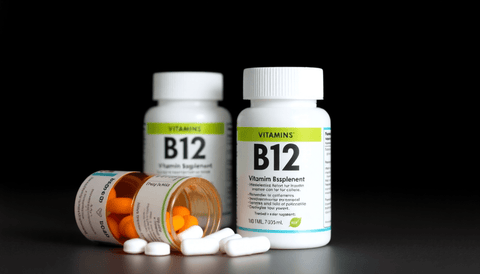
La vitamine B12 contribue au fonctionnement normal du métabolisme énergétique, mais elle ne donne pas nécessairement un surcroît d’énergie en l’absence de déficit. Ce guide explique le lien entre fatigue et vitamine B12, compare la méthylcobalamine et la cyanocobalamine, présente les critères de choix d’un complément et rappelle les précautions liées au dosage, aux symptômes persistants et aux situations particulières.