
Les minéraux dans l'alimentation versus les compléments est un sujet qui porte sur la manière dont le corps reçoit les minéraux essentiels à travers les habitudes alimentaires quotidiennes et via des produits manufacturés. Cette page vise à clarifier ce qu'il faut prendre en compte lors de la comparaison des minéraux fournis par une alimentation habituelle et ceux fournis sous forme de compléments, comment réfléchir aux différentes sources, et ce que "ça en vaut la peine" pourrait signifier en termes pratiques. En se concentrant sur la dynamique de l'apport, la disponibilité et la qualité des produits, nous pouvons explorer les choix sans faire de revendications sur les résultats. Les facteurs clés à comparer incluent la biodisponibilité, la forme chimique du minéral, et son comportement dans le corps lorsqu'il est fourni via des aliments versus des produits isolés. Dans les aliments, les minéraux font partie d'une matrice avec d'autres nutriments, tandis que les compléments présentent des formes isolées qui peuvent varier en terme d'absorption. La précision des étiquettes, la qualité de la fabrication et la présence d'interactions potentielles sont également des considérations importantes dans l’évaluation des minéraux dans l’alimentation par rapport aux compléments. Comprendre ces facteurs aide à cadrer la différence pratique entre l'apport provenant de l'alimentation et celui provenant des compléments. Lorsqu'on parle des "meilleures sources alimentaires" dans le contexte des minéraux dans l’alimentation versus les compléments, l'accent est mis sur la manière dont l'alimentation fournit des minéraux dans le cadre d'un schéma alimentaire plus large, et comment les aliments enrichis ou fortifiés peuvent jouer un rôle dans l'apport global. Une alimentation diversifiée avec une variété de choix entiers et transformés contribue aux minéraux par différentes sources, tandis que les compléments offrent une méthode de livraison alternative. La définition de "meilleur" dépend des circonstances individuelles, de la disponibilité et des préférences personnelles, toujours dans un cadre qui privilégie la précision et la qualité. Les situations où les minéraux dans l'alimentation versus les compléments peuvent être pris en compte incluent des cas où les options alimentaires sont limitées par l'accès, les préférences ou les restrictions diététiques, et où les schémas d'apport ne correspondent pas aux besoins déclarés. Dans de tels cas, les décisions concernant la supplémentation doivent être prises en s’appuyant sur des informations fiables et, si possible, avec l'avis d'un professionnel de santé ou d’un diététicien. La mise en avant de la qualité des produits, la vérification par des tiers et un étiquetage honnête soutiennent des choix éclairés lors de l’évaluation des minéraux dans l’alimentation versus les compléments.
Minéraux dans l'alimentation vs compléments : ce dont votre corps a vraiment besoin
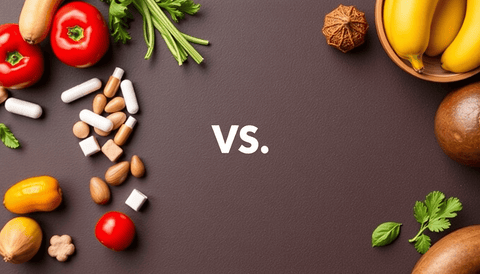
Minerals are essential nutrients that support countless functions in the body, from building strong bones to helping nerves send messages. One of the most common nutrition questions is how to get these minerals: through the foods you eat or from dietary supplements. This page provides a broad overview of the interplay between minerals in diet vs supplements, helping you understand the key concepts and practical factors involved in making informed choices.
What Does "Minerals in Diet vs Supplements" Mean?
At its core, the topic of minerals in diet vs supplements examines two different ways the body can receive these essential nutrients. The first is through a varied diet, which includes everything from fruits and vegetables to dairy, meat, and grains. The second is through dietary supplements, which are products designed to deliver specific minerals in a concentrated, isolated form.
Neither approach is automatically better than the other. The most suitable approach often depends on individual circumstances, dietary patterns, and health needs. The goal of this comparison is not to declare a winner, but to explore how these two sources differ and what that means for everyday nutrition.
Key Differences Between Food and Supplement Sources
Understanding the core differences between minerals from food and those from supplements is central to this topic. Several factors influence how minerals are absorbed and used by the body.
Bioavailability and Absorption
A key factor is bioavailability, which refers to how well a mineral is absorbed and used by the body. In food, minerals are embedded within a complex matrix of other nutrients, such as fiber, phytates, and vitamins. This matrix can either enhance or hinder absorption. For example, vitamin C in food can help with iron absorption, while certain compounds in whole grains can reduce it.
Supplements typically contain minerals in a more isolated chemical form. The specific form of the mineral can significantly impact its absorption. For instance, some forms of magnesium are more easily absorbed than others. Manufacturers also choose different chemical forms that can affect bioavailability.
Chemical Form and Interactions
The chemical form of a mineral influences how it behaves in the body. Minerals in food are naturally occurring in various forms, often combined with organic molecules. Supplements may use specific forms, such as oxides, citrates, or glycinates, which can have different absorption rates and tolerability.
Interactions with other substances are also important. The presence of other minerals in a supplement, or in the gut from a meal, can affect absorption. Some minerals compete for absorption when taken together, while others can be taken together to support absorption.
Common Minerals: Food Sources vs. Supplement Forms
To make the comparison more concrete, it helps to look at how common minerals are supplied through diet and how they are offered in supplements.
This is not an exhaustive list, but it highlights examples of well-known minerals.
- Calcium: Rich sources include dairy products, leafy green vegetables, and fortified plant-based milks. Supplements often come as calcium carbonate or calcium citrate.
- Iron: Found in red meat, poultry, beans, and fortified cereals. Supplement forms include ferrous sulfate and ferrous gluconate.
- Magnesium: Abundant in nuts, seeds, whole grains, and dark chocolate. Supplemental forms include magnesium citrate, glycinate, and oxide.
- Zinc: Present in oysters, red meat, poultry, and legumes. Supplements may feature zinc picolinate or zinc acetate.
- Potassium: Found in bananas, potatoes, and beans. Potassium supplements are available but have notable restrictions due to potential risks.
The goal is to demonstrate that each source has unique characteristics. Foods provide a package of nutrients, while supplements offer targeted doses in specific forms.
Why Doctors May Advise Caution with Supplements
A common point of discussion is why healthcare providers often emphasize getting nutrients from food first. This is not because supplements are inherently harmful. Instead, doctors generally advise a “food first” approach for several reasons.
- Foods provide a complex nutritional matrix that may improve nutrient absorption and utilization.
- Whole foods contain fiber and various phytochemicals beneficial for health beyond just individual minerals.
- Excessive intake of some minerals from high-dose supplements can lead to adverse effects and interactions with medications.
- The regulation of dietary supplements is less stringent than that of pharmaceutical drugs, meaning product quality and label accuracy can vary.
However, this caution does not mean supplements are never recommended.
When Are Mineral Supplements Considered Necessary?
Despite the benefits of a well-balanced diet, there are situations where relying on food alone may not meet the body's mineral needs. In such cases, supplements can play an important role.
- Diagnosed deficiencies: A healthcare professional may confirm a specific mineral deficiency through blood tests.
- Dietary restrictions: People following vegan, vegetarian, or other restrictive diets may find it challenging to get enough of certain minerals like iron, zinc, or calcium from food alone.
- Certain life stages: Pregnancy, infancy, and older age can increase requirements for specific minerals, such as iron or calcium.
- Medical conditions: Some health conditions affect absorption in the digestive tract, making supplements necessary to maintain adequate levels.
In these scenarios, the decision to use a supplement is not a rejection of a healthy diet. Instead, it is a strategic addition designed to bridge a specific gap. These decisions should always be made with guidance from a healthcare professional or a registered dietitian.
Key Considerations for Using Mineral Supplements
If you and your healthcare provider decide that a mineral supplement is appropriate, evaluating the product carefully is crucial. Not all supplements are created equal, and quality can vary significantly between brands.
- Check label accuracy: Look for products that state the exact amount of each mineral per serving.
- Consider third-party testing: Look for seals from independent organizations that test for quality and purity.
- Review the mineral's chemical form: Some forms are absorbed better than others. Different forms may also have different tolerability profiles.
- Be aware of potential interactions: Some minerals can interact with medications or other supplements. Always consult a healthcare professional about potential interactions.
You can learn more about the different types of minerals and how they are categorized by exploring our dedicated guide to mineral supplements.
Exploring the Topic Further
The relationship between diet and supplements is nuanced. While a balanced dietary pattern is the foundation for good nutrition, mineral supplements may serve a specific need in certain circumstances. The most reliable approach is to prioritize a varied, nutrient-rich diet and to view supplements as a targeted tool rather than a replacement for healthy eating.
This broad overview covers the main concepts of minerals in diet vs. supplements. For more specific information, such as the benefits and safe use of individual minerals like magnesium or calcium, please refer to the dedicated articles listed on this page.
For a deeper look at specific minerals, you can also review our collection on magnesium benefits or the general mineral supplements guide.