
L'absorption des compléments naturels désigne le processus par lequel un supplément ingéré devient disponible sous une forme que le corps peut utiliser. Comprendre ce concept permet d'expliquer pourquoi différents produits ont des performances variables, même lorsque leurs ingrédients semblent similaires. Cette page se concentre sur cinq conseils simples pour améliorer l'absorption des compléments naturels, en mettant l'accent sur le timing, l'association et les choix de formes qui influencent l'efficacité de leur absorption. L'objectif est d'apporter des clarifications sur les facteurs qui façonnent l'absorption des compléments naturels sans entrer dans des recommandations médicales. Conseil 1 : Prioriser la bonne forme chimique et le système de délivrance. La forme moléculaire d'un supplément — telle qu’un sel soluble, un ester ou une configuration liposomale — peut fortement influencer l'absorption des compléments naturels. Les formats de livraison qui stabilisent la composante active et améliorent la solubilité tendent à modifier la facilité avec laquelle la substance est mobilisée lors de l'absorption. Conseil 2 : Tenir compte du timing et de la stratégie de dosage pour s’aligner sur la dynamique de traitement. Le moment de la prise et l’espacement entre les doses peuvent influencer la manière dont les voies d’absorption sont utilisées. Conseil 3 : Envisager l'association avec des transporteurs compatibles ou des substances co-administres qui soutiennent le format choisi. Certains systèmes de livraison dépendent de transporteurs qui favorisent la dispersion ou protègent les composants actifs, affectant l’absorption des compléments naturels. Conseil 4 : Choisir des formats qui correspondent à l’usage prévu. Des options comme les poudres, les capsules, les liquides et les systèmes de livraison avancés offrent des profils de libération variés qui influencent la vitesse et l’étendue de l’absorption. Conseil 5 : Adopter un stockage et une manipulation appropriés pour préserver la stabilité et minimiser la dégradation, ce qui peut impacter l’absorption des compléments naturels avec le temps. Conserver les produits dans des conditions adéquates afin de maintenir la cohérence des caractéristiques d’absorption.
Maximisez l'absorption des compléments naturels : conseils simples pour augmenter la biodisponibilité
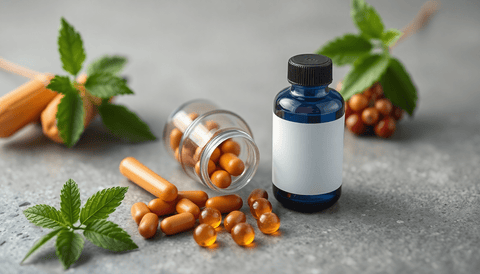
The effectiveness of any supplement hinges on a simple but critical question: how well does your body absorb it? Natural supplement absorption refers to the complex journey a nutrient takes from the moment you swallow a capsule or mix a powder until it reaches your bloodstream and cells. This page provides a broad overview of this process, exploring the key factors that influence absorption, the differences between nutrient types, and practical steps you can take to support your body's natural uptake mechanisms.
What Is Supplement Absorption and Bioavailability?
Supplement absorption is the process of a nutrient moving from the digestive tract into the bloodstream. Bioavailability, however, is a more comprehensive concept. It describes the rate and extent to which a nutrient becomes available to the body's tissues and cells to exert its intended function. Not everything you consume is fully absorbed, and even after entering the blood, some nutrients are rapidly excreted.
In simple terms, high bioavailability means more of the nutrient is effectively used by your body, while low bioavailability means a significant portion passes through without being utilized. This is why the form of a supplement and your individual health status can dramatically affect its perceived benefits.
Fat-Soluble vs. Water-Soluble Vitamins: Different Absorption Paths
Understanding the fundamental difference between fat-soluble and water-soluble vitamins is key to optimizing absorption. These nutrients are absorbed through distinct pathways and have different requirements.
Fat-Soluble Vitamins (A, D, E, K)
Vitamins A, D, E, and K are fat-soluble. This means they dissolve in fat and require dietary fat for optimal absorption. They are absorbed along with dietary fats into the lymphatic system and then into the bloodstream. Beyond initial absorption, these vitamins are stored in the body's fatty tissues and the liver, meaning they are not needed every day to maintain adequate levels.
For practical purposes, this suggests that taking fat-soluble vitamin supplements with a meal that contains some healthy fats, such as avocado, nuts, or olive oil, can support their absorption. Explore our guides on Vitamin D, Vitamin A and Vitamin E for more details on each nutrient.
Water-Soluble Vitamins (B-Complex, C)
The B-complex vitamins and vitamin C are water-soluble. They dissolve in water and are absorbed directly into the bloodstream. Unlike their fat-soluble counterparts, the body does not typically store large amounts of water-soluble vitamins, and excess amounts are often excreted in urine. This means regular intake is generally more important for maintaining healthy levels.
Absorption for these vitamins is generally more straightforward, but can still be affected by factors such as digestive health, alcohol consumption, and interactions with other nutrients. To learn more about the specific B-vitamins, see our Vitamin B collection.
Key Factors That Affect Nutrient Absorption
Several variables can influence how efficiently your body absorbs nutritional supplements. Recognizing these can help you troubleshoot potential issues and make more informed choices.
The Supplement's Chemical Form and Delivery System
The molecular form of a nutrient is a primary determinant of its absorption. For instance, certain forms of minerals, like magnesium citrate or glycinate, are often considered more readily absorbed than others, such as magnesium oxide. Similarly, delivery systems vary:
- Capsules and tablets are common but may need to disintegrate and dissolve first.
- Powders are often absorbed quickly when mixed with liquid.
- Liposomal delivery systems encapsulate nutrients in fat-like particles to potentially enhance uptake.
- Liquid formulas are directly available for absorption but may have stability concerns.
Individual Health and Lifestyle Factors
Your personal health profile plays a significant role. Factors that can impact absorption include:
- Age: Natural digestive processes can slow down with age.
- Digestive health: Conditions like celiac disease, Crohn's disease, or low stomach acid can significantly impair absorption.
- Diet: The presence of other foods can either enhance or inhibit uptake. For example, vitamin C can enhance iron absorption, while calcium can interfere with it.
- Medications: Antacids and certain other drugs can reduce the absorption of various nutrients.
Practical Tips to Support Better Absorption
While individual results can vary, there are several general strategies you can consider to help your body get the most from its supplements. This is general information, not personalized medical advice.
Timing and Pairing Nutrients
One of the most effective strategies is to consider what you take your supplements with.
- Take fat-soluble vitamins (A, D, E, K) with a meal containing healthy fats.
- Consider taking B-complex vitamins in the morning, as they play a role in energy metabolism.
- Be mindful of known interactions, such as taking calcium and iron separately, as they can compete for absorption.
Dosage and Food Considerations
How you take a supplement matters as much as the supplement itself. Some nutrients are best absorbed on an empty stomach, while others are better tolerated and absorbed with food. For example, probiotics are often recommended with a meal, while certain amino acids might be taken between meals. Your healthcare provider can provide guidance based on your specific needs and the products you are using.
Common Questions About Supplement Absorption
Due to its complexity, absorption is a frequent source of questions. Here are answers to some of the most common concerns at a broad level. For specific product questions, always refer to the label or consult a professional.
What Is the Best Supplement for Absorption?
There is no single “best” supplement for absorption. The most effective form depends on the specific nutrient. Generally, chelated minerals or more soluble forms tend to have higher bioavailability. However, a high-quality product from a reputable brand with transparent labeling is a good starting point.
What Helps Your Body Absorb Supplements?
Several factors help. Taking supplements as directed, with or without food as indicated, is crucial. Maintaining good overall digestive health and being aware of nutrient-nutrient interactions can also play a significant role. For example, pairing vitamin D with a source of fat, or taking iron with vitamin C, can be beneficial.
Exploring The Topic Further
Supplement absorption is a complex subject that connects many areas of nutrition. To learn more about specific products and how they are formulated, you can explore our selection of natural supplements and our multivitamin guide for a deeper dive. Remember, this information is for educational purposes only and is not a substitute for professional medical advice.