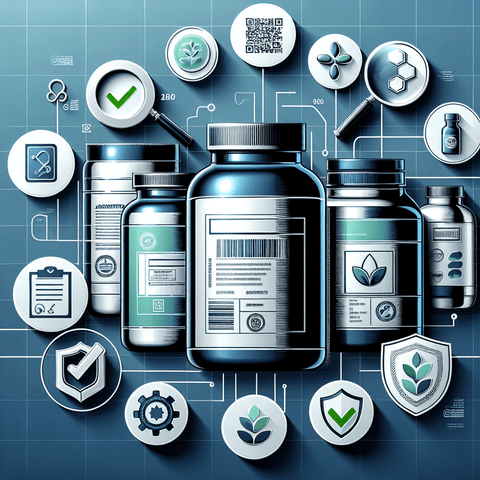
La prévention des compléments alimentaires contrefaits consiste à vérifier le vendeur, le produit et son étiquette avant de consommer. Un produit contrefait peut contenir des ingrédients différents, des quantités incorrectes ou des substances non déclarées. Pour limiter les risques, examinez la source d’achat, inspectez le produit à sa réception et lisez attentivement les informations figurant sur l’emballage.
Compléments contrefaits, adultérés, contaminés ou mal étiquetés : quelles différences ?
Un complément contrefait imite délibérément une marque ou un produit légitime tout en présentant de façon trompeuse son identité ou sa composition. Un produit adultéré contient des ingrédients non déclarés, parfois des substances pharmaceutiques. La contamination désigne la présence involontaire de substances indésirables, tandis qu’un produit mal étiqueté ne correspond pas aux informations indiquées, par exemple pour la forme ou la quantité d’un ingrédient.
Ces catégories peuvent se chevaucher : un produit peut être à la fois contrefait et adultéré, par exemple. Dans tous les cas, il devient difficile de savoir ce que l’on consomme réellement. Comprendre ces distinctions aide à apprécier l’intérêt de vérifier la provenance et, selon le produit, de rechercher des contrôles indépendants.
- Contrefait : imite une marque ou un produit authentique dans l’intention de tromper.
- Adultéré : contient des ingrédients non déclarés, parfois des médicaments ou des stimulants.
- Contaminé : contient involontairement des substances indésirables, comme des métaux lourds, des bactéries, des pesticides ou des allergènes.
- Mal étiqueté : le contenu, la dose ou la forme ne correspond pas à ce qu’indique l’étiquette.
Pourquoi les compléments contrefaits représentent un risque sérieux pour la santé
La perte financière est une conséquence possible, mais l’incertitude sur la composition est particulièrement préoccupante : un produit contrefait échappe aux contrôles attendus et son contenu peut ne pas correspondre à l’étiquette. Les effets potentiels dépendent des substances présentes et de la situation de la personne.
Les autorités de régulation ont documenté la présence de substances pharmaceutiques cachées dans certains produits, notamment la sibutramine, des analogues du sildénafil ou des composés apparentés aux stéroïdes anabolisants. Ces découvertes concernent notamment des produits présentés pour la perte de poids, la performance, la musculation ou l’énergie. Des métaux lourds comme le plomb, le mercure ou l’arsenic ont également été signalés dans certains produits à base de plantes de provenance douteuse.
Selon leur composition, les produits suspects peuvent exposer à des réactions allergiques, des effets indésirables ou des interactions avec des médicaments. Une quantité incorrecte peut aussi conduire à un apport excessif. Pour les athlètes soumis à des contrôles antidopage, la présence d’une substance interdite représente un risque supplémentaire.
- Réactions allergiques possibles en présence d’allergènes non déclarés, comme le gluten, le soja ou les fruits à coque.
- Interactions possibles avec des médicaments, notamment certains traitements anticoagulants, pour la tension ou le diabète.
- Apports excessifs possibles si la quantité réelle d’un nutriment diffère de celle indiquée.
- Présence éventuelle de substances interdites pouvant compromettre un contrôle antidopage.
Comment repérer les compléments contrefaits : signes d’alerte et signaux d’alarme
Examinez l’emballage et l’étiquette avant utilisation. Une impression floue, des fautes d’orthographe, une étiquette mal alignée ou des matériaux de mauvaise qualité peuvent éveiller les soupçons. Soyez également attentif aux scellés absents, endommagés ou semblant avoir été recollés, ainsi qu’à l’absence d’un numéro de lot, d’une date de péremption ou des coordonnées du fabricant.
Après ouverture, comparez les comprimés ou les gélules avec les photos officielles du produit. Une différence inhabituelle de couleur, de taille, de texture ou d’odeur mérite vérification. N’essayez pas de goûter un produit suspect pour en tester l’authenticité.
Le prix et le vendeur donnent aussi des indications. Une remise très inférieure au prix habituel, une boutique récemment créée, un vendeur inconnu ou une annonce sans historique fiable doivent inciter à la prudence. Méfiez-vous des promesses de guérison, de perte de poids rapide ou d’efficacité « supérieure aux médicaments », ainsi que des coordonnées vagues et des avis qui paraissent artificiels.
Certains fabricants proposent un code QR, une zone à gratter ou une recherche par numéro de lot. Utilisez ces outils depuis les canaux officiels du fabricant et contactez-le si le résultat est absent, incohérent ou difficile à vérifier.
- Impression floue, étiquettes mal alignées, fautes d’orthographe ou matériaux de mauvaise qualité.
- Scellés de sécurité absents, endommagés ou semblant recollés.
- Absence de numéro de lot ou de date de péremption.
- Absence du nom et de l’adresse du fabricant.
- Comprimés ou gélules différents des photos officielles du produit.
- Prix nettement inférieur au prix de vente habituel.
D’où viennent les compléments contrefaits et pourquoi ils continuent de se propager
Les règles applicables aux compléments alimentaires varient selon les pays. Dans de nombreux marchés, ces produits ne font pas l’objet d’une approbation préalable identique à celle requise pour les médicaments. Les fabricants et les autorités ont des responsabilités de contrôle, mais cette réalité rend aussi utile la vigilance des consommateurs quant à la provenance et à l’étiquetage.
Sur les places de marché, les vendeurs tiers peuvent changer et les produits de différents fournisseurs peuvent être difficiles à distinguer, notamment lorsque les stocks sont regroupés dans des entrepôts partagés. Cela peut compliquer la traçabilité et rendre l’identité du vendeur réel moins évidente. Un produit vendu sur une place de marché n’est pas nécessairement faux, mais il est important de vérifier qui le propose et si le vendeur est autorisé.
Le marché gris désigne des produits authentiques importés et revendus en dehors des circuits officiels. Même s’ils ne sont pas nécessairement contrefaits, ils peuvent avoir été mal stockés, être périmés ou avoir été réétiquetés. Les produits minceur, de sport et de musculation, les vitamines de marques populaires et certains extraits de plantes haut de gamme peuvent attirer davantage l’attention des contrefacteurs.
Habitudes pratiques pour réduire le risque d’acheter des compléments contrefaits
Pour acheter des compléments alimentaires en ligne plus sereinement, privilégiez le site officiel de la marque ou un revendeur autorisé. Consultez, si elle existe, la liste des vendeurs agréés publiée par le fabricant. Avant de commander, vérifiez également l’adresse du vendeur, ses moyens de contact et sa politique de retour ; un prix très bas n’est pas une preuve de contrefaçon, mais doit inviter à examiner la source avec soin.
À la réception, inspectez l’intégrité de l’emballage, le numéro de lot et la date de péremption. Comparez l’étiquette et l’aspect du produit avec les informations officielles, vérifiez que la liste des ingrédients est complète et utilisez les outils d’authentification proposés par le fabricant. Conservez le reçu et l’historique de vos achats pour faciliter toute demande de vérification ou de signalement.
Un stockage conforme aux indications de l’emballage aide à préserver le produit : la chaleur, l’humidité et la lumière peuvent affecter certains compléments. Enfin, une alimentation variée constitue le point de départ ; selon les besoins individuels, elle peut réduire le nombre de compléments nécessaires et donc les occasions d’être exposé à un produit suspect.
- Achetez directement auprès de la marque ou d’un revendeur autorisé.
- Vérifiez l’intégrité de l’emballage, le numéro de lot et la date de péremption.
- Méfiez-vous des prix qui semblent anormalement bas.
- Contrôlez que l’étiquette présente une liste complète des ingrédients.
- Utilisez les outils de vérification du fabricant, comme un code QR ou une recherche de lot.
- Conservez le reçu et l’historique de vos achats.
Comment les tests par des tiers et les certifications soutiennent l’authenticité
Des organismes indépendants proposent des programmes de vérification ou de certification. Selon le programme et le produit, les contrôles peuvent porter sur la correspondance entre les ingrédients et l’étiquette, certains contaminants, les pratiques de fabrication ou le dépistage de substances interdites dans les lots concernés.
USP Verified indique que le produit satisfait aux critères du programme USP, notamment concernant la vérification des ingrédients, des quantités déclarées et de certains contaminants. NSF propose différents programmes de certification ; NSF Certified for Sport comprend un dépistage de substances interdites pour les produits concernés. Informed Choice et Informed Sport sont également associés au dépistage de substances interdites, selon leurs programmes respectifs. Les exigences et la portée des contrôles ne sont pas identiques d’un label à l’autre.
Les bonnes pratiques de fabrication (GMP) concernent les méthodes de production et les contrôles qualité d’un site. Elles ne signifient pas, à elles seules, qu’un produit a été testé indépendamment pour chaque critère. De même, une certification ne garantit ni l’efficacité d’un complément, ni son adéquation à une personne, ni l’absence de tout contaminant imaginable.
Un logo peut être copié par un contrefacteur. Vérifiez donc le produit dans la base de données de l’organisme certificateur, lorsque celle-ci est disponible, et assurez-vous que le nom, la référence et le fabricant correspondent.
- USP Verified : vérification de critères liés aux ingrédients, aux quantités indiquées et à certains contaminants.
- NSF : programmes portant notamment sur la composition et les pratiques de fabrication ; la portée dépend du programme.
- NSF Certified for Sport et Informed Sport : dépistage de substances interdites pour les produits ou lots couverts par le programme.
- GMP : pratiques de fabrication et de contrôle qualité, sans constituer à elles seules une garantie d’efficacité.
Comment lire une étiquette de complément comme un contrôle d’authenticité
Une étiquette lisible et détaillée facilite la vérification. Recherchez le tableau des informations nutritionnelles, la quantité par portion, la forme du nutriment, les déclarations d’allergènes et le nom ainsi que l’adresse du fabricant ou du distributeur. Le numéro de lot et la date de péremption doivent également être clairement indiqués.
Des mélanges propriétaires qui ne précisent pas les quantités, des doses qui paraissent invraisemblables, des noms d’ingrédients difficiles à identifier ou des allégations de guérison et de traitement sont des motifs de prudence. Ces éléments ne prouvent pas à eux seuls qu’un produit est contrefait, mais ils peuvent témoigner d’un manque de transparence. En cas de doute, demandez des précisions au fabricant avant d’utiliser le produit.
- Tableau des informations nutritionnelles avec les ingrédients et leur quantité par portion.
- Forme du nutriment, par exemple citrate de magnésium ou oxyde de magnésium.
- Nom et adresse complets du fabricant ou du distributeur.
- Numéro de lot et date de péremption lisibles.
- Déclarations relatives aux allergènes.
Qui doit redoubler de prudence lors de l’achat de compléments alimentaires
Une vigilance accrue est particulièrement utile pour les personnes qui prennent un complément dans le cadre d’un besoin nutritionnel spécifique, par exemple une carence diagnostiquée ou une grossesse, ainsi que pour celles qui suivent un plan de supplémentation élaboré avec un professionnel de santé. La composition incertaine d’un produit peut compliquer le suivi de ces besoins.
Les personnes sous traitement médical, notamment pour la coagulation, la tension ou le diabète, et les personnes ayant des allergies doivent être attentives aux ingrédients non déclarés. Les athlètes soumis à des contrôles antidopage peuvent rechercher des produits certifiés dans le cadre de programmes comme Informed Sport ou NSF Certified for Sport, tout en vérifiant que le produit exact figure bien dans la base de données correspondante.
Les achats répétés en ligne auprès de vendeurs différents méritent également une attention particulière : les sources et les conditions de stockage peuvent varier. En cas de doute sur la compatibilité d’un complément avec un traitement, une allergie, une grossesse ou une situation particulière, demandez conseil à un médecin ou à un pharmacien.
- Personnes corrigeant une carence diagnostiquée ou suivant une grossesse.
- Athlètes soumis aux contrôles antidopage.
- Personnes sous traitement médical, notamment anticoagulants ou traitements pour la tension ou le diabète.
- Personnes allergiques, par exemple au gluten, au soja ou aux fruits à coque.
- Personnes qui achètent régulièrement en ligne auprès de vendeurs différents.
Que faire si vous suspectez un complément alimentaire contrefait
Si vous pensez qu’un complément est contrefait ou ne correspond pas à son étiquette, cessez de le prendre. Conservez l’emballage, le numéro de lot, le reçu et toute information sur le vendeur. Ces éléments pourront aider le fabricant ou l’autorité compétente à examiner le signalement.
En cas de symptômes inhabituels, de réaction allergique, de vertiges ou de battements de cœur rapides, contactez rapidement un médecin ou un pharmacien. Signalez également le produit au fabricant, par l’intermédiaire de ses contacts qualité, et à l’autorité de régulation de votre pays. MedWatch est le dispositif de signalement de la FDA aux États-Unis ; ailleurs, adressez-vous à l’organisme national compétent.
- Cessez de prendre le produit suspect.
- Conservez l’emballage, le numéro de lot et les justificatifs d’achat.
- Consultez rapidement un professionnel de santé en cas de symptômes inhabituels.
- Signalez le produit au fabricant et à l’autorité de régulation compétente.
Foire aux questions
Quelle est la meilleure solution anti-contrefaçon ? Il n’existe pas de vérification unique infaillible. La meilleure approche associe une source d’achat fiable, l’inspection du produit, une lecture attentive de l’étiquette, les outils de vérification du fabricant et, lorsqu’elle est pertinente, une certification vérifiable.
Comment vérifier l’authenticité d’un complément alimentaire ? Vérifiez que le vendeur est autorisé, examinez les scellés et le numéro de lot, comparez l’emballage aux informations officielles et utilisez les outils du fabricant. Si un label est présent, consultez la base de données de l’organisme concerné pour confirmer qu’il correspond bien au produit.
Les compléments en provenance de Chine sont-ils authentiques ? L’origine géographique ne permet pas, à elle seule, de déterminer l’authenticité d’un produit. Vérifiez plutôt l’identité du fabricant, les certifications éventuelles dans les bases officielles et le canal de distribution.
Quelles marques de compléments faut-il éviter ? Il est préférable de ne pas désigner des marques sans éléments vérifiables. Méfiez-vous plutôt des vendeurs non autorisés, des prix anormalement bas, des coordonnées vagues, des étiquettes peu transparentes et des promesses de résultats miraculeux.
Quels sont les signes d’un complément contrefait et est-il dangereux ? Une impression de mauvaise qualité, des scellés altérés, l’absence de numéro de lot ou un contenu différent des photos officielles sont des signaux d’alerte. Un produit suspect peut présenter des risques, mais ceux-ci dépendent de sa composition réelle et de la situation de la personne.
Quels compléments sont le plus souvent ciblés ? Les produits minceur, de sport et de musculation, les vitamines de marques populaires et certains extraits de plantes haut de gamme peuvent attirer les contrefacteurs. Cela ne signifie pas que tous les produits de ces catégories sont suspects.
Est-il sûr d’acheter des compléments sur une place de marché ? Cela dépend notamment de l’identité du vendeur et de la traçabilité du produit. Privilégiez les boutiques officielles ou les vendeurs autorisés et vérifiez les informations du produit dès sa réception. Les logos de certification ne garantissent pas à eux seuls l’authenticité : confirmez-les dans la base de données de l’organisme certificateur.
Les compléments contrefaits peuvent-ils affecter les contrôles antidopage ? C’est possible si un produit contient une substance interdite non déclarée. Les sportifs concernés peuvent rechercher des produits couverts par un programme comme Informed Sport ou NSF Certified for Sport et vérifier le produit exact dans la base correspondante ; cela ne supprime pas tout risque.
Points clés à retenir
Pour réduire le risque d’acheter des compléments alimentaires contrefaits, vérifiez le vendeur, inspectez le produit et lisez l’étiquette avant de le consommer. Un produit contrefait, adultéré, contaminé ou mal étiqueté peut ne pas correspondre à son contenu annoncé. Les certifications indépendantes et les outils de vérification des lots peuvent apporter des informations utiles, sans garantir l’efficacité ni l’adéquation personnelle du produit.
Les besoins nutritionnels varient d’une personne à l’autre. Miser d’abord sur une alimentation variée peut limiter le recours aux compléments ; lorsqu’un produit est envisagé, une source fiable et des informations transparentes restent essentielles.
- Vérifiez le vendeur, le produit et l’étiquette avant consommation.
- Méfiez-vous des prix anormalement bas et des allégations miraculeuses.
- Achetez sur les sites officiels ou auprès de revendeurs autorisés.
- Utilisez les outils de vérification des lots et confirmez les certifications dans les bases officielles.
- Misez d’abord sur l’alimentation pour réduire votre exposition aux produits suspects.
- En cas de doute, cessez le produit, conservez son emballage et signalez-le.