Le guide ultime des étiquettes de compléments : lisez les ingrédients, les portions et la sécurité en toute confiance


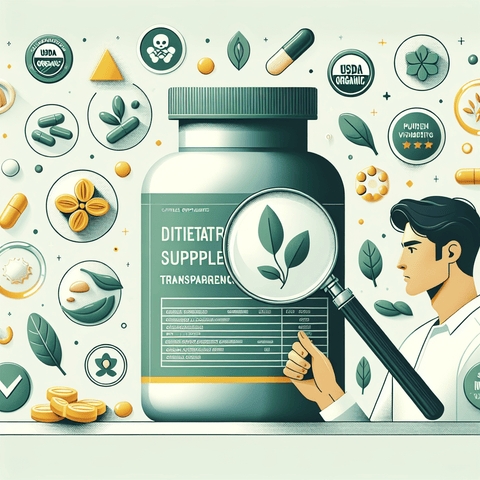
Découvrez le guide ultime pour comprendre les étiquettes de suppléments : apprenez comment lire les ingrédients, les tailles de portions et les notes de sécurité afin de faire vos achats en toute confiance. Cette page se concentre sur la compréhension des parties essentielles d'une étiquette de supplément et sur l'importance de chacune lors de l'évaluation d'un produit. En maîtrisant le langage de l'étiquette de supplément, vous pourrez comparer plus régulièrement les options et faire des choix éclairés. Commencez par la taille de la portion et le nombre de portions par emballage. L’étiquette indique ces chiffres pour montrer la quantité de produit que vous prenez par dose et combien de doses se trouvent dans le flacon. La liste des ingrédients place généralement les ingrédients actifs en premier, suivis des charges, liants et autres additifs. Si un mélange propriétaire est indiqué, notez la quantité totale du mélange sans divulguer ses composants individuels, et comparez cette dose par portion avec d’autres produits. Les notes de sécurité sur l’étiquette fournissent des précautions importantes et des recommandations d’utilisation. Recherchez les déclarations d’allergènes, les instructions de stockage, et tout avertissement tel que « ne pas utiliser par… » ou « consulter un professionnel ». Vérifiez les précautions listées, les interactions potentielles et la dose recommandée. Observez également la date d’expiration et le numéro de lot pour la traçabilité et la tenue de dossiers. Des conseils supplémentaires pour évaluer une étiquette de supplément incluent la vérification de la présence de logos de tests par des tiers, les coordonnées du fabricant, et des notes sur les normes de qualité. Lorsque cela est possible, comparez plusieurs produits côte à côte et assurez-vous de pouvoir obtenir des éclaircissements auprès de la société si quelque chose sur l’étiquette n’est pas clair. Avec ces pratiques, vous pourrez examiner une étiquette de supplément avec plus d’assurance et choisir vos produits plus efficacement.


supplement label
27 August 2026
Naviguer sur l'étiquette d'un complément alimentaire peut prêter à confusion, mais c'est essentiel pour votre santé. Ce guide décompose chaque section du panneau des valeurs nutritives des suppléments, explique les termes courants comme les mélanges exclusifs et le %VQ, et met en lumière les certifications de qualité auxquelles faire confiance. Vous apprendrez à repérer les signaux d'alerte et à faire des choix éclairés fondés sur des preuves scientifiques. À la fin, vous serez en mesure d'évaluer en toute confiance tout produit de complément.
What to Look for in a Supplement Label to Avoid Hidden Ingredients and Fillers - Topvitamine
26 August 2025
Lire l’étiquette des compléments alimentaires aide à comparer une formule, à repérer les ingrédients cachés et à éviter les allégations trop vagues. Ce guide explique la différence entre actifs et excipients, les mentions à vérifier, les mélanges propriétaires, les allergènes, les certifications et les précautions d’emploi. Vous trouverez aussi une méthode simple pour choisir un complément plus transparent, sans confondre produit naturel, produit sûr et produit efficace.

If you have ever stood in the supplement aisle, you know the experience can be overwhelming. Between bottles boasting about their contents and claims, it is hard to know what to look for. The key to navigating this landscape is the supplement label. It is the most direct way to understand what is in a product, how it is meant to be used, and what precautions you should take. This guide provides a clear overview of the different parts of a supplement label and why each one matters.

What Is a Supplement Label?

A supplement label is the informational panel required on all dietary supplement products. It is your primary source of truth for the contents and intended use of the product, and it is regulated by government agencies like the FDA in the United States to ensure consistency and accuracy. The label contains the Supplement Facts panel, a list of ingredients, serving size information, and various safety warnings. Understanding its layout is the first step in becoming a more informed consumer. While it may seem technical at first, once you learn the basics, you will be able to evaluate any supplement more effectively.

How Is a Supplement Label Different From a Nutrition Label?

While food and supplement labels share some similarities, they serve different purposes. A nutrition label on a food product provides information about the food's composition, including calories, macronutrients, and vitamins, based on a standard daily diet of 2,000 calories. This is designed to help you manage your overall dietary intake. In contrast, a supplement label provides specific information about dietary ingredients in the product, their amounts per serving, and the suggested use of the product. A supplement label also includes a different set of regulatory requirements, such as the declaration of the part of the plant used for botanical ingredients. Understanding this distinction is important, as it helps you know what kind of information you are looking at when you pick up a product.

The Essentials of the Supplement Facts Panel

At the heart of every supplement label is the Supplement Facts panel. This section standardizes the presentation of product information, allowing for easier comparisons. Here are the key components you will find on it:

  • Serving Size: This is the amount of the product you should take at one time, for example, one tablet or two gummies. All the nutrient amounts listed on the label refer to this specific serving size.
  • Servings Per Container: This tells you how many servings are in the entire package, which helps you understand how long the product will last.
  • Amount Per Serving: This lists the quantity of each dietary ingredient in a single serving, typically expressed in metric units like milligrams (mg) or micrograms (mcg).
  • % Daily Value (%DV): This shows what percentage of the recommended daily intake for a nutrient is provided by one serving, when such a recommendation has been established.

Understanding the serving size is crucial because all other information on the panel is relative to it. It is easy to accidentally consume more than the intended amount if you do not carefully check this first. Knowing the number of servings helps track how long a product will last and can be used to compare the per-serving cost or potency of different products.

Understanding the Ingredient List

Below the Supplement Facts panel, you will find the full list of ingredients. This list includes all active ingredients, as well as inactive ingredients such as fillers, binders, preservatives, and other substances used to manufacture the product. Inactive ingredients are important to note, especially if you have allergies or dietary restrictions. Manufacturers are required to list all ingredients. For example, a supplement may contain magnesium stearate, a common flow agent, or cellulose, a common filler. Some products use artificial colors or sweetenersand others stick to natural ingredients. Learning to scan the ingredient list for things you may want to avoidor ingredients you are specifically looking for is a key part of evaluating a supplement label.

How to Read Suggested Use and Warnings

Beyond the components of the product, the supplement label provides crucial information on how to use it safely. This includes:

  • Suggested Use: This section explains how to take the supplement. It may include directions like “Take one capsule daily with a meal” or “Take two tablets in the morning and two in the evening.” Following these directions is important for the intended effect.
  • Warnings: This part of the label contains important safety information. Look for allergen statements, such as “contains soy” or “processed in a facility that also processes tree nuts.”
  • Precautions: Manufacturers may include statements like “Do not use if pregnant or nursing” or “Consult your healthcare professional before use if you have a medical condition or are taking medication.” These precautions are there for your safety.
  • Storage Instructions: Some products require specific storage conditions, like being kept in a cool, dry place or refrigerated after opening. Paying attention to this can affect the product's shelf life.
  • Expiration Date and Lot Number: These are critical for quality control. The expiration date tells you until when the manufacturer guarantees the product's potency, while the lot number is used for traceability in case of a recall or quality issue.

Reading Label Claims and Certifications

Beyond the required information, many supplements feature claims and certifications on their labels. These can be helpful but should be evaluated carefully. Some common ones include:

  • Third-Party Testing Seals: Programs like NSF International, USP, or Informed Choice test products independently to verify their contents and that they are free from harmful levels of contaminants. A seal from one of these organizations can be a sign of a higher-quality product.
  • Non-GMO, Organic, Gluten-Free: These are examples of product claims that describe the nature of the ingredients. They can be important depending on your personal preferences or dietary needs.
  • Proprietary Blends: Some products list their active ingredients as a “proprietary blend.” This means the total amount of the blend is listed, but the individual amounts of each ingredient are not. While this protects manufacturer formulas, it also means you cannot assess the amount of each specific ingredient. If this is important to you, you may want to look for products that disclose individual ingredient amounts.

When you see a claim on a supplement label, it is a good practice to consider whether it helps you understand the product better or is simply marketing language. Look for the manufacturer's contact information if you have questions that the label does not answer. A reputable company should be willing to provide clarification about its products.

A Simple Approach to Evaluating a Supplement

To make the process of evaluating a supplement label more manageable, you can follow a few simple steps:

  1. Start with the Supplement Facts panel: Check the serving size first, then review the active ingredients and their amounts.
  2. Scan the full ingredient list: Look for any ingredients you may be allergic to or prefer to avoid, and check for unnecessary fillers or additives.
  3. Read the suggested use and warnings: This ensures you know how to take the product correctly and are aware of any precautions.
  4. Check for quality indicators: Look for third-party testing seals, clear lot numbers, expiration dates, and accessible manufacturer contact information.
  5. Compare products side-by-side: Whenever possible, place labels of different products next to each other to assess their differences in ingredients, potency, and cost per serving.

By adopting a systematic approach, you can look beyond marketing claims and focus on the factual information that helps you make an informed choice.

Important Regulatory and Safety Context

It is useful to understand that dietary supplements are regulated differently than conventional foods and drugs. In the United States, the FDA regulates dietary supplements under the Dietary Supplement Health and Education Act (DHEA) of 1994. This means that unlike drugs, dietary supplements do not generally need FDA approval before they are marketed. However, manufacturers are responsible for ensuring that their products are safe and that their labels are truthful andat not misleading. The FDA can take action against a product after it is on the market if it poses a safety risk or if its claims are false or misleading.

This has practical implications for you as a consumer. It means you should view the supplement label as a key tool for vettinga product. The information it contains is your primary source of details. Since no government agency independently verifies every supplement before sale, it becomes more important to choose products from reputable brands and to look for third-party testing or other quality certifications. It is also a good reason to communicate with the manufacturer if you have questions that the label does not answer.

Explore the World of Supplements

Understanding the supplement label opens the door to exploring the wide variety of supplements available. Once you can decode labels, you can approach any product, from vitamins to herbal supplements, with greater clarity. If you are beginning to explore specific nutrients, our guide to multivitamins can help you understand one of the most popular supplement categories. Similarly, if you are interested in particular areas of wellness, you can find dedicated resources on

mineral supplements or herbal supplements to dive deeper into those topics. The more you learn about what goes into a supplement, the more confidence you will have in choosing products that are right for you.