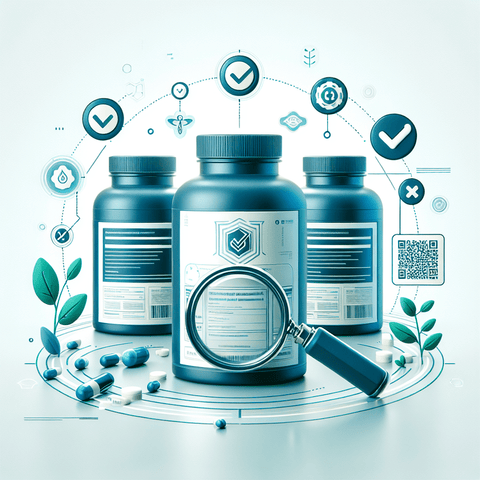
Une arnaque aux compléments alimentaires peut prendre trois formes : un produit contrefait, un produit adultéré contenant des substances non déclarées ou un produit réel vendu avec des allégations trompeuses. Aux États-Unis, la FDA n’approuve pas les compléments avant leur mise sur le marché. Pour limiter les risques, vérifiez l’étiquette, le vendeur et toute certification indépendante : la vigilance repose sur des contrôles concrets, pas sur la paranoïa. Un produit falsifié peut aussi contenir des médicaments non déclarés ou des contaminants.
Pourquoi la détection des arnaques aux compléments alimentaires compte avant tout achat
Dans le cadre américain, les compléments ne font pas l’objet de la même approbation préalable que les médicaments : les entreprises sont responsables de leur sécurité et de leur étiquetage, tandis que la FDA intervient notamment par la surveillance et des mesures après leur mise en vente. Le niveau de contrôle préalable n’offre donc pas la même garantie qu’une autorisation de médicament.
La vente en ligne facilite la création de boutiques à l’apparence professionnelle, sans que celle-ci prouve l’identité du fabricant ni la qualité du produit. Un complément contrefait ou adultéré peut contenir une substance différente de celle indiquée, une quantité incorrecte ou des contaminants, parmi lesquels des métaux lourds. Un achat douteux peut aussi retarder des démarches plus utiles, comme revoir son alimentation ou demander une évaluation professionnelle.
Que sont les arnaques aux compléments alimentaires ? Les trois principaux types
Ces catégories peuvent se recouper : un produit contrefait peut également être adultéré et accompagné d’allégations trompeuses. Comme il est impossible de reconnaître le contenu d’une gélule à l’œil ou à l’odeur, l’emballage seul ne suffit pas à établir son authenticité.
- Comprimés contrefaits : ils imitent l’emballage d’une marque légitime, mais peuvent contenir un ingrédient absent, incorrect ou dosé différemment, voire des excipients contaminés.
- Produits adultérés : ils contiennent des substances non déclarées, par exemple certains stimulants, médicaments sur ordonnance ou composés apparentés aux hormones.
- Fausses allégations : un produit réel est commercialisé avec des promesses de guérison, des garanties de résultat ou des affirmations impossibles à vérifier.
Aux États-Unis, la FDA n’approuve pas les compléments alimentaires avant leur commercialisation. Une marque qui prétend qu’un complément est « approuvé par la FDA » doit donc éveiller la méfiance. Les règles d’étiquetage américaines prévoient notamment un avertissement indiquant que certaines allégations n’ont pas été évaluées par la FDA ; les exigences applicables dépendent du type d’allégation.
Décoder le langage marketing : mélanges propriétaires, « qualité pharmaceutique » et « cliniquement prouvé »
Un mélange propriétaire peut indiquer les ingrédients d’une formule sans préciser la quantité de chacun. Il devient alors difficile de comparer les doses ou de vérifier si elles correspondent à un besoin précis. « Qualité pharmaceutique » n’est pas, à elle seule, une garantie réglementaire vérifiable pour un complément. Quant à « cliniquement prouvé », cette formule n’est informative que si des données pertinentes portent sur l’ingrédient exact, à la dose concernée, et non sur une formule différente ou une simple affirmation publicitaire.
Pourquoi les faux compléments sont un risque pour la santé, et pas seulement un gaspillage d’argent
Les alertes de la FDA ont notamment concerné des produits adultérés contenant des médicaments non déclarés, comme la sibutramine, retirée du marché, des analogues du sildénafil ou des composés apparentés aux stéroïdes. Des alertes de ce type ont touché, entre autres, des produits présentés pour la perte de poids, les performances sexuelles ou le bodybuilding. Ces substances peuvent interagir avec des médicaments et présenter des risques, notamment pour le système cardiovasculaire.
D’autres problèmes possibles comprennent la contamination par des métaux lourds — plomb, arsenic ou mercure —, une contamination bactérienne ou fongique, ou des gélules ne contenant pas l’ingrédient actif annoncé. La présence d’un ingrédient végétal ne garantit pas à elle seule la pureté ou la sécurité : l’approvisionnement, l’identification de la plante et les contrôles de fabrication comptent également.
Signaux d’alerte : signes courants qu’un complément peut être faux ou trompeur
Les promesses de « remède miracle », de résultats garantis ou de remplacement d’un médicament sont des signaux d’alerte sérieux. Méfiez-vous également des avis cinq étoiles très similaires, des témoignages sans rapport avec le produit, des photos avant/après qui semblent mises en scène et des recommandations attribuées à des professionnels impossibles à identifier.
- Allégations miraculeuses, remèdes universels et résultats garantis.
- Avis suspects, photos avant/après et recommandations invérifiables.
- Prix anormalement bas, comptes à rebours, fausse rareté ou paiement immédiat exigé.
- Offres qui dissimulent un abonnement difficile à résilier.
- Fabricant ou distributeur non identifié, adresse invérifiable, numéro de lot ou date de péremption manquants.
Un prix bas ou une offre pressante ne prouve pas à lui seul une fraude, mais ces tactiques justifient de vérifier soigneusement l’entreprise, les conditions de vente et l’origine du produit avant de payer.
Pourquoi les arnaques persistent et qui elles ciblent le plus
Sur certaines places de marché, une fiche produit peut être associée à plusieurs vendeurs ou à des stocks issus de circuits différents. Un article portant le nom d’une marque connue peut ainsi être expédié par un tiers dont l’origine est moins facile à vérifier. Des revendeurs du marché gris peuvent s’approvisionner auprès de liquidateurs ou de fournisseurs étrangers, tandis que les contrefacteurs s’intéressent souvent aux produits populaires.
Les pratiques trompeuses apparaissent notamment autour de besoins auxquels les consommateurs souhaitent trouver une réponse rapide : perte de poids, énergie, mémoire, confort articulaire ou soutien immunitaire. Les personnes âgées et celles qui vivent avec une maladie chronique peuvent être particulièrement exposées aux messages promettant une solution simple. Cela ne signifie pas que toute offre dans ces domaines est frauduleuse, mais qu’il faut examiner les allégations et le vendeur avec attention.
Variabilité individuelle : pourquoi les besoins réels en nutriments ne suivent pas un argumentaire de vente
Les besoins et le statut nutritionnels dépendent de nombreux facteurs : âge, sexe, grossesse, alimentation, exposition au soleil, consommation d’alcool ou de tabac, médicaments, santé digestive, activité physique et parfois caractéristiques génétiques. Un message de vente qui prétend convenir à tout le monde sans tenir compte de ces différences mérite donc d’être questionné.
À titre d’exemple, les besoins en fer peuvent différer selon l’âge et les pertes menstruelles. L’absorption de la vitamine B12 peut diminuer avec l’âge, tandis que la production de vitamine D par la peau dépend notamment de la latitude, de la saison et du teint. Des symptômes similaires chez deux personnes ne suffisent pas à déterminer qu’elles ont la même carence ou qu’elles ont besoin de la même approche. L’alimentation, l’étape de vie et, lorsque c’est pertinent, des analyses peuvent guider une décision mieux qu’une page de vente.
L’alimentation et le mode de vie d’abord : couvrir les besoins avant d’acheter quoi que ce soit
Beaucoup d’adultes en bonne santé peuvent couvrir leurs besoins grâce à une alimentation variée comprenant, selon leurs habitudes et leur contexte, des légumes, des fruits, des légumineuses, des céréales complètes, des fruits à coque, du poisson, des œufs, des produits laitiers ou des alternatives enrichies. Les aliments apportent aussi des fibres et d’autres composés, dans une matrice qui peut influencer l’absorption des nutriments.
Le statut nutritionnel peut aussi être influencé par l’exposition au soleil, l’alcool, le tabac ou une alimentation restrictive. Dans certains contextes, un professionnel peut envisager des analyses comme la 25-hydroxyvitamine D, la vitamine B12, le folate ou la ferritine. Leur pertinence dépend de la situation : elles ne sont pas nécessaires à tout le monde et ne remplacent pas une évaluation clinique.
- Exposition au soleil : le temps passé à l’extérieur, la saison, la latitude et le teint influencent la production de vitamine D par la peau.
- Alcool : une consommation importante et régulière peut perturber l’apport ou le métabolisme de certaines vitamines B, notamment la thiamine et le folate.
- Tabac : il est associé à un besoin accru en vitamine C.
- Alimentation restrictive : un régime végétalien, d’éviction ou hypocalorique peut réduire l’apport de certains nutriments, comme la B12, le fer, le zinc, le calcium, l’iode ou les oméga-3.
Où les compléments trouvent réellement leur place — et qui peut en tirer le plus de bénéfices
La supplémentation peut avoir sa place lorsqu’un déficit est établi ou qu’un besoin accru est reconnu, par exemple à certaines étapes de la vie ou dans le cadre d’une alimentation particulière. L’acide folique est notamment recommandé avant et au début d’une grossesse dans plusieurs recommandations de santé publique ; la vitamine B12 demande une attention particulière dans les régimes végétaliens. Les recommandations concernant la vitamine D chez les nourrissons allaités ou les personnes peu exposées au soleil varient selon le contexte et les autorités compétentes.
Une maladie cœliaque, une maladie inflammatoire de l’intestin, une chirurgie bariatrique ou la prise prolongée de certains médicaments, dont la metformine ou les inhibiteurs de la pompe à protons, peuvent justifier une évaluation des apports ou du statut nutritionnel. Cela ne signifie pas qu’un complément est automatiquement nécessaire : les décisions dépendent de la situation et des résultats disponibles.
Un complément peut contribuer à l’apport en nutriments, mais ne remplace pas un traitement et ne doit pas être présenté comme un produit qui traite, guérit ou prévient une maladie. Une allégation portant sur une fonction normale de l’organisme, par exemple la contribution d’un nutriment à la santé des os, n’équivaut pas à une promesse de prévenir l’ostéoporose.
Comment choisir un complément en qui vous pouvez réellement avoir confiance
Comparez la forme de l’ingrédient, la quantité indiquée et la composition complète. Un même nutriment peut exister sous différentes formes chimiques : l’oxyde de magnésium, le citrate et le bisglycinate ne sont pas interchangeables à tous égards, et la tolérance ou l’absorption peut varier selon la forme et la personne. Le choix ne se résume pas à sélectionner la forme au nom le plus séduisant.
Une quantité plus élevée n’est pas forcément préférable : certains nutriments ont des limites supérieures d’apport, et les besoins varient selon les personnes. Un produit à ingrédient unique facilite souvent la vérification de la dose et de la composition, tandis qu’une formule combinée peut réunir plusieurs ingrédients, mais demande de contrôler chacun d’eux. Les certifications indépendantes sont volontaires ; leur absence ne prouve pas à elle seule qu’un produit est de mauvaise qualité.
Pour réduire le risque de contrefaçon, privilégiez le site de la marque ou un revendeur qu’elle reconnaît comme autorisé. Sur une place de marché, vérifiez qui vend et expédie le produit : le nom affiché dans l’annonce ne suffit pas toujours à établir l’identité du vendeur réel.
Les analyses indépendantes expliquées : USP Verified, NSF Certified et Informed Sport
Un programme de certification par un tiers peut vérifier certains aspects du produit, comme la conformité de son contenu avec l’étiquette, la teneur déclarée ou les contrôles portant sur des contaminants. Les critères varient selon l’organisme et le programme : USP Verified, NSF — notamment NSF/ANSI 173 et Certified for Sport — et Informed Sport ne doivent pas être considérés comme des garanties identiques ni comme une approbation de la FDA.
Ne vous fiez pas uniquement au logo imprimé sur le flacon. Recherchez le produit dans la base de données publique de l’organisme certificateur et vérifiez que la marque et la référence correspondent. Une icône copiée sur une étiquette ne constitue pas une preuve de certification.
Comment lire une étiquette de complément avant d’acheter
Sur une étiquette américaine, le tableau « Supplement Facts » indique notamment la taille d’une portion, la quantité de chaque nutriment et son pourcentage de la valeur quotidienne. Lisez aussi la liste des « autres ingrédients », qui précise les composants autres que les nutriments déclarés dans le tableau. Vérifiez que l’étiquette donne assez d’informations pour comparer le produit à votre objectif réel.
Soyez prudent si les quantités sont cachées dans un mélange propriétaire ou si des informations de traçabilité font défaut. Un fabricant ou distributeur identifiable, un numéro de lot et une date de péremption facilitent les vérifications. Aux États-Unis, l’absence de la mention prévue pour certaines allégations, associée à des promesses de traitement de maladies, est un motif supplémentaire de prudence ; les règles d’étiquetage peuvent varier selon le produit et le pays.
- Quantités d’ingrédients dissimulées derrière un mélange propriétaire.
- Numéro de lot absent, ce qui complique la traçabilité.
- Date de péremption manquante.
- Nom ou adresse du fabricant ou du distributeur absent ou invérifiable.
- Promesses de traitement de maladies ou prétendue approbation par la FDA.
Pour vérifier un produit, consultez les outils de contrôle de lot mis à disposition par la marque, confirmez les certifications sur le site de l’organisme concerné et recherchez les alertes ou rappels publiés par les autorités compétentes, dont la FDA pour le marché américain.
Considérations de sécurité : contamination, interactions et avis professionnel
Avant d’acheter auprès d’une marque peu connue, recherchez les avis de sécurité, alertes et rappels publiés par les autorités. Si vous suspectez un produit contrefait ou ressentez une réaction indésirable, cessez de l’utiliser, conservez l’emballage et le reçu, puis signalez le problème. Aux États-Unis, MedWatch est le dispositif de signalement de la FDA.
Les nutriments et autres ingrédients peuvent avoir une activité biologique et interagir avec des médicaments. La vitamine K, par exemple, peut interagir avec certains anticoagulants. Le fer, la vitamine A, la vitamine D et le sélénium font partie des nutriments pour lesquels des limites supérieures d’apport existent ; la quantité pertinente dépend notamment de l’âge et de la situation.
En cas de grossesse ou d’allaitement, d’affection rénale ou hépatique, de chirurgie programmée ou de prise de médicaments, demandez conseil à un professionnel de santé avant d’ajouter un complément. Cette précaution aide à prendre en compte les interactions possibles et les besoins propres à votre situation.
Avant d’acheter : une liste de contrôle anti-arnaques, étape par étape
- Étape 1 : déterminez si un complément est réellement pertinent en considérant votre alimentation, votre mode de vie, votre étape de vie et vos médicaments. Si un doute persiste, demandez si une évaluation ou des analyses sont utiles.
- Étape 2 : vérifiez le vendeur, le fabricant, le numéro de lot, la date de péremption et toute certification indépendante. Recherchez également les alertes et rappels disponibles.
- Étape 3 : comparez la forme et la quantité des ingrédients à votre objectif, lisez les « autres ingrédients » et évitez les formules dont les doses sont cachées. Si les informations restent invérifiables, renoncez à l’achat.
Points clés à retenir : le meilleur détecteur d’arnaques est un acheteur informé
Aux États-Unis, la FDA n’approuve pas les compléments avant leur mise sur le marché. Les principales fraudes prennent la forme de produits contrefaits, de produits adultérés ou de fausses allégations, et ces pratiques peuvent se recouper. Les termes « mélange propriétaire » et « qualité pharmaceutique » ne garantissent pas à eux seuls la qualité ni la transparence.
Des produits adultérés peuvent contenir des médicaments non déclarés ou des contaminants. Les promesses miraculeuses, les faux avis et les tactiques de pression sont des signaux d’alerte ; une certification indépendante, vérifiée auprès de l’organisme qui l’a délivrée, apporte une information supplémentaire sans constituer une approbation médicale. Acheter auprès de la marque ou d’un revendeur autorisé peut réduire le risque de contrefaçon.
Les besoins nutritionnels varient d’une personne à l’autre. Commencez par l’alimentation et le mode de vie, puis vérifiez si un besoin précis justifie une supplémentation. Lire l’étiquette et contrôler le produit et le vendeur permet de décider avec méthode : en cas de doute, une évaluation professionnelle vaut mieux que deviner.
Questions fréquentes sur les arnaques aux compléments alimentaires
Quel est le type d’arnaque aux compléments le plus courant ? Les allégations et pratiques marketing trompeuses sont fréquentes. La contrefaçon et l’adultération sont moins visibles, mais peuvent présenter des risques plus importants.
Un complément peut-il être approuvé par la FDA ? Non : aux États-Unis, les compléments sont réglementés comme une catégorie de produits alimentaires et ne reçoivent pas d’approbation préalable de la FDA comme les médicaments.
Est-il sûr d’acheter des compléments sur une place de marché tierce ? Cela peut être possible, mais il faut vérifier l’identité du vendeur et de l’expéditeur, ainsi que l’origine et le numéro de lot du produit. Une annonce à elle seule ne garantit pas l’authenticité.
Que signifie « qualité pharmaceutique » sur une étiquette ? Cette expression n’est pas, à elle seule, une garantie réglementaire vérifiable pour un complément. Demandez plutôt quelles normes ou quels contrôles précis la marque peut documenter.
Comment savoir si un complément est testé par un organisme indépendant ? Recherchez des mentions comme USP Verified, NSF ou Informed Sport, puis vérifiez le produit dans la base de données publique de l’organisme correspondant.
Que faire si vous pensez avoir acheté un complément contrefait ? Cessez de l’utiliser, gardez l’emballage et le reçu, et signalez le problème. Aux États-Unis, un signalement peut être transmis à MedWatch.
Les compléments chers sont-ils forcément de meilleure qualité ? Non. Le prix ne constitue pas, à lui seul, une preuve de qualité ; examinez plutôt la transparence de l’étiquette, la traçabilité et les contrôles vérifiables.
Un complément peut-il légalement prétendre guérir ou traiter une maladie ? Aux États-Unis, les compléments ne peuvent pas être commercialisés avec des allégations de traitement de maladie. Une allégation portant sur une fonction normale de l’organisme est différente d’une promesse de guérison ou de prévention.
Les compléments « naturels » sont-ils automatiquement sûrs ? Non. L’origine naturelle ne renseigne pas, à elle seule, sur la dose, la pureté, l’authenticité ou les interactions possibles.
Comment vérifier le numéro de lot d’un complément ? Consultez l’outil de vérification proposé par la marque ou contactez directement l’entreprise. Un numéro de lot doit pouvoir être associé au produit et à son fabricant.
Une liste d’ingrédients plus longue est-elle meilleure dans une multivitamine ? Non. Il est plus utile de pouvoir lire clairement la quantité de chaque ingrédient et de comparer cette formule à vos besoins.
Combien de temps faut-il pour remarquer les effets d’un complément ? Il n’existe pas de délai universel : cela dépend du nutriment, de la situation et de la raison de la prise. Reconstituer des réserves basses peut prendre des semaines ou des mois, mais un complément ne garantit pas un effet perceptible. Un professionnel peut aider à évaluer la pertinence de la prise et son suivi.