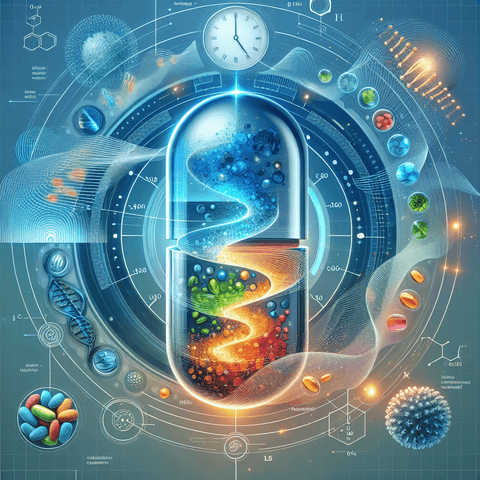
La livraison de nutriments programmée est une approche d'alimentation de précision qui synchronise la disponibilité des nutriments avec les cycles de croissance. En fournissant des nutriments en accord avec les étapes de développement, cette méthode réduit le gaspillage et favorise un développement plus rapide et plus prévisible. L'accent est mis sur le timing des doses, la concentration des solutions et le rythme des livraisons afin que les nutriments arrivent lorsque les tissus cibles sont les plus réceptifs. Cela crée un programme de croissance qui s'adapte aux signaux en temps réel plutôt que de suivre un calendrier fixe. Le résultat est une trajectoire de croissance plus contrôlable et des résultats plus clairs et mesurables. Le fonctionnement de la livraison programmée de nutriments combine détection, analytique et automatisation. Les indicateurs de croissance, les conditions environnementales et l'état des tissus renseignent sur le moment d'initier une fenêtre d'alimentation et la quantité à fournir. Les profils nutritionnels sont ajustés pour correspondre aux phases de croissance — début, milieu et fin — en utilisant des doses en impulsions et des intervalles soigneusement espacés. Les plateformes automatisées coordonnent les pompes, les mélangeurs et les capteurs pour délivrer des quantités précises à des moments exacts, aidant à maintenir la concentration et le timing en accord avec les besoins de la plante ou de l'organisme. Cette approche met l'accent sur la réactivité et la répétabilité tout au long des cycles. Les avantages de la livraison programmée de nutriments deviennent visibles dans la performance mesurable. Lorsqu'ils sont fournis exactement au moment où la demande augmente, l'efficacité d'utilisation des nutriments s'améliore et les taux de croissance deviennent plus réguliers d'un lot à l'autre. Étant donné que les livraisons sont synchronisées avec les signaux de croissance, les variations diminuent et la durée des cycles peut être raccourcie. Les données issues de mesures biomasse, du développement de la canopée ou d'autres indicateurs de croissance fournissent des preuves objectives de la progression, soutenant l'optimisation basée sur les données du programme d'alimentation. La livraison programmée de nutriments favorise également une meilleure traçabilité et reproductibilité dans les flux de production. Pour commencer avec la livraison programmée de nutriments, il faut aligner votre plan d'alimentation actuel avec les étapes clés de croissance. Commencez par définir les phases de croissance que vous souhaitez cibler ainsi que les indicateurs que vous utiliserez pour évaluer les progrès. Choisissez une solution d'automatisation qui supporte la livraison programmée de nutriments, avec des capteurs compatibles et des interfaces de contrôle adaptées. Démarrez avec une base conservatrice, surveillez les réponses, puis affinez progressivement les fenêtres de dosage, les concentrations et la cadence des livraisons. La collecte continue de données et l'étalonnage permettent de maintenir l'alignement entre les cycles de croissance et l'apport en nutriments, décuplant la croissance rapide grâce à un programme répétable et mesurable.
Distribution précise de nutriments : alimentation ciblée pour une croissance plus rapide
Timed nutrient delivery represents a shift from traditional, constant-feeding models to a more dynamic approach. Instead of simply providing a steady supply of nutrients, this method focuses on the precise timing of when those nutrients are made available. The central idea is to synchronize nutrient availability with an organism's biological demand, which can lead to improved efficiency and more consistent outcomes. This guide explores the core concepts behind this strategy, its key components, and the practical considerations for implementing it in various settings, from agriculture to biological research.
The Core Principle of Timed Nutrient Delivery
At its heart, timed nutrient delivery is about precision. It moves away from the idea of a constant, unchanging nutrient supply and instead looks at the growth cycle as a series of phases. Each phase—whether it is early development, a rapid growth spurt, or a maturation period—has different nutritional requirements. This approach uses the timing of dosing, the concentration of solutions, and the cadence of deliveries to ensure nutrients arrive when the target tissues are most receptive. This responsiveness allows for a growth program that adapts to real-time signals rather than following a rigid, predetermined schedule.
The ultimate goal is to create a more controllable and predictable growth trajectory. By reducing waste and maximizing uptake, this method can lead to clearer, more measurable outcomes.
Key Components: Sensing, Analytics, and Automation
A successful timed nutrient delivery system is often built on three main pillars: sensing, analytics, and automation. These components work together to create a responsive and precise feeding program.
Sensing involves monitoring growth indicators, environmental conditions, and tissue status to gather real-time data. Analytics then processes this information to determine when to initiate a feeding window and how much to supply. Finally, automation platforms, which may include pumps, mixers, and sensors, execute the commands to deliver precise amounts at exact times. This integrated workflow helps keep nutrient concentration and timing aligned with the organism's current needs, ensuring the system is both responsive and repeatable across cycles.
The Role of Nutrient Profiles and Growth Phases
Just as the timing of delivery is crucial, so too is the composition of the nutrients themselves. In a timed delivery program, nutrient profiles are adjusted to match the organism's growth phase—early, mid, and late stages. For example, a plant in its vegetative phase may require a different balance of nitrogen, phosphorus, and potassium than one that is flowering or fruiting.
Pulse dosing, a technique where nutrients are delivered in short, concentrated bursts, is often used to match these varying demands. This approach, combined with carefully spaced intervals, can be more efficient than a continuous feed. It allows for greater control over nutrient availability and can be fine-tuned to the specific requirements of each growth stage.
Potential Benefits and Measurable Outcomes
The benefits of timed nutrient delivery are observed through measurable performance indicators. When nutrients are delivered exactly when demand peaks, nutrient use efficiency can improve, and growth rates may become more consistent across different batches. Because delivery is synchronized with growth signals, variances can drop, and cycle times may potentially be shortened.
Data from biomass measurements, canopy development, or similar growth indicators provide objective evidence of progression. This data is crucial for supporting the ongoing optimization of the feeding program. This approach also supports better traceability and reproducibility in production workflows, making it easier to replicate successful outcomes.
Practical Steps for Getting Started
Implementing timed nutrient delivery does not require a complete overhaul of your existing plan. It begins with aligning your current feeding approach with specific growth milestones. Here are some practical steps to consider when starting out:
- Define your key growth stages and the metrics you will use to evaluate progress.
- Select an automation solution that supports timed nutrient delivery, with compatible sensors and control interfaces.
- Start with a conservative baseline and monitor responses carefully.
- Gradually refine your dosing windows, concentrations, and delivery cadence based on the data you collect.
Ongoing data collection and calibration are essential for maintaining alignment between growth cycles and nutrient supply. This iterative process can help unlock more efficient growth through a repeatable and measurable program.
Nutritional Context and Supplement Considerations
While the principles of timed nutrient delivery are often discussed in the context of plant cultivation, the underlying concept of syncing nutrient intake with biological rhythms is also relevant to human nutrition. For example, the body's circadian rhythm can influence digestion and metabolism, meaning that the timing of meals and supplements may play a role in how well nutrients are absorbed and utilized. This is a complex area of study, but it shares a common theme with timed nutrient delivery: the 'when' of nutrient intake can be as important as the 'what'.
For those interested in general nutritional support, including a variety of vitamins and minerals is fundamental. You can explore options like a comprehensive multivitamin guide to understand more about foundational nutrients. Additionally, specific nutrients like amino acid supplements can play a role in various bodily functions, though their precise timing is a topic of ongoing research. For those looking to support their overall wellness routine, exploring sports supplements may provide additional context on how timing is used in performance and recovery.
Exploring the Topic Further
Timed nutrient delivery is a broad and evolving topic. It brings together concepts from biology, data science, and engineering to create more efficient feeding strategies. Whether you are a professional grower, a researcher, or someone interested in the principles of precision nutrition, understanding the core ideas of timing, concentration, and responsiveness can be valuable.
The articles in this section provide more detailed information on specific aspects of this approach, from the technology involved to the nuanced applications in different fields.