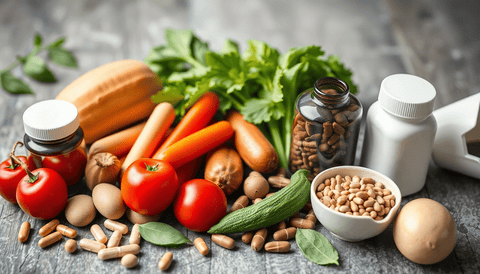
Suppléments Véganes : Votre Guide Essentiel pour une Vie Plus sainte


Découvrez le guide essentiel des compléments vegan pour une vie plus saine. Cette page vous aide à comprendre le rôle des compléments vegan, quels nutriments sont généralement pris en compte, comment les dosages sont abordés et comment choisir des produits fiables. L'accent reste mis sur des informations pratiques, centrées sur les produits, conçues pour soutenir des décisions éclairées concernant les compléments vegan. Les nutriments couramment abordés par les compléments vegan incluent la vitamine B12, la vitamine D, l'iode, le fer, le calcium, les acides gras oméga-3 issus de l'algue, le zinc et la choline. Certaines formules de compléments vegan combinent plusieurs nutriments dans un seul produit, et différentes formes ( telles que la méthylcobalamine pour la B12 ou les sources d'algues pour les oméga-3) peuvent être proposées. Cette section décrit les types de nutriments qui sont fréquemment évoqués dans le contexte des compléments vegan. Les considérations de dosage et l'étiquetage sont une partie importante du guide. Les compléments vegan sont accompagnés d'instructions sur l'étiquette précisant la taille de la portion et la fréquence d'utilisation, et les recommandations de dosage peuvent varier selon le nutriment et le produit. Il est important de lire attentivement l'étiquette et de prendre en compte des facteurs pertinents tels que l'âge, le stade de vie et la formulation du produit lors du choix d'un complément vegan. Le cas échéant, consultez un professionnel pour des conseils personnalisés sur le dosage et pour comprendre la logique derrière les quantités recommandées. Choisir des compléments vegan fiables implique d'évaluer la qualité et la fiabilité. Cherchez des certificats de tests réalisés par des tiers, des labels de certification et des listes d'ingrédients transparentes. Vérifiez que le produit respecte des normes de production reconnues et qu'il fournit des numéros de lot ainsi que des dates de péremption. Prenez en compte des marques qui divulguent clairement leur sourcing, minimisent les additifs inutiles et offrent des informations claires sur les allergènes. En vous concentrant sur ces signaux de qualité, vous pouvez évaluer les compléments vegan en toute confiance.


Supplements for vegans - Topvitamine
30 July 2026
Understanding vegan supplements: why planning mattersA vegan diet can be deeply nourishing, but it requires deliberate attention to specific nutrients that are less available or harder to absorb from plant foods alone. While a varied, whole-food approach covers many needs, certain micronutrients—particularly vitamin B12, vitamin D, iron, and omega-3 fatty acids—often demand targeted planning. This article explains why these nutrients are important, how to identify potential gaps, and how to approach vegan supplements as a precise tool rather than a blanket solution.Key nutrients for vegans: what to focus onCommon nutrients to evaluate include vitamin B12, iron, iodine, zinc, vitamin D, calcium, selenium, and omega-3s. For most vegans, B12 is the most critical because it is not naturally present in plant foods. Vitamin D is a close second when sun exposure is limited, and omega-3s, particularly DHA, may require an algae-based supplement because the conversion from plant-based ALA is inefficient. Iron from plants is less absorbable, so pairing with vitamin C can help. Symptom-based guessing is unreliable; blood tests are the most objective way to confirm deficiencies.Choosing vegan supplements wisely and building a routineStart by assessing your daily food choices and identifying your most probable gap. Choose targeted, single-nutrient supplements over complex blends, and respect reasonable dosing ranges. Look for cruelty-free brands with transparent labeling and third-party testing. Reassess your routine as your diet changes. Supplements support—not replace—a nourishing diet, and professional guidance is helpful when considering high doses, pregnancy, or existing health conditions.
Are Vegan or Vegetarian Supplement Options Right for You? - Topvitamine
25 August 2025
Les compléments végétaliens peuvent être utiles pour compléter une alimentation végétale, notamment pour la vitamine B12, la vitamine D ou les oméga-3. Ils ne sont toutefois pas automatiquement nécessaires ni plus efficaces que les autres formes. Découvrez les différences entre produits végétaliens et végétariens, les ingrédients d’origine animale à repérer, les critères de qualité et les précautions à prendre avant toute supplémentation.
Top 5 Vegan Supplements That Actually Work and Taste Great | Topvitamine - Topvitamine
22 July 2025
Les compléments alimentaires vegan ne sont pas tous indispensables. La vitamine B12 constitue généralement la priorité d’une alimentation végétalienne. Selon les apports alimentaires, la saison et la situation personnelle, la vitamine D, les oméga-3 issus d’algues ou le fer peuvent aussi être envisagés. Ce guide présente les options à connaître, les critères de sélection et les précautions à prendre avant toute supplémentation.
Best Vegan Multivitamins for 2025 | Topvitamine - Topvitamine
06 July 2025
La meilleure multivitamine végane dépend de votre alimentation, de vos besoins et de la composition du produit. Ce guide présente les nutriments à surveiller, notamment la vitamine B12, la vitamine D, le fer, l’iode, le calcium et le zinc. Il explique aussi comment vérifier les labels, distinguer les compléments bio des produits certifiés véganes et choisir avec prudence les probiotiques ou les oméga-3 d’origine végétale.

Following a vegan or plant-based lifestyle is a significant and positive choice for many people. However, it comes with a unique set of nutritional considerations. A vegan diet can be rich in fruits, vegetables, legumes, and whole grains, but it may also be lower in certain nutrients that are typically found in animal products. This is where vegan supplements come into play. They are designed to help fill these potential nutritional gaps, ensuring that your body receives the support it needs to thrive on a plant-based diet.

This guide serves as a broad overview of the key aspects of vegan supplements. We'll explore the most important nutrients to consider, how to approach dosages and labeling, and what to look for when choosing a trust-worthy product. Whether you are new to veganism or a long-time practitioner, this page is designed to help you make well-informed decisions about your nutritional health.

Key Nutrients in Vegan Supplements

A balanced vegan diet covers many nutritional bases, but certain vitamins and minerals require special attention. Vegan supplements are often formulated to address these specific nutrients. Here’s a closer look at the most commonly discussed ones:

  • Vitamin B12: This essential vitamin is almost exclusively found in animal products. It is crucial for nerve function and the production of red blood cells. A vegan supplement with B12, often in the form of methylcobalamin or cyanocobalamin, is a foundational part of most plant-based routines.
  • Vitamin D: While our bodies can produce vitamin D from sunlight, many people, especially those in less sunny climates, may not get enough. Vitamin D3 is often derived from lanolin (sheep's wool); however, vegan versions are available, sourced from lichen. This nutrient is important for bone health and immune function. For a deeper dive into this topic, explore our collection on vitamin D.
  • Omega-3 Fatty Acids (EPA and DHA): These essential fats are primarily found in fish oil. Vegan supplements typically use algae oil, which is a direct and sustainable source. Omega-3s are important for heart and brain health.
  • Iron: There are two types of dietary iron: heme (from animals) and non-heme (from plants). The body absorbs non-heme iron less efficiently. Vegan supplements can help ensure adequate intake, and often include vitamin C to enhance absorption.
  • Iodine: This mineral is essential for thyroid function. Good dietary sources include seaweed, but the amount can vary greatly. Supplements can provide a consistent, reliable dose.
  • Calcium: While well-known for its role in bone health, calcium is also vital for muscle and nerve function. It’s found in leafy greens and fortified plant milks, but supplementation is often considered to meet daily needs.
  • Zinc and Choline: Zinc is important for immune support and wound healing, while choline supports brain and liver health. Both can be found in plant foods like nuts and legumes, but supplements can help fill potential gaps.

Many vegan supplements combine multiple nutrients into a single daily formula. This can be a convenient way to ensure you’re covering your bases without having to take several different pills. When looking for a comprehensive option, you might also find it helpful to review multi-nutrient blends in our collection of multivitamins.

Dosages, Labels, and Supplement Forms

Navigating supplement labels is an important skill. Vegan supplements, like all supplements, come with clear directions on their packaging. These directions specify the serving size and frequency, which is how much to take and how often (for example, 'one tablet daily'). It's essential to follow these label instructions carefully.

Dosage guidance can vary significantly depending on the nutrient and the specific product. Factors like your age, life stage (e.g., pregnancy, older age), and the overall composition of your diet can influence how much of a given nutrient you might need. It is not always appropriate to take the maximum dose of everything. Instead, it is wise to review the label, consider your individual circumstances, and when in doubt, discuss your specific situation with a healthcare professional. They can provide personalized guidance on dosage and help you understand the reasoning behind recommended amounts.

It is also helpful to understand the different forms of nutrients. For example, vitamin B12 can be found as cyanocobalamin or methylcobalamin, and magnesium comes in forms like citrate or glycinate. The form doesn't necessarily change the nutrient's fundamental purpose, but it can affect how it is absorbed and tolerated. A general knowledge of these forms can help you make sense of product labels, but you don't need to be an expert to choose a well-made product.

How to Choose a Trusted Vegan Supplement

In the market of many available options, how do you decide which vegan supplement to trust? Quality and reliability are key. By focusing on a few critical signals, you can evaluate products with confidence. When you're comparing different brands, consider the following factors:

  • Third-Party Testing: Look for supplements that have been tested by an independent, third-party organization. Seals from reputable labs indicate that the product has been verified for purity and potency.
  • Transparent Ingredient Lists: Be wary of products with vague or overly complex ingredient lists. A good product will list every ingredient and its amount clearly. It should also state that it is vegan and explicitly list any potential allergens.
  • Certifications: For vegan products, look for certifications from organizations like The Vegan Society or Vegan Action. This provides extra assurance that no animal-derived ingredients were used in the manufacturing process.
  • Clear Sourcing and Manufacturing: A trustworthy brand will be open about where their ingredients come from and where their products are made. They should adhere to Good Manufacturing Practices (GMP), which are standards set to ensure consistent quality.
  • Lot Numbers and Expiry Dates: These details are a sign of a responsible manufacturer. They ensure traceability and confirm that the product you are purchasing is fresh and valid.

By prioritizing these quality signals, you can minimize the guesswork and choose vegan supplements that align with your health goals and values. For more insights into responsible manufacturing and high-quality ingredients, browsing categories dedicated to respected brands like Dr. Mercola or Nature’s Plus can be a useful starting point.

Exploring the World of Vegan Supplementation

Vegan supplements are an integral part of a well-rounded plant-based lifestyle. Whether you choose individual nutrients to target a specific concern or a comprehensive multivitamin for daily support, the key is to do so thoughtfully. Beyond the core nutrients we've discussed, there is a wide world of products available, from plant-based protein powders and sports nutrition to specialized herbal supplements for general wellness. These products are designed to complement a plant-based diet, helping you to perform at your best and feel your best.

This tag page is intended to serve as your map to that world. As you explore our articles on specific nutrients, product comparisons, and the science behind plant-based nutrition, you will gain the knowledge to make increasingly confident decisions about which supplements are right for you. You can also explore broader categories like our complete guide to amino acids or sports supplements to find targeted support for your active lifestyle.

Always remember that supplements are intended to supplement—not replace—a healthy diet. They are most effective when used as part of a holistic approach to health that includes balanced nutrition, regular physical activity, and sufficient rest. This information is for general educational purposes. It is not a substitute for professional medical advice. Always consult with your doctor or a qualified healthcare provider before starting any new supplement, especially if you have a pre-existing health condition or are taking medication.