
{ "@context": "https://schema.org/", "@type": "Article", "mainEntityOfPage": { "@type": "WebPage", "@id": "https://www.topvitamine.com/fr/blogs/vitamine-a-sources-animales-vegetales" }, "headline": "Sources de vitamine A : options animales et végétales", "description": "Les aliments riches en vitamine A comprennent les sources animales et végétales. Découvrez comment absorber cette vitamine liposoluble grâce à notre guide.", "image": [ "https://www.topvitamine.com/cdn/shop/articles/vitamine-a-sources.jpg" ], "author": { "@type": "Organization", "name": "Topvitamine.com" }, "publisher": { "@type": "Organization", "name": "Topvitamine.com" }, "datePublished": "2025-01-01", "dateModified": "2025-01-01" }
Les 12 meilleures sources de vitamine A pour la vision, l'immunité et une peau saine

30 October 2025
Le cantaloup figure parmi les fruits frais les plus riches en provitamine A, tandis que l’abricot, la mangue et la papaye sont d’excellentes alternatives. La vitamine A contribue notamment au maintien d’une vision normale, au fonctionnement du système immunitaire et de la peau. Découvrez la différence entre rétinol et bêta-carotène, comment mieux consommer ces fruits et quand demander conseil avant de prendre un complément.
24 October 2025
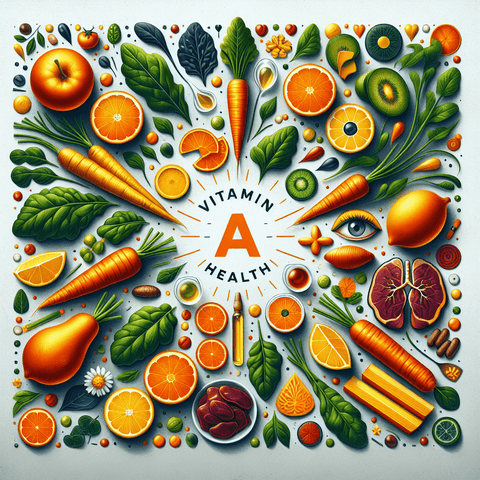
Les aliments riches en vitamine A comprennent le foie, les produits laitiers, les œufs, les carottes, les patates douces et les légumes à feuilles vertes. Ce guide explique la différence entre vitamine A préformée et bêta-carotène, comment couvrir ses besoins grâce à une alimentation variée, quels symptômes peuvent évoquer une carence et pourquoi les compléments nécessitent de la prudence, notamment pendant la grossesse.

16 October 2025
Quel fruit contient de la vitamine A ? Les fruits ne fournissent généralement pas de rétinol, mais certains, comme la mangue, la papaye, l’abricot et le melon, sont riches en caroténoïdes que l’organisme peut convertir en vitamine A. Ce guide présente les meilleures sources, le rôle des légumes, les conseils d’absorption et les précautions à prendre avant d’utiliser un complément.
{
"content": "
Les sources de vitamine A sont importantes car la vitamine A est un nutriment liposoluble impliqué dans la vision, la fonction immunitaire et le maintien d'une peau saine et des tissus épithéliaux. Cependant, la quantité réellement absorbée dépend fortement des aliments choisis, de leur mode de préparation et de la capacité de l'organisme à convertir efficacement les pigments végétaux. Ce guide explique la différence entre la vitamine A préformée et les caroténoïdes provitaminiques A, passe en revue les 12 meilleures sources alimentaires avec des quantités approximatives par portion, et aborde les besoins quotidiens, les facteurs d'absorption, la pertinence des compléments et les limites de sécurité. L'objectif est une clarté pratique : comment couvrir ses besoins par l'alimentation en priorité, et quand un complément peut — ou non — mériter d'être envisagé.
\n
Quelles sont les meilleures sources de vitamine A et pourquoi est-ce important ?
\n
Qu'est-ce que la vitamine A et quel est son rôle dans l'organisme ?
\n
La vitamine A est un terme générique qui désigne un groupe de composés apparentés plutôt qu'une molécule unique. Elle comprend le rétinol, le rétinal et l'acide rétinoïque, ainsi qu'une famille de pigments végétaux appelés caroténoïdes provitaminiques A. Dans l'organisme, la vitamine A soutient le cycle visuel dans la rétine, contribue au fonctionnement normal du système immunitaire et joue un rôle dans la différenciation cellulaire — le processus par lequel les cellules maturent en tissus spécialisés tels que la peau, les muqueuses et la paroi intestinale et pulmonaire.
\n
Parce que la différenciation cellulaire touche de nombreux systèmes, le statut en vitamine A influence bien plus que la seule vision. C'est aussi l'une des quatre vitamines liposolubles, avec la vitamine D, la vitamine E et la vitamine K, ce qui signifie qu'elle nécessite des matières grasses alimentaires ainsi qu'une fonction biliaire et pancréatique normale pour être absorbée efficacement.
\n
Vitamine A préformée vs caroténoïdes provitaminiques A : quelle différence ?
\n
Les aliments contiennent de la vitamine A sous deux grandes formes. La vitamine A préformée — principalement le rétinol et ses esters — provient uniquement d'aliments d'origine animale tels que le foie, les œufs, les produits laitiers et les poissons gras. Elle est absorbée directement utilisable, ce qui la rend efficace mais signifie aussi qu'elle peut être consommée en excès. Les caroténoïdes provitaminiques A, principalement le bêta-carotène, l'alpha-carotène et la bêta-cryptoxanthine, proviennent des aliments végétaux. L'organisme doit les convertir en rétinol, et cette conversion est régulée et généralement loin d'être complète.
\n
Cette distinction a de réelles conséquences pratiques. Le rétinol préformé est plus puissant par microgramme et soumis à une limite supérieure définie, tandis que les caroténoïdes alimentaires ne sont pas associés à une toxicité de la vitamine A — même si les compléments de bêta-carotène à très forte dose présentent leurs propres considérations, abordées plus loin.
\n
Les deux principales formes de vitamine A dans l'alimentation : rétinol vs bêta-carotène
\n
Le rétinol est la forme alimentaire de vitamine A la plus biologiquement active. Un microgramme de rétinol équivaut à un microgramme d'équivalent d'activité du rétinol (EAR). Le bêta-carotène alimentaire est bien moins puissant : il faut environ 12 microgrammes de bêta-carotène alimentaire pour obtenir l'équivalent de 1 microgramme de rétinol, et environ 24 microgrammes pour l'alpha-carotène ou la bêta-cryptoxanthine.
\n
En bref, un bol de carottes peut contenir plus de caroténoïdes totaux qu'une petite portion de foie ne contient de rétinol, tout en apportant une fraction de la vitamine A utilisable. Cela ne rend pas les sources végétales inférieures — elles constituent le pilier de la plupart des régimes dans le monde et possèdent des propriétés antioxydantes supplémentaires — mais cela explique pourquoi les tables de composition des aliments et les étiquettes doivent être lues en gardant le système EAR à l'esprit.
\n
Pourquoi la vitamine A est essentielle pour la vision, l'immunité et la santé de la peau
\n
Comment la vitamine A soutient une vision et une fonction oculaire normales
\n
Dans la rétine, le rétinal se combine à la protéine opsine pour former la rhodopsine, le pigment photosensible nécessaire à la vision dans une lumière faible. C'est pourquoi la cécité nocturne est souvent l'un des premiers signes d'un statut insuffisant en vitamine A. La vitamine A soutient également la santé de la cornée et de la conjonctive ; une carence sévère peut conduire à une xérophtalmie, et l'Organisation mondiale de la santé identifie la carence en vitamine A comme une cause majeure de cécité évitable chez les enfants dans le monde.
\n
Le rôle de la vitamine A dans les défenses immunitaires
\n
La vitamine A contribue au fonctionnement normal du système immunitaire, en partie en maintenant l'intégrité des barrières muqueuses des voies respiratoires et du tractus gastro-intestinal. Elle influence aussi la différenciation et la fonction de certaines cellules immunitaires. Les données indiquent qu'une carence altère les compétences immunitaires, ce qui explique pourquoi des programmes de supplémentation en vitamine A sont utilisés dans les régions où la carence est courante. Dans les populations bien nourries, cependant, un apport supplémentaire en vitamine A au-delà des besoins n'a pas été démontré comme stimulant l'immunité de manière prévisible.
\n
Pourquoi la vitamine A est un nutriment clé pour l'intégrité et la réparation de la peau
\n
Les rétinoïdes influencent le renouvellement des kératinocytes et les processus liés au collagène, ce qui explique pourquoi des rétinoïdes synthétiques sont utilisés en clinique dermatologique. La vitamine A alimentaire soutient le maintien normal de la peau et la réparation épithéliale, et les caroténoïdes contribuent à l'activité antioxydante dans les tissus cutanés. Il est important de distinguer ce soutien nutritionnel d'un traitement médical : consommer des aliments riches en vitamine A soutient la biologie normale de la peau, mais ne traite pas l'acné, le psoriasis ni d'autres affections dermatologiques.
\n
Ce que disent les données sur la vitamine A et le risque de maladies chroniques
\n
Des études observationnelles ont associé des apports plus élevés en fruits et légumes riches en caroténoïdes à un risque plus faible de certaines maladies chroniques, mais ces associations sont confondues par l'alimentation globale et le mode de vie et n'établissent pas de lien de causalité. Notamment, de grands essais randomisés portant sur des compléments de bêta-carotène à forte dose chez des fumeurs ont constaté un risque accru de cancer du poumon, un exemple dissuasif de la façon dont des nutriments isolés à forte dose peuvent se comporter différemment des aliments complets. Les données actuelles ne justifient pas la prise de compléments de vitamine A pour prévenir les maladies chroniques.
\n
De quelle quantité de vitamine A avez-vous besoin chaque jour ?
\n
Apport journalier recommandé (AJR) en vitamine A selon l'âge et le sexe
\n
Les recommandations sont exprimées en microgrammes d'équivalent d'activité du rétinol (µg EAR) par jour :
\n
- 1–3 ans : 300 µg EAR
- 4–8 ans : 400 µg EAR
- 9–13 ans : 600 µg EAR
- Hommes adultes (14 ans et plus) : 900 µg EAR
- Femmes adultes (14 ans et plus) : 700 µg EAR
- Grossesse : 770 µg EAR
- Allaitement : 1 300 µg EAR
\n
Ces chiffres reflètent les besoins physiologiques moyens, et non un objectif de complémentation. La plupart des personnes qui suivent une alimentation variée les atteignent sans difficulté.
\n
Comprendre les équivalents d'activité du rétinol (EAR) sur les étiquettes alimentaires
\n
L'EAR corrige les différences de biodisponibilité entre le rétinol et les caroténoïdes ; c'est donc l'unité la plus précise pour comparer les aliments. Les anciennes étiquettes peuvent encore utiliser les unités internationales (UI) : environ 1 UI de rétinol équivaut à 0,3 µg EAR, tandis que 1 UI de bêta-carotène alimentaire équivaut à environ 0,05 µg EAR. Lorsqu'une étiquette indique seulement du bêta-carotène en milligrammes, vous ne pouvez pas supposer une équivalence directe avec le rétinol — la conversion dépend de la matrice alimentaire et de la biologie individuelle.
\n
Risquez-vous un apport faible en vitamine A ?
\n
Une carence manifeste est rare dans les pays à revenu élevé, mais elle survient dans certaines circonstances : régimes restrictifs, troubles de l'absorption, trouble lié à l'usage d'alcool, maladie pancréatique ou biliaire et chirurgie bariatrique. Exclure tous les produits d'origine animale supprime les sources de rétinol les plus concentrées ; les végétaliens dépendent donc entièrement de la conversion des caroténoïdes. Des symptômes tels qu'une cécité nocturne ou des yeux secs sont compatibles avec une carence, mais ne la confirment pas — le statut est mieux évalué par une évaluation clinique et, lorsque cela est indiqué, par une analyse sanguine.
\n
Les 12 meilleures sources alimentaires de vitamine A
\n
Sources animales de vitamine A préformée (rétinol)
\n
- Foie de bœuf — environ 6 000 à 6 500 µg EAR pour 85 g cuits ; une portion peut dépasser les besoins d'une semaine.
- Huile de foie de morue — environ 1 350 µg EAR par cuillère à café, avec en plus de la vitamine D et des oméga-3.
- Jaunes d'œufs — environ 80 µg EAR par gros œuf, concentrés presque entièrement dans le jaune.
- Beurre — environ 95 à 100 µg EAR par cuillère à soupe.
- Saumon — environ 50 à 60 µg EAR pour 85 g cuits.
\n
Le lait entier, le fromage et le foie de poulet sont également des contributeurs importants. Comme ces aliments apportent directement du rétinol, de petites portions suffisent largement.
\n
Sources végétales de provitamine A (bêta-carotène)
\n
- Patate douce — une patate douce moyenne cuite au four avec la peau apporte environ 1 400 µg EAR, l'une des sources végétales les plus riches disponibles.
- Courge butternut ou potiron — environ 1 000 à 1 100 µg EAR par tasse cuite.
- Carottes — environ 600 µg EAR par carotte moyenne, davantage lorsqu'elles sont cuites.
- Épinards — environ 570 µg EAR par demi-tasse cuite.
- Chou kale — environ 880 µg EAR par tasse cuite.
- Poivron rouge — environ 115 à 160 µg EAR par tasse cru.
- Melon cantaloup — environ 270 µg EAR par tasse.
\n
Les légumes orange foncé et vert foncé sont les indicateurs les plus fiables de la teneur en caroténoïdes ; dans les légumes-feuilles, la chlorophylle masque le pigment orange.
\n
Quelles sources alimentaires de vitamine A offrent la meilleure biodisponibilité ?
\n
Le rétinol des aliments d'origine animale est généralement absorbé avec une efficacité élevée — souvent 70 à 90 % dans des conditions normales. Les caroténoïdes sont moins prévisibles : l'absorption à partir de légumes crus peut être bien inférieure à 10 % pour certains pigments, et la conversion en rétinol varie largement d'une personne à l'autre. La cuisson et la disruption mécanique des parois cellulaires végétales améliorent la libération des caroténoïdes, ce qui explique pourquoi les carottes cuites et les produits à base de tomate surpassent souvent les équivalents crus en termes de biodisponibilité. Vous pouvez en savoir plus sur les caroténoïdes et d'autres composés végétaux protecteurs dans cet aperçu des antioxydants et de la défense contre les radicaux libres.
\n
Comment la cuisson et la préparation influencent la teneur en vitamine A des aliments
\n
Le rétinol est relativement stable, mais sensible à une chaleur élevée prolongée et à l'oxydation. Les caroténoïdes sont également sensibles à une cuisson prolongée et à l'exposition à la lumière, mais une cuisson douce améliore leur disponibilité en dégradant les structures cellulaires. Les approches pratiques comprennent la cuisson à la vapeur plutôt qu'à l'eau bouillante, l'évitement d'un stockage prolongé à température ambiante et le fait de couper finement les légumes riches en caroténoïdes. La friture ou le service avec de l'huile améliore l'absorption des caroténoïdes, mais ajoute des calories ; une cuisson au four avec une quantité modérée de matière grasse est un compromis raisonnable.
\n
Facteurs qui influencent l'absorption et l'utilisation de la vitamine A
\n
Pourquoi les matières grasses alimentaires sont importantes pour absorber la vitamine A
\n
La vitamine A est liposoluble, et son absorption dépend des acides biliaires et des enzymes pancréatiques libérés en réponse aux matières grasses alimentaires. Un repas très pauvre en matières grasses contenant des légumes riches en caroténoïdes peut entraîner une faible absorption. Ajouter une quantité modérée de matière grasse — huile d'olive, avocat, noix, yaourt ou œufs — au même repas améliore sensiblement l'absorption des caroténoïdes sans nécessiter de grandes quantités de matières grasses.
\n
Comment la santé intestinale et les troubles digestifs affectent l'absorption de la vitamine A
\n
Les affections qui touchent l'absorption des matières grasses touchent aussi la vitamine A : la maladie cœliaque, la maladie de Crohn, la pancréatite chronique, la mucoviscidose, la maladie hépatique cholestatique et le syndrome de l'intestin court sont tous associés à un risque accru d'insuffisance. La chirurgie bariatrique modifie à la fois les apports et l'absorption. Des symptômes gastro-intestinaux persistants associés à un régime restrictif justifient raisonnablement une évaluation professionnelle plutôt qu'une automédication par compléments.
\n
Médicaments et affections qui peuvent interférer avec la vitamine A
\n
L'orlistat réduit l'absorption des matières grasses et peut altérer l'absorption des vitamines liposolubles. La cholestyramine et l'huile minérale réduisent l'absorption, tandis que l'isotrétinoïne et l'acitrétine sont elles-mêmes des rétinoïdes — les associer à des compléments de vitamine A risque d'entraîner une toxicité additive et doit être évité sans surveillance médicale. La consommation chronique et excessive d'alcool épuise les réserves hépatiques de vitamine A et augmente le risque de toxicité, et une carence en zinc peut altérer le transport du rétinol, car le zinc est nécessaire à la synthèse de la protéine de transport du rétinol.
\n
Génétique et variabilité individuelle de la conversion du bêta-carotène
\n
La conversion du bêta-carotène en rétinal dépend de l'enzyme BCMO1. Des variants génétiques courants du gène BCMO1 réduisent sensiblement l'efficacité de conversion chez certaines personnes, ce qui signifie que deux personnes mangeant des quantités identiques de carottes peuvent atteindre un statut en vitamine A très différent. La conversion semble également plus faible chez les personnes présentant certains profils génétiques courants et peut varier selon le sexe et la composition corporelle. Cette variabilité est un argument solide pour inclure certaines sources de rétinol préformé, ou pour choisir un complément qui apporte à la fois du rétinol et des caroténoïdes plutôt que des caroténoïdes seuls.
\n
Schémas alimentaires favorisant des niveaux sains de vitamine A
\n
Construire une alimentation équilibrée autour d'aliments riches en vitamine A
\n
Un schéma réalisable comprend un légume riche en caroténoïdes la plupart des jours — patate douce, carottes, courge, épinards ou chou kale — ainsi que des œufs, des produits laitiers ou des poissons gras de façon régulière. Le foie une fois par semaine n'est pas nécessaire pour la plupart des gens, et chez les femmes enceintes, il est généralement déconseillé en raison du risque d'apport excessif en rétinol. La variété sur une semaine compte davantage que la précision d'un seul repas.
\n
Associer les aliments riches en vitamine A à des matières grasses pour une meilleure absorption
\n
Des associations simples font l'essentiel du travail : des carottes rôties à l'huile d'olive, des épinards revenus dans un peu de beurre, un œuf avec une salade de carottes et de fruits, ou une soupe de courge butternut agrémentée de yaourt. L'huile d'olive vierge extra et des quantités modérées de graisses animales sont toutes deux efficaces ; l'objectif est simplement d'éviter les repas sans matières grasses construits exclusivement autour de légumes crus.
\n
Combiner les sources de rétinol et de caroténoïdes pour un apport régulier
\n
S'appuyer sur une seule forme crée une vulnérabilité. Les aliments végétaux apportent de grandes quantités de caroténoïdes sans problème de toxicité, mais avec une conversion variable ; les aliments d'origine animale apportent du rétinol puissant et facilement absorbé, mais sous des formes concentrées qui exigent de surveiller les portions. Un schéma qui inclut les deux lisse la variabilité individuelle et réduit le risque d'apport insuffisant.
\n
Quand l'alimentation seule peut ne pas suffire à couvrir les besoins en vitamine A
\n
L'alimentation en priorité reste la règle par défaut, mais certaines situations justifient une attention particulière : troubles de l'absorption, chirurgie bariatrique, consommation chronique d'alcool, régimes très restrictifs et grossesse ou allaitement avec un faible apport en aliments d'origine animale ou en produits enrichis. Dans ces contextes, les aliments enrichis et — lorsque le clinicien est d'accord — un complément peuvent aider à combler l'écart.
\n
Quand envisager une supplémentation en vitamine A ?
\n
Qui peut avoir besoin de compléments de vitamine A (populations et circonstances)
\n
La supplémentation se conçoit mieux comme une réponse situationnelle que comme une routine. Elle peut être pertinente pour les personnes présentant une malabsorption diagnostiquée, une carence connue confirmée par une évaluation clinique ou des régimes restrictifs associés à un apport limité en caroténoïdes. Dans les régions où la carence est répandue, les programmes de santé publique recourent à une supplémentation périodique à forte dose chez les enfants, mais il s'agit d'une intervention à l'échelle de la population, et non d'un modèle pour un usage individuel dans des contextes bien nourris.
\n
Quelles formes de vitamine A sont utilisées dans les compléments ?
\n
Les formes courantes comprennent le palmitate de rétinyle et l'acétate de rétinyle (esters de rétinol largement utilisés dans les multivitamines), les caroténoïdes mixtes naturels, le bêta-carotène synthétique et l'huile de foie de morue comme source alimentaire complète. Certains produits associent rétinol et caroténoïdes pour refléter les deux formes alimentaires.
\n
Comment choisir entre rétinol, bêta-carotène ou compléments mixtes ?
\n
Les produits à base de rétinol apportent de la vitamine A utilisable de manière fiable, mais doivent être dosés en tenant compte de la limite supérieure, et l'apport total de toutes les sources doit être pris en compte. Les compléments de bêta-carotène ne sont pas soumis au même plafond de toxicité, mais le bêta-carotène isolé à forte dose a été associé à un risque accru de cancer du poumon chez les fumeurs et les anciens travailleurs exposés à l'amiante ; ce n'est donc pas un choix anodin pour ces groupes. Les formules de caroténoïdes mixtes issues de sources naturelles constituent une voie moyenne raisonnable. Pour des conseils généraux sur la façon dont ces produits s'intègrent dans des schémas plus larges, consultez ce guide des ingrédients et de la sécurité des multivitamines.
\n
Ce qu'il faut vérifier sur l'étiquette d'un complément de vitamine A
\n
Vérifiez trois éléments : la forme (ester de rétinol ou caroténoïde), la quantité en µg EAR plutôt qu'en UI seules, et la présence éventuelle de bêta-carotène à forte dose dans le produit. Notez le pourcentage de vos besoins quotidiens par portion, vérifiez les tests par des laboratoires indépendants ou une certification qualité, contrôlez les allergènes et la compatibilité avec un régime végétarien ou végétalien, et privilégiez les produits qui indiquent la composition complète en vitamine A plutôt qu'un mélange propriétaire. Une collection dédiée à la vitamine A et un aperçu de sa sécurité peuvent vous aider à comparer les options côte à côte.
\n
Sécurité de la vitamine A : posologie, effets secondaires et interactions
\n
Quelle est la limite supérieure de sécurité pour la vitamine A ?
\n
Le niveau d'apport maximal tolérable pour la vitamine A préformée chez l'adulte est de 3 000 µg EAR par jour. Cela s'applique au rétinol provenant de l'alimentation et des compléments combinés — et non aux caroténoïdes alimentaires, qui ne sont pas associés à une toxicité de la vitamine A. Une consommation fréquente de foie peut faire approcher ce plafond étonnamment vite, ce qui explique pourquoi une consommation hebdomadaire plutôt que quotidienne de foie est souvent recommandée.
\n
La différence entre toxicité aiguë et chronique de la vitamine A
\n
La toxicité aiguë fait suite à une seule dose très importante et peut provoquer des maux de tête, des nausées, des vertiges et une vision floue. La toxicité chronique résulte d'un apport élevé soutenu et a été associée à des douleurs osseuses, une peau sèche ou qui pèle, une perte de cheveux, des anomalies hépatiques et une augmentation de la pression intracrânienne. Les symptômes disparaissent dans la plupart des cas lorsque l'apport excessif cesse, mais les effets hépatiques justifient une évaluation médicale.
\n
Qui doit être prudent avec les compléments de vitamine A (grossesse, maladie du foie, tabagisme) ?
\n
Le rétinol à forte dose est tératogène : des apports bien supérieurs à l'AJR au début de la grossesse ont été associés à des malformations congénitales, et il est généralement conseillé aux femmes enceintes d'éviter le foie et les compléments de rétinol à forte dose. Les personnes atteintes d'une maladie du foie ont un stockage altéré et un risque de toxicité plus élevé. Les fumeurs et les anciens travailleurs exposés à l'amiante doivent éviter spécifiquement les compléments de bêta-carotène à forte dose. Toute personne prenant des rétinoïdes sur ordonnance ne doit pas ajouter de compléments de vitamine A sans avis médical.
\n
Médicaments et autres nutriments qui interagissent avec la vitamine A
\n
Les interactions principales comprennent l'orlistat et la cholestyramine (absorption réduite), l'isotrétinoïne et l'acitrétine (toxicité additive) et l'alcool chronique (risque d'hépatotoxicité). La vitamine E et le zinc influencent le métabolisme et le transport de la vitamine A, et des apports très élevés d'une vitamine liposoluble peuvent perturber l'équilibre des autres.
\n
Comment déterminer si vous avez besoin de plus de vitamine A
\n
Questions à vous poser sur votre alimentation et votre état de santé
\n
Mangez-vous des légumes riches en caroténoïdes la plupart des jours ? Incluez-vous régulièrement des œufs, des produits laitiers ou des poissons gras ? Votre alimentation est-elle très restrictive ? Avez-vous un trouble digestif, une chirurgie bariatrique antérieure ou des antécédents de consommation excessive d'alcool ? Prenez-vous des médicaments qui affectent l'absorption des matières grasses ? Présentez-vous des symptômes tels que des problèmes persistants de vision nocturne ou des yeux secs ? Ces questions aident à cerner la situation, mais ne remplacent pas une évaluation clinique.
\n
Quand envisager une analyse sanguine pour doser la vitamine A
\n
Le dosage du rétinol sérique est disponible et peut clarifier le statut lorsqu'une carence est suspectée, bien qu'il ne s'agisse pas d'un test de dépistage systématique et que les résultats soient affectés par l'inflammation et la fonction hépatique. Si une carence est une possibilité réaliste — en raison d'une malabsorption, d'une alimentation restrictive ou de symptômes —, un test apporte plus d'informations qu'une simple estimation à partir de l'alimentation ou des symptômes.
\n
Choisir l'alimentation en priorité ou la supplémentation : un cadre décisionnel pratique
\n
- L'amélioration de l'alimentation peut suffire si vous mangez une variété de légumes riches en caroténoïdes et certaines sources animales ou enrichies.
- Évaluez d'abord l'apport existant si vous prenez déjà une multivitamine — beaucoup contiennent du rétinol et contribuent à l'apport total.
- Une supplémentation peut raisonnablement être envisagée en cas de malabsorption diagnostiquée, d'apport faible documenté ou de carence confirmée par un clinicien.
- Des tests peuvent apporter des informations utiles lorsque des symptômes ou des facteurs de risque suggèrent une carence, mais que la situation reste floue.
- Un avis professionnel est justifié avant toute utilisation de rétinol à forte dose, pendant la grossesse ou en cas de rétinoïdes sur ordonnance.
\n
À retenir : privilégier les aliments riches en vitamine A pour une santé à long terme
\n
La vitamine A est essentielle à la vision, à la fonction immunitaire et à l'intégrité de la peau, et le moyen le plus fiable de couvrir ses besoins est une alimentation qui combine des caroténoïdes provitaminiques A issus de légumes orange et vert foncé avec des quantités modérées de rétinol préformé provenant des œufs, des produits laitiers, du poisson ou d'un foie occasionnel. Le système EAR explique pourquoi ces sources ne sont pas interchangeables, et la recherche sur l'absorption explique pourquoi les matières grasses, le mode de cuisson, la santé intestinale et la génétique influencent toutes la quantité de vitamine A réellement obtenue.
\n
La meilleure approche pour la plupart des gens : une stratégie alimentaire avant tout
\n
Pour la plupart des adultes en bonne santé, une alimentation variée couvre confortablement les besoins en vitamine A, et les compléments n'apportent que peu de choses. Les besoins individuels varient selon l'âge, le sexe, la grossesse, la prise de médicaments, la santé digestive et les restrictions alimentaires ; un schéma qui convient à une personne peut donc laisser une autre en dessous de ses besoins. En cas de doute sur votre statut, améliorer la qualité de l'alimentation est une première étape judicieuse avant d'ajouter un produit.
\n
Quand les compléments sont pertinents et comment les utiliser en toute sécurité
\n
Les compléments sont les plus défendables lorsqu'un déficit réel existe — carence confirmée, malabsorption ou alimentation durablement restrictive. Si vous prenez un complément, maintenez l'apport total en vitamine A préformée sous 3 000 µg EAR par jour, évitez d'associer du rétinol à forte dose avec du foie ou des rétinoïdes sur ordonnance, lisez attentivement les étiquettes et discutez de la décision avec un professionnel de santé si vous êtes enceinte, avez une maladie du foie ou prenez des médicaments interagissants. Les compléments peuvent soutenir le statut nutritionnel, mais ils ne remplacent ni une alimentation variée ni des soins médicaux.
\n
Points clés
\n
- La vitamine A existe sous deux formes alimentaires : le rétinol préformé des aliments d'origine animale et les caroténoïdes provitaminiques A des végétaux.
- Le rétinol est bien plus puissant par microgramme ; environ 12 µg de bêta-carotène alimentaire équivalent à 1 µg de rétinol.
- La patate douce, la courge butternut, les carottes, le chou kale et les épinards sont des sources végétales remarquables.
- Le foie est exceptionnellement concentré en rétinol — de petites portions peu fréquentes suffisent.
- Les AJR adultes sont de 900 µg EAR pour les hommes et de 700 µg EAR pour les femmes ; la limite supérieure pour la vitamine A préformée est de 3 000 µg EAR par jour.
- Ajouter une quantité modérée de matière grasse et cuire légèrement les légumes améliore l'absorption des caroténoïdes.
- La variation génétique de BCMO1 fait que la conversion du bêta-carotène diffère sensiblement d'une personne à l'autre.
- Les compléments de bêta-carotène à forte dose ne conviennent pas aux fumeurs ni aux anciens travailleurs exposés à l'amiante.
- La grossesse, la maladie du foie et l'utilisation de rétinoïdes sur ordonnance exigent de la prudence avec les compléments de vitamine A.
- L'alimentation en priorité reste la règle par défaut ; la supplémentation est situationnelle et idéalement guidée par une évaluation clinique.
\n
Questions fréquentes
\n
Quelles sont les meilleures sources de vitamine A pour les végétariens ?
\n
La patate douce, la courge butternut, les carottes, les épinards, le chou kale, le poivron rouge, le melon cantaloup et la mangue sont d'excellentes sources végétales. Les œufs et les produits laitiers apportent aussi du rétinol préformé si vous en consommez. Parce que la conversion des caroténoïdes varie d'une personne à l'autre, les végétariens peuvent bénéficier d'associer systématiquement des matières grasses à ces aliments et de consommer une large gamme de produits riches en caroténoïdes.
\n
De quelle quantité de vitamine A a-t-on besoin par jour ?
\n
Les adultes ont généralement besoin de 900 µg EAR par jour pour les hommes et de 700 µg EAR pour les femmes, avec des besoins plus élevés pendant l'allaitement. Les besoins varient selon l'âge, et la grossesse entraîne une augmentation modérée. Ces objectifs concernent l'apport total provenant de l'alimentation et des compléments combinés, et non les compléments seuls.
\n
Est-il possible de consommer trop de vitamine A par l'alimentation ?
\n
Pas par les aliments végétaux — les caroténoïdes ne sont pas convertis assez efficacement pour causer une toxicité de la vitamine A. Une consommation très fréquente de foie peut toutefois faire approcher l'apport en rétinol préformé de la limite supérieure. La plupart des gens devraient modérer le foie en portions occasionnelles plutôt que quotidiennes.
\n
Faut-il des matières grasses pour absorber la vitamine A des carottes ?
\n
Oui, de manière significative. L'absorption des caroténoïdes dépend des acides biliaires et des enzymes pancréatiques libérés en réponse aux matières grasses alimentaires. Ajouter une petite quantité d'huile, d'avocat, de noix ou de produits laitiers à un repas contenant des carottes améliore l'absorption sans nécessiter un régime riche en matières grasses.
\n
Le bêta-carotène est-il identique à la vitamine A ?
\n
Non. Le bêta-carotène est un caroténoïde provitaminique A que l'organisme convertit en rétinol, mais la conversion est partielle et variable. Il faut environ 12 microgrammes de bêta-carotène alimentaire pour fournir l'équivalent de 1 microgramme de rétinol.
\n
Quels sont les signes d'une carence en vitamine A ?
\n
Les premiers signes comprennent souvent une difficulté à voir dans une lumière faible et des yeux secs. Une carence plus avancée peut affecter la cornée et augmenter la sensibilité aux infections. Ces symptômes ont aussi d'autres causes ; ils doivent donc conduire à une évaluation plutôt qu'à un autodiagnostic.
\n
Dois-je prendre un complément de vitamine A tous les jours ?
\n
La plupart des adultes en bonne santé suivant une alimentation variée n'en ont pas besoin. Une supplémentation quotidienne est plus défendable lorsque l'apport est restreint, que l'absorption est altérée ou qu'une carence a été identifiée cliniquement. Si vous prenez déjà une multivitamine, vérifiez sa teneur en vitamine A avant d'ajouter un autre produit.
\n
Un complément de bêta-carotène à forte dose est-il sûr pour les fumeurs ?
\n
De grands essais randomisés ont constaté un risque accru de cancer du poumon chez les fumeurs et les travailleurs exposés à l'amiante qui prenaient des compléments de bêta-carotène à forte dose. Il est généralement conseillé à ces groupes d'éviter les produits de bêta-carotène isolé à forte dose et d'obtenir les caroténoïdes par l'alimentation.
\n
La cuisson détruit-elle la vitamine A des aliments ?
\n
Le rétinol est assez stable, mais sensible à une chaleur prolongée et à l'oxydation, et les caroténoïdes peuvent se dégrader lors d'une cuisson prolongée ou d'une exposition à la lumière. Une cuisson douce améliore généralement la disponibilité globale en dégradant les parois cellulaires végétales ; la cuisson à la vapeur ou au four est donc un bon compromis.
\n
La vitamine A peut-elle interagir avec des médicaments ?
\n
Oui. L'orlistat et la cholestyramine réduisent l'absorption, les rétinoïdes sur ordonnance tels que l'isotrétinoïne peuvent aggraver la toxicité, et la consommation chronique d'alcool augmente le risque d'effets hépatiques. Revoyez toujours les compléments avec un pharmacien ou un clinicien si vous prenez des médicaments régulièrement.
\n
Combien de temps faut-il pour corriger un apport faible en vitamine A ?
\n
Les réserves hépatiques peuvent être importantes ; une insuffisance légère peut donc prendre des semaines à des mois pour se corriger avec un apport amélioré. La récupération dépend de la cause, du degré d'épuisement et de l'altération éventuelle de l'absorption. Une carence cliniquement significative doit être prise en charge avec un accompagnement professionnel plutôt que par une automédication.
\n
La patate douce ou la carotte est-elle une meilleure source de vitamine A ?
\n
La patate douce est environ deux fois plus riche par portion typique, apportant environ 1 400 µg EAR contre environ 600 µg pour une carotte moyenne. Les deux sont d'excellents choix, et consommer une variété de légumes orange et vert foncé est plus utile que d'optimiser un seul aliment.
\n
Mots-clés associés
\n
- sources de vitamine A dans les aliments
- aliments riches en vitamine A
- meilleurs aliments riches en vitamine A pour la vision
- sources alimentaires de bêta-carotène
- rétinol vs bêta-carotène
- caroténoïdes provitaminiques A
- AJR et limite supérieure de la vitamine A
- légumes riches en vitamine A
- aliments riches en vitamine A pour la santé de la peau
- quelle quantité de vitamine A par jour
- signes de carence en vitamine A
- absorption de la vitamine A et matières grasses
- sécurité des compléments de vitamine A pendant la grossesse
- biodisponibilité des caroténoïdes
"
}