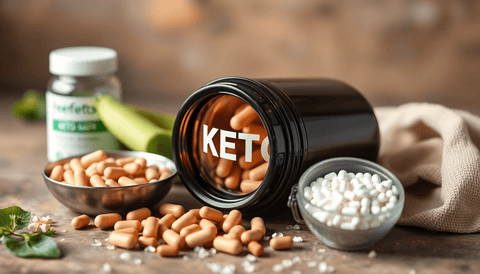
Exogene ketonen zijn ketonlichamen die van buiten het lichaam worden geïntroduceerd. De meest voorkomende vormen die je zult zien, zijn beta-hydroxybutyraat (BHB) in ketonenzouten en in ketonesters. Wanneer je een supplement neemt, kan dit het ketonenniveau in het bloed verhogen, waardoor een extra brandstofbron wordt aangeboden die onafhankelijk is van koolhydraatinname. Deze pagina richt zich op het begrijpen van wat exogene ketonen zijn, hoe ze werken en praktische overwegingen voor dosering en dagelijks gebruik. Wat betreft hoe ze werken, komen exogene ketonen na inname in de bloedbaan en worden ze beschikbaar voor transport naar verschillende weefsels. Ze kunnen dienen als een alternatieve energiebron en bijdragen aan de bestaande voorraad circulerende ketonen. Door het verhogen van de circulerende ketonen kunnen exogene ketonen mogelijk invloed uitoefenen op hoe energiebronnen worden gebruikt tijdens dagelijkse activiteiten, zonder dat daarvoor speciale dieetveranderingen nodig zijn. De details van de metabole reactie kunnen variëren van persoon tot persoon, en je ervaring kan afhangen van factoren zoals de formulering en het tijdstip van inname. De juiste dosering voor exogene ketonen varieert per product en formulering. Het is gebruikelijk om met een kleinere portie te starten om de tolerantie te meten, en daarna aan te passen op basis van je persoonlijke reactie. Voor ketonenzouten liggen de gebruikelijke porties rond 5–12 gram per keer, terwijl ketonesters vaak hogere hoeveelheden per portie hebben, vaak in de range van 10–25 gram. Volg altijd de instructies op het etiket van het specifieke product dat je gebruikt, en overweeg te beginnen met een halve portie om te beoordelen hoe je reageert voordat je de hoeveelheid verhoogt. De smaak, textuur en algehele smaakbaarheid kunnen ook je doseringskeuze beïnvloeden. Praktische tips voor het opnemen van exogene ketonen in je dag omvatten het plannen van de dosis rond je routine, goed gehydrateerd blijven, en een eenvoudig logboek bijhouden van wanneer je ze neemt en hoe je je voelt om je persoonlijke reactie te begrijpen. Als je de voorkeur geeft aan een bepaald formulier—zout of ester—overweeg dan hoe dit past in je dagelijkse schema en smaakvoorkeuren. Goed bewaren en de instructies van het product volgen helpt bij het behoud van de kwaliteit. Door gebruik af te stemmen op je routine en aantekeningen te maken, kun je exogene ketonen op een manier integreren die aansluit bij je dagelijkse planning.
Exogene Ketonen: Verhoog snel energie, focus en prestaties
Exogenous ketones are a popular topic in the health and wellness world, often discussed in relation to energy, focus, and athletic performance. This page serves as a central guide to understand what they are, the different forms available, and key factors to consider before you decide if they fit into your routine. We'll explore the basics of how they work, compare the main types, and offer practical tips for use, all while providing a foundation for exploring more specific questions.
What Are Exogenous Ketones?
Ketones are water-soluble molecules produced by the liver from fatty acids. They serve as an alternative energy source for the body, particularly when glucose (from carbohydrates) is limited. 'Exogenous' simply means 'produced outside the body.' Therefore, exogenous ketones are ketone bodies that you consume, usually in the form of a dietary supplement, to raise the level of ketones in your blood without needing to follow a specific diet.
The main ketone body relevant to supplements is beta-hydroxybutyrate (BHB). When you ingest BHB, it can quickly increase the concentration of ketones in your bloodstream, making them available for your tissues to use as fuel.
How Do Exogenous Ketones Work?
After you swallow an exogenous ketone supplement, the ketones are absorbed through your digestive tract and enter your bloodstream. From there, they can be transported to various tissues like your brain, heart, and muscles. These tissues can then take up the ketones and use them as an energy substrate, potentially influencing how your body manages its energy supply.
It's important to understand the difference between exogenous ketones and ketosis achieved through diet. When you follow a ketogenic diet, your body produces its own ketones by depleting glycogen stores. Exogenous ketone supplements provide a source of ketones directly, which can raise blood ketone levels. However, the metabolic response and effects can vary greatly from person to person. Factors like the formulation (salts vs. esters), your individual metabolism, and the timing of intake can all influence your experience.
Types of Exogenous Ketones: Salts vs. Esters
The two main forms of exogenous ketone supplements are ketone salts and ketone esters. They differ in their chemical structure, how they are made, and their characteristics.
- Ketone Salts: These are BHB bound to a mineral salt, such as sodium, potassium, calcium, or magnesium. They are typically sold as a powder that you mix with water. They tend to be more affordable and have a better taste than esters.
- Ketone Esters: These are BHB bound to another compound, usually a synthetic ester. They are a liquid and are known for raising blood ketone levels more rapidly and to a higher degree than salts. However, they are often more expensive and have a very bitter, unpleasant taste.
Ketone Salts vs. Esters and MCT Oil
It's also common to confuse exogenous ketones with MCT oil (medium-chain triglycerides). They are not the same. MCT oil is a type of fat that the liver can convert into ketones. It's a precursor, meaning it helps your body produce its own ketones, whereas exogenous ketone supplements provide ready-made ketones. MCT oil is generally considered a food, while exogenous ketones are supplements.
The table below provides a quick comparison to clarify the differences.
Comparison of Exogenous Ketone Salts, Esters, and MCT Oil
- Ketone Salts: Absorbed quickly, taste fairly palatable, moderate cost, raises blood ketones moderately.
- Ketone Esters: Absorbed very quickly, taste very bitter, high cost, raises blood ketones significantly.
- MCT Oil: Not absorbed as quickly, tastes like oil, relatively low cost, may help produce ketones via the liver.
How to Use Exogenous Ketones: Dosage and Timing
Finding the right approach to using exogenous ketones involves a few key considerations. There is no single 'correct' dose that works for everyone, as it depends largely on the specific product and your individual response. However, understanding the typical ranges and best practices can help you start safely and effectively.
Starting Your Dosage
It is always best to follow the label instructions from the specific product you are using. As a general guideline, typical serving sizes are:
- Ketone Salts: Around 5 to 12 grams per serving.
- Ketone Esters: Often around 10 to 25 grams per serving.
Before starting, consider trying a half-serving to assess your tolerance. Gastrointestinal discomfort is a common side effect, especially with esters, so starting small is a prudent strategy.
Timing Your Intake
The best time to take exogenous ketones can depend on your goals. Some people use them before exercise for an energy boost, while others take them first thing in the morning to help maintain mental focus.
A practical approach is to plan your dosing around your routine. For example, if you want to test their effect on a workout, take them 30-45 minutes before training. If you're using them for morning focus, take them with breakfast. Keeping a simple log of when you take them and how you feel can be an excellent way to understand your personal response and determine what works best for you.
Practical Considerations for Use
Beyond dosage and timing, there are other practical factors to keep in mind when incorporating exogenous ketones into your daily routine.
- Palatability: Ketone salts come in various flavors, but they can be quite salty. Ketone esters are notoriously bitter. Taste is a significant factor in sticking to a routine.
- Hydration: Staying well-hydrated is important, as electrolytes from ketone salts can affect your body's water balance.
- Texture and Form: Consider whether you prefer a powder you can mix or a liquid shot. This can influence your choice between salts and esters.
- Storage: Always follow product directions for proper storage to maintain quality and effectiveness.
Exploring Ketosis and Related Topics
Understanding exogenous ketones also involves understanding the broader context of ketosis, the body's fat-burning state. This involves the metabolic state where your body uses fat for fuel instead of carbohydrates. For those interested in this area, exploring related nutritional topics can provide valuable background.
If you're curious about other supplements that support energy and performance, you might find our guide to sports supplements helpful. For a broader view of nutritional support, our sports supplements guide provides an overview of common products. Additionally, learning about MCT oil as a source of energy can be useful, and you can explore options within our superfoods guide which discusses nutrient-dense foods and their role in a balanced diet. For a detailed look at specific ingredients that may complement your wellness routine, our collection on amino acid supplements is also worth exploring.
Ultimately, exogenous ketones are an interesting tool that some people use to support their energy and focus goals. By understanding the types, how to use them, and what to expect, you can make a more informed decision about whether they align with your personal health strategy.