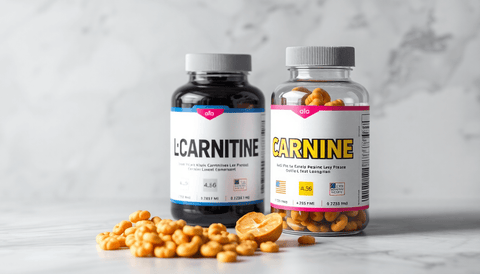
L-Carnitine Supplementen: Verhoog je Energie & Verbrand Vet


Deze pagina verkent l-carnitine-supplementen en de manieren waarop ze worden besproken in verband met energie, metabolisme en workouts. Het behandelt wat l-carnitine-supplementen zijn, de belangrijkste vormen die worden gebruikt in supplementen (L-carnitine, acetyl-L-carnitine, L-carnitine tartraat, propionyl-L-carnitine), en de gangbare toedieningsformaten (capsules, tabletten, vloeistoffen en poeders). De focus ligt op hoe deze producten te evalueren en welke informatie je op etiketten moet zoeken bij het overwegen van l-carnitine-supplementen. Dosisadviezen voor l-carnitine-supplementen: Richtlijnen voor de dosering verschillen per vorm en product, dus begin met de instructies op het etiket en pas deze alleen aan onder begeleiding van een professional. Typische ranges die in consumentenbronnen worden genoemd, zijn ongeveer 1–2 gram per dag voor bepaalde vormen, waarbij sommige schema's 500 mg tot 1.500 mg per dag gebruiken voor acetyl-L-carnitine. Dosis kan over de dag verdeeld worden, en het innemen met maaltijden kan voor sommige mensen een praktische optie zijn. Overweeg altijd persoonlijke gezondheidsfactoren en raadpleeg een zorgverlener voor individuele aanbevelingen. Veiligheidsrichtlijnen voor l-carnitine-supplementen: Wees je bewust van mogelijke bijwerkingen bij gebruik van l-carnitine-supplementen, zoals milde gastro-intestinale klachten of een tijdelijke lichaamsgeur bij hogere doses. De veiligheid kan variëren op basis van de individuele gezondheidstoestand en medicijngebruik. Mensen met nierziekten, zwangere of borstvoedende vrouwen, of mensen die bepaalde medicijnen gebruiken, moeten professioneel advies inwinnen voordat ze starten met l-carnitine-supplementen. De aanbevolen doses niet overschrijden en stop het gebruik als je onverwachte symptomen opmerkt. Kiezen van kwaliteitsmerken voor l-carnitine-supplementen: Om betrouwbare l-carnitine-supplementen te herkennen, controleer op derdengeteste producten en GMP-certificering, en zoek naar transparante labeling met de exacte vorm van carnitine en de hoeveelheid per portie. Kies producten met duidelijke ingrediëntenlijsten, batch- of lotnummers, en een houdbaarheidsdatum. Vergelijk formuleringstypen (capsules, vloeistoffen, poeders) en controleer of er geen onnodige vulmiddelen of propriëtaire mengsels zijn die de hoeveelheden verbergen. Prioriteer merken die toegankelijke kwaliteitsinformatie bieden en betrouwbare productiepraktijken.


L-Carnitine Benefits & Side Effects: A Clear Review from Topvitamine - Topvitamine
Jun 30, 2025
L-carnitine helpt vetzuren naar de mitochondriën te transporteren, waar ze betrokken zijn bij de energieproductie. Een supplement is geen wondermiddel voor afvallen en werkt niet hetzelfde als Ozempic. In dit artikel lees je over mogelijke voordelen, bijwerkingen, vormen, voedingsbronnen en dosering. Ook ontdek je wanneer overleg met een arts of apotheker verstandig is, vooral bij medicijngebruik, zwangerschap of een medische aandoening.

L-carnitine is a naturally occurring compound that plays an important role in the body, particularly in the metabolism of fats for energy. While your body produces it and you can get it from foods like red meat and dairy, L-carnitine supplements have become a popular topic for those interested in supporting their energy levels and fitness goals. This guide serves as a broad hub, covering the main types of L-carnitine, how they are often discussed in relation to energy and performance, and the key factors to consider when you are evaluating any L-carnitine supplement.

What is L-Carnitine and Why Do People Use Supplements?

At its core, L-carnitine is a non-protein amino acid that helps transport fatty acids into the mitochondria of your cells. With the help of this shuttle system, the cell can convert these fatty acids into energy through a process known as beta-oxidation. This process is fundamental to normal energy production, which is why L-carnitine is often discussed in the same context as metabolism and athletic performance. Many people who follow a vegetarian or vegan diet may have lower levels of naturally occurring L-carnitine, which is another reason some turn to supplements. It is important to know that L-carnitine does not produce a sudden burst of energy like a stimulant; instead, it supports the body's natural process of converting fats into usable fuel.

The Main Forms of L-Carnitine Supplements

Not all L-carnitine is the same. When you research supplements, you will encounter a few different names that are all derived from the same basic structure. Recognizing the differences between these versions is an important first step in a confident choice.

A Closer Look at Common Carnitine Types

To clarify the main types, here's a breakdown:

  • L-Carnitine: This is the foundational form. It is not attached to any other molecules and is a standard base form of the ingredient.
  • Acetyl-L-Carnitine (ALCAR): This form is bound to an acetyl group. This form is often studied in discussions related to brain health or cognitive function. It may also have better absorption characteristics and can cross the blood-brain barrier.
  • L-Carnitine L-Tartrate: This form is bonded with tartaric acid. It is commonly included in sports nutrition, and is typically discussed in the context of workout recovery and muscle soreness.
  • Propionyl-L-Carnitine (GPLC): This is a derivative of L-carnitine and is often used in different types of clinical research in the context of circulation. It may be particularly used for those with specific health support needs.

L-Carnitine Supplement Formats and Why They Matter

L-carnitine is made available in a variety of formats, including capsules, tablets, liquid formulas and powder. The chosen format does not change the core ingredient, but it can impact how you use it. The choice often comes down to a personal preference or your routine. Capsules and tablets offer convenience, powders easily mix into beverages, and liquids can be taken directly by the pe. If you have any dietary restrictions, it's always best to consult the ingredient label to ensure the format aligns with your particular needs.

General Dosing Considerations for L-Carnitine

It is important to treat L-carnitine as you would any dietary supplement. Start by always reading the label on your chosen product and follow its directions exactly. As a rule, standard doses often discussed in consumer resources range from 1 gram to 2 grams of L-carnitine per day. If using Acetyl-L-Carnitine, a typical range is roughly 500 mg to 1,500 mg per day. For best practices, you might consider splitting these doses throughout the day, and taking them with a meal might be convenient for some. However, your personal health status is a factor to consider. Always use the smallest and more direct dose for your need, and make sure to speak with your healthcare provider if you want to reach a tailored recommendation.

Potential Side Effects and Safety Considerations

Since each person responds differently, it is essential that you are aware of the possible effects of introducing any new supplement. Some people may experience mild gastrointestinal discomfort or a temporary body odor at higher doses. This can be a common occurrence, but it is often not severe. But you must assess the risk associated with your personal profile. If you have kidney disease or are pregnant, nursing, or taking certain medicines, you should seek professional guidance before starting L-carnitine. Never exceed the dose and safety guidance provided on the label. If you notice any unexpected symptoms after beginning a supplement, discontinue its use and consult with a medical professional.

How to Choose a Quality L-Carnitine Supplement

When you scan the marketplace, making an quality choice comes down to a few determined key quality markers. To identify reliable brands, we suggest you use a checklist to help you. This approach is much more effective than relying on the front label alone.

  • Check for third-party testing and GMP certification. These certifications are a mark of quality and often indicate a brand is meeting higher safety standards.
  • Read the ingredient label for transparency. Confirm exactly which form of L-carnitine is included, and see the amount per serving is clear.
  • Seek batch or lot numbers and an expiration date on the bottle. These are standard for quality control and traceability.
  • Compare between capsules, liquids, and powders to find the format you prefer. Be cautious of unnecessary fillers or proprietary blends that obscure the quantity of the ingredients.

Prioritize brands that give you access to their quality information and are open to the public about their manufacturing practices. If you take this approach, you are more likely to find a product you can trust. Along with your interest for L-carnitine, your wellness routine may be more developed with a proper intake of amino acids, find out more about the basics of the topic in our guide.

Answers to Common Questions About L-Carnitine

Potential users commonly have more specific questions beyond broad selections. Here, we answer a few of the most frequent common queries that arise in this topic:

What are the benefits of taking L-carnitine?

Benefits often associate L-carnitine with its role as a key to get energy through fats, so it is commonly discussed in relation to athletic performance, workout recovery, and general energy support. The big picture above covers the broad range of those. More specific benefits may be unique to the different types, for instance Acetyl-L-Carnitine is more often linked to brain health.

Does L-carnitine help reduce belly fat?

While L-carnitine is often marketed for fat loss, the effect is often modest and not specifically targeted at belly fat. The research is very mixed, and many nutrition professional see it as an accessory that only works best when combined with a comprehensive fitness and nutrition routine. Taking L-carnitine on its own won't lead to direct 'spot reduction' of fat, but it might fit into a broad energy strategy along with proper diet.

Is it all right to take L-carnitine daily?

Generally, many people take L-carnitine daily within the stated dosage recommendations. However, you should not just rely on general 'rules of thumb'. You should gather advice from the label of the product you're using. YOu also should pay close attention to how your body responds. Starting with a smaller or lower dose is often the best idea to see first if you have any reactions. If in any doubt, seek professional advice.

Who should not take L-carnitine??

Individuals with certain pre-existing health problems, especially kidney or seizure-prone disorders, should stay cautious and should not start without the specific consent of their doctor. In addition, people who are pregnant or breast-feeding should not begin any supplement without discussing it with their practitioner. If you take anticoagulant (blood-thinning) medications or have thyroid conditions, don't assume that L-carnitine is right for you until you have that conversation with your prescriber.

Exploring the Role of Other Supplements and Amino Acids

Considering L-carnitine often comes up in the same way as other wellness products. It may be useful to think about this in the broader context of fitness or a balanced regime. For readers who are interested in the building blocks of the body, it's useful to put L-carnitine in context with other amino-acid containing products. The role and the mechanisms of the compound is unique, but exploring the landscape of associated supplements can help create a more holistic routine.

You may find it easy to shop for a broader set of products and use the additional insight into your supplements with a look at other builders that support a healthy style. For example, exploring our amino acids supplements collection for options that are related to your goals. And remember to check out the full sports supplements guide to find more facts and related products.

The Bottom Line

The decision to use an L-carnitine supplement is a personal one. Whether you are looking to support your energy, your fitness, or your overall health, success depends on selecting the right form, taking an appropriate dose, and looking for trustworthy brands. Keep in mind that adding a supplement is just one part to the larger picture. A healthy, balanced diet and exercise remains central. Always remember to discuss your plans with your healthcare provider to ensure all supplements are designed around your specific profile and needs.