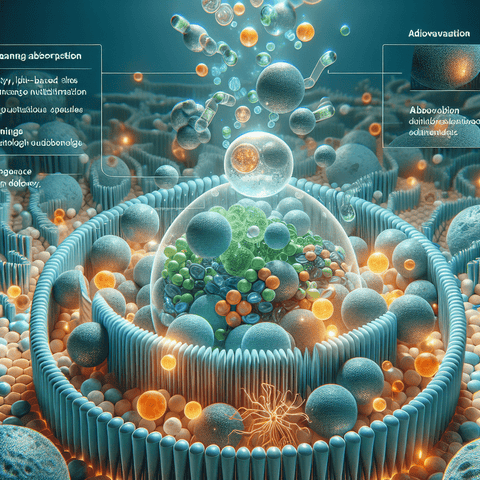
Maximaliseer vitamineabsorptie met liposomale toediening. Liposomale vitamineabsorptie is een term die centraal staat in de formulering wetenschap, waarin wordt beschreven hoe vesikel-dragers omgaan met vitamines in een toedieningssysteem. Liposomen zijn kleine, ronde shells gevormd uit fosfolipiden die actieve verbindingen omvatten. Wanneer vitamines in deze dragers worden geladen, verschuift hun micro-omgeving van een eenvoudige oplossing naar een gestructureerde, beschermende ruimte. Dit overzicht schetst hoe liposomale systemen worden ontworpen om de route te beïnvloeden van formulering tot meetbare aanwezigheid in een doelsysteem, met een focus op karakterisering en prestatie-indicatoren in plaats van productclaims. Verschillende ontwerpfactoren bepalen de absorptie van liposomale vitaminen. Deeltjesgrootte, membraamsamenstelling en oppervlakte-lading bepalen het gedrag van een liposoom in een bepaald medium. Hydrofiele en lipofiele vitamines bevinden zich in verschillende regio’s van het vesikel, wat invloed heeft op encapsulatiestrategieën en stabiliteit. De keuze van lipiden, cholesterolgehalte en oppervlakte-modificatoren kunnen bescherming tegen degradatie en het vrijlatingsprofiel veranderen. Samen vormen deze variabelen het fundamentele concept van liposomale vitamineabsorptie zonder outcomes te claimen. Efficiëntie en het minimaliseren van afval zijn praktische doelen in liposomale formulering. Encapsulatie-efficiëntie vertelt ons welk deel van de begonnen vitamine uiteindelijk binnenin het liposoom belandt, terwijl niet-encapsuleerd materiaal kan worden geverifieerd en beheerd in verwerkingsstromen. Methoden zoals zuiveringsstappen, conditionering en kwaliteitscontrole-workflows helpen om niet-gebonden materiaal en bijproducten te verminderen. Door te focussen op hoge encapsulatie en schone scheidingen, streeft het ontwerp ernaar materiaalverlies te minimaliseren en hulpbronnen te optimaliseren. Het ontsluiten van het volledige potentieel van je vitamines via liposomale toediening vereist inzicht in het vrijlatingsgedrag, compatibiliteit met formulatiecomponenten en stabiliteit onder verwachte opslagomstandigheden. In-vitromodellen en analytische assays bieden perspectieven op hoe liposomale vitamineabsorptiekenmerken geïnterpreteerd kunnen worden in een gecontroleerde omgeving. De taal van liposomale vitamineabsorptie combineert dus materiaalwetenschap, analytische karakterisering en procesoptimalisatie, gericht op het beschrijven van hoe ingeschatte vitaminen worden vervoerd en vrijgegeven binnen een gedefinieerd systeem.
Liposomale vitamineabsorptie: maximale biologische beschikbaarheid
Liposomal vitamin absorption represents an important topic in nutritional science and supplement formulation. This page serves as a broad introduction to the subject, explaining what liposomes are, how they function as delivery systems, and which factors determine their behavior. The goal is to provide a clear overview of the science, terminology, and key considerations without making unsubstantiated claims about specific health outcomes. For more detailed information on specific nutrients and their uses, explore our guide on natural supplements.
What Is a Liposome and How Does It Work?
A liposome is a tiny spherical structure composed of one or more phospholipid bilayers, similar to the membranes that surround every cell in your body. This unique composition allows liposomes to encapsulate various substances. Water-soluble (hydrophilic) vitamins sit in the aqueous core, while fat-soluble (lipophilic) vitamins can be housed within the lipid bilayer. This is a fundamental concept in liposomal delivery.
The primary function of a liposome as a delivery vehicle is protection. The phospholipid shell can shield the encapsulated vitamin from degradation in the digestive tract, theoretically allowing more of it to reach the absorption site intact. This protective effect is a key reason why researchers study liposomal systems for enhancing vitamin absorption.
In simple terms, the liposome acts as a protective carrier. It is designed to navigate the body's environment until it releases its contents at a specific location or time. The specific behavior is determined by its formulation, which is a complex process involving several design choices.
Key Formulation Factors in Liposomal Vitamin Absorption
The performance of a liposomal formulation is influenced by its physical and chemical characteristics. These factors are key areas of study in understanding how liposomal vitamin absorption works.
Particle Size and Surface Charge
The size of the liposome and its surface charge are two primary characteristics. Particle size can influence how the liposome interacts with biological barriers. The surface charge can affect its stability in suspension and its interaction with cells. These are measured and optimized during the formulation process.
Lipid Composition and Membrane Stability
The type of phospholipids used, along with the addition of cholesterol or other surface modifiers, determines the rigidity and fluidity of the liposome membrane. A more stable membrane can offer better protection to the encapsulated vitamin, but it may also slow down the release process. The balance between stability and release is a crucial decision in the design.
Encapsulation Efficiency and Stability
Encapsulation efficiency is defined as the percentage of the starting vitamin that is successfully loaded inside the liposome. High encapsulation efficiency is important for minimizing waste and ensuring the product is economically and efficiently produced. Additionally, the formulation must demonstrate stability under expected storage conditions to maintain its performance over time.
How Is Absorption Measured and Evaluated?
In a controlled setting, researchers evaluate liposomal vitamin absorption using various analytical methods. These include in vitro models, which simulate digestive or bodily conditions, to observe how the liposome releases its contents. Key performance indicators include the release profile, which is the rate at which the vitamin is released over time, and the general stability of the formulation.
These tests are fundamental to the development and quality control of liposomal products. They help researchers understand how the system behaves without making direct claims about its effects in the human body. The language of liposomal absorption combines materials science, analytical chemistry, and process optimization to describe how encapsulated vitamins are carried and released.
General Considerations for Supplements
The concept of liposomal delivery is often discussed alongside the general principles of vitamin absorption. When considering any supplement, it is useful to remember that various factors, including diet, lifestyle, and individual health status, can influence how well your body uses nutrients. For example, some vitamins are better absorbed with food, while others may compete for absorption pathways.
This overview is intended to explain the concepts behind liposomal technology. It serves as a foundation for exploring more specific questions about particular vitamins, supplement types, and absorption strategies. For instance, you might be interested in how liposomal delivery applies to a specific vitamin like vitamin C, which you can explore further in our vitamin C guide.
Exploring the Topic Further
There are many specific questions that people ask within the broader topic of liposomal vitamin absorption. These include comparisons between different forms of vitamins, the role of specific ingredients, and practical questions about usage. These detailed subjects are often best explored in dedicated articles, which provides a deeper understanding of a particular question or use case.
This tag page is designed to give you the map: an understanding of the fundamental terms, processes, and scientific concepts. With this foundation, you can more easily evaluate the specific questions and product information you encounter. To learn about the different types of lipids used in these technologies, you can read more about phospholipids.