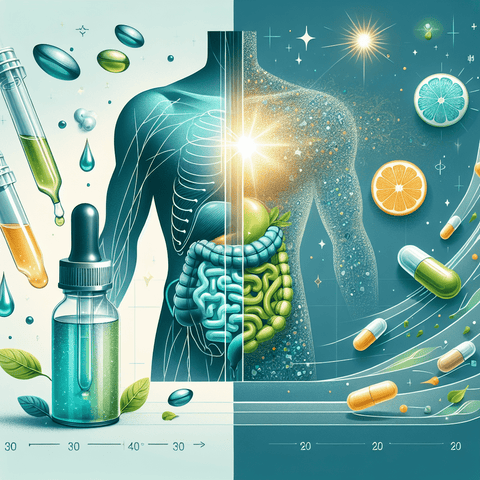
Voordelen van vloeibare vitamines verwijzen naar de praktische voordelen waar mensen naar zoeken bij het beoordelen van vloeibare vitamines als supplementvorm. Vloeibare vitamines worden geformuleerd met vitamines die zijn opgelost of gesuspendeerd in een vloeibaar medium, en labels specificeren meestal de hoeveelheid van elke vitamine per portie. Deze pagina geeft een overzicht van hoe deze formuleringen werken en hoe je het juiste supplement kiest, met een focus op het identificeren van de voordelen van vloeibare vitamines die belangrijk zijn in het dagelijks gebruik. Hoe vloeibare vitamines werken, hangt af van de formulering en de toedieningsmethode. In een vloeibare vorm bestaan vitamines in oplossing of suspensie binnen een basis zoals gezuiverd water, glycerine of een gearomatiseerde drager. De vloeibare vorm beïnvloedt de dosering, stabiliteit en verwerking, inclusief hoe het product wordt gemeten en bewaard. Verpakkingen zoals druppelflessen, sprays of emulsies beïnvloeden de gebruikservaring en de consistentie van het product, wat deel uitmaakt van de voordelen van vloeibare vitamines. Hoe je het juiste supplement kiest, vereist een zorgvuldige beoordeling en vergelijking van het etiket. Kijk naar de hoeveelheid per portie, het totale aantal porties per fles, en of het product zowel wateroplosbare als vetoplosbare vitamines bevat. Controleer op toevoegingen zoals zoetstoffen, smaakstoffen of conserveermiddelen, en let op allergenen. Zoek naar third-party testing of certificeringen en verifieer de bewaarvoorschriften en houdbaarheidsdata. Deze overwegingen helpen je om de praktische voordelen van vloeibare vitamines te beoordelen bij verschillende producten. Met deze punten in gedachten, kun je opties vergelijken en een product kiezen dat aansluit bij jouw voorkeuren en routine. Bij twijfel, lees de productlabels zorgvuldig door en raadpleeg indien nodig een professional. De term voordelen van vloeibare vitamines kan je begeleiden bij je beoordeling van het formaat, de transparantie van ingrediënten en het gemak van dosering.
Voordelen van vloeibaar vitamine: Snelle opname voor meer energie en betere gezondheid
Liquid vitamins are a popular alternative to traditional pills and capsules. They offer a different way to incorporate essential nutrients into your daily routine, and many people are curious about how they compare to more common supplement forms. This guide provides a broad overview of liquid vitamins, from how they work to what you should look for when choosing a product. Whether you’re new to supplements or considering a switch in format, this page covers the key points you need to know.
What Are Liquid Vitamins?
Liquid vitamins are dietary supplements that deliver nutrients in a liquid form rather than in solid tablets, capsules, or gummies. The “liquid” refers to the carrier base, which can be water, glycerin, vegetable oil, or another food-grade liquid. Vitamins and minerals are either fully dissolved or suspended in this base, allowing the nutrient blend to be consumed directly by the teaspoon, dropper, or mixed into a drink.
This format is particularly attractive for individuals who have difficulty swallowing pills, children who refuse tablets, or adults who simply prefer the taste and flexibility of a liquid supplement. However, liquid vitamins are not just about convenience—they also offer distinct characteristics in terms of how they are formulated, absorbed, and used by the body.
How Liquid Vitamins Work in the Body
The primary difference between liquid and solid vitamins lies in the delivery mechanism. When you take a tablet, it must first break down in the stomach—a process called disintegration—before the nutrients can be released for absorption. Liquid vitamins bypass this initial breakdown step because the nutrients are already in a dissolved or suspended state. This means that, in theory, the body can begin absorbing them sooner.
However, it’s important to understand that “faster absorption” does not automatically mean “better absorption.” The overall bioavailability—the amount of a nutrient that your body can actually use—depends on several factors, including the chemical form of the nutrient, the presence of other nutrients or foods, and your individual digestive health. For example, fat-soluble vitamins like A, D, E, and K are better absorbed when taken with a meal that contains dietary fat, regardless of whether the supplement is liquid or solid.
Liquid Vitamins vs. Tablets and Gummies
Choosing between liquid, tablet, and gummy vitamins often comes down to personal preference and lifestyle. Each format has its own set of strengths and trade-offs:
- Liquids: Provide flexible dosing, are easy to swallow, and can be mixed into food or drinks. They may require refrigeration after opening and generally have a shorter shelf life once opened.
- Tablets and capsules: Offer precise dosing, have a long shelf life, and are highly portable. However, they may be difficult for some people to swallow and can sometimes cause stomach upset if taken on an empty stomach.
- Gummies: Taste pleasant and are easy to chew, making them a good option for children or those who dislike swallowing pills. They often contain added sugar or sweeteners and may have a lower nutrient concentration per serving compared to liquid or tablet forms.
Ultimately, the best format is the one that you will take consistently. All forms can be effective when used correctly, but personal factors like convenience, taste, and ease of use play a significant role in long-term adherence.
Types of Liquid Vitamins
Liquid vitamins come in several formulations, each designed to address different nutritional needs or preferences:
- Multi-nutrient formulas: These combine a broad range of vitamins and minerals in one product, aiming to fill general nutritional gaps.
- Single-nutrient liquids: Products that focus on one specific nutrient, such as vitamin D3, vitamin C, or magnesium, allowing for targeted support.
- Water-soluble formulas: Designed to dissolve easily in water, these are often used for vitamins like B-complex and vitamin C, which the body doesn’t store in large amounts.
- Oil-based liquids: These are typically used for fat-soluble vitamins like vitamin A, D, E, and K, which require a lipid base for optimal absorption.
When choosing a type, consider your specific health goals and dietary needs. A multivitamin might be a good starting point for general wellness, while a single-nutrient liquid could be more appropriate if you have a known deficiency or a specific concern identified by a healthcare provider.
Key Considerations When Choosing a Liquid Vitamin
Selecting a high-quality liquid vitamin requires attention to detail. Here are some practical factors to keep in mind:
- Read the label carefully: Always check the serving size and the concentration of each nutrient. The amount per serving can vary significantly between brands.
- Check for additives: Be aware of added sugars, artificial sweeteners, flavors, and preservatives. Some products use natural juice concentrates or stevia as sweeteners, which may be preferable.
- Consider the nutrient forms: Some forms of vitamins are better absorbed than others. For example, vitamin E as “d-alpha-tocopherol” is more biologically active than the synthetic “dl-alpha-tocopherol.”
- Look for third-party testing: Certifications from independent testing organizations can provide assurance about the product’s quality and purity.
- Store properly: Many liquid vitamins need to be refrigerated after opening and should be used within a specific timeframe. Always follow the storage instructions on the label.
It’s also crucial to discuss any supplement with a healthcare professional, especially if you are pregnant, nursing, have a medical condition, or are taking medications. This helps ensure you are choosing the right product for your individual needs and avoiding any potential interactions.
Absorption, Bioavailability, and Dosing
One of the main reasons people choose liquid vitamins is the belief that they are more easily absorbed. While it’s true that the body doesn’t have to break down a pill first, scientific consensus on whether liquids are significantly more bioavailable than solid forms is mixed. Some studies suggest certain nutrients in liquid form may have higher absorption rates, while others show no meaningful difference.
For most people, the practical benefit of liquids is the ability to fine-tune the dose. Droppers and marked spoons allow for smaller or more precise amounts than a fixed tablet size. This can be particularly useful for children or for gradually adjusting intake under the guidance of a healthcare provider. However, this flexibility also means there’s a greater potential for measuring errors, so it’s important to use the provided measuring device rather than a kitchen spoon.
Safety and Practical Usage
Liquid vitamins are generally safe when taken as directed, but there are some specific considerations. Because they are often flavored and appealing, they may pose a higher risk of accidental overdose in children if left within reach. Always store them securely out of sight and reach of young children.
Additionally, liquid formulations may contain allergens such as soy, gluten, or dairy, so always check the label if you have food sensitivities. Some people may also experience mild digestive discomfort when taking certain vitamins on an empty stomach; mixing the liquid with food or water can often help mitigate this.
Remember that supplements are intended to complement a healthy diet, not replace it. Vitamins and minerals from whole foods are still the most natural way to meet nutritional needs, and a balanced diet should be the foundation of your health strategy.
Explore Related Supplement Categories
To further investigate specific nutrients and supplement options, you may find the following guides helpful. They provide more detailed information on individual vitamins and their roles in the body:
• Explore Vitamin B benefits and food sources for more on energy metabolism.
• Learn about Vitamin D's role in bone health and immune function.
• Browse our multivitamin guide for a broader understanding of comprehensive supplementation.
Liquid vitamins are a practical and versatile option for many people. By understanding how they work, what to look for on the label, and how to use them safely, you can make an informed choice that aligns with your health goals. As always, professional guidance is recommended when making decisions about supplementation.