
Verward tussen methylcobalamine en cyanocobalamine? Deze pagina duikt in de wetenschap achter de twee meest besproken vormen van vitamine B12. Beide zijn kobalaminen, die hetzelfde kernstructuur delen, maar ze verschillen in hun liganden en hoe het lichaam ze gebruikt. Methylcobalamine en cyanocobalamine verschijnen in supplementen en verrijkte producten, maar ze activeren verschillende biochemische routes wanneer ze worden verwerkt. Het begrijpen van deze verschillen helpt te verduidelijken waarom de ene vorm in bepaalde contexten en productspecifieke kenmerken wordt benadrukt. Vanuit biochemisch perspectief is methylcobalamine een co-factor in de methioninesynthase-reactie, waarmee B12 wordt gekoppeld aan één-koolstofmetabolisme. Adenosylcobalamine dient als co-factor voor methylmalonyl-CoA mutase, een ander enzym in cellulaire routes. Cyanocobalamine, met zijn cyanide-ligand, is een stabiele, synthetische vorm die in het lichaam wordt omgezet naar de actieve co-enzymvormen—methylcobalamine en adenosylcobalamine—als onderdeel van de normale verwerking. In die zin weerspiegelt methylcobalamine versus cyanocobalamine zowel directe co-factorrollen als de downstream omzettingsstappen van het lichaam. Stabiliteit en hantering zijn praktische factoren die het verschil maken. Cyanocobalamine staat bekend om zijn robuuste stabiliteit en langere houdbaarheid, wat bijdraagt aan de prevalentie in veel productformuleringen. Methylcobalamine kan gevoeliger zijn voor licht en temperatuur en kan afhangen van formulering voor opslag. Deze stabiliteitsverschillen beïnvloeden de verpakking, labeling en hoe producten worden vervaardigd, in plaats van de fundamentele chemie van de vitamine zelf te veranderen. Bij het kiezen tussen methylcobalamine en cyanocobalamine, bedenk dan hoe elke vorm wordt geproduceerd, hoe het lichaam het verwerkt en hoe het wordt gepresenteerd in een bepaald product. Beschikbaarheid, formuleringstype en kosten kunnen variëren tussen merken, en regelgeving en etikettering kunnen per regio verschillen. Door je te richten op de wetenschap—structuur, omzettingsroutes en stabiliteit—kun je opties navigeren en de vorm kiezen die aansluit bij je voorkeuren en doelen. Klik om meer te leren over hoe deze vormen overeenkomen met verschillende productfamilies en specificaties.
Methylcobalamin vs Cyanocobalamin: Welke vitamine B12 is het beste voor jou?

Vermoeidheid, hersenmist of geheugenproblemen tijdens de menopauze? Mogelijk heb je vitamine B12 nodig. Deze gids legt uit waarom B12 belangrijk is tijdens de menopauze, vergelijkt methylcobalamine met cyanocobalamine en geeft duidelijke aanbevelingen over dosering, opname en de beste supplementen om in 2026 te overwegen.

Methylcobalamin vs Cyanocobalamin: What's the Difference?Methylcobalamin and cyanocobalamin are two common forms of vitamin B12. The key difference is their chemical structure. Methylcobalamin is the naturally occurring, active form found in the body. Cyanocobalamin is a synthetic, stable form that requires conversion into an active form before your body can use it. Both forms can effectively raise B12 levels, but they are processed differently.Absorption, Bioavailability, and How Your Body Uses Each FormFor most people, both forms are absorbed similarly. Absorption depends more on your digestive health—stomach acid, intrinsic factor, and gut health—than on the form you take. Once absorbed, methylcobalamin is ready for immediate use in methylation reactions. Cyanocobalamin must first remove its cyanide group and convert into either methylcobalamin or adenosylcobalamin. This conversion requires adequate liver function and certain nutrients like glutathione.Choosing Between Methylcobalamin or CyanocobalaminThere is no universal best form. Cyanocobalamin is often a cost-effective and stable option for a confirmed deficiency. Methylcobalamin may be more direct for those with neurological symptoms, methylation support, or genetic variations affecting conversion. Your individual health profile, diet, lab results, and goals should guide your choice. Both forms are generally safe and well-tolerated with mild, temporary side effects.
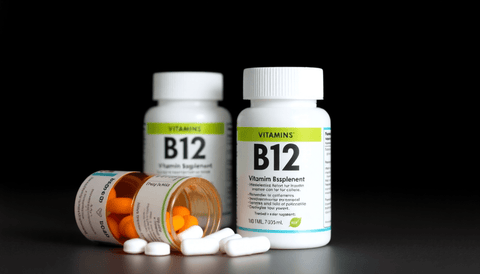
Vitamine B12 ondersteunt onder andere de normale energiestofwisseling, rode bloedcellen en het zenuwstelsel. Een supplement geeft vooral meer energie wanneer een tekort of verhoogde behoefte meespeelt; het werkt niet als algemene energiebooster. In deze gids lees je hoe je vitamine B12-supplementen kiest, wat methylcobalamine en cyanocobalamine van elkaar onderscheidt, welke dosering op etiketten voorkomt en wanneer professioneel advies verstandig is.