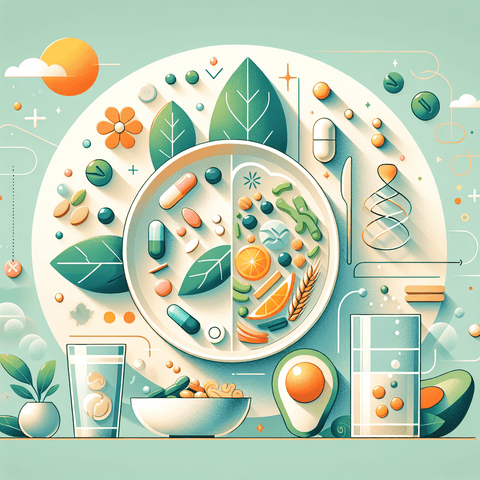
Nutrient effectiveness is a core concept in nutrition that goes beyond simply counting the vitamins and minerals on a food label. It describes the complex journey a nutrient takes from your plate to the cells in your body, where it can finally have an effect. This process is influenced by a multitude of factors, including the food's physical structure, how it's prepared, what else you eat with it, and the unique workings of your digestive system. Focusing on nutrient effectiveness can help you understand how to get more value from the foods you eat and any supplements you may choose to take.
What Is Nutrient Effectiveness?
At its most basic, nutrient effectiveness is the measure of how well your body absorbs and uses the nutrients you consume. It bridges the gap between the chemical composition of food and its biological impact. A meal might be rich in a particular vitamin on paper, but if your body cannot liberate that vitamin from the food matrix or transport it efficiently, its effectiveness is low.
Two key terms are often used when discussing this topic: bioavailability and bioefficacy. Bioavailability refers to the proportion of a nutrient that is absorbed and made available for use in the body. Bioefficacy goes a step further, describing how effectively the absorbed nutrient is converted into an active form and produces a beneficial effect. A nutrient can be highly bioavailable but have low bioefficacy if it's not efficiently converted to its active form.
In discussions about food production, you may also hear the term “nutrient use efficiency” (NUE). This concept, often used in agriculture, refers to how effectively plants convert soil nutrients into biomass or yield. While it is a different context, it highlights the broader principle that nutrients must be in a usable form to be effective, whether for a plant or a person.
Nutrient Effectiveness in Agriculture: Nutrient Use Efficiency
In agriculture, nutrient use efficiency (NUE) is a measure of how well plants utilize the nutrients available in the soil. It's a critical concept for sustainable farming, as it relates to crop yields, fertilizer management, and environmental impact. A high NUE means a plant is converting a large portion of applied or available nutrients into harvestable biomass, while a low NUE suggests that nutrients are being lost to the environment or remain unavailable to the plant.
Improving NUE is a major goal in modern agriculture. Strategies include optimizing fertilizer application timing and placement, using slow-release fertilizers, and breeding crop varieties that are more efficient at nutrient uptake. This agricultural perspective provides a useful contrast to the human nutrition angle, showing that the principle of nutrient effectiveness is universal: a nutrient must be in a form that a living organism can access and use.
Key Factors Influencing Nutrient Absorption in the Human Diet
Several interconnected factors determine how well your body can utilize the nutrients from your diet. Understanding these can help you make practical changes to improve your nutritional status.
Food Preparation and the Meal Matrix
The physical and chemical structure of food, often called the meal matrix, has a significant impact. For example, cooking can break down plant cell walls, making some nutrients like beta-carotene in carrots easier to absorb. Conversely, boiling certain vegetables can leach water-soluble vitamins like vitamin C and B vitamins into the cooking water.
The way you combine foods in a meal is also crucial. Some nutrients are fat-soluble, meaning they need dietary fat for optimal absorption. This includes vitamins A, D, E, and K. For instance, consuming a salad with a dressing that contains oil will improve the absorption of fat-soluble nutrients from the vegetables compared to eating them without any fat.
Nutrient Interactions
The components of your meal can interact with each other, either enhancing or inhibiting absorption. For example, vitamin C can enhance the absorption of non-heme iron (the type found in plant foods). On the other hand, certain compounds like phytates in whole grains and tannins in tea can bind to minerals like iron and zinc, reducing their absorption.
Individual Digestive Health
The health and functionality of your digestive system is the final gatekeeper for nutrient effectiveness. Factors such as stomach acid levels, gut enzyme production, and the health of your gut lining all play a vital role. A healthy gut microbiome also contributes to the breakdown and synthesis of certain nutrients. Individual variations in digestive health can mean that two people eating the same meal absorb significantly different amounts of nutrients.
Practical Ways to Improve Nutrient Effectiveness
While the biochemistry can seem complex, applying the principles of nutrient effectiveness is often about common-sense food choices. Here are some broad strategies to consider:
- Pair foods strategically: Combine iron-rich plant foods with sources of vitamin C, and always include a source of healthy fat with fat-soluble vitamins.
- Choose preparation methods wisely: Favor steaming or roasting over prolonged boiling to preserve water-soluble vitamins. Some foods are more nutritious raw, while others benefit from cooking.
- Consider your overall diet: Instead of focusing on a single 'superfood,' aim for a balanced diet rich in a variety of plant and animal foods to support optimal digestion and nutrient interactions.
- Manage anti-nutrients: Soaking or fermenting legumes and whole grains can help reduce phytate content and improve mineral absorption.
Supplements and Nutrient Effectiveness
The concept of nutrient effectiveness logically extends to dietary supplements. The form of a nutrient, the presence of other ingredients, and the formulation of the supplement itself can all impact how well it is absorbed and used. For example, some minerals are bound to amino acids (chelated) in an attempt to improve absorption. Fat-soluble vitamins in supplements are often formulated with oils or emulsifiers to enhance uptake.
When considering supplementation, it can be helpful to focus on forms that are well-regarded for their quality. Understanding the various types of supplements, from single vitamins and minerals to complex formulas designed for specific needs, like sports performance or general wellness, is a useful step. You can learn more about specific categories of supplements by exploring our natural supplements or explore our mineral supplements guide to see the range of available options.
Essential Nutrients and Their Roles
Nutrient effectiveness is ultimately about supporting the body's functions, which depend on a team of essential nutrients. While all are important, certain groups often get special attention. These include the various vitamins and minerals that act as co-factors for thousands of biochemical reactions.
For example, the different B vitamins are involved in energy production and nerve function, while minerals like magnesium are critical for muscle function and bone health. To learn more about these foundational nutrients, you can consult dedicated guides for specific vitamins and minerals. For instance, you might be interested in exploring a guide on Vitamin D benefits and sources or information about the B-complex vitamins.
A Balanced Approach to Nutrition
The science of nutrient effectiveness is complex and still developing. Researchers use careful study designs to understand the relationships between food, digestion, and health outcomes. Individual responses can vary significantly, and a healthy, balanced diet remains the best foundation for good nutrition.
A practical approach is to focus on a diet rich in diverse whole foods, prepared in simple ways, and to use supplements responsibly to fill specific gaps where needed. This tag page serves as a starting point for exploring more detailed articles on specific nutrients (like the importance of Vitamin A), particular ingredients, and practical strategies for making every meal more effective.
Exploring the Topic Further
Understanding nutrient effectiveness is an ongoing process. Each nutrient has its own unique absorption pathway, interaction partners, and factors that can enhance or diminish its activity. By learning about the broad principles and then diving into the details of specific vitamins, minerals, and phytonutrients, you can build a more nuanced and effective approach to your diet and supplement routine. It's a step from simply eating food to truly nourishing your body.