
Ontdek de beste plantaardige bronnen van omega-3—lijnzaad, chia, hennep, zeewier en meer. Deze pagina benadrukt plantaardige opties die passen bij alledaags koken, met de focus op hoe deze veganistische omega-3-bronnen terugkomen in maaltijden, snacks en keukengewoonten. Verken smaken, texturen en eenvoudige manieren om ze in je kookkunst op te nemen. Of je nu een voorraadkast vol legendarische smaken aanlegt of een week vol diverse gerechten plant, deze opties bieden flexibele ideeën. Lijnzaad en chia zijn compacte opties die zich aanpassen aan veel bereidingen. Gemalen lijnzaad meng je door smoothies, roer je door yoghurt, of bak je in broden en muffins. Chiazaad vormt een dikker wordende textuur wanneer het gemengd wordt met vloeistof, waardoor het gemakkelijk lekker pudding en jus in recepten te maken is. Beide zijn handig te bewaren en te meten in vertrouwde hoeveelheden. Hennepzaad en algenproducten brengen een karakteristieke toets. Hennepzaad geeft een milde, nootachtige smaak aan salades, ontbijtgranen en gebak. Algenproducten zoals algenolie, spirulinapoeder en gedroogd zeewier verruimen het scala aan bereidingen—roer ze door dressings, meng ze in smoothies, of gebruik ze als finishing touch. Naast de belangrijkste opties omvatten andere veganistische omega-3-bronnen walnoten, perillaolie en bepaalde zeegroenten. Ze komen in verschillende vormen voor—van oliën en melk tot poeders en vlokken—die in veel gerechten geïntegreerd kunnen worden. Het gevarieerde landschap van veganistische omega-3-bronnen moedigt creativiteit in de keuken aan, waarmee je texturen en smaken in recepten kunt combineren.
Top vegan omega-3-bronnen: Plantaardige opties voor jouw gezondheid

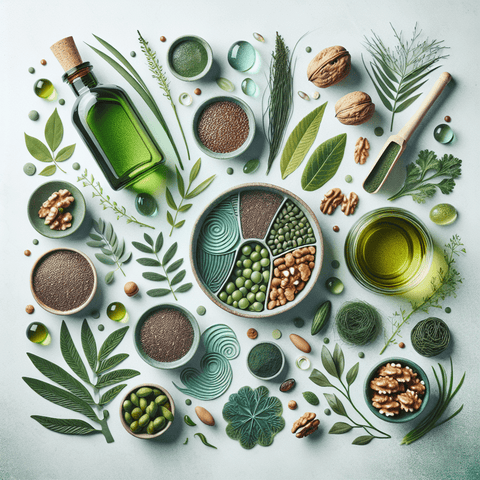
Vegan omega-3 sources are the plant-based foods and algae-derived supplements that supply omega-3 fatty acids without fish or fish oil. They matter because omega-3s are essential fats: the body cannot produce them efficiently, so they must come from food or, where relevant, from supplements. For vegans, vegetarians and anyone reducing their fish intake, knowing these sources is the foundation of planning omega-3 intake.
This page gives the broad overview: what omega-3 fatty acids actually are, which plant foods contain them, how ALA differs from EPA and DHA, where algae oil fits in, and how to use these sources in everyday meals. The individual guides listed under this tag then explore specific sources and questions in more depth.
What Are Omega-3 Fatty Acids?
Omega-3 fatty acids are a family of polyunsaturated fats. They are considered essential nutrients: the body cannot produce them efficiently on its own, so they must come from food or, where relevant, from supplements.
Three types matter most for understanding this topic:
- ALA (alpha-linolenic acid): the omega-3 found predominantly in plant foods such as flaxseed, chia and walnuts.
- EPA (eicosapentaenoic acid): a long-chain omega-3 that occurs mainly in marine sources, including oily fish and algae.
- DHA (docosahexaenoic acid): another long-chain omega-3, likewise found mainly in marine sources.
Because these three types are not interchangeable in practice, the distinction runs through everything else on this page.
The Main Vegan Omega-3 Sources
Plant-based omega-3 is spread across several food groups rather than coming from a single ingredient. The best-known vegan omega-3 sources are:
- Flaxseed, as whole or ground seeds or as flaxseed oil
- Chia seeds
- Hemp seeds and hemp seed oil
- Walnuts
- Edamame and kidney beans
- Seaweed and microalgae, including algae oil
- Plant oils such as canola (rapeseed) and perilla oil
Seeds and Nuts
Flaxseed, chia and hemp seeds are among the most concentrated plant sources of ALA, and all three adapt easily to everyday cooking. Ground flaxseed is often preferred to whole seeds, as whole flaxseeds can pass through digestion largely intact. Walnuts add a convenient whole-food option for snacking and salads. Ingredients like these also feature in our superfoods collection, alongside other nutrient-dense plant foods.
Algae and Sea Vegetables
Algae hold a special position among vegan omega-3 sources. Whole seaweeds such as nori and wakame, as well as microalgae like spirulina, do contain omega-3 fatty acids, but the amounts in a typical serving of seaweed are generally small. Microalgae oil is different: it is the direct plant-based source of EPA and DHA, which is why algae oil rather than seaweed itself forms the basis of most vegan omega-3 supplements.
Legumes and Plant Oils
Edamame, kidney beans and other legumes contribute modest amounts of ALA and help build omega-3 intake across a full day of eating. Plant oils such as canola (rapeseed) and perilla oil offer another route, commonly used in dressings and general cooking. These sources usually complement, rather than replace, the more concentrated seed and algae options.
ALA vs EPA and DHA: Why the Difference Matters
The key nuance in plant-based omega-3 nutrition is conversion. When you eat ALA from flaxseed, chia or walnuts, your body must convert part of it into EPA and DHA before those long-chain forms are available — and this conversion is known to be limited and to vary from person to person. A diet rich in ALA therefore does not automatically deliver the same EPA and DHA levels as marine sources.
For vegans, algae oil bridges that gap. Microalgae produce EPA and DHA at the base of the marine food chain, so algae-derived oil provides these long-chain omega-3s directly, without fish. That is what makes algae oil the most direct vegan alternative to fish oil, and it is why it dominates most discussions about the best vegan omega-3 option.
Vegan Omega-3 Supplements: Where Algae Oil Fits
Supplements come into the picture when food alone is impractical, or when a direct source of EPA and DHA is wanted. Algae-based omega-3 products are the plant-based counterpart to fish oil and are typically sold as softgels or liquids, with the EPA and DHA content per serving stated on the label.
When comparing products, the details worth checking include the amount of EPA and DHA per serving, the form of the oil, and whether capsules or a liquid better suit your routine. Our DHA and EPA omega-3 supplements collection gathers algae-based and other omega-3 products in one place.
As with any supplement, labels reward a careful read, and anyone unsure about what suits their situation — including during pregnancy or when taking medication — may want to consult a healthcare professional or registered dietitian.
Using Vegan Omega-3 Sources in Everyday Meals
One practical strength of vegan omega-3 sources is how easily they fit into ordinary meals:
- Stir ground flaxseed into smoothies, yogurt or porridge, or bake it into breads and muffins.
- Mix chia seeds with liquid for puddings, or use them to thicken sauces.
- Sprinkle hemp seeds over salads, cereals and baked dishes for a mild, nutty flavour.
- Add walnuts to snacks, muesli and savoury recipes.
- Use canola or perilla oil in dressings and everyday cooking.
- Use dried seaweed flakes as a finishing accent on salads and grain bowls.
- Take algae oil as a supplement in capsule or liquid form rather than as a frying oil.
A pattern many people find workable is combining a regular ALA source — for example, a spoonful of ground flaxseed or chia with a daily meal — and varying sources across the week rather than relying on one food. Because omega-6-rich oils are common in modern diets, keeping some balance between omega-6 and omega-3 intake is another consideration that often comes up in nutrition guidance.
Comparing Plant Sources with Animal Sources
Oily fish is often used as the benchmark for omega-3 because it delivers EPA and DHA directly. Eggs also come up in these comparisons: they contain small amounts of long-chain omega-3, with levels that vary depending on the hens' diet. How much a couple of eggs actually contributes to daily omega-3 intake is one of the common questions explored in more detail in the guides under this tag — and it is answered briefly in the questions below.
Plant foods work differently. They supply ALA, so vegan omega-3 planning typically combines ALA-rich foods with algae oil where direct EPA and DHA are wanted. That does not make plant sources less worthwhile — flaxseed, chia, hemp and walnuts also bring fibre, protein and other nutrients — but it does explain why the two approaches are usually planned in different ways.
Omega-3 Intake: Reference Values and Personal Needs
Public health authorities publish adequate intake values for omega-3 fatty acids, and these official reference values are the usual starting point for thinking about daily amounts. Supplement labels show the EPA and DHA content per serving, which makes it easier to see how a product fits alongside dietary sources. Because needs differ between individuals, there is no single figure that suits everyone.
Frequently Asked Questions
What Is the Best Vegan Omega-3?
There is no single answer that suits everyone, but algae oil is widely regarded as the most direct vegan source of omega-3, because microalgae produce EPA and DHA directly. ALA-rich foods such as flaxseed, chia, hemp and walnuts are valuable whole-food sources in their own right. Many plant-based eaters therefore combine the two: seeds and nuts as everyday foods, with algae oil where a direct source of EPA and DHA is wanted.
Are Two Eggs Enough Omega-3?
Eggs contain small amounts of long-chain omega-3, with levels that vary depending on the hens' diet. Two eggs therefore contribute a modest amount rather than a concentrated dose, and whether that is enough depends on the rest of the diet and on individual needs. The specialist guides under this tag look at this comparison in more detail.
What Are the Signs of Low Omega-3 Intake?
Changes such as dry or rough skin are sometimes mentioned in connection with low omega-3 intake. Such signs are nonspecific, can have many different causes, and are not a reliable indicator of omega-3 status on their own. Anyone who suspects their intake is low, or who has persistent concerns, is best advised to speak with a healthcare professional rather than self-diagnosing.
Choosing Between Foods and Supplements
Whole foods and supplements play complementary roles: ALA-rich foods contribute omega-3 alongside fibre and other nutrients, while algae oil supplies EPA and DHA directly. A few practical factors help when weighing the options:
- Variety: combining several ALA sources spreads intake across the week.
- Form: ground flaxseed is generally used in place of whole seeds, and seed oils are more perishable than the seeds themselves.
- Storage: flaxseed oil keeps best cool and fresh and is usually sold in dark bottles.
- Labels: comparing EPA and DHA content per serving makes products easier to evaluate.
- Personal context: pregnancy, medication use and existing health conditions are all reasons to seek professional advice before changing a supplement routine.
None of these points replaces individual guidance. They are simply the practical considerations that most often shape a sensible vegan omega-3 approach.
Exploring Vegan Omega-3 Further
This overview is the map of the topic. The articles collected under this tag go deeper into specific vegan omega-3 sources, compare supplement forms and answer individual questions in detail. Starting here gives you the context; the guides that follow supply the depth.