
Ontdekken van de factoren die de opname van vitamine B12 beïnvloeden betekent het traceren van de manier waarop deze voedingsstof wordt verwerkt, vanaf het eerste contact met het lichaam tot aan de uiteindelijke opname. Deze pagina benadrukt de vijf belangrijkste factoren die de opname van vitamine B12 bepalen en legt uit hoe elke fase de algehele route kan beïnvloeden. Door te focussen op het mechanisme in plaats van op de resultaten krijgen lezers een duidelijker beeld van waar variabiliteit kan ontstaan en wat onderzoekers onderzoeken bij het bestuderen van de opname. Vijf factoren die de opname van vitamine B12 beïnvloeden, zijn: 1) Beschikbaarheid en binding van intrinsieke factor—geproduceerd door gespecialiseerde cellen, vormt intrinsieke factor een complex met B12 dat wordt erkend voor opname. 2) Maagcondities—de zuurgraad en proteolytische omgeving in de maag beïnvloeden de vrijlating van B12 uit dragers-eiwitten en de daaropvolgende binding met intrinsieke factor. 3) Pancreatische en galondersteuning—de activiteit van pancreashormonen en galzouten helpt B12 vrij te maken van bindende moleculen en ondersteunt de vorming van het complex dat klaar is voor opname. 4) Ileale opname—het terminale ileum bevat receptoren die reageren op het B12-intrinsieke factorcomplex om transport in het lichaam mogelijk te maken. 5) Transport en cellulaire levering—het circulerende B12 wordt vervoerd door transcobalamine II en naar cellen gebracht via receptormedieerde opname, met componenten die recycling binnen het enterohepaat systeem ondersteunen. Expert-tips om de factoren die de opname van vitamine B12 beïnvloeden te navigeren, omvatten het in kaart brengen van hoe de vijf factoren in jouw specifieke situatie samenwerken, het overwegen van leeftijdsgebonden veranderingen in de productie van intrinsieke factor en de functie van het ileum, en het herzien van eerdere procedures of aandoeningen die het spijsverteringskanaal beïnvloeden. Het kan ook nuttig zijn om niet-invasieve beoordelingen te onderzoeken die inzicht geven in de efficiëntie van deze routes, en om bevindingen te bespreken met een gekwalificeerde professional die gespecialiseerd is in voedingswetenschap of gastro-enterologie. Het bijhouden van een duidelijk overzicht van vragen en resultaten kan bijdragen aan geïnformeerde discussies over verdere stappen. Het begrijpen van de factoren die de opname van vitamine B12 beïnvloeden, bouwt aan een kader voor voortdurende studie en discussie, en benadrukt waar variabiliteit vandaan komt en hoe de verschillende elementen van de route met elkaar verbonden zijn. Dit overzicht kan richtlijnen geven voor vragen en interpretatie van informatie met betrekking tot opname, en biedt de mogelijkheid om dieper te onderzoeken hoe het proces werkt bij verschillende personen. Door te focussen op de sleutelwoorden ‘vitamine B12 opname factoren’, kunnen lezers een consistent referentiepunt behouden terwijl ze betrokken raken bij gerelateerd onderzoek en expertperspectieven.
Vitamine B12-absorptiefactoren: 5 cruciale invloeden op je opname en hoe je ze kunt optimaliseren
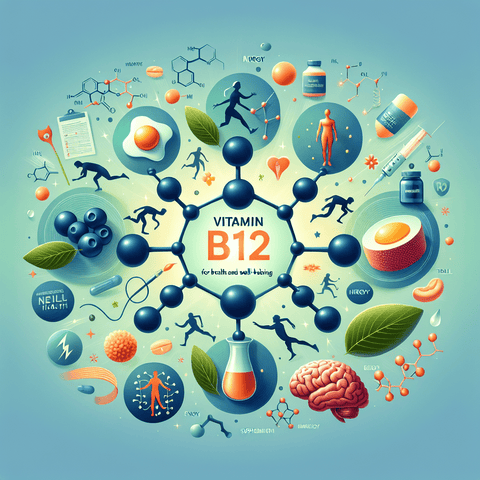
Vitamin B12 absorption factors determine how much of this essential vitamin actually reaches the body's cells. Because B12 passes through several distinct stages — from the stomach, through the small intestine, and into the bloodstream — a disruption at any point can influence overall uptake. Understanding these stages helps explain why some people absorb B12 efficiently from an ordinary diet while others may benefit from different forms, timings, or professional guidance.
This page provides a broad overview of the topic: how the absorption process works, which factors may hinder or deplete it, what tends to support it, and which signs are sometimes discussed in connection with poor absorption. More specific questions are explored in the related articles listed on this page.
How Vitamin B12 Absorption Works
Dietary B12 is bound to proteins in food, so the body must first separate the vitamin from those proteins before absorption can happen. Stomach acid and digestive enzymes begin this release, while haptocorrin — a binding protein present in saliva — temporarily attaches to the freed B12. Pancreatic enzymes and bile salts later release B12 from these binding molecules, leaving it ready for the next stage.
That stage involves intrinsic factor, a protein produced by specialized cells in the stomach lining. B12 attaches to intrinsic factor, and the combined complex travels to the terminal ileum — the last section of the small intestine — where specialized receptors enable absorption into the bloodstream. From there, the transport protein transcobalamin II carries B12 to cells throughout the body, while the enterohepatic recycling system helps conserve the body's supply.
Public-health resources such as the NIH Office of Dietary Supplements describe the same sequence. In practice, the pathway can be summarized as follows:
- Release from food protein — stomach acid and enzymes free B12 from the proteins it is bound to in food.
- Binding to haptocorrin — the freed B12 temporarily attaches to this carrier protein found in saliva.
- Pancreatic and biliary support — pancreatic enzymes and bile salts help liberate B12 from binding molecules.
- Intrinsic factor availability and binding — intrinsic factor forms a complex with B12 that is recognized for absorption.
- Ileal uptake — receptors in the terminal ileum interact with the B12–intrinsic factor complex, enabling transport into the body.
- Transport and cellular delivery — transcobalamin II carries circulating B12 to cells, while enterohepatic recycling helps conserve the body's supply.
Because each stage depends on the one before it, variability can arise at several points along the way. That is what makes the topic of absorption factors so practical: the same vitamin can be handled very differently depending on stomach acid levels, intrinsic factor availability, and the condition of the small intestine.
Factors That Can Block or Deplete Vitamin B12 Absorption
The factors most often associated with reduced B12 absorption share a common theme: each one interferes with a step in the pathway described above. Some lower stomach acid, some affect intrinsic factor, and others damage or bypass the part of the digestive tract where absorption actually takes place. The most frequently discussed factors include:
- Reduced stomach acid, including the natural decline frequently seen with advancing age
- Acid-lowering medications such as proton pump inhibitors (PPIs) and H2 blockers, which are associated with reduced B12 absorption
- Metformin, a medication widely used for blood sugar management, which may reduce B12 absorption over time
- Pernicious anemia, an autoimmune condition that affects the cells responsible for producing intrinsic factor
- Gastric or intestinal surgery, which can remove or bypass areas of the digestive tract needed for absorption
- Digestive conditions such as Crohn's disease and celiac disease, which can affect the gut lining, including the ileum
- Regular alcohol use, which may irritate the digestive tract and interfere with nutrient uptake
Several of these factors can occur at the same time, and their combined effect may be greater than any single one alone. Anyone taking a long-term medication that appears above should not stop or adjust it on their own — many people continue such medications safely while monitoring their B12 status with professional guidance.
What Helps Vitamin B12 Absorption
No habit guarantees better uptake, but several practical approaches are commonly suggested because they work with the body's natural absorption process rather than against it:
- Taking B12 with meals, since food intake stimulates the digestive activity involved in the absorption pathway
- Splitting larger doses into smaller amounts taken at different times of day
- Trying sublingual tablets or lozenges, formats that some people find convenient
- Looking at methylcobalamin, one of the B12 forms commonly used in supplements
Supplemental B12: Forms and Practical Considerations
Supplemental B12 differs from food-bound B12 in one important respect: it is not attached to food proteins. As a result, it does not depend on stomach acid in the same way as the B12 found in meat, fish, eggs, and dairy. This distinction is one reason supplemental B12 is so often discussed for people whose stomach acid or intrinsic factor production may be reduced.
Supplemental B12 appears in standalone products, B-complex formulas, and many multivitamins. For context on how B12 fits into broader supplement formulas, the guide to multivitamins explains how these products are structured and used.
To compare standalone options and B-complex combinations side by side, browse the full range of vitamin B supplements to see the different B12 formats available.
Signs That Vitamin B12 Absorption May Be an Issue
Because the body can store B12 for long periods, changes connected to absorption often develop gradually. Tiredness and weakness, neurological sensations such as tingling or numbness in the hands and feet, and appetite changes are among the signs sometimes associated with low B12. None of these signs is specific to B12 on its own — they can have many different causes — which is why they are best treated as prompts for professional assessment rather than grounds for self-diagnosis.
Questions about cravings also come up regularly in this context. Loss of appetite appears among the possible signs of low B12, while intense or unusual cravings are more often discussed in connection with other nutrient shortfalls. A healthcare professional can assess B12 status with blood tests and help determine whether absorption, dietary intake, or another factor best explains an individual situation.
Exploring Vitamin B12 Absorption Further
This page is designed as a topical starting point: it maps the absorption pathway and the main factors that influence it, while the related articles listed on this page go into greater depth on specific questions — such as how individual medications affect B12, what pernicious anemia involves, which deficiency signs are most frequently reported, and how different supplemental forms compare. Reading the overview first makes it easier to place those detailed discussions in context. Keeping a simple record of questions, symptoms, and any test results can also make conversations with a qualified healthcare professional more productive, and personalized decisions about testing or supplementation are best made together with such a professional.