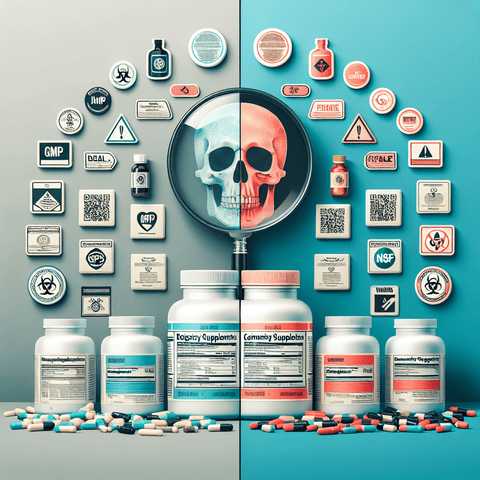
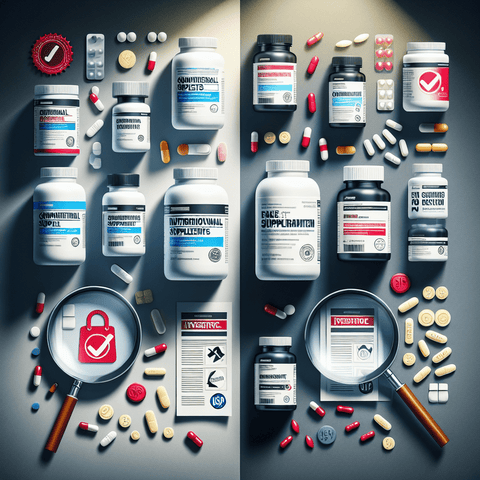
Spotting fake supplements is becoming an essential skill for anyone who takes vitamins, minerals, or herbal products. Counterfeit and low-quality supplements may contain little or none of the listed ingredient, incorrect dosages, harmful contaminants, or undeclared substances. This article explains the most common red flags of fake supplements, the health risks involved, how counterfeit products differ from merely poor-quality ones, and the practical steps you can take to verify a product before you buy.
What Are Fake Supplements and Why Is Spotting Fake Supplements So Important?
Supplements are regulated differently from medicines in most countries, which means products can reach the market without pre-market approval of their contents. A "fake" supplement is one that misrepresents what it contains: the label may list ingredients that are absent, present in far lower amounts than stated, or replaced with cheap fillers. Some counterfeit products are copies of legitimate brands; others are entirely fabricated products with no real manufacturer behind them.
The issue matters because people take supplements with a specific health purpose in mind — supporting bone health, filling a vitamin D gap, or maintaining adequate B12 intake on a plant-based diet. A product that does not contain what it claims provides no nutritional benefit and, in the worst cases, may actively cause harm through contamination or hidden pharmaceutical ingredients.
How Common Are Counterfeit and Adulterated Supplements?
Precise figures are difficult to establish, but regulatory agencies including the U.S. FDA and EU authorities regularly issue warnings, recalls, and import alerts related to adulterated or mislabeled supplements. Independent laboratory analyses have repeatedly found products — particularly those sold through unofficial online channels — that contain substantially less active ingredient than the label states, or none at all. Certain categories carry higher risk than others: weight-loss products, sexual enhancement products, bodybuilding supplements, and heavily discounted branded products sold by unauthorized sellers are among the most commonly counterfeited.
The Real Health Risks of Fake or Contaminated Supplements
The risks fall into three broad categories. First, nutritional failure: a product lacking its stated nutrients can lead to a continued — and unrecognized — deficiency, which is particularly concerning for nutrients like vitamin B12, iron, or vitamin D where low status has measurable health consequences. Second, contamination: fake products have been found to contain heavy metals, bacteria, unapproved stimulants, or even prescription drugs. Third, indirect harm: hidden ingredients can interact with medications, and undisclosed allergens can trigger reactions in sensitive individuals.
7 Red Flags That Tell You a Product Isn't Real
Unrealistic Claims Like "Cures," "Miracle," or Instant Results
Legitimate supplements cannot legally claim to cure, treat, or prevent disease. Language such as "miracle cure," "works instantly," "replaces medication," or dramatic before-and-after promises is a hallmark of fraudulent marketing. Real nutrients have defined physiological roles, and their effects are gradual and measurable — not overnight transformations.
Missing or Incomplete Supplement Facts Label
Every legitimate product must display a complete supplement facts panel listing serving size, each ingredient, the amount per serving, and the percent of the reference intake where applicable. A blurry, missing, or incomplete label is one of the clearest warning signs. Be equally wary of labels that list ingredients without quantities.
No Manufacturer Information, Address, or Contact Details
Reputable manufacturers state their name, business address, and a way to be contacted. If this information is absent, hidden behind a generic web form, or traceable only to a freight forwarder, there is no accountable party if something goes wrong — a defining feature of counterfeit operations.
Proprietary Blends That Hide Actual Ingredient Amounts
A "proprietary blend" lists several ingredients under a single total weight, without disclosing how much of each one is present. While not always fraudulent, this practice makes it impossible to verify whether active ingredients are included at meaningful doses. It also conveniently conceals products padded with cheap ingredients and only trace amounts of the expensive ones.
Suspiciously Low Prices and Too-Good-To-Be-True Deals
Deep discounts on well-known branded products from unknown sellers are a classic counterfeiting signal. Genuine branded supplements have production, testing, and distribution costs that set a price floor. A premium product offered at a fraction of its normal retail price through an unofficial channel usually means the product is expired, stored improperly, refilled, or entirely fake.
No Third-Party Testing, Certifications, or Batch Verification
Credible manufacturers often verify their products through independent laboratories and display certifications such as GMP (Good Manufacturing Practice), NSF, USP Verified, or Informed Choice. These are not guarantees on their own — logos can be faked — but their complete absence, or a refusal to provide a certificate of analysis when asked, is a meaningful red flag.
Poor Packaging Quality, Broken Seals, or Suspicious Online Sellers
Inspect what arrives: misaligned labels, spelling errors, flimsy containers, missing tamper-evident seals, or packaging that differs from the brand's official photos all suggest a counterfeit. When buying online, check the seller's history, reviews, and whether they are listed as an authorized retailer on the brand's own website.
Counterfeit vs. Low-Quality vs. Adulterated Supplements: What's the Difference?
These terms are often used interchangeably but describe different problems. A counterfeit product imitates a legitimate brand and typically misrepresents its contents entirely. A low-quality product may come from a real manufacturer but use cheap ingredient forms, imprecise dosing, or weak manufacturing controls — it contains what it says, just not well. An adulterated product contains undeclared substances, which may include banned stimulants, prescription drugs, or heavy metals. All three undermine trust and safety, but adulteration carries the most direct health risk, while counterfeits most often result in wasted money and unaddressed nutritional needs.
Where Fake Supplements Are Most Often Sold
Marketplaces, Social Media Ads, and Unverified Third-Party Sellers
Large online marketplaces mix products from official brands with those from thousands of third-party sellers, and inventory from different sellers can even be co-mingled in the same listing. Social media advertisements for "exclusive" supplements sold only through direct-message channels are a particularly common vector for counterfeit and adulterated products, precisely because they bypass retail oversight.
Why Buying Directly From Brands or Licensed Retailers Lowers Risk
Purchasing from the manufacturer's own website or an authorized retailer keeps the supply chain short and traceable. Established retailers, such as those stocking recognized brands like Nature's Plus supplements or Healthy Origins products, have direct relationships with manufacturers, proper storage conditions, and batch traceability — all of which dramatically reduce the likelihood of receiving a counterfeit product.
How to Verify a Supplement Brand Before You Buy
Checking Certifications: GMP, NSF, USP, Informed Choice, and Others
GMP certification indicates the product was manufactured under controlled quality standards. USP and NSF verification means an independent body has tested that the product contains the listed ingredients at stated amounts and is free from harmful contaminant levels. Informed Choice/Informed Sport certification is particularly relevant for athletes, as it screens for substances on banned-substance lists. You can usually verify certifications directly on the certifying organization's website.
Using Lot Numbers, Expiry Dates, and Manufacturer Verification Tools
Legitimate products carry a batch or lot number and a clear expiry date printed — not merely stuck on — in professional formatting. Many manufacturers offer verification tools where you can enter a lot number or scan a code to confirm authenticity. If the expiry date is missing, illegible, or implausibly distant (many years away for a perishable product like probiotics), step back.
Researching Recalls, Warning Letters, and Customer Complaints
Regulatory agencies publish recall notices and warning letters online, and these are searchable by brand name. A pattern of consistent complaints about product authenticity, sudden formulation changes, or multiple sellers reporting identical problems is informative. Equally, a long history free of regulatory action is a positive — though not conclusive — signal.
What a Legitimate Supplement Label Should Include
Supplement Facts Panel: Serving Size, Dosages, and Ingredient Forms
A compliant label specifies the serving size, the exact amount of each nutrient, the chemical form of the ingredient (for example, magnesium citrate versus magnesium oxide), and the percentage of the nutrient reference value. Transparent labeling of ingredient forms matters because forms differ in absorption and tolerability — a topic covered further in our magnesium guide.
Redundant Terms to Be Wary Of: "Proprietary Blend," Filler Ingredients, and Vague Claims
Beyond proprietary blends, watch for long lists of fillers and flow agents, "energy complex" or "immunity booster" language without specifics, and labels emphasizing exotic ingredients while burying the amounts. Transparency about exactly what is in the capsule and why is the mark of a trustworthy manufacturer.
Allergen Statements, Additives, and Hidden Ingredients
Legitimate products declare major allergens such as milk, gluten, soy, nuts, and shellfish, and note facility cross-contamination where relevant. Undeclared allergens in counterfeit products are a genuine safety hazard. Suspiciously short ingredient lists on complex formulas, or additive names you cannot find any information about, deserve scrutiny.
Why Fake Supplements Fail You Nutritionally
When the Label Doesn't Match What's Inside the Bottle
Laboratory analyses of counterfeit and adulterated products have found everything from rice flour substituted for active ingredients to doses hundreds of times below the label claim. The practical consequence is that someone taking a fake vitamin D or B12 product for a documented low level may see no improvement — and may delay proper nutritional support while believing they are addressing the problem.
How Poor-Quality Ingredients Affect Absorption and Bioavailability
Even when an ingredient is genuinely present, its form and quality determine how well the body absorbs it. Nutrient bioavailability varies meaningfully between chemical forms, and factors such as tablet disintegration, storage conditions, and ingredient purity all affect what your body actually receives. This is why credible multivitamin formulations specify forms and doses rather than hiding them behind blends.
What Real Supplements Can and Cannot Do for Your Health
Where Supplements Fit Alongside a Balanced Diet
A varied diet built on vegetables, fruits, whole grains, legumes, quality protein sources, and oily fish provides the vast majority of nutrients most people need, in forms the body absorbs efficiently. Supplements are intended to supplement — not replace — dietary intake.
Situations Where Nutritional Support May Be Considered, Such as Dietary Gaps, Restricted Diets, or Increased Needs
There are well-recognized situations where intake may fall short: vegan and vegetarian diets (B12, iron, zinc, omega-3), limited sun exposure (vitamin D), pregnancy (folate, iodine, vitamin D), older age (B12, vitamin D), and certain medical conditions or medications that impair absorption. In these contexts, supplementation may be a reasonable consideration, ideally guided by professional advice.
Why a Deficiency Should Be Confirmed Through Testing, Not Guesswork
Symptoms such as fatigue, poor concentration, or muscle cramps are non-specific and have many possible causes. For nutrients like vitamin D, B12, iron, and folate, validated blood tests exist and provide far more useful information than self-diagnosis. Testing prevents both unnecessary supplementation and the false reassurance of taking a product that may not be working — a particularly relevant concern when product authenticity is in question.
How to Choose a Genuine, High-Quality Supplement
Ingredient Forms and Bioavailability: What the Science Suggests
Research indicates that nutrient forms differ in absorption and tolerability. Chelated minerals are often gentler on the digestive system than simple salts, for example, and some vitamin forms require conversion in the body before use. Evidence comparing forms is strong for some nutrients and limited for others, so avoid products claiming one form is universally superior. Educational resources such as our vitamin D benefits and safety guide explain form and dosing considerations for individual nutrients.
Dosage: Why More Isn't Always Better
Higher doses do not necessarily produce proportionally greater benefits, and nutrients such as vitamin A, iron, and selenium have established upper intake limits beyond which adverse effects become possible. A legitimate product provides doses consistent with recognized nutritional reference values or research-supported ranges — not megadoses marketed as superiority.
Single Ingredients vs. Combination Products
Single-ingredient products make it easy to control intake and avoid exceeding upper limits; combination formulas offer convenience but can complicate dosing, particularly with minerals that interact with each other, such as iron and zinc. Choose based on your goal and what you can track accurately.
Capsules, Tablets, Powders, and Liquids: Which Format Suits You?
Formats differ mainly in convenience, stability, and tolerability. Capsules are often easier to swallow; tablets are compact and shelf-stable; powders suit people who dislike swallowing pills or want flexible dosing; liquids may suit children or those with absorption difficulties. Format does not determine authenticity — but consistent, professional packaging across formats is a quality signal.
Matching Products to Your Diet, Allergies, and Preferences
Check allergen declarations, capsule sources (gelatin versus plant-based), and additives against your dietary needs. If you follow a vegan diet, manage allergies, or take multiple supplements, verify compatibility carefully and consider consulting a professional.
Safety First: Interactions, Upper Limits, and When to Talk to a Professional
Medication Interactions and Health Conditions to Consider
Several nutrients and herbal ingredients interact with common medications: vitamin K can affect anticoagulants, and herbal products such as ashwagandha may not be appropriate alongside thyroid or sedative medications. People with kidney or liver conditions should be particularly cautious with unverified products, since counterfeit supplements may contain contaminants these organs must process.
Pregnancy, Children, and Older Adults: Extra Caution With Unverified Products
These groups have distinct nutritional requirements and lower tolerances for contaminants and dosing errors. For pregnancy in particular, nutrient needs change substantially and some nutrients become harmful in excess. Unverified or counterfeit products should never be used in these circumstances; consult a healthcare professional and use products from traceable, certified supply chains.
Your Quick Checklist for Spotting Fake Supplements Before Checkout
- Label completeness: Full supplement facts panel with serving size, doses, and ingredient forms.
- Manufacturer identity: Named company, physical address, and working contact details.
- Claims: No promises to cure, treat, or deliver instant results.
- Transparency: No hidden proprietary blends or unexplained ingredients.
- Verification: GMP, NSF, USP, or equivalent certification you can confirm independently.
- Traceability: Legible lot number and realistic expiry date.
- Price and seller: Prices consistent with the market and an authorized, reviewable seller.
- Physical checks: Intact tamper seals, professional packaging, no spelling errors.
- Track record: No unresolved recalls or regulatory warnings.
The Bottom Line: Buy Smarter, Supplement Wiser
Spotting fake supplements comes down to a consistent habit of scrutiny: read labels fully, verify manufacturers and certifications, question unrealistic claims and prices, and buy through channels with traceable supply chains. At the same time, remember that supplementation is a tool for specific situations — documented gaps, restricted diets, or increased needs — rather than a substitute for a varied diet or for testing when a deficiency is suspected. Individual nutritional needs differ based on age, diet, health status, and lifestyle, and what is useful for one person may be unnecessary for another. When in doubt, prioritize food first, verify product quality carefully, and seek professional guidance before starting anything new.
Key Takeaways
- Fake supplements may contain no active ingredient, wrong doses, contaminants, or undeclared substances.
- Major red flags include miracle claims, missing labels, hidden proprietary blends, absent manufacturer details, and suspiciously low prices.
- Counterfeit, low-quality, and adulterated products are distinct problems; adulteration poses the most direct health risk.
- Unverified marketplaces and social media sellers carry the highest counterfeit risk; authorized retailers and brand-direct purchases are safer.
- Third-party certifications (GMP, NSF, USP, Informed Choice) provide meaningful — though not absolute — quality assurance.
- Poor-quality or fake products can fail nutritionally, since ingredient form and bioavailability determine what your body actually absorbs.
- A balanced diet covers most nutritional needs; supplementation is most relevant for documented gaps, restricted diets, or increased needs.
- Suspected deficiencies should be confirmed through testing, not symptom guesswork.
- Pregnant women, children, older adults, and people on medication should exercise particular caution with unverified products.
- A short pre-purchase checklist — label, manufacturer, certification, lot number, seller — catches most warning signs.
Frequently Asked Questions
How can I tell if a supplement is fake?
Check for a complete supplement facts panel, named manufacturer with contact details, realistic claims, a legible lot number and expiry date, and intact tamper seals. Missing certifications, prices far below the normal retail range, and unknown sellers are strong warning signs.
Are supplements sold on large online marketplaces safe?
They can be, but risk is higher because third-party sellers are harder to vet and inventory can be co-mingled. Prefer listings sold and shipped by the brand or an authorized retailer, and verify the seller against the brand's official website.
What does "adulterated" mean on a supplement label?
Adulteration means a product contains substances not declared on the label, such as prescription drugs, stimulants, or contaminants like heavy metals. This is the most dangerous form of supplement fraud and a common reason for regulatory recalls.
Is a proprietary blend always a bad sign?
Not always, but it prevents you from verifying whether each ingredient is present at a meaningful dose. Reputable manufacturers increasingly disclose individual amounts precisely because transparency builds trust.
Do third-party certifications guarantee a product is genuine?
They substantially reduce risk because independent bodies verify contents and manufacturing standards, but logos can be faked. Confirm certifications on the certifying organization's own website rather than trusting the packaging alone.
Can fake supplements be dangerous, or just ineffective?
Both. Many are simply ineffective, but adulterated or contaminated products have been linked to serious harm, including liver injury, cardiovascular events, and dangerous drug interactions.
Why do counterfeiters target certain supplement categories?
Products promising weight loss, muscle gain, or sexual performance attract fraud because demand is high and buyers are motivated by results. Premium branded products sold at steep discounts are also frequent targets.
What should I do if I suspect I bought a fake supplement?
Stop using the product, keep the packaging and receipt, report it to the seller, platform, and your national food or drug regulatory authority, and consult a pharmacist or doctor if you have taken it and feel unwell.
Does a higher price mean better quality?
Not by itself. Price reflects branding and distribution as much as quality. What matters more is transparent labeling, verified certifications, and a traceable supply chain — a mid-priced certified product can outperform an expensive uncertified one.
How do I verify a lot number on a supplement?
Many manufacturers provide online verification tools or customer service channels where you can enter the lot number and confirm it matches a legitimate production batch. If a brand offers no way to verify its batches, that itself is informative.
Are expired supplements harmful?
Most vitamins lose potency rather than becoming toxic, but degradation is unpredictable, some products (like fish oils) can oxidize, and selling expired goods repackaged as fresh is a known counterfeit tactic. Always check dates carefully.
Should I test my nutrient levels before taking supplements?
For nutrients with validated tests — vitamin D, B12, iron, folate — testing is generally more reliable than guessing and helps avoid both unnecessary supplementation and missed deficiency. Discuss testing with a healthcare professional.
Related Keywords
- spotting fake supplements
- counterfeit supplements
- adulterated vitamins
- how to verify supplement authenticity
- supplement label red flags
- proprietary blend warnings
- third-party tested supplements
- GMP certified supplements
- supplement safety and quality
- buying vitamins online safely
- supplement bioavailability
- fake vitamin warnings
- supplement recalls and warnings
- choosing high-quality supplements