
Descubra los beneficios del recubrimiento entérico y cómo esta tecnología funciona como una capa protectora para ciertas formas de dosificación. Un recubrimiento entérico es una película delgada aplicada a tabletas o cápsulas que resiste la disolución en ambientes ácidos y permanece intacta hasta que alcanza una región de pH más alto en el tracto digestivo. Este comportamiento de liberación es una característica fundamental de la ciencia de formulación y se considera durante el diseño del producto. Con los beneficios del recubrimiento entérico en mente, los formuladores utilizan esta tecnología para proteger los componentes activos de una exposición temprana y para permitir propiedades de liberación controlada relacionadas con las condiciones de pH. El recubrimiento puede ayudar a separar la ubicación de la exposición inicial de las etapas subsecuentes, contribuyendo a un perfil de disolución definido que los técnicos pueden modelar y verificar durante el desarrollo. Los materiales comunes utilizados para los recubrimientos entéricos incluyen polímeros sensibles al pH, como derivados de celulosa (por ejemplo, HPMCP y HPMCAS), copolímeros a base de metacrilato, escuda y acetato de polivinilo ftalato. La elección del polímero, el grosor de la película y el método de aplicación influyen en cuándo y dónde comienza la disolución, así como en la integridad del recubrimiento durante el almacenamiento y manejo. Desde una perspectiva de fabricación y pruebas, propiedades como la uniformidad del recubrimiento, la adhesión y la integridad de la película son importantes. Las pruebas de disolución y las evaluaciones de estabilidad se utilizan para confirmar que el recubrimiento se comporta como se pretende en condiciones simuladas, prestando atención a cómo los factores ambientales pueden afectar el rendimiento. Esta sección resalta cómo el diseño del recubrimiento encaja en los objetivos generales de formulación y en los procesos de control de calidad.
Beneficios del recubrimiento entérico: Mejorar la absorción y reducir malestar estomacal
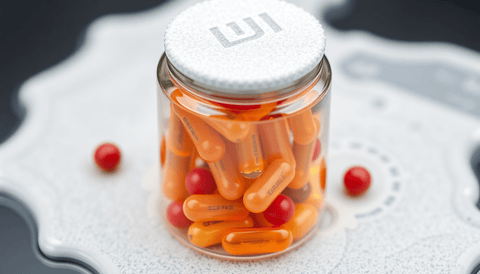
Enteric coating is a scientifically designed protective layer applied to oral medications and supplements. Think of it as a timed-release barrier that helps the active ingredient survive the harsh, acidic environment of your stomach and travel intact to the intestines, where the pH level is higher. This technology is not just a single technique but a core concept in formulation science, used to improve how certain products behave in the body.
This guide provides a broad overview of enteric coating, explaining its mechanism, its primary purposes, and key factors to consider. Whether you are curious about the medications you take or the science behind your supplements, this page will help you understand the role of this important pharmaceutical technology.
What Is Enteric Coating and How Does It Work?
An enteric coating is a thin film applied to a tablet or capsule. Its primary function is to control where in the digestive tract the contents are released. The coating is formulated with pH-sensitive polymers that do not dissolve in the strong acids of the stomach, which typically have a pH between 1 and 3. Instead, the coating only begins to break down when it encounters the less acidic (higher pH) environment of the small intestine, which is generally around pH 6 to 7.
This protective mechanism is a key feature of formulation science. It allows manufacturers to design products with specific release profiles. The choice of polymer, the thickness of the coating, and the manufacturing process all influence exactly where and when the active ingredient is released, ensuring the product functions as intended.
Common materials used to create these coatings include:
- pH-sensitive polymers like cellulose derivatives (e.g., HPMCP and HPMCAS).
- Methacrylate-based copolymers.
- Natural substances like shellac.
- Synthetic polymers such as polyvinyl acetate phthalate.
The Primary Benefits of Enteric Coating
The benefits of enteric coating are significant and address several practical concerns for both medications and supplements. The most well-documented advantages include:
- Reducing stomach irritation: For substances known to irritate the gastric lining, such as certain NSAIDs (like aspirin), the coating prevents direct contact with the stomach wall, which can significantly improve tolerability.
- Protecting active ingredients: It shields components that are sensitive to degradation by stomach acid, ensuring they remain stable and effective until they reach the intestines where they can be absorbed.
- Targeted release: The coating helps deliver active ingredients to a specific part of the digestive tract, which can be essential for drugs designed to act locally in the intestine or for those that are optimally absorbed there.
- Controlled dissolution: The coating enables a controlled and predictable dissolution profile, which is a quality that technicians can model and verify during the development and manufacturing process.
Enteric-Coated vs. Regular Tablets
The distinction between enteric-coated and regular (or immediate-release) tablets is a fundamental concept. A regular tablet begins to break down as soon as it is swallowed and dissolves in the stomach, which is ideal for fast absorption of the active ingredient into the bloodstream. However, this rapid release can be problematic for certain drugs.
Enteric-coated tablets, in contrast, are designed for a delayed release. They are engineered to remain intact in the stomach and disintegrate in the intestine. This provides a protective mechanism but also results in a longer time before the drug starts to take effect. The choice between these two forms depends on the specific properties of the medication and the therapeutic goals. A comprehensive comparison can help clarify the differences:
- Release Location: Enteric-coated tablets release in the intestines; regular tablets release in the stomach.
- Onset of Action: Enteric-coated tablets have a delayed onset; regular tablets have a quick onset.
- Primary Purpose: Enteric coating protects the stomach or the drug; regular tablets provide fast absorption.
- Effect on Stomach: Enteric-coated tablets reduce stomach upset; regular tablets may cause irritation.
Drawbacks and Important Considerations
While enteric coating provides important advantages, it is not without its limitations. Understanding these drawbacks is crucial for consumers and patients.
One of the most significant trade-offs is a delayed onset of action. Because the medication doesn't begin dissolving until it reaches the intestine, the therapeutic effect may not be felt as quickly as with a standard tablet. This can be an issue for medications taken for immediate relief, such as pain relievers. There is also potential for variable absorption, as the time food spends in the stomach and individual digestive patterns can affect how quickly the coated tablet moves into the intestine and dissolves.
Furthermore, the manufacturing process for enteric-coated products is more complex and costly, which can be reflected in the final price of the medication. Some individuals may also notice the coating is more difficult to swallow or that a coated tablet does not break down properly, which can sometimes lead to the active ingredient being released too late or not at all.
Practical Guidance for Consumers
If you are taking an enteric-coated medication, it is essential to follow specific guidelines to ensure it works correctly. The most important rule is not to crush, chew, or break the tablet, as this would destroy the protective coating and release the drug in the stomach, defeating its purpose.
Generally, enteric-coated tablets should be swallowed whole with a glass of water. It is also advisable to take them on an empty stomach, as food can delay the passage from the stomach into the intestine, further slowing the drug's absorption. Always follow the instructions provided by your healthcare provider or on the product label, and consult with a professional if you have any concerns about your medication or supplements.
This overview serves as a guide to understanding enteric coating. To learn more about the specific products that might benefit from this technology, you can explore our Topvitamine natural supplements or find more detailed information on specific nutrients in our multivitamins guide.