Impulsa la absorción de suplementos: domina la biodisponibilidad hoy


Aumenta la absorción de suplementos: domina la biodisponibilidad hoy mismo — aprende consejos respaldados por la ciencia para maximizar la absorción de nutrientes y obtener resultados más rápidos. Comprender la biodisponibilidad de los suplementos comienza con una definición clara: la biodisponibilidad de los suplementos es la fracción de una dosis administrada que está disponible en la circulación sistémica (o en el sitio de acción) después de la administración. Los investigadores distinguen entre la rapidez con la que ocurre la absorción (tasa) y la cantidad que se absorbe (extensión). Los puntos de referencia típicos incluyen parámetros farmacocinéticos como el área bajo la curva (AUC), la concentración máxima (Cmax) y el tiempo para alcanzarla (Tmax). Reconocer el metabolismo de primer paso y la distribución ayuda a comprender por qué algunas formas de un compuesto determinado muestran diferentes niveles de biodisponibilidad. La ciencia de la formulación determina la biodisponibilidad de los suplementos. Propiedades como la solubilidad y la velocidad de disolución influyen en gran medida en la absorción. Reducir el tamaño de partículas, seleccionar formas que mejoren la solubilidad o usar transportadores lipídicos puede modificar la disponibilidad de un compuesto en el cuerpo. Técnicas como dispersión sólida, emulsiones, liposomas y la formación de complejos con ciclodextrinas son comúnmente discutidas en relación con la biodisponibilidad de los suplementos. Los excipientes y los métodos de fabricación añaden variables adicionales que pueden alterar la disolución y la cinética de absorción, incluso antes de que intervengan los factores biológicos. Factores fisiológicos y ambientales influyen en la biodisponibilidad de los suplementos. La biología individual importa: el pH gástrico, el tiempo de vaciado gástrico, el tránsito intestinal y la permeabilidad a través del revestimiento intestinal determinan la cantidad y la rapidez de absorción. La actividad enzimática en el intestino y el metabolismo de primer paso pueden modificar lo que llega a la circulación sistémica. Las interacciones con otros ingredientes o compuestos co-administrados pueden influir en la absorción, lo que subraya la necesidad de diseños de estudio sólidos al evaluar la biodisponibilidad de los suplementos. Medir e interpretar la biodisponibilidad de los suplementos implica una variedad de enfoques. Los científicos utilizan métodos in vitro y en vivo para evaluar la disolución, permeabilidad y perfiles farmacocinéticos. Conceptos como la biodisponibilidad absoluta y relativa ayudan a comparar productos y formulaciones. Los enfoques de modelado, como la farmacocinética fisiológicamente basada (PBPK), proporcionan marcos para predecir cómo los cambios en la formulación podrían alterar la absorción, permitiendo una interpretación rigurosa de los resultados sin exagerar los posibles efectos.


Vitamin Absorption: How to Maximize Nutrient Uptake for Better Health - Topvitamine
02 de September, 2025
La biodisponibilidad de los suplementos indica qué cantidad de un nutriente se absorbe y queda disponible para el organismo. En esta guía descubrirás las diferencias entre vitaminas hidrosolubles y liposolubles, cómo influyen las comidas, la forma del ingrediente, la salud digestiva y las interacciones entre nutrientes. También encontrarás criterios para elegir suplementos y respuestas a dudas frecuentes sobre absorción, combinaciones y seguridad.
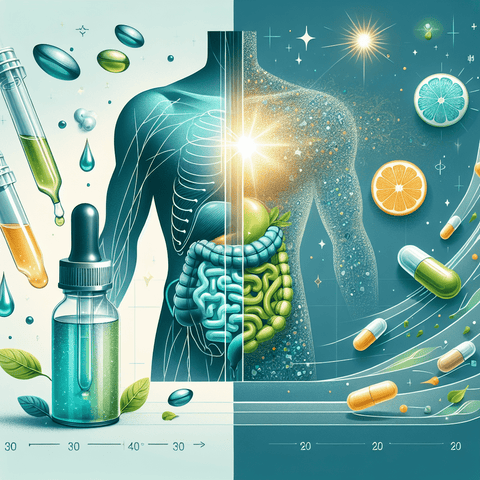
Do Liquid Supplements Work Faster Than Capsules? A Breakdown of Absorption and Effectiveness - Topvitamine
29 de August, 2025
Los suplementos líquidos pueden ser más fáciles de tomar y, en determinadas formulaciones, liberar algunos nutrientes antes que una cápsula. Sin embargo, no siempre ofrecen mayor biodisponibilidad ni mejores resultados: influyen la forma química, la dosis, la alimentación y las necesidades individuales. Esta guía compara ambos formatos, explica cuánto se absorbe realmente un suplemento y ofrece criterios prácticos para elegirlo con seguridad.
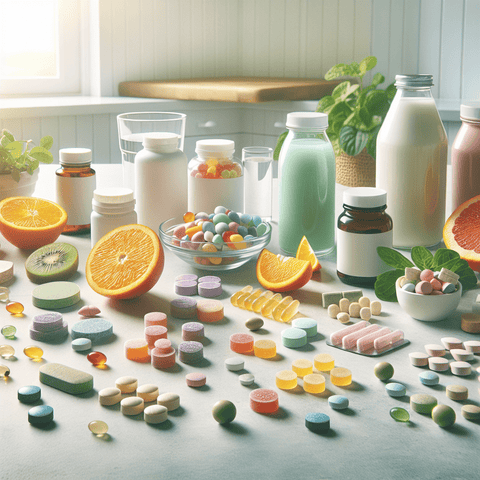
Are Chewable Supplements as Effective as Capsules or Pills? - Topvitamine
27 de August, 2025
Los suplementos masticables pueden ser tan útiles como las cápsulas cuando aportan el mismo nutriente y dosis, pero el formato no determina por sí solo la absorción. La biodisponibilidad depende de la sustancia, la formulación, la alimentación y las características de cada persona. Esta guía compara ambos formatos, explica sus ventajas y limitaciones y ofrece criterios prácticos para elegir vitaminas masticables, cápsulas u otras alternativas.
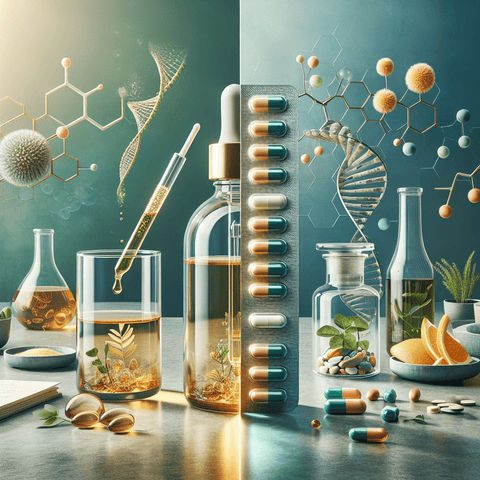
Are Liquid Supplements More Effective Than Pills? - Topvitamine
27 de August, 2025
Los suplementos líquidos no son automáticamente más efectivos que las pastillas. La absorción y la biodisponibilidad dependen del nutriente, la formulación, la dosis, los alimentos y las características de cada persona. Este artículo compara ambos formatos, explica cuándo puede ser útil un líquido, qué ventajas ofrecen las cápsulas y qué revisar en la etiqueta, el almacenamiento y las posibles interacciones antes de elegir.

Understanding the bioavailability of supplements is key to getting the most from your nutritional routine. In simple terms, it’s the proportion of a nutrient you consume that actually reaches your bloodstream and is available for your body to use. A supplement can contain a high dose of a vitamin, but if its bioavailability is low, your body may only absorb a fraction of that amount.

This page provides a broad overview of what bioavailability means, why it varies between different products, and the main factors that influence how well your body absorbs nutrients from supplements.

What Does Bioavailability Mean?

In pharmacology and nutrition, bioavailability is defined as the fraction of an administered dose that reaches systemic circulation in an unchanged form. When you take a supplement orally, the nutrient must be released from the pill or capsule, dissolve in digestive fluids, and be absorbed across the intestinal wall before it can enter the bloodstream.

Two key terms are used to describe this process: the rate of absorption, which is how quickly the nutrient enters the bloodstream, and the extent of absorption, which is the total amount that ultimately makes it through. Scientists often measure bioavailability using pharmacokinetic parameters like the area under the curve (AUC), maximum concentration (Cmax), and time to reach that peak concentration (Tmax).

It’s also important to consider first-pass metabolism. After absorption, nutrients pass through the liver before reaching general circulation, and a portion may be metabolized or excreted during this first pass. This process, alongside natural variations in digestion and metabolism, is why different forms of the same nutrient can have significantly different bioavailability profiles.

Why Does Bioavailability Vary?

Bioavailability is not a fixed property of a nutrient; it’s influenced by a complex mix of formulation science and individual biology. Understanding these variables helps clarify why you might absorb more of one supplement than another, even if the labels look similar.

Formulation and Delivery

The way a supplement is manufactured plays a major role in its bioavailability. Key factors include:

  • Solubility: Nutrients that dissolve easily in water are generally absorbed better than those that are poorly soluble.
  • Particle Size: Reducing the particle size of a nutrient increases its surface area, which can speed up dissolution and improve absorption.
  • Delivery Systems: Advanced technologies like liposomal encapsulation, emulsions, and cyclodextrin complexation are designed to protect nutrients and enhance their uptake.
  • Excipients: Other ingredients used in the manufacturing process can also influence how quickly a tablet or capsule breaks down and releases its contents.

Individual Physiological Factors

Your own digestive system has a significant impact on how much of a nutrient you absorb. Several internal factors can affect bioavailability:

  • Gastric pH: The acidity of your stomach can affect how well certain nutrients dissolve.
  • Gastric Emptying Time: How quickly food and supplements move from your stomach into the small intestine.
  • Intestinal Transit Time: The speed at which contents move through your intestines, which affects the time available for absorption.
  • Intestinal Permeability: The health and integrity of your intestinal lining, which determines how easily nutrients can pass through.
  • Digestive Enzymes: The presence and activity of enzymes that help break down food and release nutrients for absorption.

Nutrient Interactions and Timing

What you consume alongside a supplement can also influence its bioavailability. Some nutrients are better absorbed when taken with food, particularly meals containing fats. For example, the fat-soluble vitamins—A, D, E, and K—are generally better absorbed when ingested with a source of dietary fat.

Conversely, certain minerals can compete with each other for absorption. For example, taking high doses of zinc and calcium at the same time might reduce the absorption of one or both. This is why it's often recommended to take certain supplements at different times of the day, though the specific guidance can vary depending on the nutrients involved.

How Bioavailability Is Measured

Scientists use a range of laboratory methods to assess the bioavailability of a supplement. These include in vitro tests that simulate digestion and absorption, as well as in vivo studies that measure nutrient levels in the blood after consumption.

Two important concepts are used in these evaluations: absolute bioavailability, which compares oral intake to intravenous administration, and relative bioavailability, which compares one form or formulation to another. Advanced computational models, such as Physiologically Based Pharmacokinetics (PBPK), are also increasingly used to predict how changes in a formulation might affect absorption in the body.

Key Takeaways for Supplement Users

When choosing a supplement, focusing on bioavailability can make a difference. Here are a few practical points to consider:

  • Look for high-quality brands that use forms of nutrients with documented absorption profiles.
  • Consider the delivery format. Some nutrients may be better absorbed in liquid, powder, or liposomal forms rather than standard tablets.
  • Be aware of potential interactions between nutrients, and separate your supplement doses if needed.

To learn more about specific nutrients, explore our guides on natural supplements, multivitamins, and mineral supplements to better understand which forms may be right for you.

Frequently Asked Questions

Below are some general questions people often ask about supplement absorption. For more detailed answers, please refer to our dedicated blog articles.

What two vitamins cannot be taken together?

Many vitamins and minerals can interact, potentially affecting absorption. For example, high doses of zinc can interfere with copper absorption, and calcium can reduce iron absorption if taken at the same time. It's often recommended to take these nutrients at different times of the day to avoid competition.

How much of a supplement do you actually absorb?

The amount absorbed varies significantly based on the nutrient type, its formulation, and your individual biology. Bioavailability can range from nearly 100% for some water-soluble vitamins to much lower for certain minerals or poorly soluble compounds. There is no single answer that applies to all supplements.

Can I take 5 different vitamins at once?

Taking multiple vitamins at once is common and often safe with a standard multivitamin. However, taking several high-dose individual supplements together may increase the risk of nutrient interactions affecting absorption. It's generally advisable to take fat-soluble vitamins (A, D, E, K) with a meal and to consider separating doses of minerals that compete for absorption. For personalized advice, consulting a healthcare professional is recommended.

Do you actually absorb vitamins from supplements?

Yes, your body does absorb vitamins from supplements. The efficiency of absorption depends on many factors discussed above, including the supplement's form and how you take it. We strive to provide products from reputable brands that use well-absorbed forms of nutrients.