Síntesis de Colágeno Desmitificada: Cómo tu Cuerpo Construye una Piel y Articulaciones Más Fuertes


La síntesis de colágeno describe una secuencia cuidadosamente coreografiada que comienza en el núcleo de la célula con la transcripción del gen COL y termina con fibras de colágeno maduras en la matriz extracelular. El proceso comienza cuando se produce ARN mensajero para las cadenas alfa de colágeno, que se traducen en preprocolágeno. En el retículo endoplásmico rugoso, las residuos de prolina y lisina son hidroxilados, y se unen azúcares en patrones que ayudan en la formación de la triple hélice. Las tres cadenas alfa se ensamblan en trímeros de procollágeno, con extensiones no helicales llamadas propeptidos en cada extremo que evitan el ensamblaje prematuro. El procollágeno se secretan en el espacio extracelular, donde enzimas eliminan los propeptidos para formar tropocolágeno, que luego se autoensambla en microfibrillas y, en última instancia, en fibrillas de colágeno de mayor tamaño. La lisil oxidasa cataliza los enlaces cruzados entre las moléculas de tropocolágeno, estabilizando las fibras dentro de la matriz extracelular. A través de los tejidos, la síntesis de colágeno progresa de manera específica según el tipo, con los tipos de colágeno I, II y III proporcionando arquitecturas fibrosas distintas. Por qué importa la síntesis de colágeno está relacionada con la estructura de los tejidos. En la piel y las articulaciones, las redes de colágeno confieren resistencia a la tracción y resistencia a la deformación, permitiendo la resiliencia bajo carga mecánica. El equilibrio general de la síntesis de colágeno—producción, ensamblaje y renovación—modela cómo las matrices extracelulares son remodeladas durante el desarrollo, el envejecimiento y el mantenimiento continuo de los tejidos. El proceso implica una regulación coordinada en múltiples niveles, desde la expresión génica hasta las modificaciones postraduccionales y el ensamblaje extracelular, lo que subraya la naturaleza interconectada de la biología celular y de la matriz. Comprender los pasos de la síntesis de colágeno también implica reconocer a los actores clave. Enzimas que modifican residuos de colágeno, enzimas que procesan el procollágeno en tropocolágeno y enzimas que crean enlaces cruzados en las fibras maduras contribuyen a la arquitectura final. La investigación a menudo se centra en distinguir las vías del colágeno tipo I, II y III y en seguir cómo diferentes tejidos ajustan su síntesis a sus necesidades. Las técnicas utilizadas para estudiar la síntesis de colágeno examinan la expresión génica, el procesamiento de proteínas, la actividad enzimática y la organización extracelular de las fibrillas de colágeno, proporcionando una visión integral de cómo esta síntesis se desarrolla desde el gen hasta la matriz. Consejos prácticos para profundizar en la comprensión de la síntesis de colágeno: construir una línea de tiempo clara desde la transcripción del gen COL hasta las fibras de colágeno maduras; mapear la secuencia de modificaciones postraduccionales y procesamiento de propeptidos; diagramar cómo el procollágeno se convierte en tropocolágeno y se ensambla en fibrillas con enlaces cruzados; comparar cómo difieren los tipos I, II y III en su ensamblaje y organización en red; seguir cómo la regulación en niveles de transcripción y enzimáticos influye en el avance de la síntesis; y usar datos de imagen o proteómicos para conectar eventos en compartimentos celulares y en el espacio extracelular.


Vitamin C and Collagen Synthesis: The Ultimate Guide (2026) - Topvitamine
19 de October, 2026
Vitamin C is essential for collagen synthesis, acting as a cofactor for enzymes that stabilize collagen structure. This in-depth guide explains the biochemical mechanisms, compares dietary versus topical vitamin C, reviews scientific evidence, and offers practical tips for optimizing your vitamin C intake for skin health and beyond. Whether you're considering supplements or dietary changes, you'll find evidence-based answers here.
What are Vitamin C thieves? - Topvitamine
09 de February, 2026
Qué agota la vitamina C incluye principalmente el tabaquismo, una alimentación poco variada y ciertas situaciones que aumentan las necesidades del organismo. En este artículo encontrarás señales de posible deficiencia, alimentos ricos en vitamina C y otros antioxidantes, referencias diarias para adultos y consejos prudentes sobre suplementos. La alimentación debe ser la base, y los complementos no sustituyen la valoración médica.
What is vitamin C good for? - Topvitamine
09 de February, 2026
La vitamina C es un nutriente esencial que participa en la formación de colágeno, el funcionamiento normal del sistema inmunitario y la absorción del hierro. En este artículo explicamos sus beneficios respaldados, sus principales fuentes alimentarias, cuándo puede tener sentido valorar un suplemento y qué precauciones conviene considerar. También aclaramos conceptos sobre el microbioma intestinal, Bacteroides, Firmicutes y Bacteroidetes.
What does vitamin C do to your muscles? - Topvitamine
20 de December, 2025
La vitamina C en los músculos participa en la síntesis de colágeno, el funcionamiento normal del sistema inmunitario y la protección frente al estrés oxidativo. Puede contribuir a la recuperación de tejidos, aunque no sustituye una alimentación suficiente, proteínas, descanso ni una planificación adecuada del entrenamiento. Descubre qué alimentos la aportan, cuándo valorar un suplemento, qué dosis se utilizan habitualmente y qué precauciones conviene tener en cuenta.
What does vitamin C do to your intestines? - Topvitamine
11 de November, 2025
La vitamina C participa en la formación de colágeno, el funcionamiento normal del sistema inmunitario y la protección antioxidante. En cantidades habituales suele tolerarse bien, pero los suplementos en dosis elevadas pueden provocar diarrea, gases o cólicos porque parte del nutriente queda sin absorber. Descubre su relación con el intestino, qué forma puede resultar más suave y cuándo conviene consultar a un profesional.
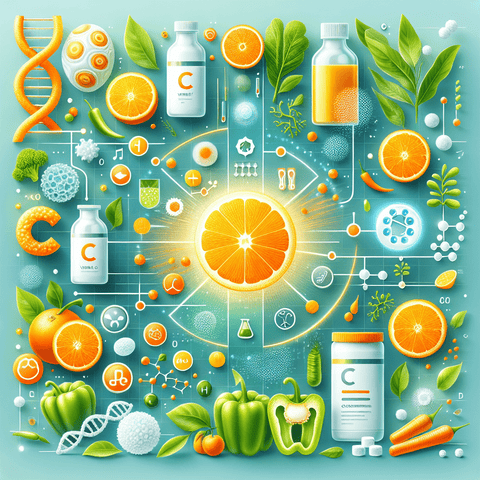
What happens to my body if I take vitamin C? - Topvitamine
01 de November, 2025
Tomar vitamina C puede contribuir al funcionamiento normal del sistema inmunitario, la formación de colágeno, la protección de las células frente al estrés oxidativo y la absorción del hierro. En este artículo explicamos qué ocurre en el organismo, qué alimentos la aportan, cuándo puede ser útil un suplemento y qué precauciones conviene tener con las dosis altas. También aclaramos las dudas más frecuentes sobre antioxidantes.

Collagen synthesis is the biological process by which the body produces collagen — the main structural protein in skin, joints, tendons, bones and other connective tissues. Because collagen forms much of the framework that keeps these tissues strong and resilient, the topic is relevant to anyone interested in skin health, joint function, nutrition or healthy aging.

This page provides a broad map of the subject: what collagen synthesis is, why it matters, how the process works step by step, which amino acids and nutrients are involved, and which habits may support or affect it. The individual articles collected under this tag then explore specific aspects of the topic in greater depth.

What Is Collagen Synthesis?

Collagen synthesis, also called collagen biosynthesis, is the sequence of biological steps that turns genetic instructions into mature collagen fibers. It is a continuous cycle: the body constantly produces new collagen to replace older fibers that are broken down during normal tissue turnover.

The process takes place in two broad phases — one inside the cell, where collagen molecules are assembled, and one outside the cell, where those molecules are modified and woven into stable fibers. Because every step depends on specific enzymes and raw materials, collagen synthesis is closely tied to nutrition. A shortage of particular amino acids, or of vitamin and mineral cofactors, can influence how efficiently the process runs. That connection is one reason the topic attracts attention in both scientific research and everyday supplement discussions.

Why Collagen Synthesis Matters

Collagen networks give skin, joints and other connective tissues their tensile strength — the ability to resist stretching and deformation under mechanical load. This structural role is the main reason collagen is so closely associated with conversations about firm skin, flexible joints and resilient tissue.

Equally important is turnover. Collagen is continuously produced, degraded and remodeled, and the balance between those processes shapes how the extracellular matrix adapts during development, aging and everyday tissue maintenance. How tissue looks and performs therefore depends not only on how much collagen is present, but on how well the entire synthesis-and-renewal cycle is working.

How the Collagen Synthesis Process Works

The pathway from gene to finished fiber follows a well-defined sequence. It is easiest to follow when divided into the intracellular phase, which takes place inside the cell, and the extracellular phase, which takes place in the surrounding matrix.

Inside the Cell: Building Procollagen

  1. Transcription: collagen genes (COL genes) are activated in the cell nucleus, producing messenger RNA for collagen alpha chains.
  2. Translation: the messenger RNA is used to build preprocollagen peptide chains on the rough endoplasmic reticulum.
  3. Modification: enzymes hydroxylate selected proline and lysine residues, and sugar groups are attached in patterns that help the chains assemble.
  4. Assembly: three alpha chains wind together into a triple helix, forming procollagen. Non-helical extensions called propeptides sit at each end and prevent premature fiber formation while the molecule is still inside the cell.

Outside the Cell: From Procollagen to Mature Fibers

  1. Secretion: procollagen is transported out of the cell into the extracellular space.
  2. Processing: enzymes remove the propeptides, converting procollagen into tropocollagen.
  3. Assembly: tropocollagen molecules self-assemble into microfibrils and then into larger collagen fibrils.
  4. Cross-linking: the enzyme lysyl oxidase catalyzes cross-links between tropocollagen molecules, stabilizing the mature fibers within the extracellular matrix.

Viewed end to end, collagen synthesis is coordinated at several levels at once: gene expression, post-translational modification, secretion and extracellular assembly. This layered organization is also why researchers study the process through gene activity, enzyme function and fiber structure together, rather than by looking at any single step in isolation.

Common Types of Collagen

Collagen synthesis proceeds in a type-specific manner: different tissues produce different collagen types, each with its own fibrous architecture. Three types account for most of the collagen in the body:

  • Type I — the most abundant form, commonly found in skin, bones, tendons and ligaments.
  • Type II — the primary collagen of cartilage.
  • Type III — commonly found in skin, muscles and the walls of blood vessels.

Because each type has its own assembly characteristics, research on collagen synthesis often distinguishes between the type I, II and III pathways when studying how particular tissues build and maintain their extracellular matrices.

Key Amino Acids for Collagen Production

Collagen chains are unusually rich in a small group of amino acids. Four of them recur throughout discussions of collagen synthesis:

  • Glycine — the smallest amino acid, which appears repeatedly along the chain and allows the triple helix to pack tightly.
  • Proline — an abundant amino acid in collagen that contributes much of the helix's rigidity.
  • Hydroxyproline — formed inside the body when proline residues are hydroxylated; it helps stabilize the triple-helix structure.
  • Arginine — present in collagen chains and involved more broadly in the body's protein metabolism.

The body can produce most of these amino acids itself, but dietary protein remains the primary source of the raw materials. That connection is a key reason adequate protein intake is so often emphasized in discussions of collagen and connective tissue health.

The Role of Vitamin C, Zinc and Copper

Collagen synthesis also depends on nutrient cofactors — substances that allow the enzymes in the pathway to function. Vitamin C is the best-known example, and the vitamin most closely associated with collagen synthesis: it supports the enzymes that hydroxylate proline and lysine, the modification steps that prepare collagen chains for triple-helix formation. For readers who want to review products in this area, our vitamin C supplements collection gathers relevant options in one place.

Trace minerals play supporting roles as well. Copper is involved in the function of lysyl oxidase — the enzyme that creates the cross-links stabilizing mature fibers — while zinc contributes to broader aspects of protein synthesis and tissue maintenance. Our mineral supplements range covers both of these minerals.

How to Support Collagen Synthesis

Because the process relies on amino acids and nutrient cofactors, the most commonly cited ways to support collagen synthesis are grounded in everyday diet and lifestyle:

  • Eat adequate protein, so the body has access to glycine, proline and the other amino acids collagen requires.
  • Include vitamin C-rich foods, such as fruit and vegetables, to support the hydroxylation steps.
  • Keep the diet varied enough to cover trace minerals, including zinc and copper.
  • Maintain healthy sleep patterns, since tissue maintenance and renewal are continuous processes.

Collagen peptides, amino acid formulas and collagen-supporting nutrient supplements are also widely marketed. Some people find them a convenient addition to a balanced routine, and our amino acid supplements range includes products relevant to protein intake. Keep in mind that evidence for specific outcomes varies between products and individuals, and supplements are not a substitute for a balanced diet. Anyone considering them — particularly during pregnancy, while taking medication or when managing a health condition — may want to discuss the options with a healthcare professional first.

Habits That May Affect Collagen

Alongside supportive habits, several lifestyle factors are associated with faster collagen breakdown or reduced formation. Frequently cited examples include:

  • Smoking, which is linked to reduced collagen formation and increased breakdown in the skin.
  • Excessive UV exposure, which can damage existing collagen fibers and is widely recognized as a key contributor to premature skin aging.
  • Diets high in sugar, which are associated with the formation of advanced glycation end products (AGEs) that can make collagen fibers stiffer and less functional.
  • Chronic poor sleep, which may interfere with the body's normal repair and renewal processes.

These factors do not act in isolation, and individual outcomes vary. Even so, moderating them is a sensible, low-risk starting point for anyone interested in protecting their existing collagen.

Frequently Asked Questions About Collagen Synthesis

What does collagen synthesis do?

Collagen synthesis produces and renews the collagen fibers that form the structural framework of skin, joints, tendons, bones and blood vessels. This ongoing process gives tissues their tensile strength and resilience, and it drives the continuous remodeling that keeps the extracellular matrix functional throughout life.

Does collagen synthesis really work?

Collagen synthesis is a natural biological process, not a marketing concept — the body continuously builds, modifies and remodels collagen. Whether a specific product or routine meaningfully increases it is a separate question: supplying adequate protein, vitamin C and key minerals gives the process the raw materials it needs, while evidence for individual supplements varies.

How can I increase collagen synthesis?

Practical steps include eating enough protein to supply amino acids such as glycine and proline, getting sufficient vitamin C, zinc and copper, protecting skin from excessive UV exposure, avoiding smoking and prioritizing good sleep. Anyone considering collagen supplements should weigh the evidence and consult a healthcare professional where appropriate.

Which vitamin promotes collagen synthesis?

Vitamin C is the vitamin most closely associated with collagen synthesis. It supports the enzymes that hydroxylate proline and lysine — the steps that prepare collagen chains for triple-helix formation. Trace minerals such as zinc and copper play supporting roles in the pathway as well.

Collagen synthesis sits at the crossroads of cell biology, nutrition and everyday habits. The sections above provide the broad map of the topic; the articles associated with this tag examine individual parts of that picture in more detail, so you can go deeper wherever your questions lead.