Porcentajes de Valor Diario: Decodifica las Etiquetas Nutricionales y Toma Decisiones Más Inteligentes


Los porcentajes de valor diario en las etiquetas de nutrición traducen las cantidades de nutrientes en un punto de referencia familiar. El %VD (porcentaje del valor diario) comunica cuánto de la cantidad diaria recomendada se proporciona por porción para varios nutrientes. Las etiquetas hacen referencia a un conjunto de Valores Diarios que reflejan las recomendaciones actuales, ayudándole a interpretar los números sin necesidad de conocer las cantidades de referencia exactas detrás de cada nutriente. Entender cómo se calculan los porcentajes de valor diario puede hacer que la lectura de las etiquetas sea más sencilla. El %VD equivale a la cantidad por porción dividida por el valor diario del nutriente, multiplicada por 100. Si un producto muestra un 25 %VD para un nutriente dado, la porción proporciona aproximadamente una cuarta parte del valor diario para ese nutriente. Algunos nutrientes tienen valores diarios establecidos, mientras que otros pueden estar listados con diferentes unidades o sin porcentaje si no se ha establecido un VD en la etiqueta. Al comparar alimentos rápidamente, los porcentajes de valor diario pueden ser una ayuda útil. Escanea el %VD de los nutrientes que te importan; un mayor %VD por porción indica más cantidad de ese nutriente en relación con el valor diario estándar. Para los nutrientes que deseas limitar, como el sodio o los azúcares añadidos, puede ser preferible un %VD menor, mientras que para los nutrientes de los que quieres obtener más, un %VD mayor puede ser instructivo. Ten en cuenta que el %VD depende del tamaño de la porción, por lo que las comparaciones deben hacerse entre productos con cantidades similares. Utilizar los porcentajes de valor diario para guiar las elecciones puede apoyar decisiones más rápidas y eficientes durante las compras o la planificación. El %VD proporciona un punto de referencia consistente entre productos, permitiendo juicios más rápidos de un vistazo. Recuerda que los valores diarios son guías generales y pueden actualizarse con el tiempo, y algunas etiquetas pueden presentar el %VD de manera diferente si están alineadas con un estándar de referencia más reciente.


How to Read Supplement Labels Like a Pro: A Simple Guide - Topvitamine
02 de August, 2025
Aprender cómo leer etiquetas de suplementos te ayuda a comparar productos y entender qué contiene realmente cada porción. Esta guía explica el tamaño de la porción, la lista de ingredientes, los valores de referencia de nutrientes y los porcentajes del valor diario. También aborda alérgenos, formas de los nutrientes, fechas de caducidad, declaraciones de calidad y precauciones para evitar duplicidades o dosis inadecuadas.
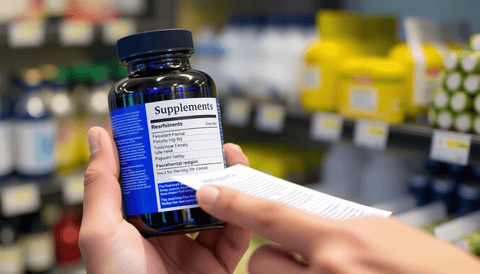
How to Read a Supplement Label: A Complete Guide for Topvitamine Buyers - Topvitamine
06 de July, 2025
Aprender cómo leer una etiqueta de suplementos te permite comparar productos y entender qué aporta realmente cada porción. Esta guía explica el tamaño de la porción, las cantidades de nutrientes, el valor diario, la lista de ingredientes, las advertencias y la información de trazabilidad. También aclara la regla 5/20 y varias dudas frecuentes sobre porcentajes y nutrición, sin sustituir el consejo de un profesional sanitario.

Daily Value (DV) percentages, displayed as %DV on nutrition labels, are designed to help you quickly understand the nutritional value of the foods you eat. Rather than requiring you to memorize how many milligrams of calcium or grams of fiber you need each day, the %DV translates the amount of a nutrient in a single serving into a percentage of a standard reference value. This guide explains what Daily Value percentages are, how to interpret them, and how you can use this information to compare products and make more informed decisions while shopping.

What Is Daily Value and %DV?

The Daily Value (DV) is a reference amount of a nutrient that has been established by health authorities, such as the U.S. Food and Drug Administration (FDA), to help consumers understand the nutritional significance of a serving of food. The %DV tells you what percentage of that established Daily Value is provided in one serving of the product. For instance, if a food label shows 25% DV for calcium, one serving of that food provides about 25% of the calcium considered a standard daily reference.

This system serves as a consistent yardstick across different products. Instead of trying to compare grams of fat or micrograms of vitamin D directly, which can be confusing, you can compare the %DV numbers. A product with a higher %DV for a nutrient provides more of that nutrient relative to the standard reference than a product with a lower %DV. Daily Values are general guidelines and are periodically updated by health agencies to reflect the latest scientific consensus.

How to Calculate and Find %DV

Finding the Daily Value percentage is straightforward because it is already printed on the nutrition facts label. Look for the "% Daily Value" column on the right side of the label, next to the amount of each nutrient in grams or milligrams. This number is the %DV for that nutrient based on a single serving.

You can also understand the underlying calculation. The formula is simple:

(%DV) = (Amount of nutrient per serving / Daily Value for that nutrient) x 100

While the label does the maths for you, understanding this formula can help clarify what the number represents. For example, if a product has 200 mg of calcium per serving and the Daily Value for calcium is 1,300 mg, then the %DV would be approximately 15%.

For a quick reference on what these values mean, remember that a %DV of 5% or less is considered low, and a %DV of 20% or more is considered high for a particular nutrient.

Practical Applications: What Does a Specific %DV Mean?

The %DV is most useful when you apply it to your dietary goals. Here are some practical examples to illustrate how to interpret these percentages:

  • A %DV of 10% or 30%: These values indicate that a serving provides a moderate to significant portion of your daily reference need for that nutrient. For a nutrient you want more of, like vitamin D, a 30% DV is a substantial contribution. For a nutrient you may want to limit, like sodium, 30% DV would represent a large portion of the recommended daily upper limit.
  • A %DV of 5% or less: This is considered a low amount of the nutrient per serving. This is often the target range for nutrients like saturated fat, sodium, and added sugars.
  • A %DV of 20% or more: This is considered a high amount of the nutrient per serving. This is a good target range for nutrients like dietary fiber, vitamins, and minerals that support overall health.

By using these benchmarks, you can scan labels efficiently and compare products. For example, when looking at two different breakfast cereals, you can quickly compare the %DV for fiber and added sugars to choose the one that better meets your needs.

General Guidelines for Daily Values

Daily Values are set for a range of nutrients, but they are based on an average adult reference. The exact numbers can vary, and some nutrients may not have an established Daily Value. When a DV has not been established, the label may not show a %DV for that nutrient. This is more common with certain trans fats, sugars, and protein, which have other label presentation rules.

It's helpful to be aware that Daily Values can be updated as new research emerges. The numbers you see on a label today represent the most recent update from the relevant health authority, which is why you may see a wider variety of vitamins (like vitamin D and potassium) on new labels compared to older ones.

How %DV Relates to Your Diet and Supplements

Daily Value percentages are a useful tool for building a balanced diet. They help you see how a food item fits into your daily nutritional needs. For instance, if you are aiming for a high-fiber diet, you can choose foods that collectively add up to 100% DV for fiber over the course of the day. Similarly, you can use %DV to monitor your intake of nutrients you prefer to limit.

When you are looking at supplements, you may also see %DV listed on the supplement facts panel. This indicates how much of a nutrient the supplement provides compared to the standard Daily Value. This can be useful for understanding the relative strength of a supplement. If you are considering supplements, it's generally recommended to first try to meet your nutritional needs through a balanced diet. For specific questions about your individual needs, it is always wise to speak with a healthcare professional.

To learn more about specific vitamins and minerals, you can explore our guides on Vitamin D, Magnesium, or Multivitamins for more in-depth information.

Exploring the Topic Further

Understanding Daily Value percentages is a foundational skill for anyone looking to make informed nutritional choices. This tag page serves as a starting point for exploring this topic. You'll find a collection of articles below that dive deeper into specific aspects, such as how to interpret %DV for particular nutrients, the science behind the reference values, and practical tips for label reading in different situations.

While the information here and in the associated articles is educational, it is not a substitute for professional medical advice. Always consult with a qualified healthcare provider or a registered dietitian for personalized dietary guidance.