
¿Confundido entre metilcobalamina versus cianocobalamina? Esta página profundiza en la ciencia detrás de las dos formas de vitamina B12 más discutidas. Ambos son cobalaminas, comparten la misma estructura central, pero difieren en sus ligandos y en cómo el cuerpo los utiliza. La metilcobalamina y la cianocobalamina aparecen en suplementos y productos fortificados, pero participan en diferentes vías bioquímicas cuando se procesan. Comprender estas diferencias ayuda a esclarecer por qué una forma se destaca en ciertos contextos y especificaciones de productos. Desde un punto de vista bioquímico, la metilcobalamina es un cofactor en la reacción de la metionina sintasa, vinculando la vitamina B12 al metabolismo de un carbono. La adenosilcobalamina actúa como cofactor de la mutasa de coenzima Methylmalonil-CoA, otra enzima en las vías celulares. La cianocobalamina, con su ligando de cianuro, es una forma estable y sintética que se convierte en el cuerpo en las formas Coenzimáticas activas—metilcobalamina y adenosilcobalamina—como parte del procesamiento normal. En este sentido, metilcobalamina vs cianocobalamina refleja tanto los roles inmediatos de cofactor como los pasos de conversión posteriores en el cuerpo. La estabilidad y el manejo son factores prácticos que distinguen a ambas. La cianocobalamina destaca por su estabilidad robusta y mayor vida útil, lo que contribuye a su prevalencia en muchas formulaciones de productos. La metilcobalamina puede ser más sensible a la luz y la temperatura y puede tener consideraciones de almacenamiento dependiendo de la formulación. Estas diferencias de estabilidad influyen en el envasado, el etiquetado y en cómo se fabrican los productos, en lugar de alterar la química fundamental de la vitamina. Al decidir entre metilcobalamina y cianocobalamina, considera cómo se produce cada forma, cómo el cuerpo la procesa y cómo se presenta en un producto determinado. La disponibilidad, el tipo de formulación y el costo pueden variar entre marcas, y el etiquetado regulatorio puede diferir según la región. Enfocándote en la ciencia—estructura, vías de conversión y estabilidad—puedes navegar entre las opciones y elegir la forma que se alinee con tus preferencias y objetivos. Haz clic para aprender más sobre cómo estas formas corresponden a diferentes familias de productos y especificaciones.
Methylcobalamina vs Cianocobalamina: ¿Cuál vitamina B12 es mejor para ti?

¿Lidiando con fatiga, niebla mental o problemas de memoria durante la menopausia? Puede que necesites vitamina B12. Esta guía explica por qué la B12 es importante durante la menopausia, compara metilcobalamina vs cianocobalamina, y ofrece recomendaciones claras sobre la dosis, la absorción y los mejores suplementos a considerar para 2026.

Methylcobalamin vs Cyanocobalamin: What's the Difference?Methylcobalamin and cyanocobalamin are two common forms of vitamin B12. The key difference is their chemical structure. Methylcobalamin is the naturally occurring, active form found in the body. Cyanocobalamin is a synthetic, stable form that requires conversion into an active form before your body can use it. Both forms can effectively raise B12 levels, but they are processed differently.Absorption, Bioavailability, and How Your Body Uses Each FormFor most people, both forms are absorbed similarly. Absorption depends more on your digestive health—stomach acid, intrinsic factor, and gut health—than on the form you take. Once absorbed, methylcobalamin is ready for immediate use in methylation reactions. Cyanocobalamin must first remove its cyanide group and convert into either methylcobalamin or adenosylcobalamin. This conversion requires adequate liver function and certain nutrients like glutathione.Choosing Between Methylcobalamin or CyanocobalaminThere is no universal best form. Cyanocobalamin is often a cost-effective and stable option for a confirmed deficiency. Methylcobalamin may be more direct for those with neurological symptoms, methylation support, or genetic variations affecting conversion. Your individual health profile, diet, lab results, and goals should guide your choice. Both forms are generally safe and well-tolerated with mild, temporary side effects.
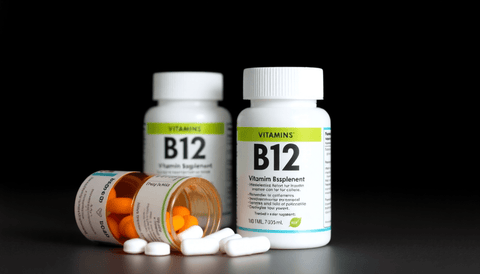
La vitamina B12 es necesaria para la formación normal de glóbulos rojos y el funcionamiento del sistema nervioso, pero no actúa como un estimulante. Puede ayudar a reducir el cansancio cuando existe una deficiencia, mientras que tomar más B12 no suele aumentar la energía en personas con niveles adecuados. Esta guía compara metilcobalamina y cianocobalamina, explica las dosis y ofrece criterios para elegir un suplemento con seguridad.