
La regulación de los neurotransmisores es el acto de equilibrio continuo del cerebro. Describe cómo los mensajeros químicos—dopamina, serotonina, GABA, glutamato y otros—son producidos, liberados y detectados, y cómo su señalización se programa y ajusta en circuitos que influyen en el ánimo, la atención y el pensamiento. Cuando la regulación de los neurotransmisores funciona sin problemas, las señales son claras y coordinadas; cuando cambia, puede que notes alteraciones en el enfoque, la energía o el estado de ánimo. La ciencia muestra que estas señales no actúan de forma aislada; forman redes dinámicas que se adaptan a las experiencias diarias, el aprendizaje y el estrés. Al entender la regulación de los neurotransmisores, puedes ver tus estados mentales como el producto de sistemas activos y ajustables en lugar de rasgos fijos. El objetivo de consejos respaldados por la ciencia no es una solución rápida, sino formas prácticas de observar e influir en estos procesos de señalización a través de hábitos cotidianos. Pasos simples y prácticos que puedes probar hoy se relacionan con la regulación de los neurotransmisores fomentando patrones estables, cognición flexible y conciencia plena. Primero, establece un ritmo diario predecible: horarios consistentes para despertar y descansar ayudan al cerebro a gestionar los ciclos de señalización que influyen en la alerta y la concentración. Segundo, varía tus tareas cognitivas y brinda a tu cerebro oportunidades para adaptarse—aprende una habilidad nueva, prueba un acertijo mental o cambia de tarea para fomentar patrones de disparo neural flexibles. Tercero, incorpora rutinas cortas de mindfulness o respiración durante el día para observar los estados mentales y reducir respuestas de estrés innecesarias. Cuarto, diseña un espacio de trabajo que minimice la sobrecarga y permita momentos de concentración tranquila, para que la señalización pueda reanudarse con menos distracción. Estos pasos son experimentos no prescriptivos que puedes ajustar para ver qué se alinea con tu experiencia de la regulación de los neurotransmisores en tu propio cerebro. Recuerda que la regulación de los neurotransmisores es un proceso complejo y individualizado. Los pasos anteriores son enfoques ligeros, informados por la ciencia, que puedes probar para entender cómo responde tu cerebro a los patrones diarios. Observa lo que notas con el tiempo—niveles de concentración, fluctuaciones en el estado de ánimo o la rapidez con que llegan las ideas—y ajústalo en consecuencia. El objetivo es apoyar un flujo equilibrado de señalización más que perseguir un resultado único. Al enmarcar las acciones desde la perspectiva de la regulación de neurotransmisores, puedes cultivar un enfoque curioso y paciente sobre cómo funciona tu cerebro, con cambios sencillos y prácticos que puedes comenzar hoy.
Regulación de neurotransmisores: desbloquea el estado de ánimo, la concentración y la salud cerebral
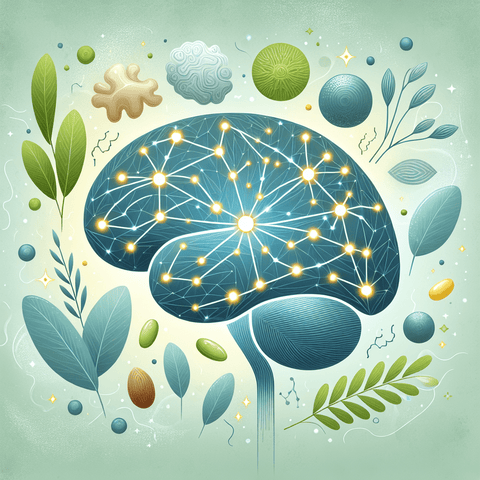
Neurotransmitter regulation is the brain's ongoing balancing act. It describes how chemical messengers—dopamine, serotonin, GABA, glutamate, and others—are produced, released, and sensed, and how their signaling is timed and scaled across circuits that influence mood, attention, and thought. This tag page is a high-level hub for the topic: it explains the broad concepts, introduces the major dimensions, and points toward more specific articles for deeper questions.
Rather than acting as fixed traits, mental states can be viewed as the product of bustling, adjustable systems. When neurotransmitter regulation operates smoothly, signals tend to be clear and coordinated. When it shifts, you might notice changes in focus, energy, or mood. The sections below map out what regulation involves, why it matters, and which everyday factors are commonly discussed in relation to it, without offering personalized medical advice.
What Neurotransmitter Regulation Actually Involves
At its core, neurotransmitter regulation covers the full life cycle of a chemical messenger: how it is built, how it is released from one neuron, how it is received by another, and how it is eventually cleared or recycled. Each of these steps is a potential point of adjustment for the brain, which is why signaling can be tuned up, dampened, or retimed depending on context.
This process does not happen in isolation. Neurotransmitters form dynamic networks that adapt to daily experiences, learning, and stress. A single messenger may participate in multiple circuits, and the same circuit may involve several messengers working together. That interconnectedness helps explain why changes in one area can ripple through others, and why regulation is better understood as a system-wide balancing act than as a set of independent switches.
The Major Neurotransmitters and Their General Roles
A useful starting point is to become familiar with the main messengers commonly discussed in relation to mood, focus, and brain health. The list below is an overview, not an exhaustive catalogue, and each entry reflects general roles rather than individual diagnoses.
- Dopamine: often associated with motivation, reward, and movement control.
- Serotonin: broadly linked to mood, sleep-wake cycles, and appetite.
- GABA: the main inhibitory messenger, helping to calm neural activity.
- Glutamate: the main excitatory messenger, central to learning and memory.
- Acetylcholine: involved in attention, learning, and muscle activation.
- Norepinephrine: associated with alertness, arousal, and the stress response.
These messengers do not act alone. Their effects depend on the circuits they operate in, the receptors they bind to, and the broader context of the nervous system. For that reason, it is rarely useful to think of any single messenger as solely responsible for a given mental state.
Why Neurotransmitter Regulation Matters
Neurotransmitter regulation sits behind many everyday experiences: alertness in the morning, sustained attention during work, winding down before sleep, and emotional responses to events. When signaling is well regulated, these experiences tend to feel coordinated. When regulation shifts, people may notice changes in focus, energy, or mood, though such changes can have many possible explanations and are not a reliable indicator of any specific condition.
Understanding the topic can be useful because it frames mental states as the product of adjustable biological systems rather than fixed traits. That perspective supports a curious, patient approach to how the brain works, and it encourages attention to daily patterns that may influence signaling over time.
Factors That May Influence Neurotransmitter Regulation
Many factors are commonly discussed in relation to neurotransmitter regulation. The categories below are broad and overlapping, and they are presented as general context rather than as prescriptive advice.
Daily rhythms and habits
Consistent times for wakefulness and rest may help the brain manage signaling cycles that influence alertness and concentration. Varying cognitive tasks, learning small new skills, and building short mindfulness or breathing routines into the day are other lightweight approaches people sometimes use to observe mental states and reduce unnecessary stress responses.
Nutrition and precursor nutrients
Neurotransmitters are built from precursors, many of which come from the diet. Amino acids such as tryptophan and tyrosine, along with a range of vitamins and minerals that support normal enzyme function, are part of the broader nutritional picture. You can explore our amino acid supplements guide and vitamin B category for related background. This information is general and is not intended to diagnose, treat, or prevent any condition.
Stress, environment, and recovery
Stress load, sleep quality, and the general environment all interact with signaling systems. A workspace that minimizes overload and allows moments of quiet focus is one practical example of how environment can be adjusted to support clearer signaling with less distraction.
Practical, Non-Prescriptive Steps People Sometimes Try
The suggestions below are lightweight, science-informed approaches that are sometimes discussed in relation to neurotransmitter regulation. They are not medical recommendations, and they are best treated as small experiments to observe over time.
- Establish a predictable daily rhythm with consistent times for rest and wakefulness.
- Vary cognitive tasks to give the brain opportunities to adapt and form flexible firing patterns.
- Build short mindfulness or breathing routines into the day to observe mental states.
- Design a workspace that minimizes overload and allows moments of quiet focus.
Tracking what you notice over time—levels of focus, mood fluctuations, or how quickly ideas come to mind—can help you understand how your brain responds to daily patterns. The aim is to support a balanced flow of signaling rather than to chase a single outcome.
Can Neurotransmitter Levels Be Checked?
This is a common question, and it deserves a cautious answer. Neurotransmitters operate in the brain, and their levels are not easily measured through routine blood tests. Some laboratories offer urine or saliva panels that report on neurotransmitter metabolites, but the interpretation of those results is complex and debated, and they do not directly reflect brain signaling. Anyone considering such testing should discuss it with a qualified healthcare professional rather than relying on a single result to explain mood, focus, or energy.
How This Tag Page Fits Into the Wider Topic
This page is intended as a broad overview of neurotransmitter regulation. More specific questions—such as how to address an imbalance, how individual messengers are tested, or how particular nutrients relate to signaling—are better suited to dedicated articles. You can browse the individual posts associated with this tag for deeper dives, and use the category links above as starting points for related nutritional context. General educational information like this is not a substitute for personalized medical advice.